
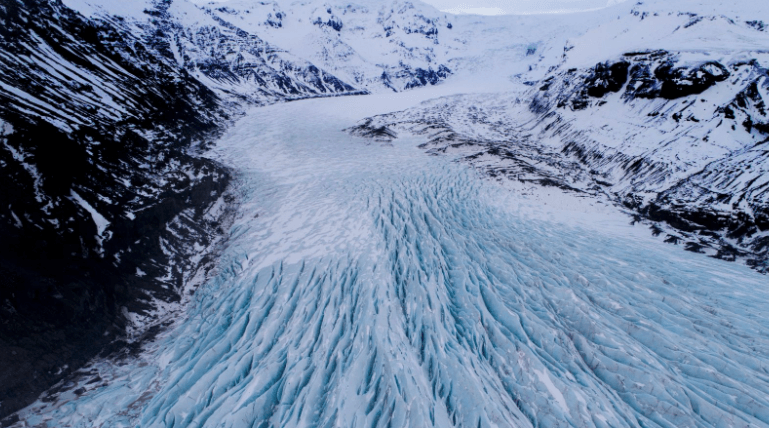
Iceland packs an unusual amount of contrast into one island: glaciers within an hour of volcanoes, black sand beaches under green mountains, geothermal rivers you can bathe in year-round, and a night sky that puts on one of the best light shows on Earth for half the year. Most guides to Iceland list these experiences as if you’ll be shuttled between them on a bus. We’re going to talk about them differently — because when you’re driving yourself in a camper van, the experience changes. You choose the pace, you can chase good weather instead of a fixed departure time, and you sleep closer to the places most tourists only see from a car park.
This guide covers everything worth doing in Iceland: natural wonders, the Northern Lights, geothermal spots, wildlife, hiking and Highland adventures, region-by-region highlights, Reykjavík, and what’s realistically worth doing depending on when you visit — including what works well for families traveling with kids. Each section links to a deeper guide if you want to plan that part of your trip in detail.
Jump to a section:
Natural wonders and landmarks
Northern Lights and night sky
Geothermal spots and hot springs
Wildlife encounters
Hiking and Highland adventures
Experiences by region
Reykjavík experiences
What to do by season
Planning your route
FAQ
Natural Wonders and Landmarks
Iceland’s landscape does most of the work for you, and a good stretch of it sits close enough to the road that you don’t need to plan a whole day around a single stop.
Waterfalls
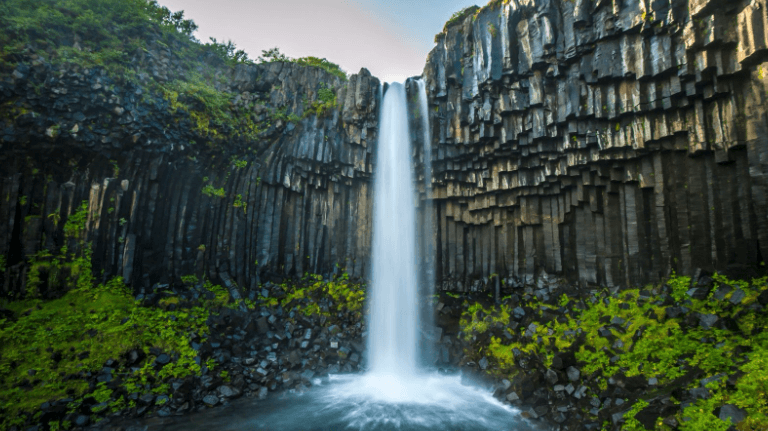
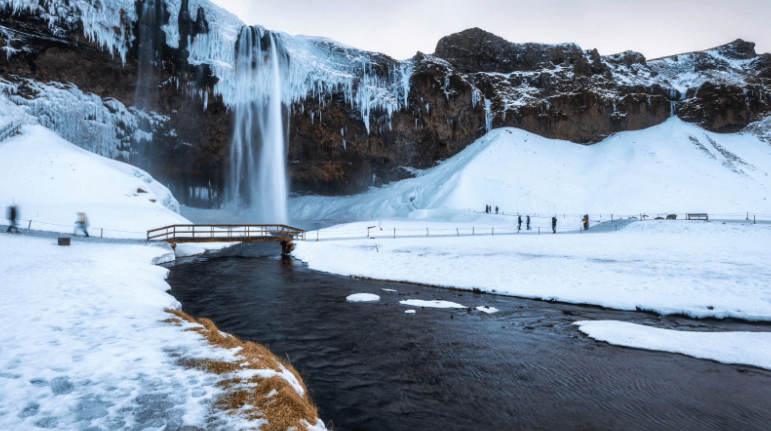
You’ll be building your route around a few of these whether you mean to or not. Seljalandsfoss drops from a cliff you can walk fully behind — bring a rain jacket, because the spray reaches the path on all but the calmest days — and a short walk further along the same cliff face brings you to Gljúfrabúi, a smaller fall tucked inside a canyon that most people miss entirely because it isn’t visible from the road. Skógafoss is wider and more forceful, a 60-meter curtain you can walk right up to at the base, with a steep staircase alongside it leading to a viewpoint over the top if your legs are up for it.
Gullfoss, further on as part of the Golden Circle, drops in two tiered stages into a canyon carved by the river itself, and on a sunny day the spray throws a rainbow across the gorge. None of these needs more than fifteen minutes from the car park, which is part of why they’re the three most photographed waterfalls in the country.
Glaciers and Ice Caves
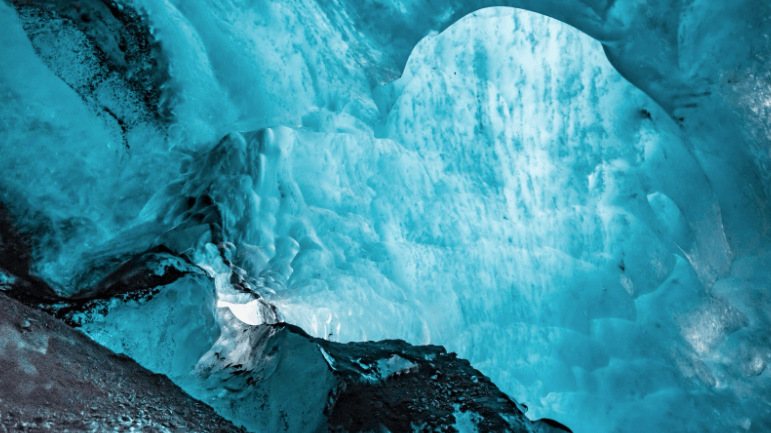
Vatnajökull, Europe’s largest ice cap by volume, covers roughly 8% of Iceland and feeds most of what you’ll come across here — half-day glacier hikes on the outlet glaciers along the South Coast, with crampons and an ice axe provided, and the blue, translucent ice caves that form each winter as meltwater carves through the glacier. Both are guided-only: glacier hikes run year-round, while ice caves are only accessible in the colder months, when the ice is stable enough to enter safely. Ice caves in particular can collapse without warning, so this isn’t something to attempt independently even if you find an opening yourself.
Jökulsárlón and Diamond Beach
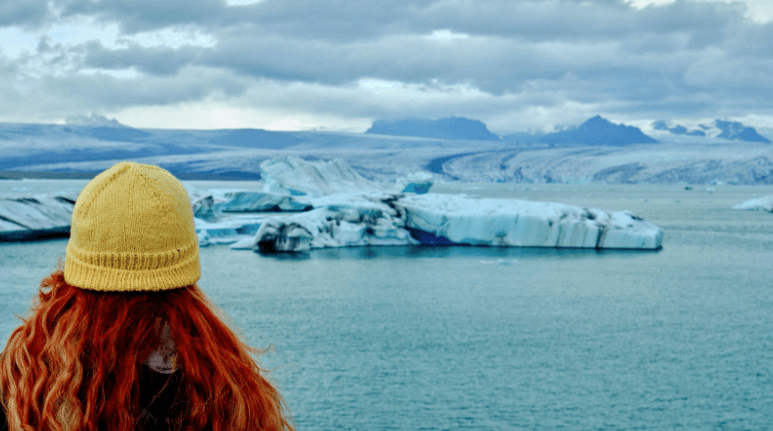
Not all the ice stays put, though — a lot of it eventually ends up at Jökulsárlón, a lagoon where icebergs calve off Breiðamerkurjökull, drift across still water, and wash out to sea through a narrow channel. You might catch seals resting on the ice, or hear the low, cracking groan of a berg shifting.
Cross the road, and you’re at Diamond Beach, where the current pushes the smaller ice fragments back onto black volcanic sand. Here, clear, sculpted pieces catch the light differently depending on the hour, which is why photographers tend to time their visit around sunrise or sunset.
Between them, the two sights take maybe an hour, and both sit right off the Ring Road — one of the easiest high-impact detours on a South Coast route.
Black Sand Beaches
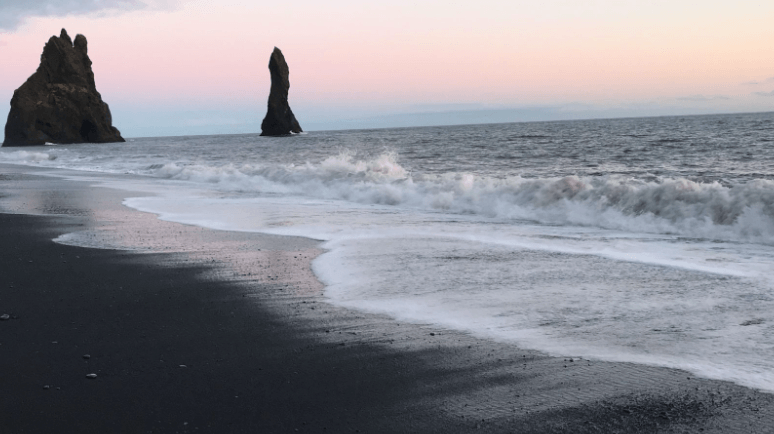
Reynisfjara, near the village of Vík, is Iceland’s best-known black sand beach — basalt columns that look almost architectural, and offshore, the Reynisdrangar sea stacks rising out of the water. It’s genuinely worth seeing, and also one place where the warnings deserve to be taken seriously: this beach has what locals call sneaker waves, unpredictable surges that reach well beyond where the surf looks like it should stop, strong enough to pull someone in, and there have been fatalities here.
Stay well back from the waterline and don’t turn your back on the ocean, and it’s a safe, striking stop. If you’d rather trade some of the drama for a calmer stretch of coast, other beaches along the south coast are just as photogenic without the same risk.
The Golden Circle
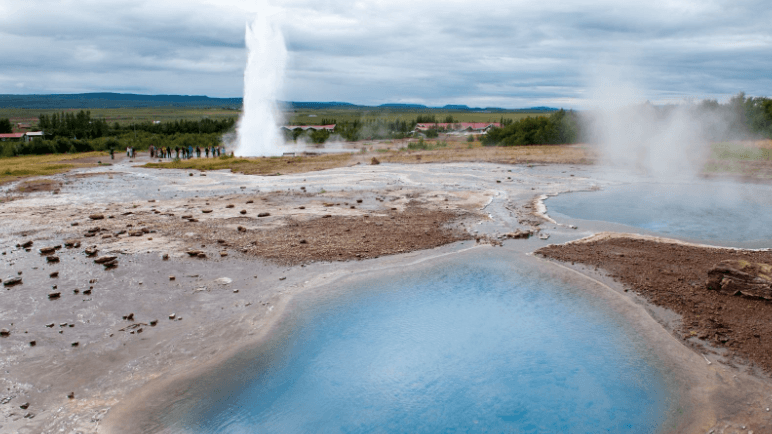
The Golden Circle earns its reputation as Iceland’s most-visited route by packing three very different landscapes into a single day trip from Reykjavík. Þingvellir National Park is where Iceland’s parliament, the Alþingi, first met in 930 AD. It’s also a rift valley where you can walk in the literal gap between the North American and Eurasian tectonic plates — ground that’s pulling apart a few centimeters a year.
A short drive on, Geysir geothermal field gave English the word “geyser”: the original Great Geysir is mostly dormant now, but its neighbour Strokkur erupts every 5 to 10 minutes, shooting water 15–20 meters up with barely any warning beyond a bubble forming on the surface.
Gullfoss closes out the loop. All three sit within about an hour of Reykjavík and of each other, which is why the route works equally well as a single day out or the opening stretch of a longer trip.
Kerið and Silfra
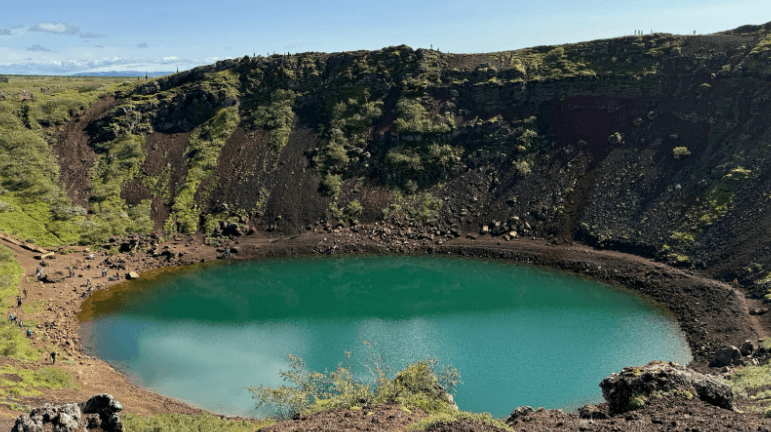
Two smaller stops sit in the same area and reward a slight detour. Kerið is a compact volcanic crater, around 3,000 years old, with a striking blue-green lake at the bottom and red volcanic rock forming the walls — small enough to walk the full rim in fifteen minutes, and easy to overlook next to its bigger neighbours.
Silfra, back at Þingvellir, is something else entirely: a fissure filled with glacial meltwater filtered through hundreds of meters of porous lava rock, clear enough that visibility can run past 100 meters.
Snorkeling or diving here means swimming between two tectonic plates in water that hovers around 2–4°C year-round — hence the drysuit — and it’s one of the few places on Earth where you can do that.
Elephant Rock
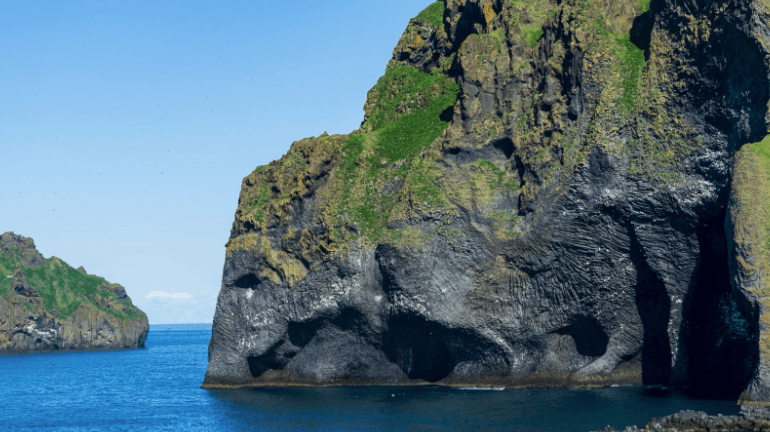
Further afield, Heimaey in the Westman Islands has a sea cliff that curves down to the water in a shape that unmistakably resembles an elephant dipping its trunk in the sea — worth a look if you’re already out there for the puffins.
Mývatn
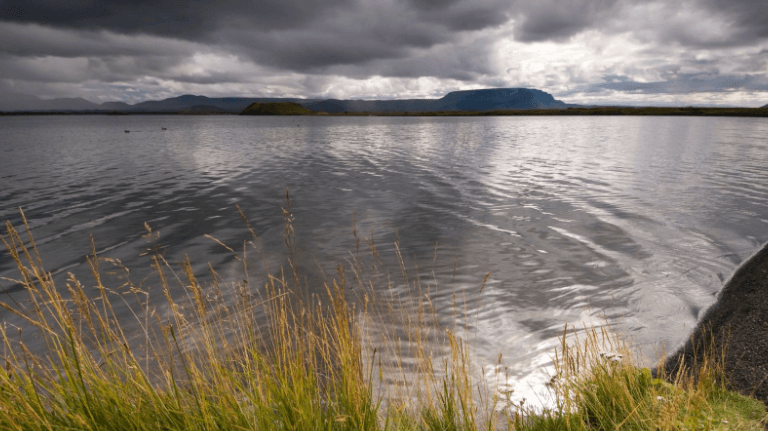
Up north, Lake Mývatn sits in one of Iceland’s most geologically active corners, with pseudocraters formed by old steam explosions, the strange lava formations at Dimmuborgir, boiling mud pools, and geothermal vents you can feel before you see.
It’s a slower, quieter part of the country than the South Coast, and worth building real time into if North Iceland is part of your route.
National Parks
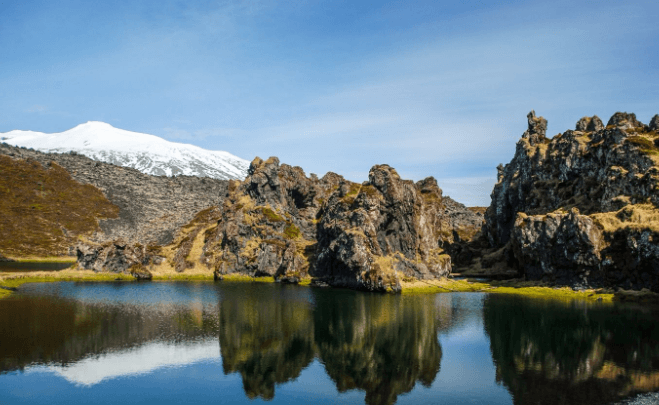
Iceland’s three national parks each protect a genuinely distinct landscape: Þingvellir for its geology and history, Vatnajökull National Park — roughly 14% of the country’s total land area — for the glacier and the canyons and waterfalls around it, including Dettifoss, and Snæfellsjökull National Park at the tip of the Snæfellsnes Peninsula, centered on the glacier-capped volcano that inspired Jules Verne’s Journey to the Center of the Earth.
Northern Lights and Night Sky
For a lot of travelers, the aurora is the reason the trip happens at all, so it’s worth understanding what actually has to line up before you build a whole itinerary around it.
You need three things at once: dark skies, which in Iceland means roughly late August through mid-April, since the summer months barely get dark at all; clear weather, since cloud cover blocks the view entirely no matter how active the aurora is; and solar activity, measured by the Kp index, where a reading of 3 or higher gives you reasonable odds and anything above 5 tends to produce a display visible even with some light pollution around.
None of it can be forced — the best strategy is checking the forecast each evening and staying flexible about where you go.
Why a Camper Van Works for Aurora Hunting
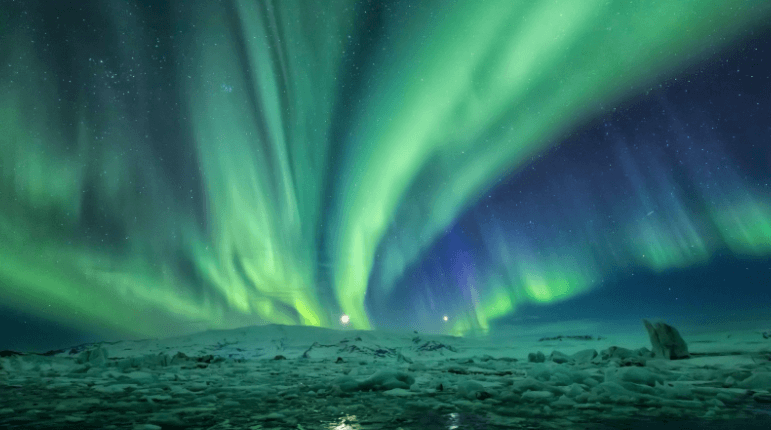
This is one of the clearest cases where a camper van changes the experience rather than just being a place to sleep. You’re not tied to a tour bus schedule or a hotel checkout time, so if the forecast looks promising at 11pm, you can simply drive to a dark spot and wait it out — something a scheduled tour, committed to a fixed departure and return time regardless of conditions, generally can’t offer.
Our Northern Lights guide covers the forecasting tools worth bookmarking and where to find genuinely dark skies away from Reykjavík’s light pollution.
Visiting in Summer Instead
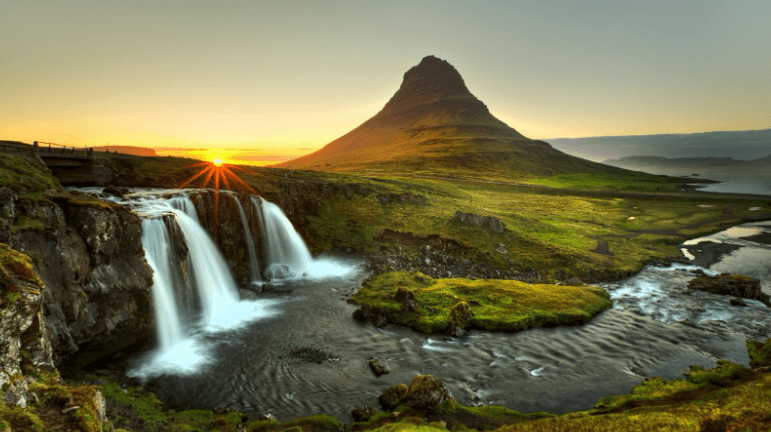
Visit in summer, and you trade the aurora for the opposite extreme — the Midnight Sun, near-24-hour daylight from late June to early July, and little darkness throughout the summer. This changes how you plan a trip in ways people don’t always expect.
It’s entirely possible to go hiking at midnight, and blackout curtains or an eye mask become genuinely useful gear. If you’re traveling in the shoulder seasons, outside peak aurora activity, the night sky is still worth looking up for.
Geothermal Spots and Hot Springs
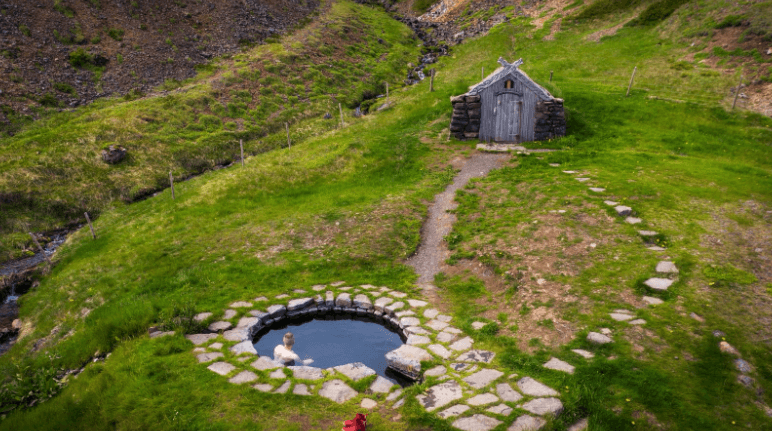
Iceland sits directly on top of the Mid-Atlantic Ridge, and one of the best side effects of that is warm water everywhere you look, from polished tourist spas to a river you have to hike to reach.
Blue Lagoon and Secret Lagoon
The Blue Lagoon is the one most people picture — a milky, mineral-rich lagoon set in a black lava field near Keflavík, naturally around 37–39°C year-round, with the silica mud along its shallower edges giving it that distinctive color.
Given how close it sits to the airport, it works well as a first stop after landing or a last one before your flight home, a way to unwind either side of the drive. If you’d rather skip the crowds and the price tag, the Secret Lagoon near Flúðir is the quieter alternative most locals would point you toward — smaller, older, and considerably less polished, and in fact the oldest swimming pool in Iceland, dating back to 1891, with a small geyser bubbling away right next to the pool itself.
Reykjadalur Hot Springs
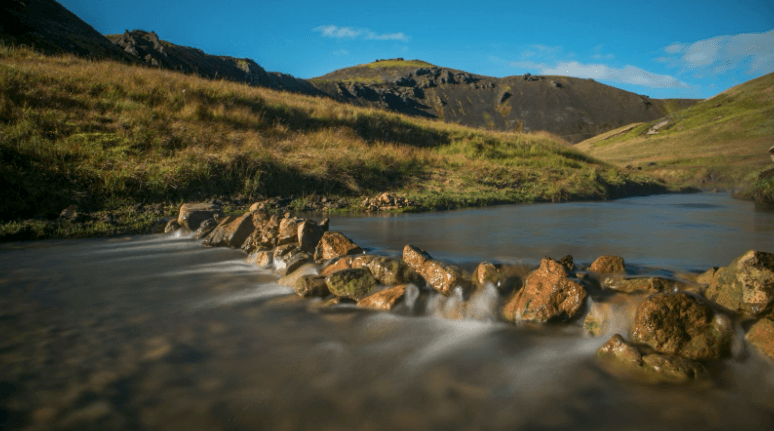
Reykjadalur is a different kind of hot spring experience, and it takes some effort to reach, which is part of why it’s worth it. A roughly 3km (1.86 mile) hike from the car park near Hveragerði leads you up a steaming valley to a geothermal river warm enough to bathe in, the temperature shifting depending on where you sit relative to the spring feeding it.
There’s no changing room beyond a basic wooden platform, no entry fee, and none of the crowds you’ll find at the commercial spas — genuinely one of the better experiences in the country if you’re up for the walk. The car park does charge a small hourly fee (payable via app or machine on-site), but the hike and hot river themselves remain free.
Public Swimming Pools
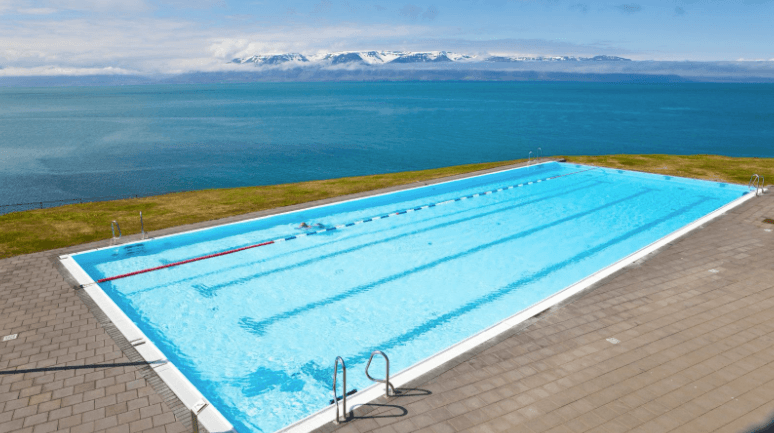
For something closer to how Icelanders actually spend their evenings, almost every town in the country, no matter how small, has a geothermally heated public pool — usually with several hot tubs at different temperatures, a cold plunge, and sometimes a steam room, all for the price of a few dollars.
It’s a far cheaper and more local experience than the tourist-facing lagoons.
Wildlife Encounters
Iceland’s wildlife isn’t limited to the sea. Along the coast and in the countryside, you can also spot puffins nesting on sea cliffs in summer and Icelandic horses grazing in open pastures, adding two of the country’s most iconic animal encounters to your trip.
Whale Watching
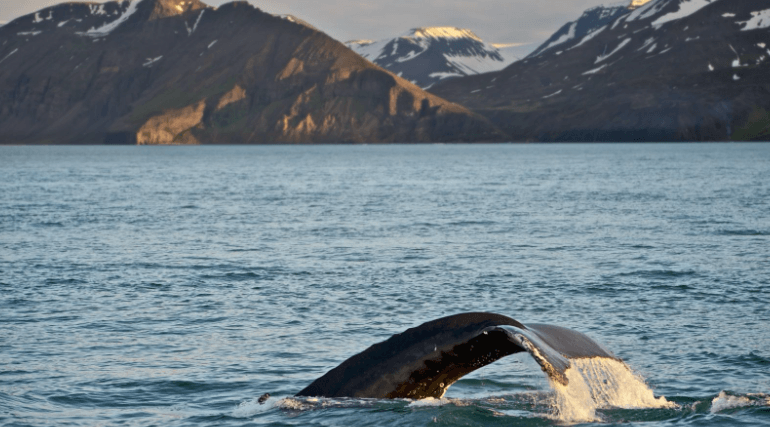
Húsavík, in North Iceland, is often called the whale watching capital of Europe, and the waters of Skjálfandi Bay see regular sightings of humpback whales, minke whales, and white-beaked dolphins, with occasional orca and blue whale sightings depending on the season. Reykjavík’s harbour is the more convenient option if you’re short on time, with tours departing right from the city and similar odds of a sighting most of the year. Season matters here — activity peaks roughly April through October, and while some operators run trips year-round, your odds drop noticeably in winter.
Puffins
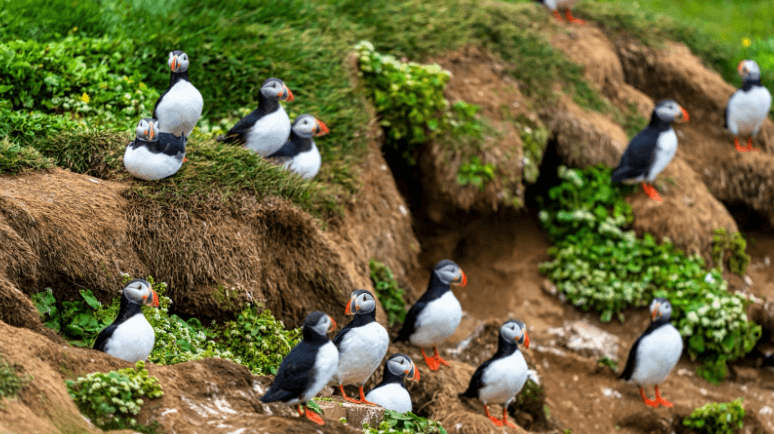
Puffins are easier to find than you’d expect once you’re in the right place at the right time — Iceland holds a significant share of the world’s entire Atlantic puffin population.
Látrabjarg, in the Westfjords, is Europe’s largest bird cliff and one of the best places anywhere to see them at close range, since they’re famously unbothered by people standing nearby, and the Westman Islands and stretches of the South Coast, including the cliffs near Reynisfjara, host large colonies too.
The catch is timing: nesting season runs roughly May through August, and outside that window the puffins are out at sea and you won’t find them on land at all.
Icelandic Horses
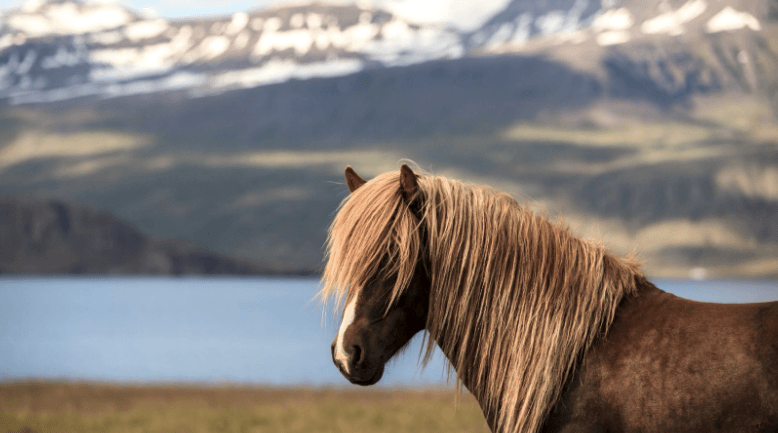
Icelandic horses are worth seeking out even if you’re not much of a rider. It’s a distinct breed, brought over by Norse settlers more than a thousand years ago and kept genetically isolated ever since — Icelandic law actually prohibits importing horses back into the country once they’ve left, to protect the breed from disease.
They’re smaller than most horse breeds, sturdy, famously good-natured, and have an extra gait called the tölt, a smooth four-beat movement that makes for a notably comfortable ride even if you’ve never been on a horse before. Farms around the country, particularly in South Iceland, offer everything from short hour-long rides to multi-day tours.
Hiking and Highland Adventures
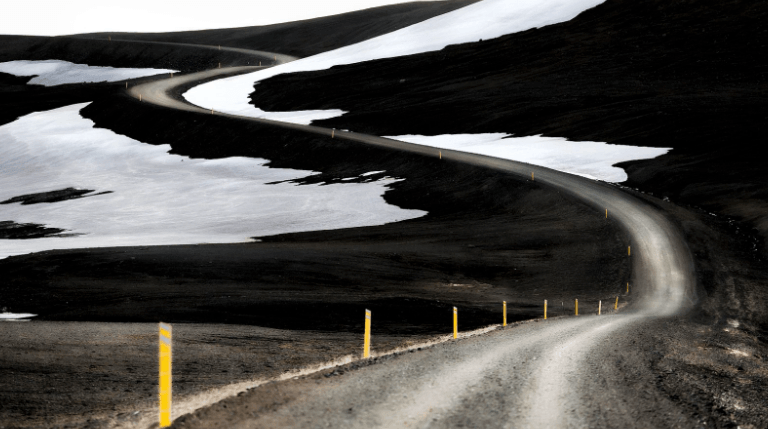
This is where a camper van — specifically a 4×4 — genuinely earns its keep, rather than being a nice-to-have. Iceland’s Highlands, the vast, largely uninhabited interior of the country, are only reachable via F-roads: unpaved, seasonal routes that are frequently narrow, rutted, and interrupted by unbridged river crossings.
They’re closed for most of the year under snow and only typically open between June and September, with exact dates shifting year to year depending on conditions — worth checking immediately before you travel rather than assuming last year’s dates still apply.
Þórsmörk
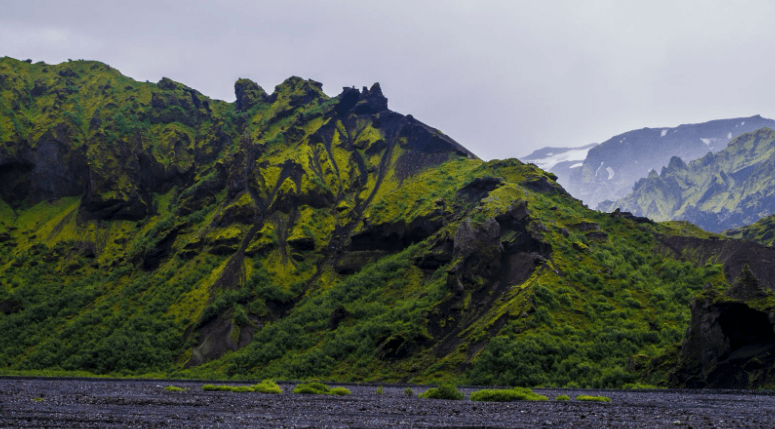
Get the timing right, though, and Þórsmörk is the reward for making that trip. It’s a valley tucked between three glaciers in the southern Highlands, reachable by F-road — specifically F249 — with some of the best hiking in the country and access to the start of the Laugavegur trail, one of the most celebrated multi-day treks in Iceland.
The journey involves river crossings — most notably the Krossá — that catch out underprepared vehicles every summer. Even a proper rental 4×4 isn’t automatically enough here; this is serious terrain that calls for a specially equipped vehicle or a guided super-jeep tour, and river-crossing damage isn’t covered by insurance regardless of what you’re driving.
General Hiking
Beyond the Highlands, Iceland has hiking for every level, from short, well-marked coastal walks near the Ring Road to demanding multi-day treks through genuinely remote terrain — some trails are realistic for a day trip, others need real planning, so it’s worth checking a route’s difficulty before you commit a day of your itinerary to it.
Choosing the Right Vehicle
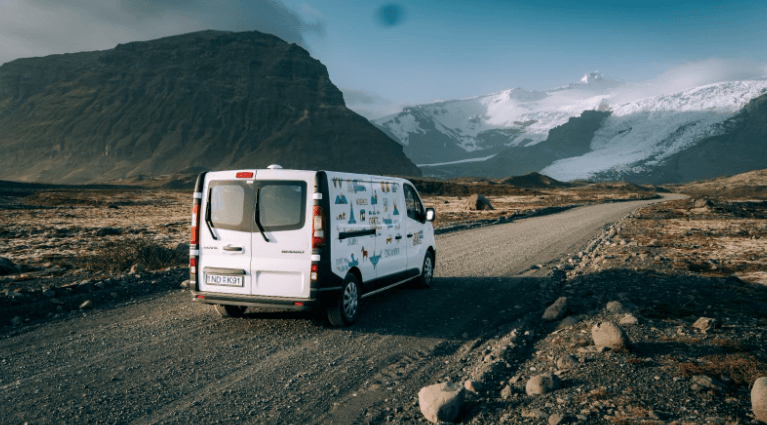
None of this is a minor vehicle detail. River crossings and rough, rutted terrain call for genuine four-wheel-drive capability and real ground clearance, not just an all-wheel-drive badge, so if Highland access is part of your plan, it’s worth understanding what you actually need versus what’s marketing.
Our Highland driving guide covers F-road rules, river-crossing technique, and seasonal timing. When you’re ready to look at vehicles, our 4×4 camper range is built specifically for this kind of trip.
Experiences by Region
Iceland’s regions each offer their own mix of landscapes, attractions, and local character, so the best experiences often depend on where you’re traveling. From waterfalls and glaciers to coastal wildlife and remote highlands, each area has something different to offer.
South Iceland
South Iceland is the most visited region in the country, and for good reason — Seljalandsfoss, Skógafoss, Reynisfjara, and Jökulsárlón are all here, along with access to Þórsmörk for hikers, and nearly every major stop sits directly off the Ring Road with minimal detouring required. That ease of access is exactly why it’s also the busiest stretch of the country.
North Iceland
North Iceland is a genuinely different pace. It centers on Akureyri, sometimes called the capital of the north, and Lake Mývatn’s geothermal landscape, with whale watching out of Húsavík as a highlight and some of the best aurora viewing in the country thanks to being well away from southern light pollution. It sees a fraction of South Iceland’s traffic.
East Iceland
East Iceland is the quietest stretch of the Ring Road by a wide margin — fjords, reindeer (Iceland’s only wild reindeer population lives here), and small fishing villages, with far fewer other travelers competing for the same viewpoints. It’s a good fit if you’ve already done a South Coast trip and want space from the crowds on a return visit.
The Westfjords
The Westfjords sit off the Ring Road entirely, connected by a long detour that keeps visitor numbers genuinely low compared to the rest of the country — dramatic cliffs, the puffin colonies at Látrabjarg, and some of the most remote, slow driving you’ll do anywhere in Iceland. It’s not a region to rush; budget more days than you think you need.
Snæfellsnes Peninsula
Snæfellsnes is sometimes called “Iceland in miniature,” and the nickname holds up — glaciers, volcanoes, black sand beaches, and small fishing villages all within a compact loop close enough to Reykjavík for a shorter trip, without sacrificing much of what makes the rest of the country worth visiting.
Reykjanes Peninsula
Reykjanes is the first landscape most visitors actually see, since Keflavík Airport sits right on it — raw lava fields, active geothermal areas, and the Blue Lagoon, all within a short drive of your arrival, which makes it a natural first or last stop depending on your flight times.
The Diamond Circle
Further north, the Diamond Circle groups Lake Mývatn, Dettifoss — one of the most powerful waterfalls in Europe by volume — and Húsavík into a single route, a quieter counterpart to the Golden Circle that sees far fewer visitors despite being just as dramatic.
The Westman Islands
The Westman Islands, reached by a roughly 35-minute ferry from the south coast town of Landeyjahöfn, round things out with some of Iceland’s best puffin colonies, the Eldfell volcano — which erupted without warning in 1973 and buried part of the town — and a noticeably different pace from the mainland.
Reykjavík Experiences
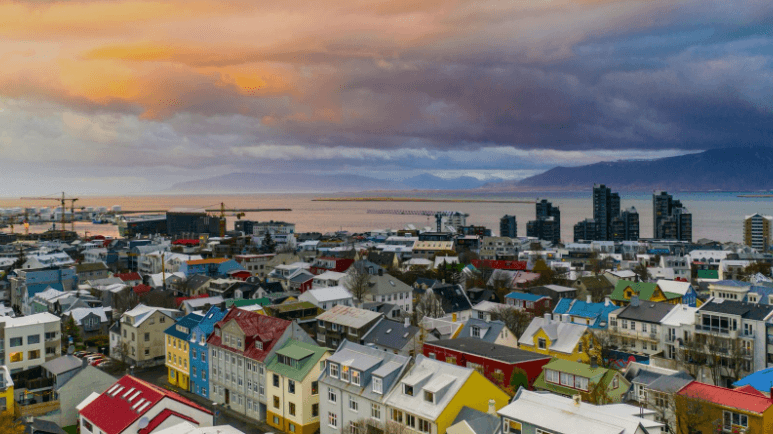
Most trips start or end in Reykjavík, and it’s worth setting aside a day or two beyond the airport transfer rather than treating it purely as a stopover.
Hallgrímskirkja, the striking concrete church that dominates the skyline, is worth climbing for the view alone, and the harbour area has grown into the city’s most interesting food and coffee district.
Whale watching tours depart right from the harbour itself too, if you’d rather not drive further north for the chance of a sighting. If you’re spending a night in the city before picking up your camper, it’s worth booking somewhere close to the harbour.
What to Do by Season
Iceland changes dramatically by month, and what’s worth prioritizing changes right along with it — the table below is a quick reference, and the guides linked underneath go deeper on each stretch of the year.
| Season | Best for | Watch out for |
|---|---|---|
| Winter (Nov–Mar) | Northern Lights, ice caves, fewer crowds | Highlands closed, shorter daylight, winter driving conditions |
| Spring (Apr–May) | Shoulder-season prices, waterfalls at high flow, early puffin arrivals | Highlands still closed into May/June |
| Summer (Jun–Aug) | Midnight Sun, Highland/F-road access, whale watching, puffin nesting | Peak crowds and prices — book early |
| Autumn (Sep–Oct) | Aurora season returns, Highlands accessible into September | Highland roads start closing, weather turns quickly |
Before you commit to travel dates, our best time of year to visit and weather by month guides are worth reading first. If you want more specifics once you’ve settled on a season, we’ve written guides to spring, summer, winter, September, and March specifically — both fall at the edge of a season change, so conditions can swing more than people expect, which is why each gets its own closer look.
Planning Your Route
Once you know which of the above matters most to you, the question becomes how to string it together. Most first-time visitors build a trip around the Ring Road, Iceland’s roughly 1,332 km (828 mile) coastal highway that loops the entire island and connects nearly every region above.
It sounds like a lot of driving, and it is, but the road itself is part of the experience rather than something to get through — the landscape changes constantly, and most days end up with more stopping than driving. A 7-day Ring Road itinerary is a practical starting point for pacing.
If you’re short on time, the Golden Circle alone covers three major experiences in a single day trip from Reykjavík without committing to the full loop, and our guides to planning a road trip and self-drive touring help you think through realistic pacing — how many days you actually need for the route you have in mind, rather than the number a generic packing list tells you.
Which Camper Fits Your Iceland Trip
With your route taking shape, the vehicle question gets a lot easier to answer. Here’s how our fleet maps to the kind of trip described above.
Ring Road and Paved Routes
If your route stays on the Ring Road and paved roads — the Golden Circle, South Coast, Reykjavík, and most of the regional guides above — a standard 2WD camper van covers everything.
For two people on a budget, the Fiat Doblo Maxi or its automatic version, the Fiat Doblo Maxi Automatic, are the most economical way to do this trip. The Renault Kangoo Camper sits in a similar bracket and is a straightforward choice if you’re new to camper van travel.
If you’d like a bit more room without stepping up to a motorhome, the VW Caddy Camper (also available in manual) sleeps two, while the Renault Trafic 3 sleeps up to three.
Highlands and F-Roads
If the Highlands, F-roads, or hiking routes like Þórsmörk and Landmannalaugar are on your list, you need a genuine 4×4.
The Toyota Hilux 4×4 Camper is the Highland workhorse of the fleet, with the ground clearance and 4×4 capability for rough terrain and sleeping space for up to four. The Dacia Duster 4×4 Roof Top Tent is a more affordable way into Highland-capable travel, but only has sleeping capacity for two.
For more comfort on the same terrain, the VW California 4×4 Automatic and the newer VW California Beach 4×4 (2024 model) bring a genuinely premium build to Highland driving.
Couples who want 4×4 access without a full-size vehicle should look at the compact Jeep Renegade 4×4 Roof Top Tent or the Suzuki Jimny 4×4 Roof Tent, Rent.is’s smallest Highland-capable option.
Families and Larger Groups
If you’re traveling as a family or larger group and want more space than a converted van offers, our motorhomes add standing height, more storage, and in some cases a bathroom.
The Renault Master 5 sleeps up to five and suits families or groups of friends travelling together.
Motorhome 3 and the newer Motorhome 4 both work well for a smaller family road trip with a bit more comfort than a standard camper van.
If you want 4×4 capability without giving up motorhome-level space, the Crosscamp Flex 541 is one of the few vehicles in the fleet that offers both.
Still not sure which one fits? Browse our full range of camper vans and motorhomes for a side-by-side comparison, or go straight to our 4×4 camper range if Highland access is non-negotiable for your trip.
FAQs
What is the number one experience in Iceland?
There isn’t a single answer — it depends on when you visit. In winter, most travelers rank the Northern Lights first. In summer, it’s often the South Coast waterfalls and glacier lagoon, or Highland access if you have a 4×4. Match experiences to your travel dates using the seasonal table above.
How many days do you need to see the best of Iceland?
A week is enough to cover the Golden Circle and South Coast comfortably. Ten to fourteen days lets you complete the full Ring Road at a reasonable pace. Our Ring Road itinerary breaks down realistic daily distances.
Can you see the Northern Lights and go hiking in the Highlands on the same trip?
Not usually. The Highlands are typically only open June through September, when it doesn’t get dark enough for the aurora. If both matter to you, you’ll likely need two trips.
Do you need a 4×4 for most Iceland experiences?
No. The Golden Circle, South Coast, Reykjavík, and most of the Ring Road are accessible in a standard 2WD camper van. A 4×4 only becomes necessary if F-roads or Highland access are part of your plan. Our 4×4 vs 2WD guide explains the difference.
What can you do in Iceland with kids?
Most of the experiences on this page work well for families — the Golden Circle, geothermal pools, whale watching, and easy coastal walks are all manageable with children. The main things to plan around are driving distances and swapping riskier spots like Reynisfjara’s waterline or ice caves for calmer alternatives such as public swimming pools or Reykjavík’s harbour area.
Is a camper van a good way to experience Iceland, or should I book a tour?
It depends on how much control you want over your schedule. Tours run on fixed timing, which matters for something like the Northern Lights, where the best viewing window can shift by hours. A camper van lets you adjust in real time and sleep closer to the places you’re visiting.