
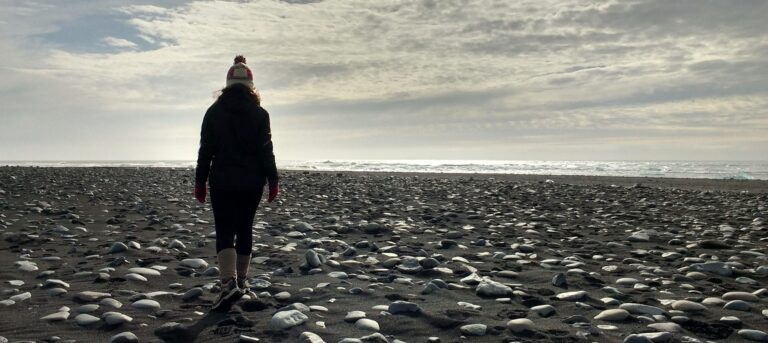
Iceland’s black sand beaches are some of the most unforgettable stops on a road trip around the country, with several of the most famous located along the South Coast. The best-known is Reynisfjara, near Vík, where volcanic sand, towering basalt columns, Reynisdrangar sea stacks, and powerful sneaker waves create one of Iceland’s most dramatic landscapes. But Reynisfjara isn’t the only black beach worth visiting. Depending on your route, group, and schedule, Diamond Beach, Sólheimasandur, Djúpalónssandur, Stokksnes, and Sandvík can all make memorable additions to an Iceland camper van itinerary.
This guide covers the best black sand beaches in Iceland, how to choose the right ones for your route, what safety risks to know before you go, and how to plan a camper van trip that makes the most of each stop.
Quick Guide: Which Black Sand Beach Should You Visit?
Use this table to match a beach to your Iceland route before you commit to the detour.
| Beach | Region | Best for | Camper van route fit | Safety note | Time needed |
| Reynisfjara | South Coast | First-time visitors, photographers | South Coast route | High wave risk — stay 30m back | 30–60 mins |
| Víkurfjara | South Coast | Quieter Vík stop, overnight base | South Coast overnight | Respect the ocean — no swimming | 20–45 mins |
| Sólheimasandur | South Coast | Plane wreck, photography | South Coast day trip | 4 km walk each way — allow half a day | 2–4 hours |
| Diamond Beach | Southeast | Glacier lagoon pairing, photographers | Ring Road | Cold surf + moving ice — do not climb | 30–60 mins |
| Djúpalónssandur | Snæfellsnes | History, lifting stones, west coast | Snæfellsnes loop | Admire shoreline — do not enter surf | 30–60 mins |
| Stokksnes | Southeast | Vestrahorn views, photography | Ring Road / SE overnight | Wind and tides — check conditions | 1–2 hours |
| Sandvík | Reykjanes | Airport route, arrival/departure add-on | Reykjanes Peninsula | Strong surf — do not enter water | 20–45 mins |
The South Coast beaches, Reynisfjara, Sólheimasandur, and Víkurfjara, sit within the same travel corridor and pair well on a single South Coast day trip or overnight. Diamond Beach and Stokksnes are Ring Road stops in the southeast, best combined with Jökulsárlón Glacier Lagoon. Djúpalónssandur is a Snæfellsnes stop, roughly two hours northwest of Reykjavík on a separate loop. Sandvík suits travelers doing a short Reykjanes drive before or after their flight.
What Are Black Sand Beaches and Why Are There So Many in Iceland?
Iceland’s black sand beaches are volcanic. The island sits on a hotspot in the Mid-Atlantic Ridge, which means lava flows have shaped much of the landscape for millions of years. When that lava and basalt rock reach the coast, waves, weather, and erosion gradually break them down into black sand or dark pebbles. This is why Iceland’s beaches look so different from the pale sands of warmer countries.
Reynisfjara’s sand is particularly dark and fine. The area sits close to the Katla volcanic system, one of Iceland’s most active, and the ancient lava fields nearby have had thousands of years of wave action to produce the beach you see today.
Many of our CamperStories contestants have visited Reynisfjara and sent in some stunning images. You can see a few below — click on any photo to read their story.
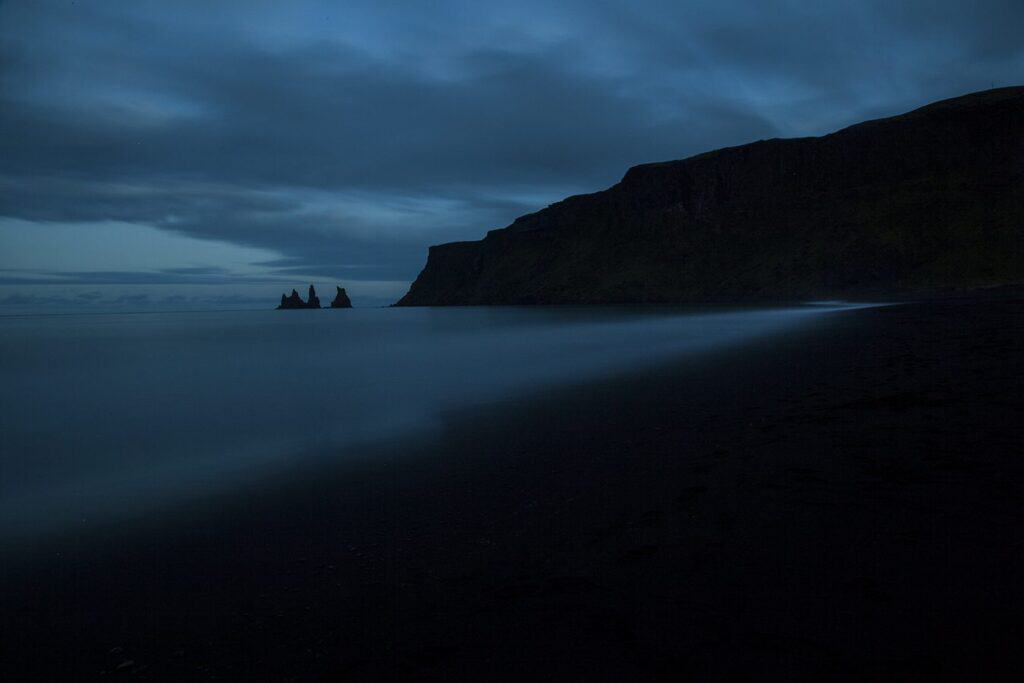
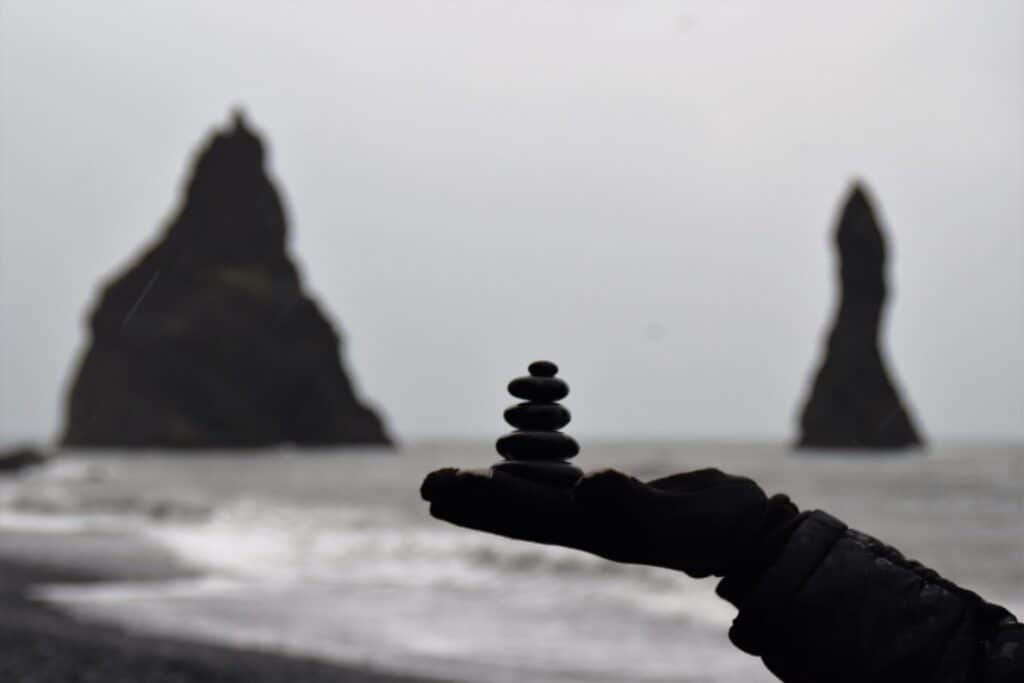
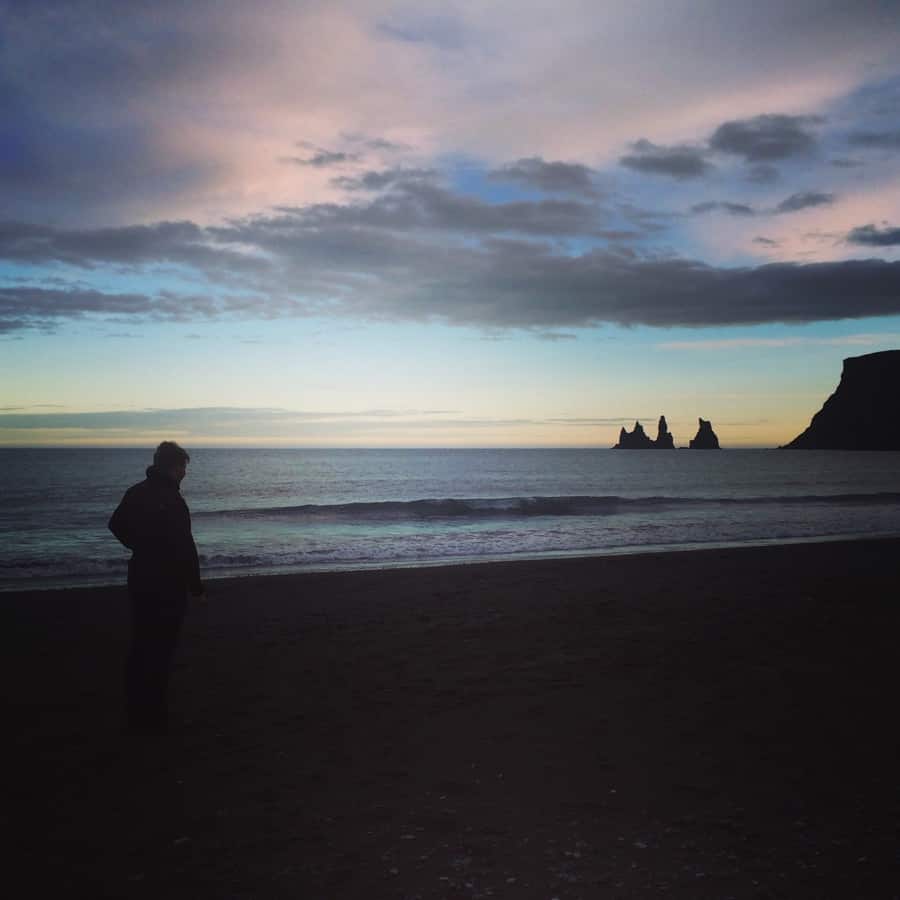
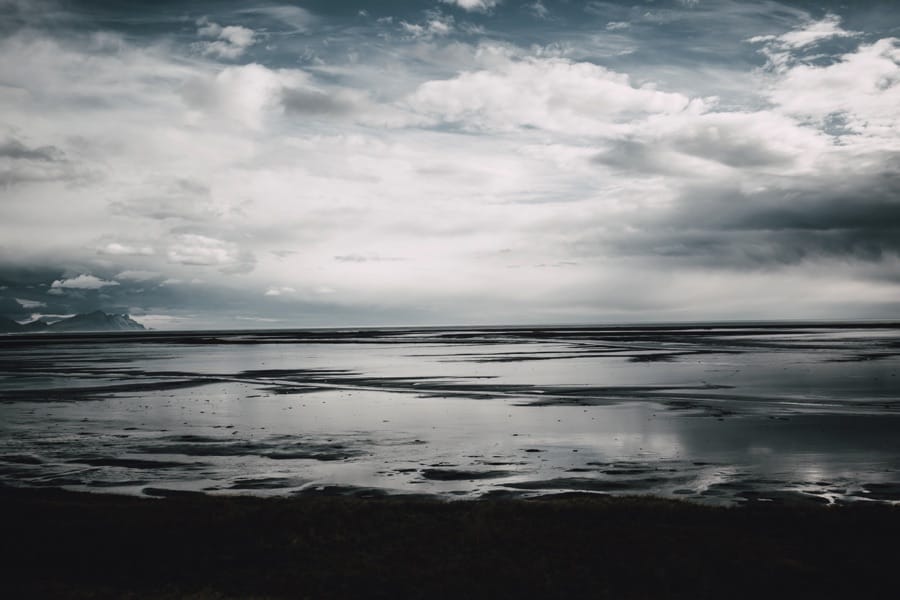
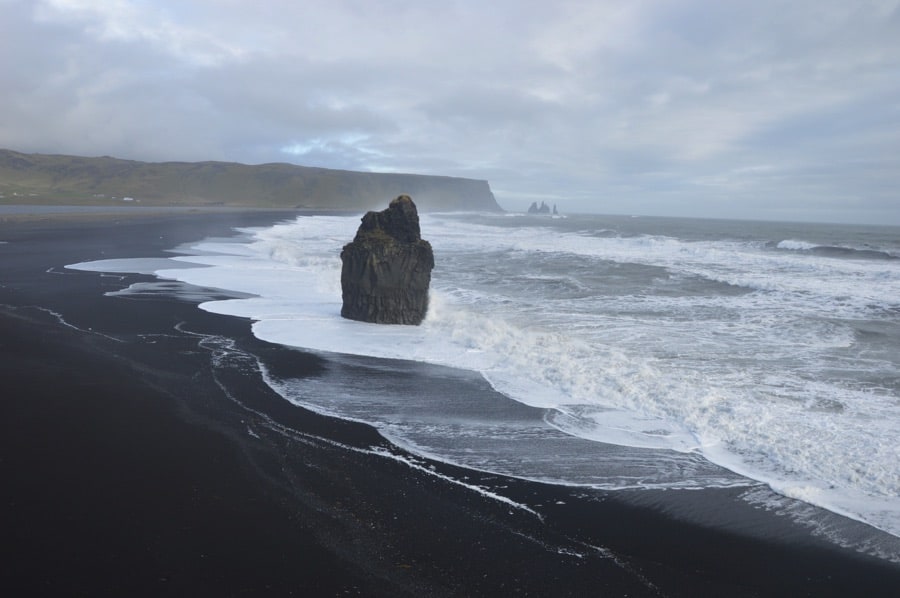
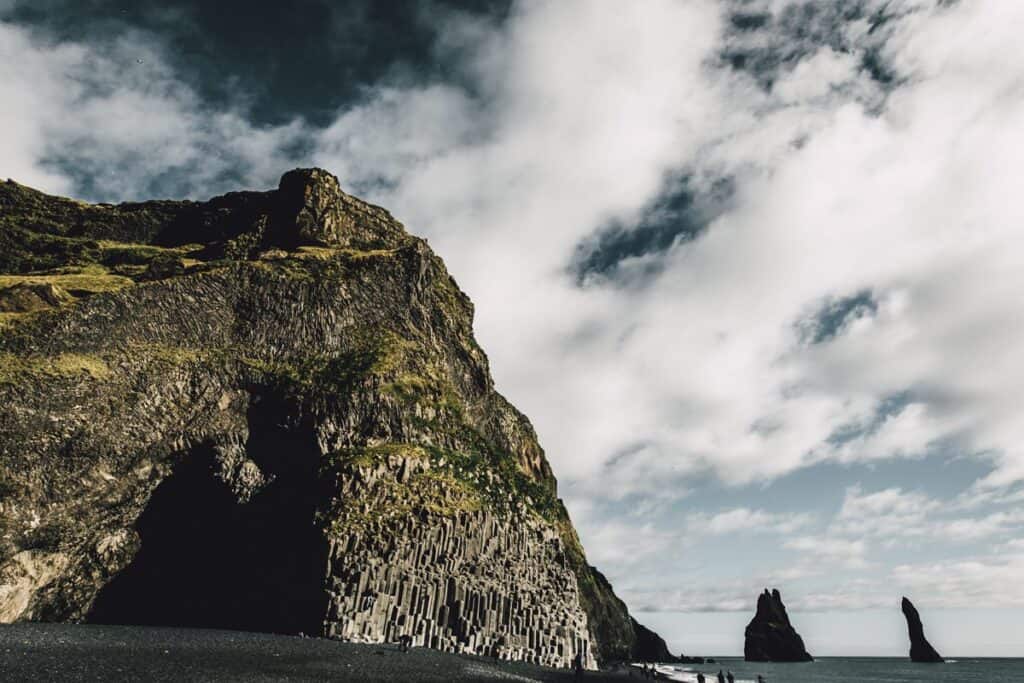
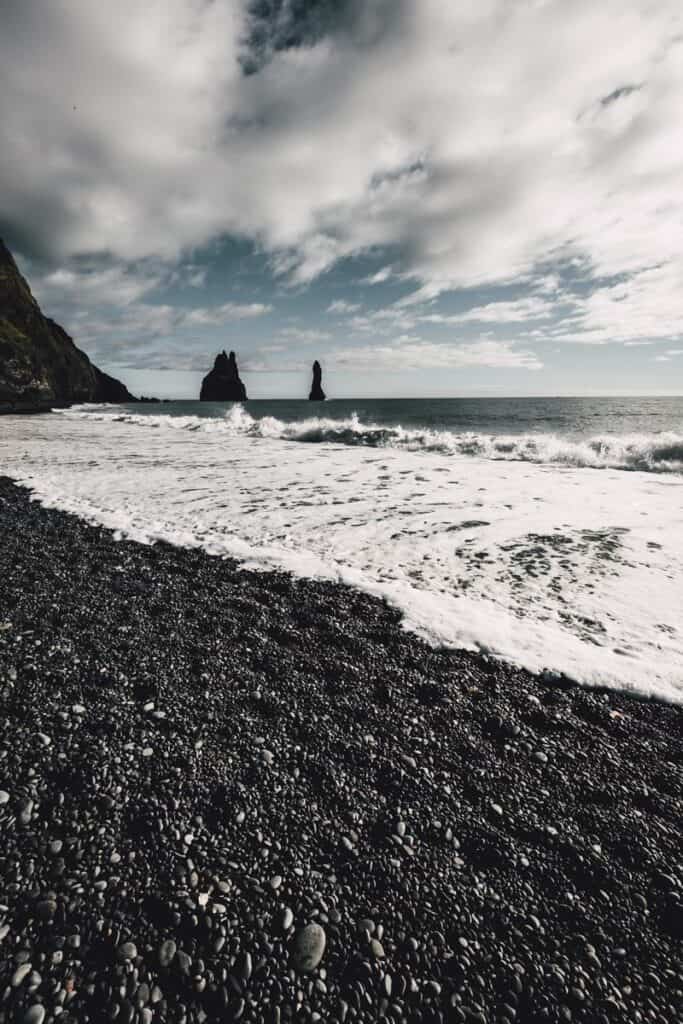
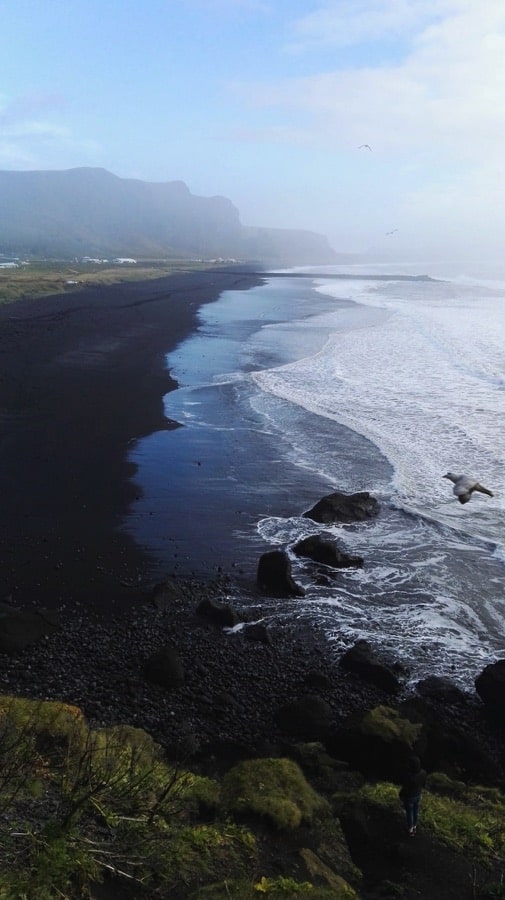
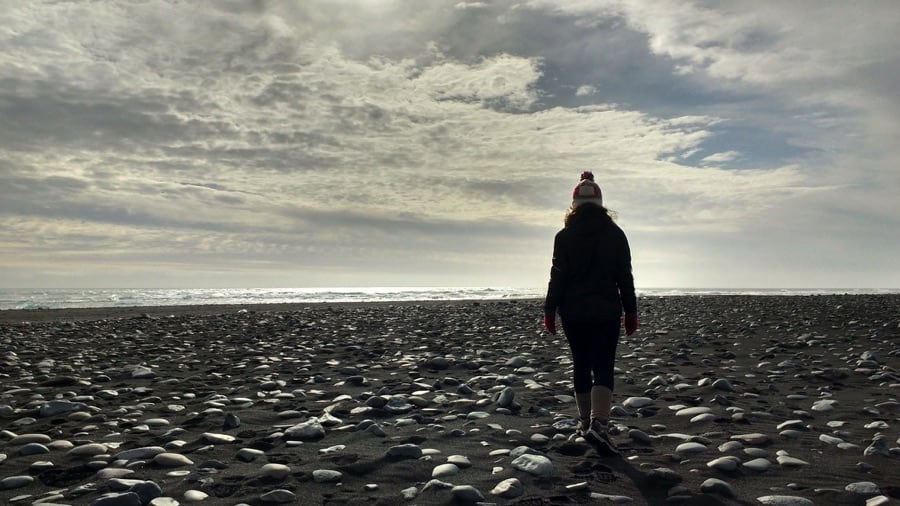
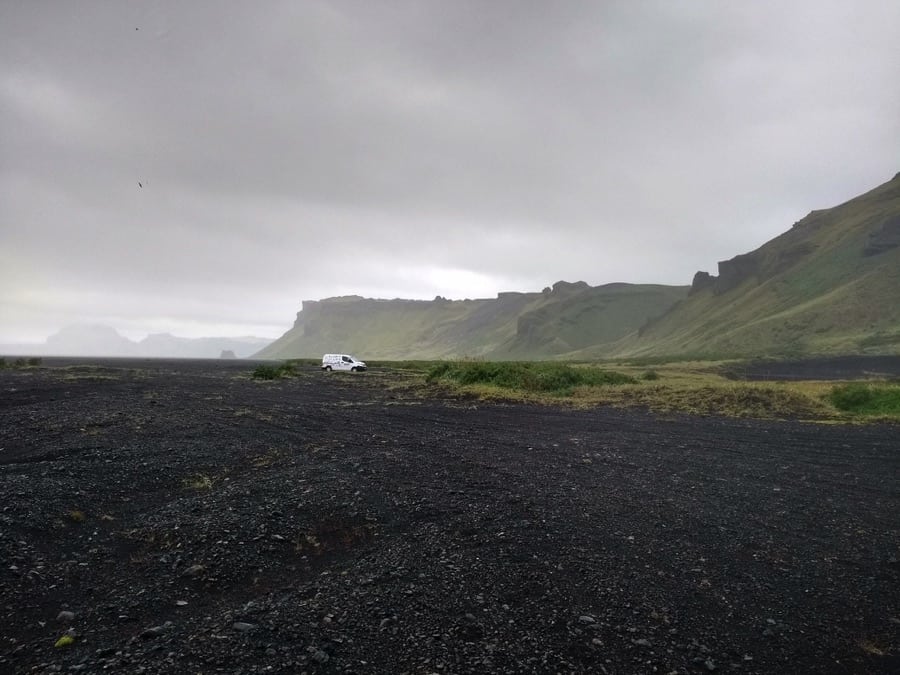
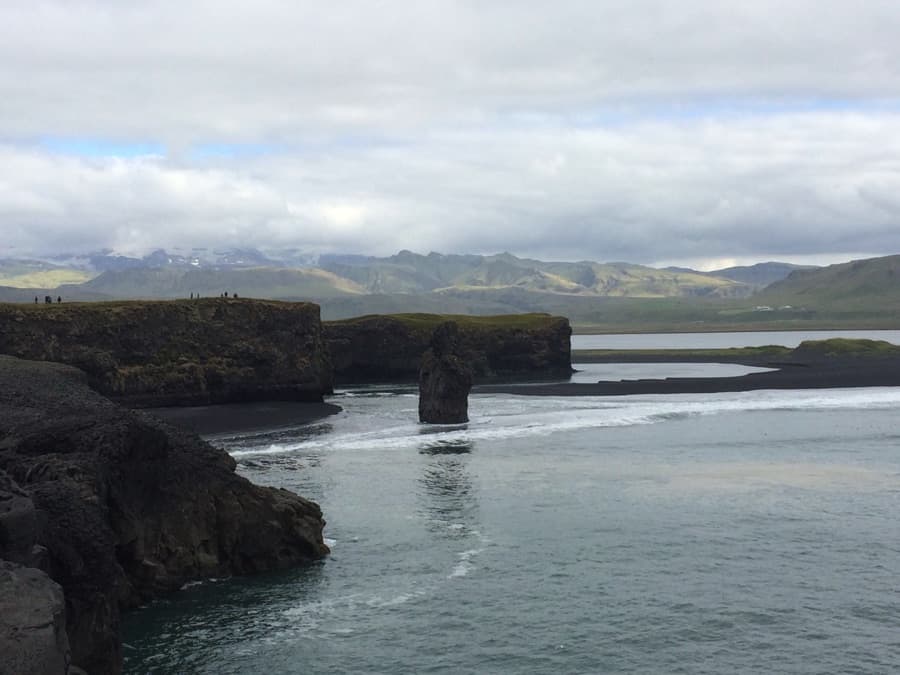
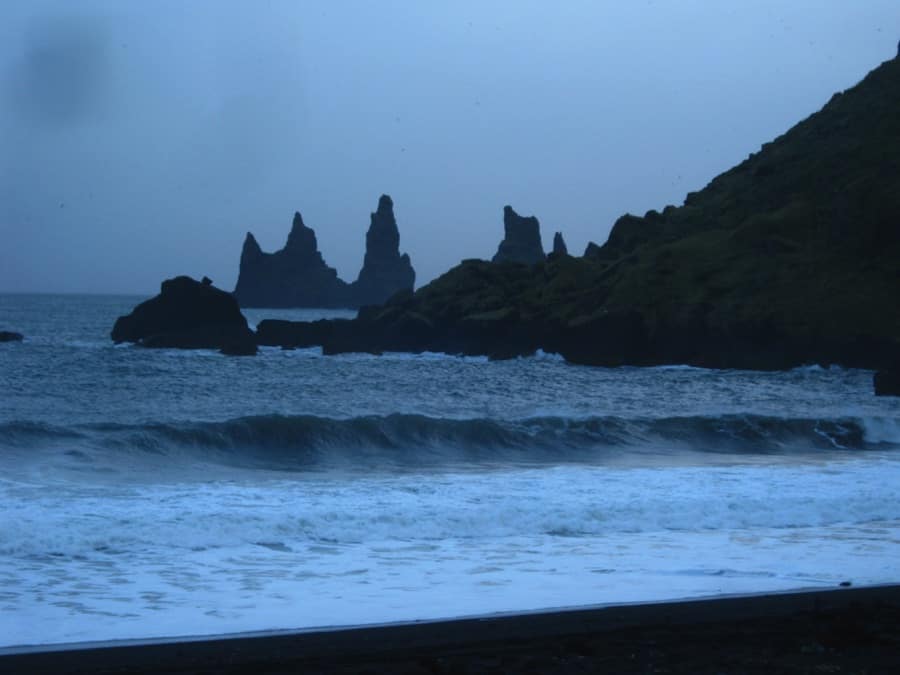
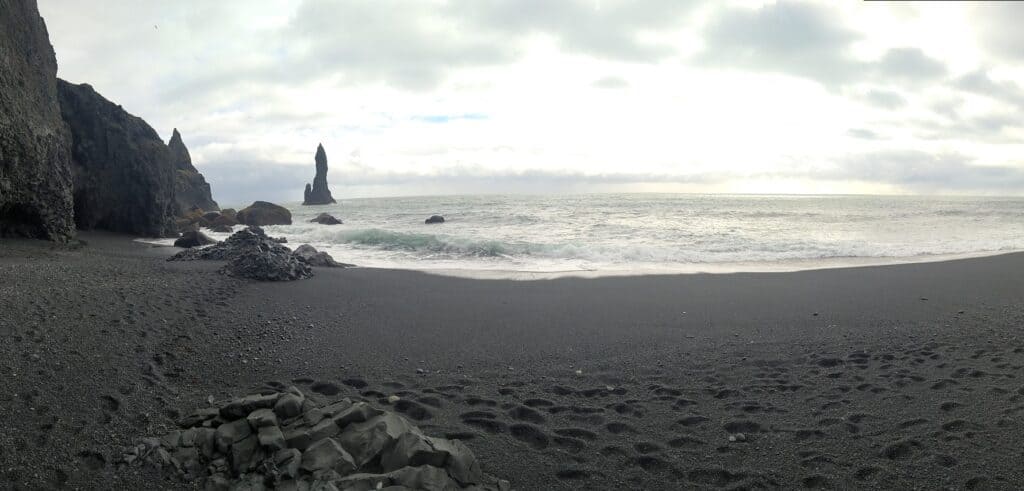
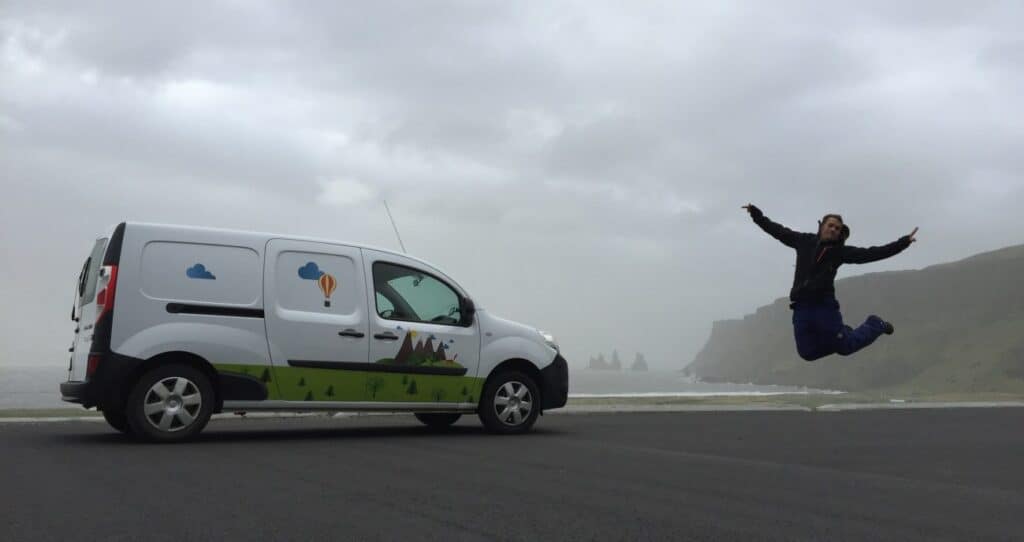
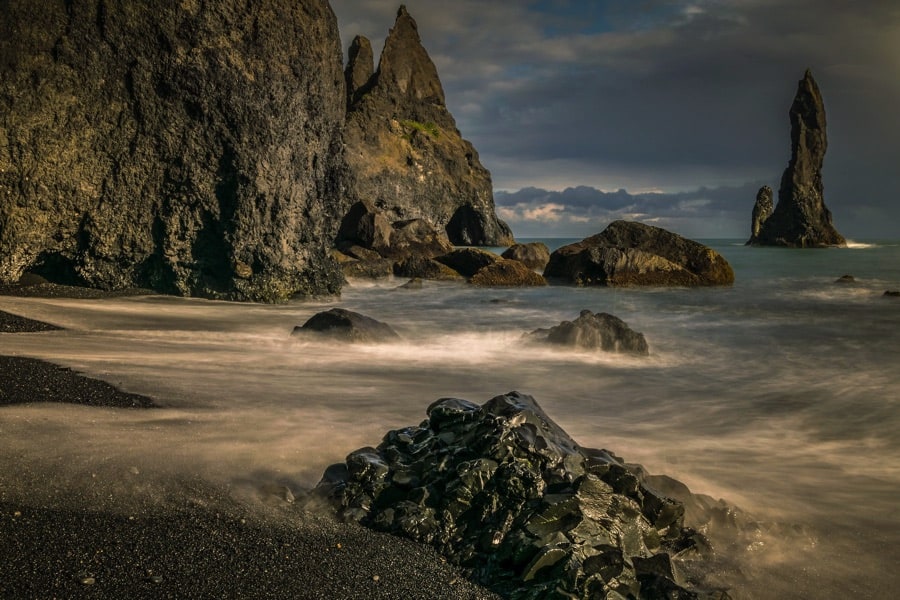
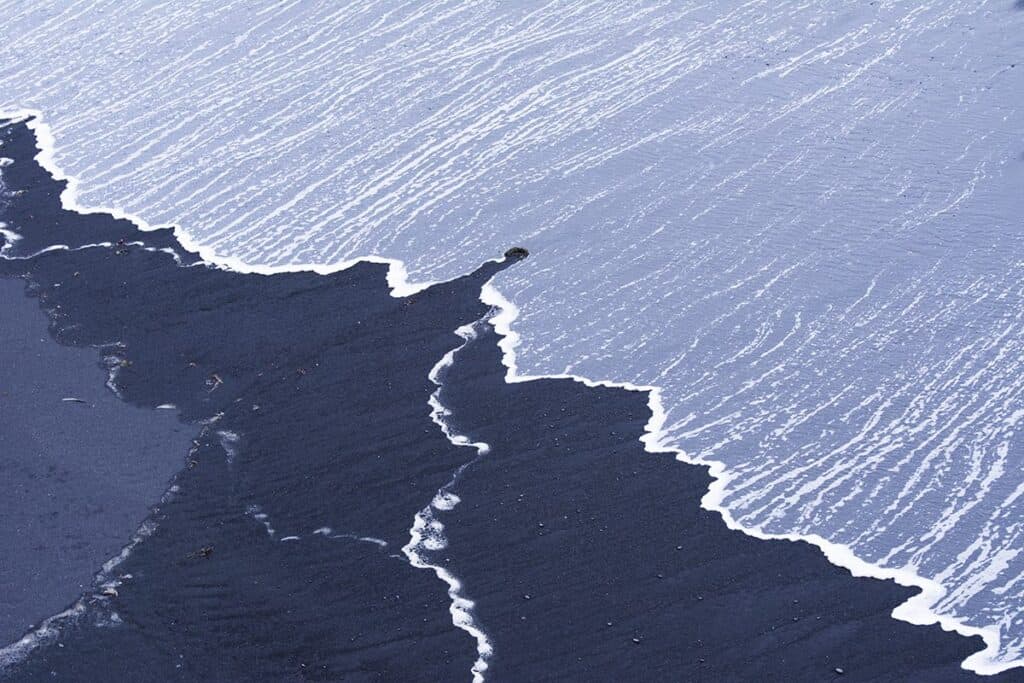
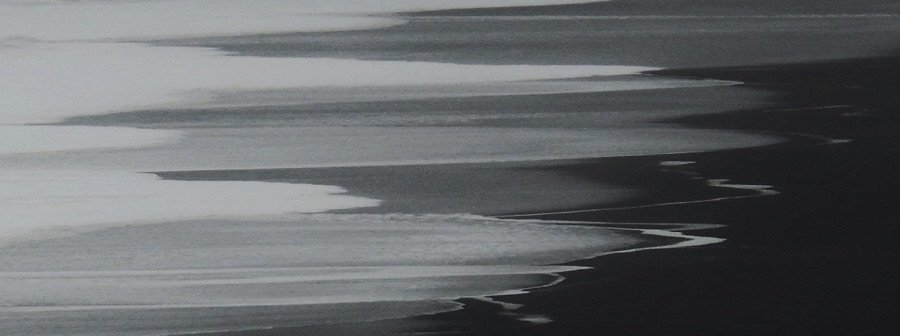
Iceland’s black sand beaches form from volcanic rock — mainly lava and basalt — that waves, weather, and erosion break down over centuries. The result is dark sand or pebbles that give Iceland’s coastline its distinctive, dramatic look.
Are black sand beaches safe to visit?
Most of them, yes — if you stay aware of your surroundings and follow posted signs. The risk varies significantly by beach. Reynisfjara is the one that requires the most caution; the others are generally easier to visit safely. We cover Reynisfjara’s specific rules in detail in the safety section below.
Best Black Sand Beaches in Iceland
1. Reynisfjara
Reynisfjara sits about 188 km/117 miles (2.5 hours) southeast of Reykjavík, just west of Vík on the South Coast. It’s Iceland’s most visited black sand beach and the one most people are picturing when they ask about black sand in Iceland.
The beach runs along the base of basalt hexagonal columns — geological structures formed when lava cools slowly and evenly. The Reynisdrangar sea stacks rise from the water just offshore, and on clear days the combination of black sand, white spray, and dark cliffs makes for striking scenery. On most days at Reynisfjara, you can also count on unpredictable Atlantic surf.
What’s changed in 2026: In February 2026, sustained easterly winds drove powerful waves toward the South Coast, stripping away a large section of the beach’s sand. The flat buffer zone between the visitor area and the water — the space that used to give people a chance to retreat from incoming waves — was significantly reduced. As of March 2026, tides have returned much of that sand, but conditions continue to change. The Hálsanefshellir cave, previously accessible by walking along the beach, is no longer reachable and is essentially underwater during high tide.
Check the current access status at SafeTravel.is before visiting. The Reynisfjara warning light system (yellow/orange/red) at the beach entrance gives a live read on wave conditions each day.
Visit Reynisfjara if: It’s on your South Coast route, you’re a first-time Iceland traveler, or you specifically want to see basalt columns and Reynisdrangar. Allow 45–60 minutes.
Shorten or skip it if: The warning light is red, the buffer zone is narrow, you have young children, and conditions are rough, or weather and daylight make it a poor use of the drive. It’s better to skip the beach and return another time.
2. Víkurfjara — the Vík beach
Víkurfjara is the black sand beach that runs in front of the village of Vík on the South Coast, just a few kilometers east of Reynisfjara. It’s less dramatic than Reynisfjara and sees fewer visitors, which also means it’s a more relaxed stop if you’re already based in Vík for the night.
The ocean safety rules are the same here — no swimming, no turning your back on the water. But it pairs well with an overnight in Vík. If you’re doing a South Coast route by camper van, Vík is a natural stopping point: there’s fuel, food, and services, and the beach is a short walk from the center.
3. Sólheimasandur
Sólheimasandur is a wide black sand plain on the South Coast, about 8 km (5 miles) east of Skógar along Route 1. It’s best known for the wreck of a US Navy Douglas DC-3 that made an emergency landing here in 1973. The aircraft has sat on the sand ever since, and it’s become one of Iceland’s most photographed subjects.
This is not a quick beach stop. The parking area is on Route 1, and from there it’s a 4 km (2.5 mile) walk across a flat, exposed black sand plain to reach the wreck — roughly 45–60 minutes each way. There’s no shelter, and the terrain is open to wind and weather, regardless of season. A paid shuttle runs daily from 10:00 am to 5:00 pm for those who’d rather not walk (around $26 one-way, with reductions for children). Allow at least 2–3 hours for the return walk, or 1.5 hours if you take the shuttle both ways.
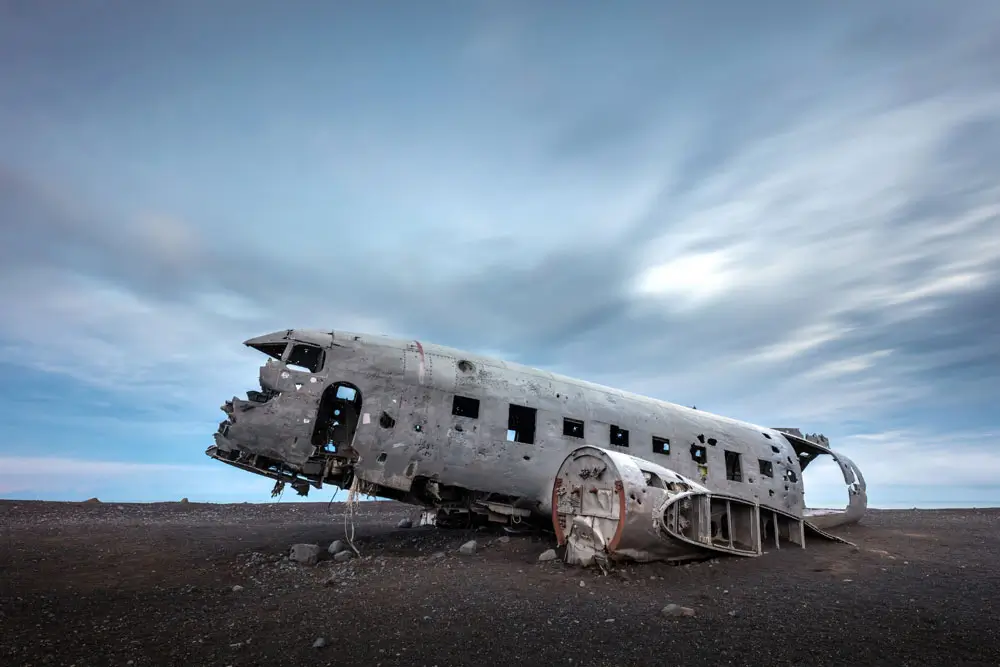
It’s a worthwhile stop for photographers and travelers who have a full South Coast day. It’s not ideal for families with very young children unless you’re using the shuttle, and it’s not the kind of stop you can rush.
4. Diamond Beach
Diamond Beach sits at the mouth of Jökulsárlón Glacier Lagoon, in the southeast of Iceland on the Ring Road — about 379 km/236 miles (roughly 4 hours and 40 minutes without stops) from Reykjavík. Icebergs calve from the Breiðamerkurjökull Glacier into the lagoon, drift out to sea, and wash back ashore on the black sand as chunks of translucent blue-white ice. That’s the image that gives the beach its name.
The ice doesn’t arrive on a schedule, but low tide tends to strand more of it on the sand. Early morning and late afternoon give the best light for photography. Summer brings more frequent calving and larger chunks due to glacier melt; winter ice tends to be denser and more intensely blue. Don’t count on a beach full of ice on any given day — it depends on wind, tide, and recent calving activity.
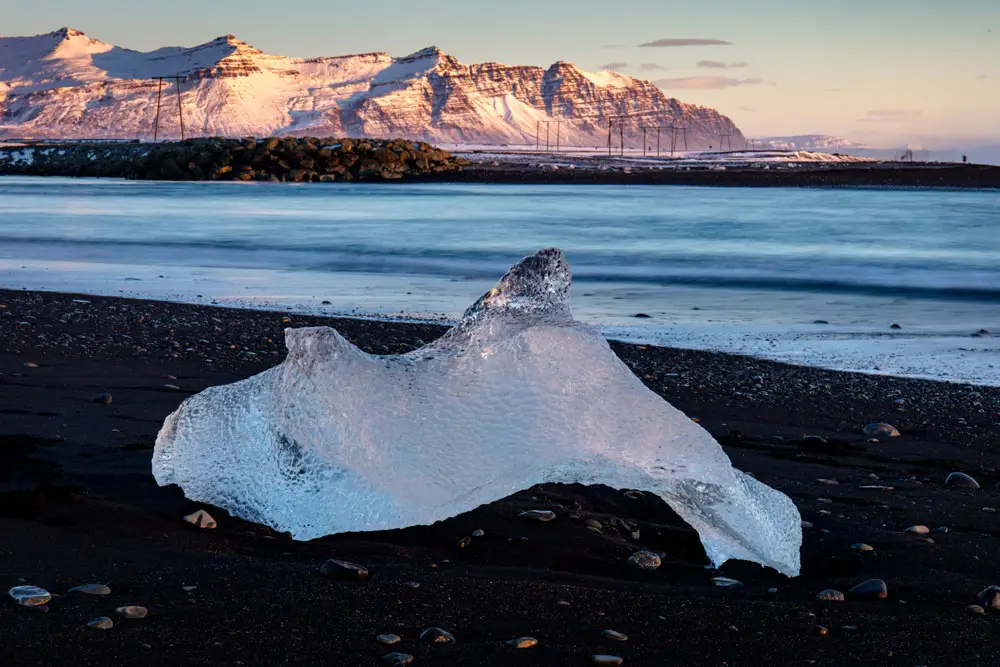
Do not climb on the ice. Chunks can flip or roll without warning, and the surf here is cold and strong. This is a Ring Road stop that pairs naturally with a visit to the lagoon itself — allow 30–60 minutes for the beach, more if you’re combining it with a lagoon boat tour.
5. Djúpalónssandur
Djúpalónssandur is on the southern tip of the Snæfellsnes Peninsula, roughly 170 km/106 miles northwest of Reykjavík and about 2 hours’ drive. It’s a different kind of black beach — not fine sand like Reynisfjara, but a cove of dark basalt pebbles that rolls down to a sheltered bay. The rusted remains of a British trawler, the Épine, which wrecked here in 1948, are scattered across the rocks near the shoreline.
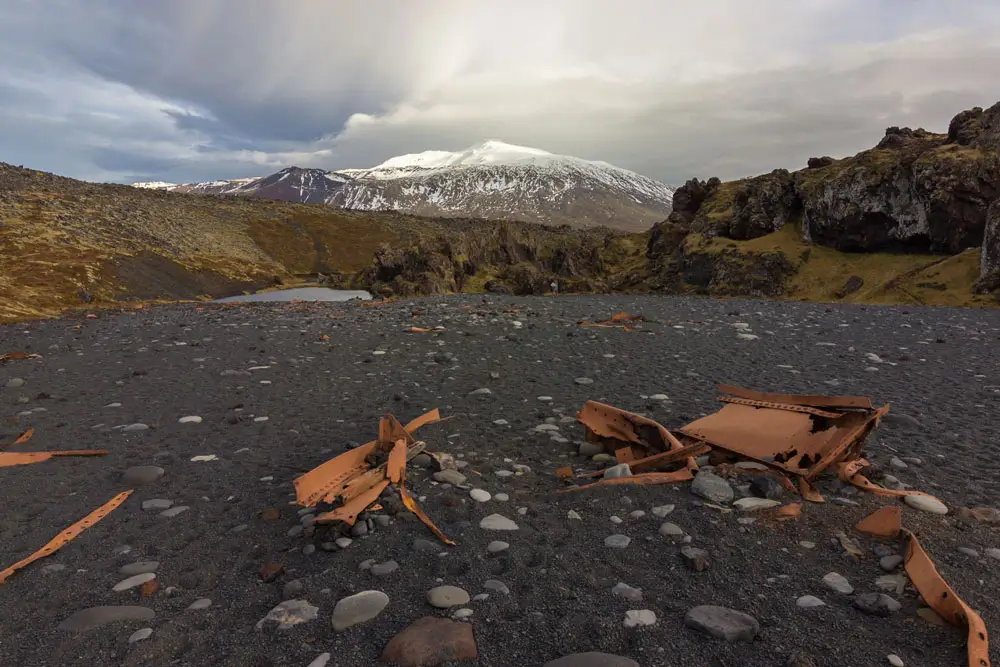
The most distinctive feature is the four lifting stones used historically to assess the strength of fishermen competing for crew positions. The stones are named by level: Amlóði (useless) at 23 kg, Hálfdrættingur (weakling) at 54 kg, Hálfsterkur (half strength) at 100 kg, and Fullsterkur (full strength) at 154 kg. Fishermen needed to lift the 100 kg stone waist-high to qualify. Today, visitors are welcome to try.
Admire the shoreline from the rocks — do not go into the surf. The swell at Djúpalónssandur is unpredictable, and the pebbled beach drops away steeply. Access is via a paved road off Route 574 with a free car park. Allow 30–60 minutes for a stop here.
6. Stokksnes
Stokksnes is on Iceland’s southeast coast, roughly 30 km (19 miles) south of Höfn on the Ring Road. It’s one of the most photographed spots in Iceland for a reason: the black sand foreground, shallow reflective pools, and the pyramid-shaped Vestrahorn mountain that rises directly behind make it an almost unreasonably scenic location.
Access is through the Viking Café on the approach road — entry costs around 1,000–1,100 ISK per person (~$8) and is payable at the café or an automated machine outside if you arrive outside opening hours (8 am–8 pm in summer). The fee gives access to two parking areas near the beach and the Viking Village set used in a 2011 film production.
Stokksnes rewards travelers who have time to wait. The light changes constantly, and the reflective pools in the foreground disappear at low tide. If you’re driving the Ring Road and want a photography stop in the southeast, factor in at least 1–2 hours here — longer if you want to shoot sunrise or sunset. Wind can be intense; dress for it.
7. Sandvík
Sandvík is a black sand beach on the Reykjanes Peninsula, roughly 50 km southwest of Reykjavík — a short drive from Keflavík Airport. Its lava-field backdrop and cinematic qualities have made it a filming location, but for most travelers it’s most useful as an arrival or departure add-on: a genuine black sand beach experience close to the airport before a flight, or on the first day of a trip without committing to a longer drive.
The surf at Sandvík is strong, and the water is cold. Do not enter the ocean here. Treat it as a look-and-photograph stop rather than a walk-on-the-sand experience. Wind off the Atlantic here is often significant.
A note on Mývatn and Skarðsvík
Mývatn is a volcanic lake in northern Iceland with striking geology, but it’s not a black sand beach destination. If you’re on a longer loop through the north, the area is worth a stop for its lava formations — just not as a black beach detour.
Skarðsvík, on the northern tip of Snæfellsnes, is primarily a golden sand beach, unusual for Iceland. If you’re doing the Snæfellsnes loop, it’s a nice contrast to Djúpalónssandur, but categorizing it as a black sand beach would mislead travelers.
Black Sand Beach Safety in Iceland
Reynisfjara safety rules
Reynisfjara has claimed at least six lives since 2013, including a nine-year-old child in August 2025. Every one of those deaths involved the same hazard: sneaker waves that crossed the beach faster than people could retreat.
Sneaker waves at Reynisfjara are not predictable from watching the sea. The ocean can look calm for ten or twenty minutes, and then a set arrives that runs much further up the sand than the previous waves. The buffer zone between the visitor area and the waterline is narrower in 2026 following coastal erosion, which means the reaction time for anyone standing too close is even shorter than it used to be.
The rules are simple, but they require actual discipline:
- Stay at least 30 meters from the water at all times
- Never turn your back on the sea
- Check the warning light at the entrance before stepping onto the beach
- When the light is red, the cave and basalt column area are closed — respect the closure
- Keep children close and within arm’s reach throughout
- If conditions are rough, view from the designated platform or skip the beach
SafeTravel.is and Visit Iceland both state clearly that Reynisfjara is unpredictable, regardless of how it looks. The warning light system helps, but even yellow, the lowest level of hazard, means you must stay alert and be cautious. Sneaker waves can arrive at any light level. Get more safety tips for your trip to Iceland.
What to check before driving to a black sand beach
A camper van gives you the flexibility to adjust the plan, which is exactly what you should do when conditions make a beach stop unsafe.
Before any beach stop on this list, check:
- Weather forecast: vedur.is (Icelandic Met Office) for Iceland conditions
- Road conditions: road.is for road status and closures
- Wave and surf warnings: SafeTravel.is for live beach and coastal alerts
- Daylight: Iceland’s daylight varies significantly by season — in winter, a 3 pm arrival at a remote beach means photographing in the dark
- Group: A stop that works for two adults with walking gear may not work for a family with a toddler in strong wind and cold
If a beach warning is active or the light is red at Reynisfjara, find an alternative stop and come back to it later if the weather window opens. The flexibility is the point of a self-drive tour in a camper van.
Visiting Iceland’s Black Sand Beaches by Camper Van
Best camper van routes for black sand beaches
- South Coast route: Reynisfjara, Víkurfjara, and Sólheimasandur all sit within the same 30 km (19 mile) stretch of South Iceland, roughly 2–3 hours from Reykjavík. This is Iceland’s most-traveled road trip corridor, accessible in standard camper vans throughout summer and most of the shoulder seasons. A dedicated South Coast day or overnight easily covers all three.
- Ring Road (southeast): Diamond Beach and Stokksnes are both on or just off the Ring Road in the southeast, roughly 380–400 km (236-249 miles) from Reykjavík. Most travelers combine them with a Jökulsárlón Glacier Lagoon visit on a multi-day Ring Road trip. Standard camper vans handle the access roads to both.
- Snæfellsnes Peninsula: Djúpalónssandur is a 2-hour drive from Reykjavík, accessed via Route 574 on the southern side of the peninsula. The Snæfellsnes loop makes for an excellent 1–2 day camper van side trip from Reykjavík, pairing the beach with the glacier and other peninsula highlights.
- Reykjanes Peninsula: Sandvík is close to Keflavík Airport and suits a half-day Reykjanes loop either at the start or end of a trip. Reykjanes roads are paved and accessible for all camper vans.
Whether you need a 4×4 camper van depends less on which black sand beach you’re visiting than on what else is in your itinerary. South Coast, Ring Road, and Snæfellsnes beaches are all accessible in standard camper vans on paved roads. If you’re adding Highland routes, F-road detours, or winter travel to the same trip, a 4×4 is worth considering for those elements of the journey, not the beaches themselves.
Planning a road trip to a black sand beach? Choose a camper that fits your route, season, and group size.
Check AvailabilityFAQs about black sand beaches in Iceland
What is the famous black sand beach in Iceland called?
The most famous black sand beach in Iceland is Reynisfjara, near Vík on the South Coast. It’s known for black volcanic sand, basalt columns, Reynisdrangar sea stacks, and powerful waves. It’s one of Iceland’s most recognized coastal stops, but it also requires careful safety awareness.
Where is the black sand beach in Iceland?
When people ask about ‘the’ black sand beach in Iceland, they usually mean Reynisfjara near Vík on the South Coast. Iceland also has black sand or volcanic beaches in the southeast (Diamond Beach, Stokksnes), Snæfellsnes (Djúpalónssandur), Reykjanes (Sandvík), and East Iceland.
Why are Iceland’s beaches black?
Many Icelandic black sand beaches are formed from volcanic rock. Lava and basalt cool into dark rock, then waves, weather, and erosion gradually break that rock into black sand or pebbles. This is why Iceland’s volcanic coastlines look so different from pale sand beaches elsewhere.
Is Reynisfjara dangerous?
Yes, Reynisfjara can be dangerous if visitors go too close to the water. Sneaker waves can rush far up the beach without warning, and the currents are strong. Stay at least 30 meters back, follow the warning light at the entrance, keep children close, and never turn your back on the ocean. At least six people have died here since 2013.
Can you swim at black sand beaches in Iceland?
Do not swim at Reynisfjara, and do not treat Iceland’s black sand beaches like typical swimming beaches. Some coastal areas may look calm, but cold water, strong currents, and sudden waves can make them unsafe. Follow local signs and only enter water where it is clearly permitted and safe. If you’re keen to enjoy a swim in Iceland, plan a visit to a nearby swimming pool or hot spring.
Can you visit Iceland’s black sand beaches by camper van?
Yes, most black sand beaches fit well into an Iceland camper van route — especially along the South Coast, Ring Road, Reykjanes, and Snæfellsnes. The right plan depends on your season, daylight, group size, and vehicle. Check the weather and road conditions before adding remote stops.