
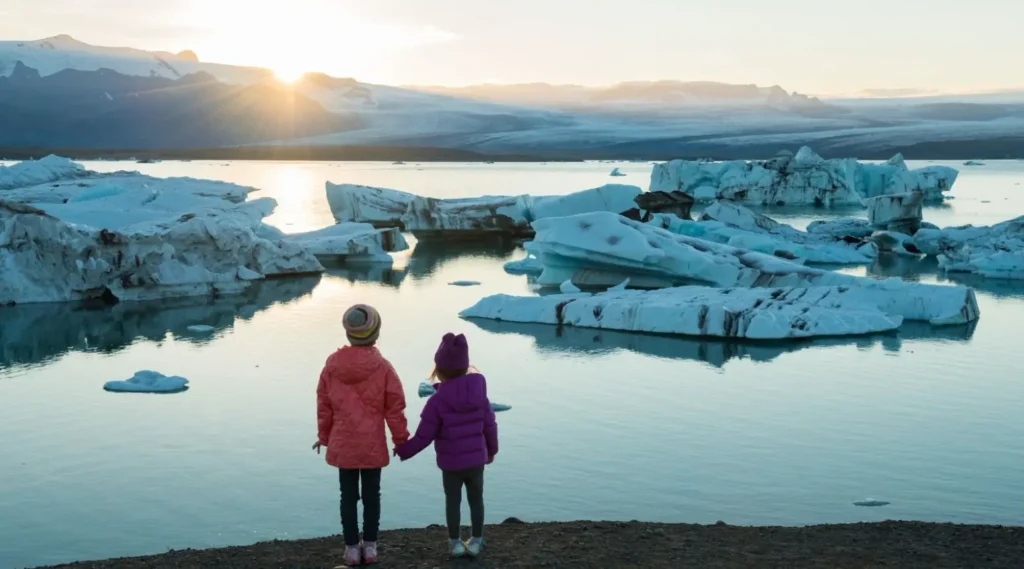
A camper van trip in Iceland can work very well for a family. The key is choosing a vehicle that suits your real routine, not just the number of beds listed on the page. The smallest camper might sleep everyone on paper, but it can feel very different once you add child seats, luggage, wet jackets, snack breaks, bedtime and a late-night walk to the campsite bathroom.
For most parents, the better question isn’t “does this camper sleep four?” – it’s “will this setup still work on a rainy evening after a full day on the road?” Choose enough indoor space for your children’s ages, your bags, and the route you want to drive. Then give yourselves shorter driving days and campsites with facilities that make the routine easier.
At a Glance
• Choose comfort and usable space, not only the number of beds.
• Confirm child-seat compatibility with Rent.is before booking.
• Treat campsites as part of your accommodation plan, not simply somewhere to park.
• Keep driving days realistic and have a wet-weather fallback.
Is a Camper Van in Iceland a Good Choice for Families?
For many families, yes. A camper van keeps transport, snacks, spare clothes and a place to rest in one place. You can stop when a child needs a break, make a simple meal without looking for a restaurant, and avoid unpacking at a new hotel room every evening.
The trade-off is less space and fewer fixed routines. Iceland’s weather can change quickly, and a compact vehicle feels much smaller when everyone needs to be inside. Campsite showers and toilets may be a short walk away. Your route may need to change with the weather or road conditions.
A family camper van trip works best when you are happy to slow down. Pick fewer overnight stops. Leave room for snacks, naps, weather delays and the odd day when the plan changes. Before each drive, check official road notifications and local travel conditions. The Icelandic Road and Coastal Administration and SafeTravel Iceland are useful starting points.
Choosing the Right Family Camper Van in Iceland
Every family is different, and every trip to Iceland is different. So what works for one family may not work so well for yours. Having the facts before choosing the camper for your trip can make all the difference.
Sleeping capacity is not the same as comfortable family space
Beds answer only one part of the question. Families also need a safe place for every passenger to sit while driving, somewhere for bags, dry clothes and food, and enough room to get ready for bed without everyone waiting their turn.
A compact camper can make sense for a short trip with one child, especially if you pack lightly and expect to spend most of your time outside. For a longer route, younger children, more luggage, or several rainy evenings, a larger camper or motorhome can be the more practical option. The goal is not to choose the largest vehicle by default. It is to choose one that leaves enough usable space for your family’s routine.
| Family setup | Prioritize | Confirm before booking |
| Two adults + one young child | Bed layout, child-seat fit and indoor storage | Can the child seat fit safely? Where will bags go? |
| Family of four | Separate sleeping space, headroom and storage | Will everyone sleep comfortably for several nights? |
| Family of five or older children | Larger living space, luggage capacity and campsite routine | Is a motorhome the more practical choice? |
Before comparing vehicles, make a short list of your non-negotiables: the number and type of child seats, how many suitcases you’ll have, whether anyone needs an easy nighttime route to the door, and how much indoor seating you will need if it rains. If a vehicle page does not answer one of those points, ask before you pay.
Child seats and car seats: confirm the details before booking
Child-seat planning should never be left until pickup. Vehicle layouts differ, and a seat that fits safely in one seating position may not fit in another. The number of beds also does not prove that there are enough compatible passenger seats for the children traveling with you.
Before booking, tell the rental company the children’s ages, heights or weights, the number of seats you need space for, and whether you plan to bring your own seats. Ask which seating positions are suitable, which restraint system each vehicle uses, and whether a rear-facing seat is compatible with the vehicle you are considering (if required). If you are renting seats, confirm what will be provided and whether the setup changes the usable seating capacity.
Keep the same questions in your pickup checklist. Fit the seats before loading the vehicle fully, make sure everyone can buckle in comfortably, and check that the driver still has clear visibility and movement. A few minutes at pickup is much easier than trying to solve a seating problem after you have left.
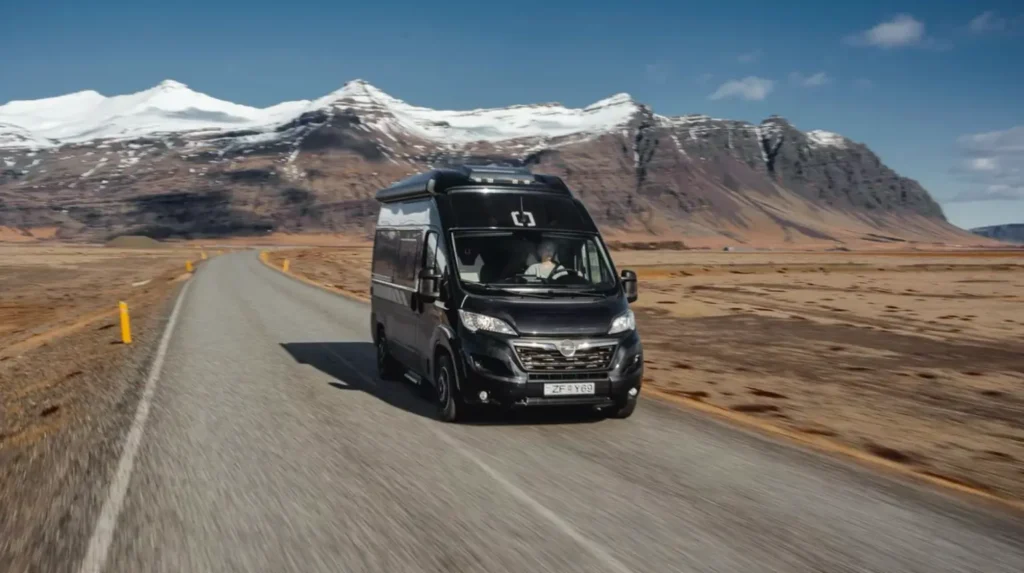
Camper van or motorhome: which works better with kids?
A smaller camper van can suit a short summer trip, a family with one child, or older children who are comfortable sharing compact sleeping space. It can be easier to handle and may be all you need if your priority is daytime exploring.
A larger camper or motorhome is typically the best choice for a family of four or five, a longer trip, younger children, more bags and wetter weather. The extra value is often in the routine: somewhere to change clothes, sit down for a meal, keep wet gear out of the sleeping area and move around while someone gets ready for bed.
Explore our motorhome rentals hub and compare the actual layouts, seats and beds before making a decision. A larger vehicle is not automatically right for every route, but more indoor space can make a family trip calmer when the weather keeps you inside.
Sleeping, Meals and Rainy Evenings
A family camper van trip feels easy when the weather is dry, and everyone is outside. The test comes after a wet afternoon, when boots, waterproofs and towels need somewhere to go, and everyone wants dinner at the same time.
Create a simple evening routine before the first night. Keep a bag by the door with headlamps, waterproof layers and anything needed for a bathroom trip. Put wet gear in one consistent place and use quick-dry towels where possible. Choose meals that need few pans and little preparation, especially on days when you arrive late.
Think about bedtime, too. Can the children settle while adults still need to move around? Is there somewhere to sit once beds are made up? Can one adult take a child to the washroom without waking the rest of the family? These practical points matter more than a long equipment list.
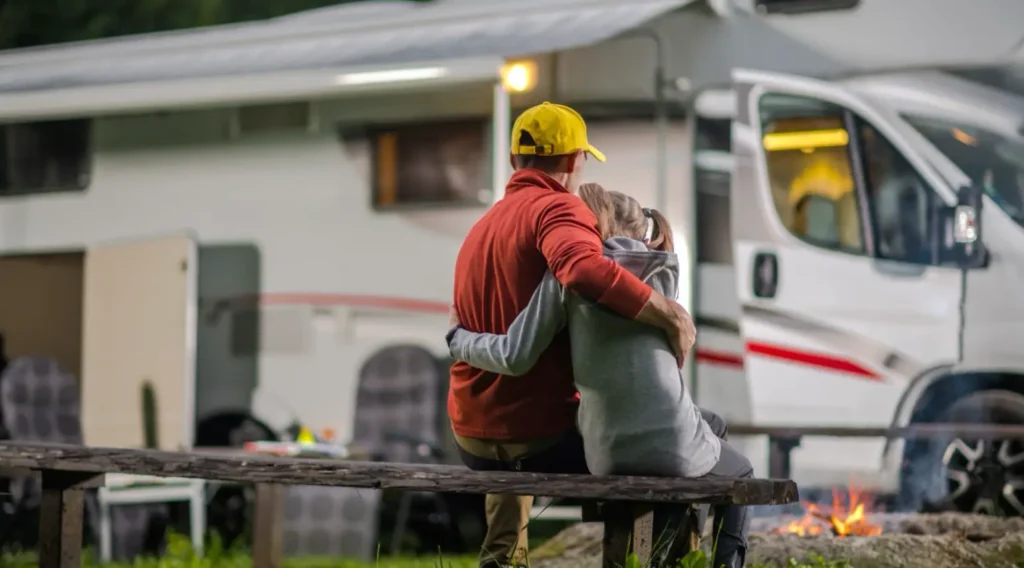
Campsites with Kids: What to Look For
A campsite is part of your accommodation decision. For a family, it can make the difference between a straightforward night and an awkward one. Facilities vary, and opening dates and check-in arrangements can change by season, so check each site before you travel.
Use the Iceland campsite guide and Iceland campground map to shortlist stops, then look at the individual campsite details. For each night, ask whether the facilities match your family’s routine and needs rather than assuming that every site offers the same setup. Things to look for include:
• Toilets and showers that are easy to reach from your pitch
• Washroom access that works for young children
• Cooking, washing-up or indoor communal space if the weather turns
• Laundry for a longer trip
• A covered place to eat or change out of wet clothes
• Space for children to have a short walk or play after driving
• Opening dates, arrival arrangements and any services you will need that night
Families should plan for campsite rules, not work around them. Camping choices in Iceland are governed by local rules and landowner permissions. Use the Environment Agency of Iceland’s current guidance and the campsite’s own information when finalizing overnight stops.
Family-Friendly Routes for a Camper Van Trip
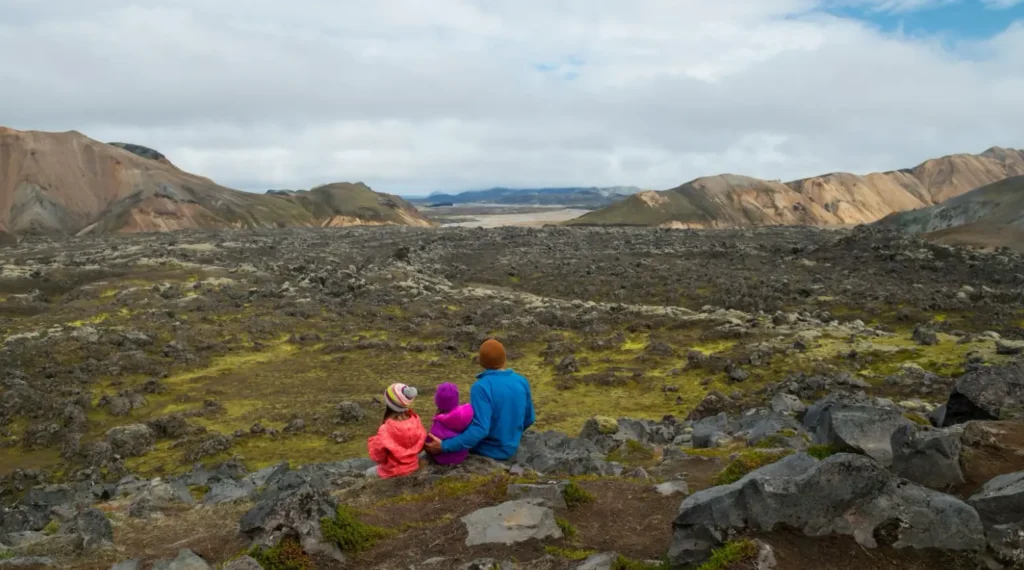
The best route for a family is usually the one that avoids changing campsites every night, with more time spent at each stop. You do not need to complete the whole Ring Road to have a proper Iceland trip. A shorter route with room for breaks is often better than a packed schedule built around long drives.
The Golden Circle for a short family trip
The Golden Circle works well when time is limited. You can keep the drives manageable and use the camper for snacks, rest or a change of clothes between stops. It is a sensible option for the first days of a trip, when everyone is still adjusting to the vehicle and the routine.
The South Coast for waterfalls, beaches and flexible stops
The South Coast gives families big sights without committing to a full-island itinerary. Treat each day as a choice between a few stops, not a checklist. Plan around the children’s energy levels and leave time for an unplanned break or two. Take a look at our South Iceland travel guide for regional ideas.
The Ring Road: give yourselves enough time
The Ring Road can work well with children, but it is not a route to rush. Build in occasional two-night stops, use long driving days sparingly, and have a shorter alternative ready if the weather changes. Our 7-day Ring Road itinerary is a useful starting point, but families should adjust the pace rather than trying to copy every stop.
How to Keep a Family Camper van Trip Flexible
A flexible itinerary is not an unplanned one. It is a route with enough slack to change course without losing the whole day. Choose one main activity per day. Buy groceries before remote stretches. Save the longest drives for days when you have a clear reason to move on, not because your plan says you should.
Keep a short list of weather-proof alternatives near each overnight stop: a pool, a café, a museum, an indoor visitor center, or simply a quieter campsite evening. Check road and weather conditions before setting off, and be willing to stay put when that is the safer, less stressful decision.
What to Pack for an Iceland Camper Van Trip with Kids

Pack for the camper routine, not only the day trips. Waterproof outer layers, spare socks, warm indoor layers, and sleepwear all help. Bring a small bag for bathroom and shower trips, refillable water bottles, snacks, simple entertainment that works offline, quick-dry towels and a compact first-aid kit. For younger children, keep car-seat essentials and a change of clothes within easy reach rather than buried under luggage.
Use the Iceland road-trip packing list as a starting point, then add the items that make your own family’s days and evenings simpler. The aim is not to pack everything. It is to avoid needing one specific item while it is raining and everyone is tired.
Common Family Camper Van Mistakes to Avoid
• Booking by berth number alone.
• Underestimating luggage and wet-weather storage.
• Planning long drives every day.
• Assuming every campsite has the same facilities.
• Leaving child-seat questions until pickup.
• Treating a full Ring Road itinerary as essential.
Choosing a Camper for Your Family Trip
Start with your route, season, children’s ages, child-seat needs, and luggage. Then think honestly about how much indoor space your family needs to sleep, eat and handle a wet evening without feeling squeezed in.
Browse our fleet to compare larger camper van and motorhome options, look closely at the layouts, and confirm the child-seat setup before you book. Once you’ve found a vehicle that fits your actual routine, you can check availability for your travel dates with more confidence.
FAQs
Is a camper van in Iceland suitable for young children?
It can be, provided the vehicle has suitable seating for the child seats you need and enough usable space for your family’s routine. Camper vans often make flexible stops easier because snacks, spare clothes and a place to rest are always nearby. The key is not to choose based on bed numbers alone. Confirm the seat positions, sleeping setup and where luggage will go before booking.
What size camper van does a family of four need in Iceland?
There is no single answer because a family of four can mean two adults and two toddlers, two adults with older children, or a mix of ages and luggage needs. As a starting point, look for separate sleeping space, adequate passenger seating, storage for bags and wet gear, and room to move around at bedtime. For a longer trip or younger children, a larger camper or motorhome may be easier to live in.
Can we use child seats in a camper van in Iceland?
You should confirm this directly with your rental company for the exact vehicle you are considering. Ask about compatible seating positions, restraint systems, the type of child seat you plan to use, and whether a rear-facing setup is possible if you need one. Do this before booking, then check the fitted setup again at pickup.
Are Iceland campsites suitable for families?
Many families find campsites a practical part of a camper van trip, but facilities vary. Check the individual site for toilets, showers, washing or cooking space, laundry, opening dates, and anything else your family needs. The campsite is your overnight accommodation, so choose it with the same care you would give a hotel.
Is the Ring Road manageable with children?
Yes, if you give it enough time and avoid turning every day into a long drive. Build in rests, occasional two-night stops and a backup plan for weather changes. A shorter South Coast or Golden Circle route can be a better fit if you have limited time or are traveling with very young children.
Should a family choose a camper van or motorhome in Iceland?
A smaller camper van can work for a short trip or a family comfortable with compact space. A larger camper or motorhome can be more practical for longer trips, younger children, more luggage, and rainy-day downtime. Compare actual vehicle layouts and choose the smallest option that still gives your family a workable daily routine.