
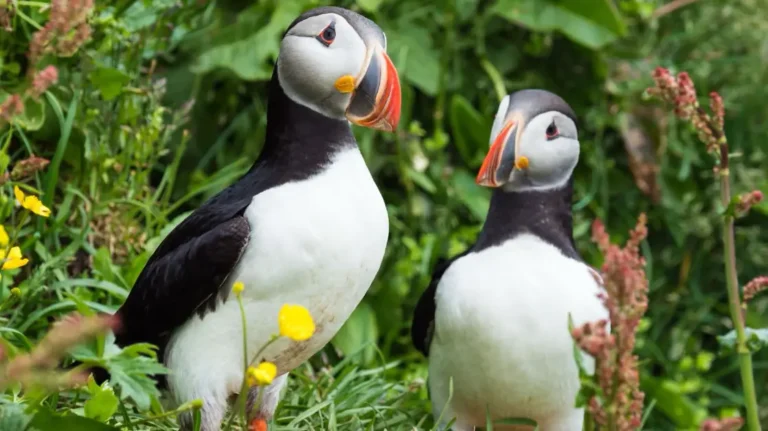
- Puffin Season in Iceland at a Glance
- When Is Puffin Season in Iceland?
- Puffin Season in Iceland by Month
- Best Places to See Puffins in Iceland
- Puffin Watching Itineraries for a Self-Drive Iceland Trip
- Do You Need a Camper Van to See Puffins in Iceland?
- Responsible Puffin Watching: Safety, Ethics & Local Rules
- What If You Miss Puffins?
- Plan Your Puffin Season Iceland Trip
- FAQs About Puffin Season in Iceland
Puffin season in Iceland usually runs from late April or May to mid-August, with June and July offering the most reliable viewing. Puffins come ashore to nest in coastal colonies, then spend the rest of the year at sea. Exact timing varies by location and year.
Puffins visit Iceland every spring and summer to nest, and for a few months each year, the country’s coastal cliffs and offshore islands become some of the best places in the world to watch them. But puffin watching in Iceland takes a little planning. The season has a clear window, the best locations suit different itineraries, and getting the timing right makes a bigger difference than most travelers expect.
This guide covers when puffin season runs, which months give you the best odds, where to go based on your route, how to watch responsibly, and how to build puffin watching into a self-drive Iceland trip.
Iceland hosts more Atlantic puffins than any other country, with several million birds arriving each spring to breed along the cliffs and islands that ring the coastline. Most visitors see them on the South Coast, in the Westman Islands, or on a short boat trip from Reykjavík, but there are good colonies scattered across the country from the Westfjords to East Iceland.
The key variables for a successful puffin trip are your travel dates, your route, and how much flexibility you have built in. A traveler arriving in late June with a camper van and a South Coast itinerary is in a strong position. Someone arriving in early September with a fixed schedule is not. What follows helps you plan around the variables you can control — and set realistic expectations for the ones you can’t.
Puffin Season in Iceland at a Glance
- Puffin season runs from late April or May to mid-August
- June and July are the most reliable months for many travelers
- May and early to mid-August can work with a flexible itinerary
- Late August and September are not months to plan a puffin trip around
- The Westman Islands offer the largest colony; Dyrhólaey is the most accessible; Borgarfjörður Eystri is the best Ring Road stop
- Most locations are self-drive; the Westman Islands and Reykjavík island tours require ferry or boat logistics
- Camper vans must stay at designated campsites; wild camping rules apply everywhere
- Puffins are seasonal wildlife, not a guaranteed attraction; build flexibility into your plan
When Is Puffin Season in Iceland?
Puffins can begin arriving as early as April at some locations, and stragglers may still be present into early September, but neither end of the season is one to plan around. Early arrivals are unpredictable, and by late August, the birds are already starting to leave for the open ocean.
The best time to see puffins in Iceland
The reliable window for puffin watching in Iceland runs from May through to mid-August. Within that window, June and July are the strongest months: colonies are fully active, birds are feeding chicks, and you have the best chance of seeing large numbers at close range.
If your dates are flexible, aim for June or July. If you are traveling in May or early August, puffin watching can still work well as part of a wider Iceland itinerary; just avoid building the whole trip around a single location or a single day.
What puffins are doing during the season
Puffins spend most of their lives at sea. They only come ashore to breed, which is why the nesting season is the only reliable window to see them on land. From late spring, adults return to the same coastal colonies year after year, digging or reclaiming burrows in grassy clifftops and rocky slopes. They pair up, lay a single egg, and spend the summer raising one chick, known as a puffling.
During peak season, the birds are busy: flying out to sea to catch fish, returning to feed their chick, and socializing around the colony. Early morning and evening tend to be the most active periods, as puffins often spend the middle of the day out on the water. That said, colonies can be lively at any point during daylight hours in midsummer Iceland, where daylight runs almost around the clock.
Quick reference: puffin season by confidence level
| Month(s) | Viewing confidence | What to expect |
| June and July | High | Colonies fully active; best chance of large numbers at close range |
| May and early to mid-August | Medium | Sightings likely but variable; works well as part of a wider itinerary |
| Late August and September | Low | Birds leaving for open ocean; any sightings are a bonus |
| October to March | None | Puffins are at sea; not present at Icelandic colonies |
If your travel dates fall in the less reliable window, the rest of this guide will help you plan around that rather than be disappointed by it.
Puffin Season in Iceland by Month
Planning around puffins is easier when you know what to expect at each stage of the season, not just the headline window. The table below breaks it down month by month, with viewing likelihood, what the birds are typically doing, and a note on self-drive planning for each period.
Month-by-month breakdown
| Month | Viewing likelihood | What’s happening | Best locations to consider | Self-drive planning note |
| April | Low | Early arrivals at some colonies; numbers are thin and unpredictable | Westman Islands, Dyrhólaey | Worth checking out if you’re already on the South Coast, but don’t plan the trip around it |
| May | Medium | Birds arriving and establishing burrows; colonies building toward full activity | Westman Islands, Dyrhólaey, Borgarfjörður Eystri | Good for spring travelers who accept some variability; pair with Iceland in spring activities |
| June | High | Peak season begins; colonies fully active, chicks hatching | All major locations | Best all-round month; campsite availability fills up, so book ahead |
| July | High | Peak season; adults feeding pufflings, maximum colony activity | All major locations | Busiest month for tourism; plan overnight stops in advance |
| Early to mid-August | Medium | Season winding down but colonies still active at most locations | Westman Islands, Dyrhólaey, Borgarfjörður Eystri | Prioritize earlier dates if August is your window |
| Late August | Low | Birds beginning to leave; numbers dropping noticeably | Westman Islands most reliable at this stage | Treat puffins as a bonus rather than the main event |
| September to March | None | Puffins at sea | N/A | Focus shifts to other Iceland experiences; see things to do in Iceland |
How to choose your travel dates if puffins are a must-see
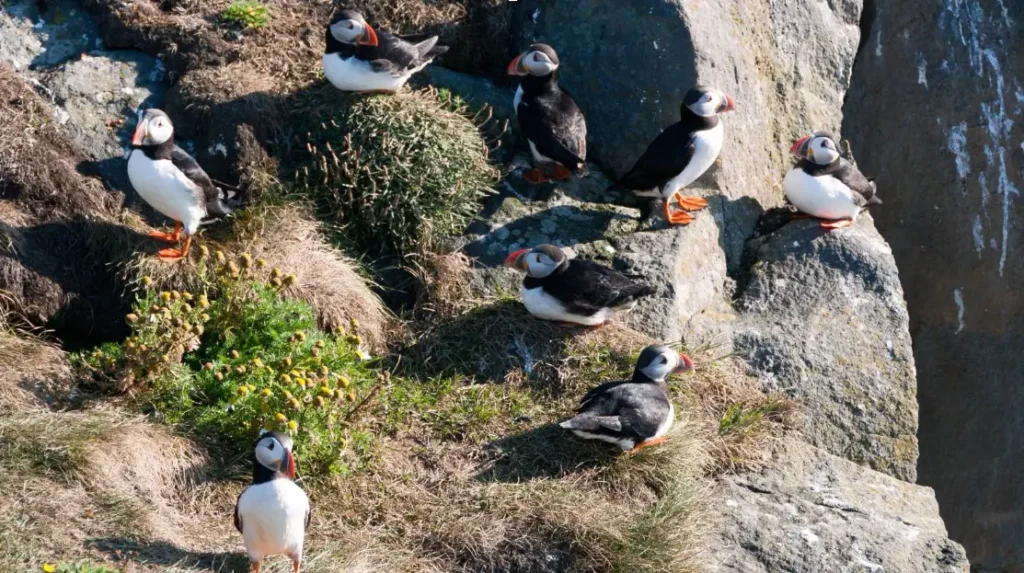
If puffin watching is the main reason for your trip, June or July gives you the highest confidence across the most locations. You are not dependent on being in exactly the right place or getting lucky with timing.
If you are traveling in May, build a flexible route rather than committing to a single colony. Conditions vary between locations, and having a backup option on the same stretch of road makes a real difference.
If August is your window, focus on the earlier half of the month and lean toward the Westman Islands, which tend to hold birds a little later than some other locations. Avoid leaving puffin watching until the final days of an August trip.
If you are traveling outside the season entirely, Iceland has plenty to plan around: waterfalls, hot springs, whale watching, hiking, and, from September onward, the Northern Lights. The Iceland in summer and Iceland road trip planning guides are good starting points for building an itinerary that works whatever your dates.
Best Places to See Puffins in Iceland
Iceland has puffin colonies at dozens of points around the coastline, but not every location suits every itinerary. The right choice depends on your route, how much time you have, and whether you are comfortable adding a ferry or a significant detour. The locations below are ordered by how many itineraries they fit, not by colony size alone.
Westman Islands / Heimaey
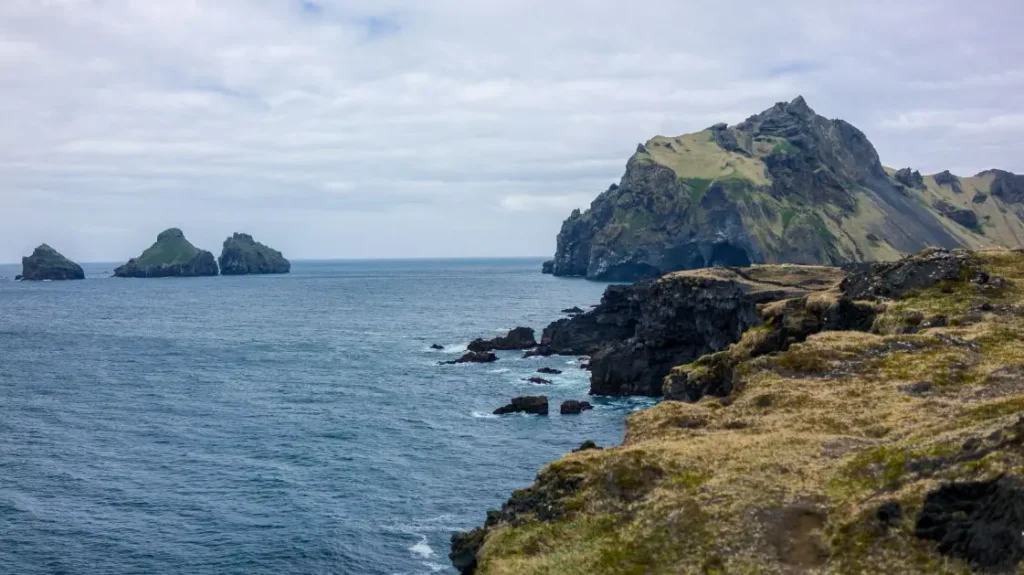
Image alt text: Westman Islands of Iceland.
The Westman Islands, known in Icelandic as Vestmannaeyjar, host the largest Atlantic puffin colony in the world, with over a million birds nesting on Heimaey and the surrounding islets during peak season. For anyone who wants to see puffins in serious numbers, this is the strongest option in Iceland.
Getting there requires a ferry from Landeyjahöfn on the South Coast, roughly 30 km (19 miles) east of Dyrhólaey. The crossing takes about 35 minutes. Ferries run multiple times daily in summer, but schedules and availability change, so check current timetables and book ahead during June and July. See the Herjólfur ferry website for the current schedule and fares.
An overnight stay on Heimaey is worth building in if your itinerary allows. It gives you time to walk the coastal paths in the evening when colonies are most active, and takes the pressure off catching a specific ferry back. The island has campsites, guesthouses, and enough to fill a full day beyond puffin watching.
Pair this stop with the South Coast: Seljalandsfoss, Skógafoss, Reynisfjara, and Vík are all on the same stretch of road. For more on planning this leg, see the Westman Islands travel guide and the South Coast Iceland guide.
Dyrhólaey and the South Coast
Dyrhólaey is a coastal promontory about 180 km (112 miles) east of Reykjavík, and one of the most accessible puffin viewing spots in Iceland. Puffins nest in burrows along the clifftops, and in peak season, you can watch them at close range from the marked viewing areas without any boat trip or ferry logistics.
Because it sits naturally on the South Coast route between Reykjavík and Vík, Dyrhólaey works well as a puffin stop for first-time Iceland travelers who are not specifically building a wildlife itinerary. It is easy to combine with Reynisfjara black sand beach, Skógafoss, and Seljalandsfoss in a single South Coast day.
A few safety points that matter here. Puffin burrows are dug into the clifftop turf, which makes the ground at the edge unstable in ways that are not always obvious. Stay on marked paths and back from cliff edges. Do not approach, touch, feed, or chase the birds. Visit South Iceland specifically advises keeping to marked paths and viewing areas, and not disturbing nesting birds. The views from the designated spots are close enough; there is no need to push further.
Note that Dyrhólaey may have restricted access during the height of nesting season to protect breeding birds. Check local conditions before visiting via the Visit South Iceland website.
Látrabjarg and the Westfjords
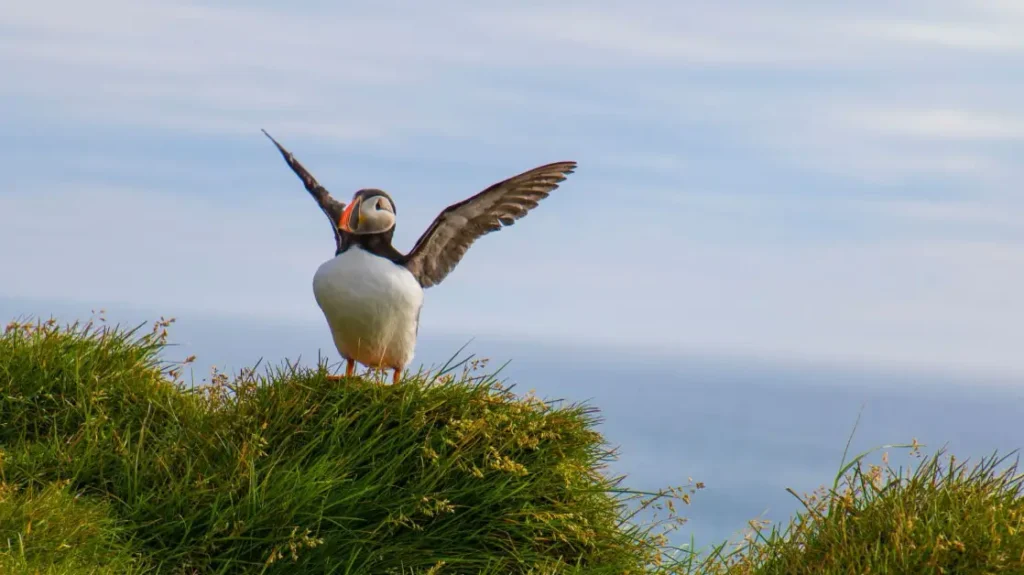
Látrabjarg is the westernmost point of Iceland and one of Europe’s largest bird cliffs, stretching around 14 km (9 miles) along the Westfjords coast. Puffins nest here alongside razorbills, guillemots, and northern gannets. The cliffs are dramatic, the location is genuinely remote, and for photographers and dedicated wildlife travelers, it is worth the journey.
That journey is significant. Látrabjarg is a long drive from the Ring Road, and the final stretch involves gravel roads that require care. Budget a full day at minimum, and ideally plan an overnight in the Westfjords rather than trying to cover it as a single long day from Reykjavík or the South Coast. The remoteness is part of the appeal, but it does not suit an itinerary that is already full.
Vigur Island, a short boat trip from Ísafjörður, is another Westfjords option. The island has a small puffin population alongside eider ducks and Arctic terns, and the scale is more intimate than Látrabjarg.
Borgarfjörður Eystri
Borgarfjörður Eystri in East Iceland has one of the most visitor-friendly puffin setups in the country. A dedicated wooden viewing platform sits directly above an active colony, close enough to watch the birds without disturbing them. The road in is paved, access is straightforward, and it fits naturally into the East Iceland leg of a Ring Road itinerary.
This is the location to add if you are already driving the Ring Road and want a quality puffin stop that does not require a ferry or a major detour. The best months here are June through early August.
Grímsey and North Iceland
Grímsey is a small island sitting on the Arctic Circle, about 40 km (25 miles) off the north coast of Iceland. It is accessible by ferry from Dalvík, near Akureyri, or by a short flight. The island has a resident puffin colony, and the experience of watching seabirds in that setting is distinct from anything on the South Coast.
Tjörnes, a peninsula between Öxarfjörður and Skjálfandi Bay in North Iceland, is another northern option with puffin sightings during the season, alongside other birdlife and the chance to spot whales offshore.
Both locations suit travelers who are already spending time in North Iceland rather than those making a dedicated detour from the south.
Reykjavík: Lundey and Akurey
If you are based in Reykjavík, or if your itinerary only allows time in the capital, boat tours to Lundey and Akurey offer a straightforward way to see puffins without leaving the city area. Both islands are uninhabited and home to active colonies in season. Tours depart from Reykjavík Old Harbour and typically last two to three hours.
This is the right option if puffins are a bonus on a city-focused trip, or if you want to fit them into an arrival or departure day. For a fuller experience, the colonies on the South Coast or in the Westman Islands are a step up.
Puffin Watching Itineraries for a Self-Drive Iceland Trip
Puffins are easy to work into a self-drive itinerary as long as you match the location to the route you are already planning. The mistake most travelers make is treating puffin watching as a separate mission rather than a natural stop on a wider trip. The routes below are built around that principle: choose the one that fits your dates and trip length, then adjust from there.
Option 1: Reykjavík quick puffin trip
Best for: short trips, city-based travelers, arrival and departure days.
If you have one to two days in or around Reykjavík and puffins are on your list, a boat tour to Lundey or Akurey from Reykjavík Old Harbour is the most practical option. Tours typically run two to three hours and require no driving beyond getting to the harbour.
Keep expectations calibrated. This is a solid introduction to puffins, not the full experience you would get at the Westman Islands or Dyrhólaey. Use it if puffins are a bonus on a city-focused trip, not if they are the main reason you came. Don’t try to pack too much into your arrival day: if you have just landed at Keflavík, give yourself time to get settled before committing to a boat departure.
Option 2: South Coast and Dyrhólaey
Best for: first-time Iceland visitors, 4-to-7 day itineraries, travelers combining waterfalls and coastal scenery with wildlife.
The South Coast is the most naturally puffin-friendly driving route in Iceland. Dyrhólaey sits between Skógafoss and Vík, so it fits into a standard South Coast day without adding distance or backtracking. A half day is enough to visit the promontory and watch the colony from the marked viewing areas. A full day gives you time to combine it with the Reynisfjara black sand beach and Vík itself.
If your schedule allows, extend to an overnight near Vík or push on to the Westman Islands ferry at Landeyjahöfn. That combination, South Coast stops plus a Westman Islands crossing, is the strongest puffin itinerary available without committing to the Ring Road.
Plan B: if Dyrhólaey has restricted access on the day you arrive, Reynisfjara and the cliffs around Vík sometimes have puffin sightings during peak season. It is not a guaranteed substitute, but it keeps the day productive.
Option 3: Westman Islands overnight
Best for: travelers making puffins the priority, 5-day or longer itineraries, anyone already planning a South Coast leg.
Add one night on Heimaey to a South Coast route, and you have the best puffin experience Iceland offers. The ferry from Landeyjahöfn takes about 35 minutes each way, and an overnight stay means you can walk the coastal paths in the evening and morning, when the colony is most active, without rushing back for a specific departure.
Book the ferry and your campsite or accommodation ahead of time in June and July. Peak summer demand on the island is real, and leaving this to chance is unnecessary risk on a trip where you have specifically come for the puffins.
Plan B: if the ferry is fully booked or weather causes a cancellation, fall back to Dyrhólaey and use the extra time on the South Coast. Build at least one flexible day into any itinerary that depends on ferry access.
Option 4: Ring Road and East Iceland wildlife detour
Best for: 7 to 10-day or longer itineraries, Ring Road travelers, wildlife and photography-focused trips.
If you are driving the full Ring Road, Borgarfjörður Eystri in East Iceland is the puffin stop to plan around. The viewing platform is excellent, access is easy, and it sits close enough to the Ring Road to add without a painful detour. Pair it with the broader East Iceland coastline, which rewards slower travel.
Grímsey is worth considering if you are already planning time in the Akureyri area, and the Arctic Circle crossing appeals. Factor in the ferry time from Dalvík and treat it as a half to full day addition rather than a quick stop.
Do not add remote puffin detours, Látrabjarg, Grímsey, or Borgarfjörður Eystri, to an itinerary that is already tight. A rushed Ring Road with three wildlife detours and no buffer days is a recipe for stress. If the schedule is full, pick one stop and do it properly.
For help planning the full Ring Road route, see the Iceland Ring Road guide.
Do You Need a Camper Van to See Puffins in Iceland?

No, but it definitely helps. Most of the best puffin locations in Iceland are reachable by any rental vehicle, and some, like the Reykjavík island tours, do not involve driving at all. What a camper van changes is not access, but flexibility, and during puffin season, flexibility matters more than most travelers expect.
Why a camper van helps during puffin season
Puffin colonies are most active in the early morning and evening. If you are staying in a hotel or guesthouse, those viewing windows often mean an early drive out and a late drive back, which eats into the day and adds pressure to be somewhere at a specific time. With a camper van, you can stay close to the viewing area, walk out at first light, and not worry about the return drive until you are ready.
The same logic applies to ferry-dependent locations like the Westman Islands. An overnight on Heimaey in a camper van, staying at the island campsite, means you can work around ferry times without booking accommodation separately and without the cost of island hotels in peak season.
A camper van also makes it easier to respond to conditions. If the colony at Dyrhólaey is quiet one morning, you can adjust your plan and try again in the evening, or push on to the next stop without losing a night’s accommodation. That kind of itinerary flexibility is harder to maintain when you are booking accommodation night by night across multiple locations.
Rent.is camper vans are collected from a base near Keflavík Airport, with a free 24/7 shuttle from the terminal, so you can pick up your vehicle on arrival and be on the South Coast within a couple of hours. Roadside assistance is available around the clock if anything goes wrong on the route.
What a camper van does not solve
A camper van improves your chances of being in the right place at the right time. It does not guarantee puffin sightings. Wildlife does not perform on schedule, and some days colonies are simply quieter than others.
It also does not remove the logistical constraints that apply to every traveler. Ferry crossings to the Westman Islands or Grímsey still need to be booked ahead of time. Dyrhólaey can still have restricted access during nesting season. The weather can still close viewpoints or make coastal paths unsafe.
On overnight stops, camper vans must stay at designated campsites. The Environment Agency of Iceland states that overnighting in a camper van outside an organized campsite or urban area is illegal without permission from the landowner or rightholder. That rule applies everywhere in Iceland, including near puffin colonies. It is not a gray area.
Do you need a 4×4 for puffin season?
For the most commonly visited puffin locations, no. Dyrhólaey, Borgarfjörður Eystri, and the Westman Islands ferry port at Landeyjahöfn are all reachable on paved roads with a standard camper van.
Where a 4×4 camper van becomes relevant is if you are combining puffin watching with Highland or F-road driving. F-roads involve rough terrain, river crossings, and conditions that change without warning. SafeTravel advises that not all 4×4 vehicles are suitable for every F-road, and that highland driving requires specific preparation. If your route stays on paved roads and the Ring Road, a standard camper van is sufficient for every puffin stop in this guide.
If you are unsure whether your planned route requires a 4×4, the Iceland road trip planning guide covers vehicle choice in more detail, and the team at Rent.is can advise based on your specific itinerary. Explore camper vans for your Iceland trip.
Responsible Puffin Watching: Safety, Ethics & Local Rules
Puffin colonies attract a lot of visitors, and the birds are tolerant enough that it is easy to get close. That tolerance is not an invitation. The nesting season is the only time puffins come ashore, and disturbance during this period affects breeding success. The rules below are not bureaucratic caution; they are the difference between a colony that thrives and one that gradually stops returning.
Safety around cliffs and burrows
Most puffin viewing in Iceland happens on or near clifftops, which creates two overlapping hazards: the drop itself and the instability of the ground near the edge.
Puffins nest in burrows dug into the grassy turf at the top of cliffs. That turf can look solid and feel firm until it gives way. Sections of cliff edge that appear safe can collapse without warning, particularly after rain or in areas with high visitor footfall. Visit South Iceland advises staying back from cliff edges and keeping strictly to marked paths and designated viewing areas. That advice applies at Dyrhólaey, Látrabjarg, and anywhere else you are watching from an elevated coastal position.
Keep children close and on paths at all times. The views from designated viewing areas are close enough; there is no photograph worth stepping off a marked path for.
Wildlife-first behavior
Puffins are not tame, but they are less easily startled than many wild birds, which can give the impression that approaching them closely is fine. It is not. Getting too close stresses the birds, disrupts feeding patterns, and can cause adults to abandon chicks.
Visit South Iceland advises specifically against touching, feeding, chasing, or blocking puffins. To that, add: do not shout or make sudden movements near a colony, do not trample the grassy areas around burrow entrances, and do not position yourself between a bird and its burrow. If a puffin is trying to get back to its nest and you are in the way, move.
Use a zoom lens or binoculars rather than closing the distance. The birds are small and move quickly; a long lens will get you better images than proximity will, and without the stress to the colony.
If you visit during the evening and find pufflings, young chicks that have left their burrows and are making their way toward the sea, do not handle them or intervene unless they are in immediate danger from traffic or predators. Local rescue organizations in the Westman Islands run a puffling rescue program each autumn for disoriented birds, and they are the right people to contact if you find one that needs help.
Drone and photography guidance
Drone use near seabird colonies is heavily restricted in Iceland. Flying a drone over or near a nesting colony causes serious disturbance, and in protected areas, it may be illegal regardless of whether signs are posted. Do not fly drones near puffin colonies without first checking the current regulations with the Environment Agency of Iceland.
For photography, a 300mm or longer lens will give you frame-filling shots from a respectful distance. Early morning and evening light is better for photography anyway, and at those times the birds are more active. The best puffin images come from patience and good positioning, not from getting as close as possible.
The principle that applies to all of the above: the experience of watching a healthy, undisturbed colony is better than anything you would get from pushing boundaries. Keep your distance, stay on the path, and the birds will give you plenty to look at.
What If You Miss Puffins?
Puffin season has a clear window, but travel dates are not always flexible. If you arrive too early, leave too late, or find that conditions have closed off your planned viewing spot, Iceland does not run out of things to offer. The plan B options below are organized by scenario.
If you are too early
If you are visiting in April or very early May, puffins may simply not be present in any numbers yet. Rather than chasing an uncertain sighting, treat puffins as a potential bonus and build your itinerary around what spring Iceland does well.
Late April and May are good months for waterfalls at their most powerful from snowmelt, uncrowded roads, and the first reliable daylight after the dark months. Whale watching season is also getting underway from Reykjavík and Húsavík by May.
If you are too late
Late August and September are not write-offs for wildlife, but puffin sightings become increasingly unreliable from mid-August onward. If you are visiting during this window, adjust expectations rather than chase the season to its edges.
September brings the first serious chances of Northern Lights, particularly from mid-month onward. Hiking conditions are often excellent in early September before the first snow, and the landscapes shift into autumn color in ways that are genuinely worth seeing. Whale watching remains active through September at most northern locations.
Avoid the framing that a late-season Iceland trip is a consolation prize. It is a different trip, with different strengths.
Plan Your Puffin Season Iceland Trip
Puffin season is one of the more reliably rewarding parts of an Icelandic summer trip, as long as you plan around the actual window rather than a vague idea of “summer.” Get the dates right, match the location to your route, and build in enough flexibility to respond to conditions on the day. That combination does more for your chances than any amount of advance research into colony sizes.
A camper van gives you the flexibility to make the most of early morning and evening viewing windows, stay close to the locations that matter, and adjust your plan without losing a night’s accommodation. With a pickup near Keflavík and roadside assistance available around the clock, it is a practical base for a puffin-season route of any length.
Explore Rent.is camper vans and start planning your puffin-season Iceland route.
FAQs About Puffin Season in Iceland
When is puffin season in Iceland?
Late April or May to mid-August, with June and July the most reliable months. If your dates fall outside that window, the month-by-month section above breaks down exactly what to expect and how to plan around it.
What is the best month to see puffins in Iceland?
June and July give you the highest confidence across the most locations. If you are still deciding when to travel, the month-by-month breakdown above will help you weigh up your options and choose a route to match.
Can you see puffins in Iceland in May?
Yes, with some variability early in the month. May works best as part of a wider spring itinerary rather than a puffin-focused trip. The Iceland in spring guide covers what else the season has to offer while colonies are still building.
Can you see puffins in Iceland in August?
Early to mid-August can still work well. If August is your window, the self-drive options above will help you choose the locations most likely to still be active, and when to build in a fallback.
Can you see puffins in Iceland in September?
It is not a month to plan a puffin trip around. For what September does offer, the things to do in Iceland guide is a good starting point for reframing your itinerary around the season’s actual strengths.
Where is the best place to see puffins in Iceland?
It depends on your route and trip length more than colony size. The locations section above compares every major spot by access type, time needed, and itinerary fit, which is a more useful starting point than a single “best” answer.
Can you see puffins near Reykjavík?
Yes, via boat tours to Lundey and Akurey from Reykjavík Old Harbour. If you are city-based or short on time, the Reykjavík option in the self-drive section above explains how to fit it into a short trip without overcomplicating your schedule.
Do you need a tour to see puffins in Iceland?
Not always. Several locations are straightforward self-drive stops. The self-drive options above cover which locations need a ferry or boat tour and which do not, so you can match the logistics to your itinerary before you commit.
What time of day is best to see puffins?
Early morning and evening, when birds are most active around the colony. If you are planning overnight stops near viewing areas, the camper van section above explains how staying close to a location makes those windows much easier to use.
Can you camp near puffin viewing areas?
Only at designated campsites. If you are planning overnight stops to make the most of early morning viewing, the responsible watching section above covers the camping rules that apply and what to look for when choosing a legal overnight base.
Is puffin watching safe for children?
Yes, with supervision, but cliff edges and unstable ground near burrows require children to stay on marked paths at all times. The responsible watching section above covers the specific hazards at cliff-top locations and what to look out for as a family.
Are puffins guaranteed in Iceland?
No, and planning as though they are is the most common mistake. The Plan B section above covers what to do if timing, weather, or access works against you, and why Iceland rarely disappoints even when the puffins do not cooperate.
Glossary
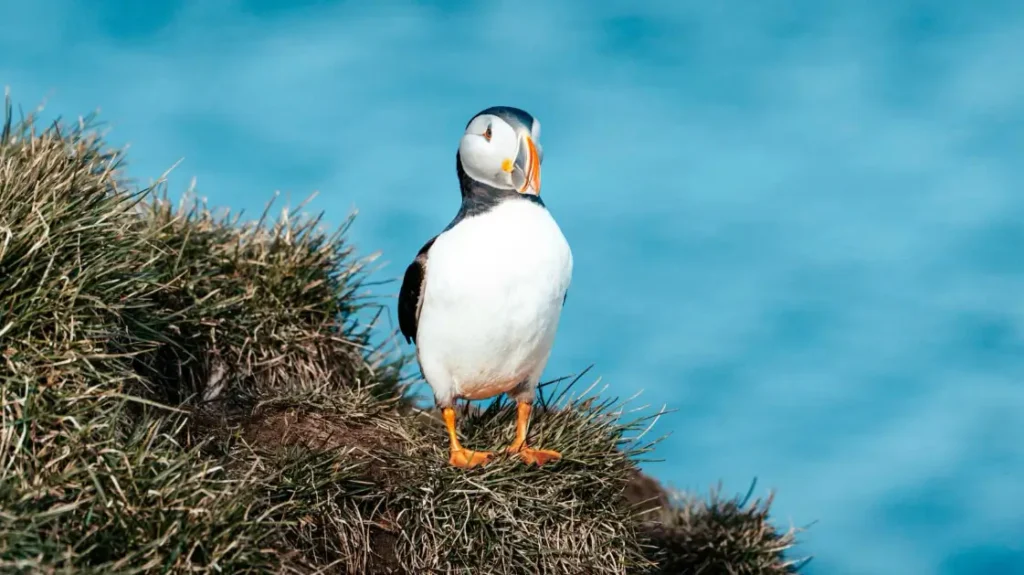
Atlantic puffin: The seabird species that visitors come to Iceland to see. Distinguished by its black and white plumage and brightly colored beak during the breeding season.
Puffling: A young puffin chick. Pufflings leave their burrows at night and make their way to the sea at the end of the nesting season.
Colony: A group of seabirds nesting together in the same location. Iceland’s puffin colonies range from a few hundred birds to over a million.
Burrow: The nesting hole a puffin digs into grassy clifftop turf. Puffins return to the same burrow year after year.
Nesting season: The period when puffins come ashore to breed, roughly late April or May to mid-August in Iceland.
Breeding season: The broader reproductive period covering pairing, nesting, egg laying, and raising chicks. Overlaps with the nesting season.
Dyrhólaey: A coastal promontory on the South Coast, about 180 km (112 miles) east of Reykjavík. One of the most accessible puffin viewing locations in Iceland.
Westman Islands: An archipelago off the South Coast of Iceland, known in Icelandic as Vestmannaeyjar. Home to the world’s largest Atlantic puffin colony.
Látrabjarg: A 14 km (9-mile) stretch of bird cliffs at the westernmost point of Iceland, in the Westfjords. One of Europe’s largest seabird cliffs.
Borgarfjörður Eystri: A small town in East Iceland with a dedicated puffin viewing platform directly above an active colony. The most visitor-friendly puffin stop on the Ring Road.
Grímsey: A small island on the Arctic Circle, accessible by ferry or flight from the Akureyri area. Home to a resident puffin colony.
Lundey and Akurey: Two uninhabited islands near Reykjavík, accessible by boat tour from the Old Harbour. The most convenient puffin viewing option for city-based travelers.
Ring Road: Route 1, the main road that circles Iceland. Most major puffin locations are either on or within a short detour of the Ring Road.
F-road: Icelandic highland roads, marked with an F on maps. Require a 4×4 vehicle and are not relevant for most puffin viewing routes, which stay on paved roads.
Campsite: A designated overnight location for camper vans and tents. The only legal overnight option for camper vans in Iceland outside urban areas, unless the landowner has given explicit permission.