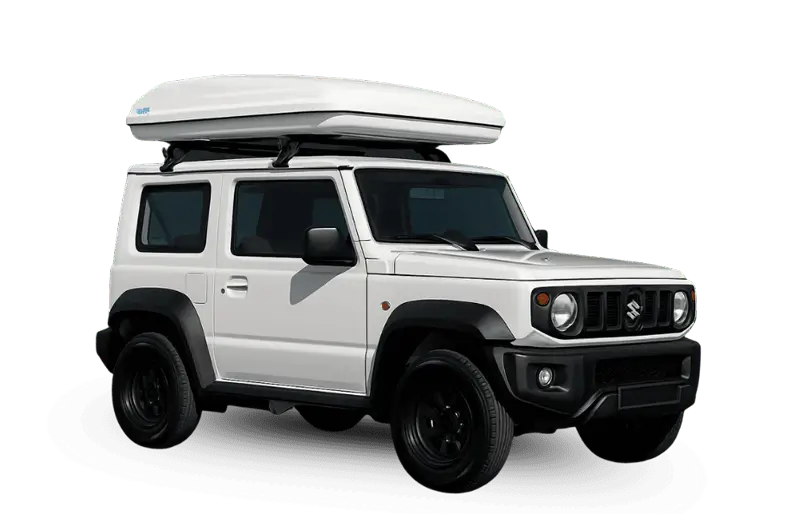
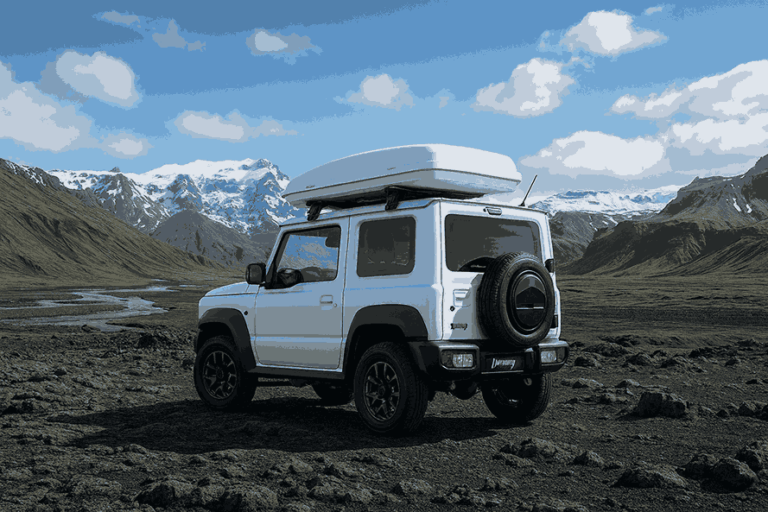
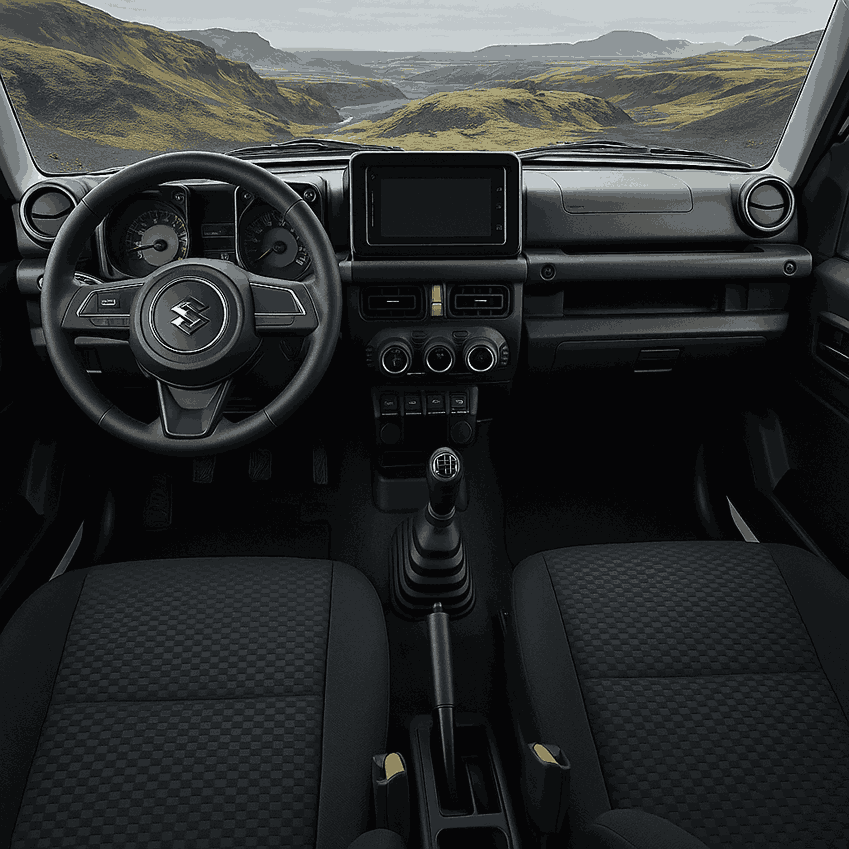
Our newest camper for two, the small but reliable Suzuki Jimny with a roof tent
The Suzuki Jimny 4×4 is our smallest camper, and it’s built for exactly one kind of trip: two people, light packing, and a route that goes further than the paved Ring Road. It’s a proper 4×4 with a rooftop tent bolted on top, not a car pretending to be a camper. If you want to reach the Highlands without renting a full-size motorhome, this is the vehicle that gets you there.
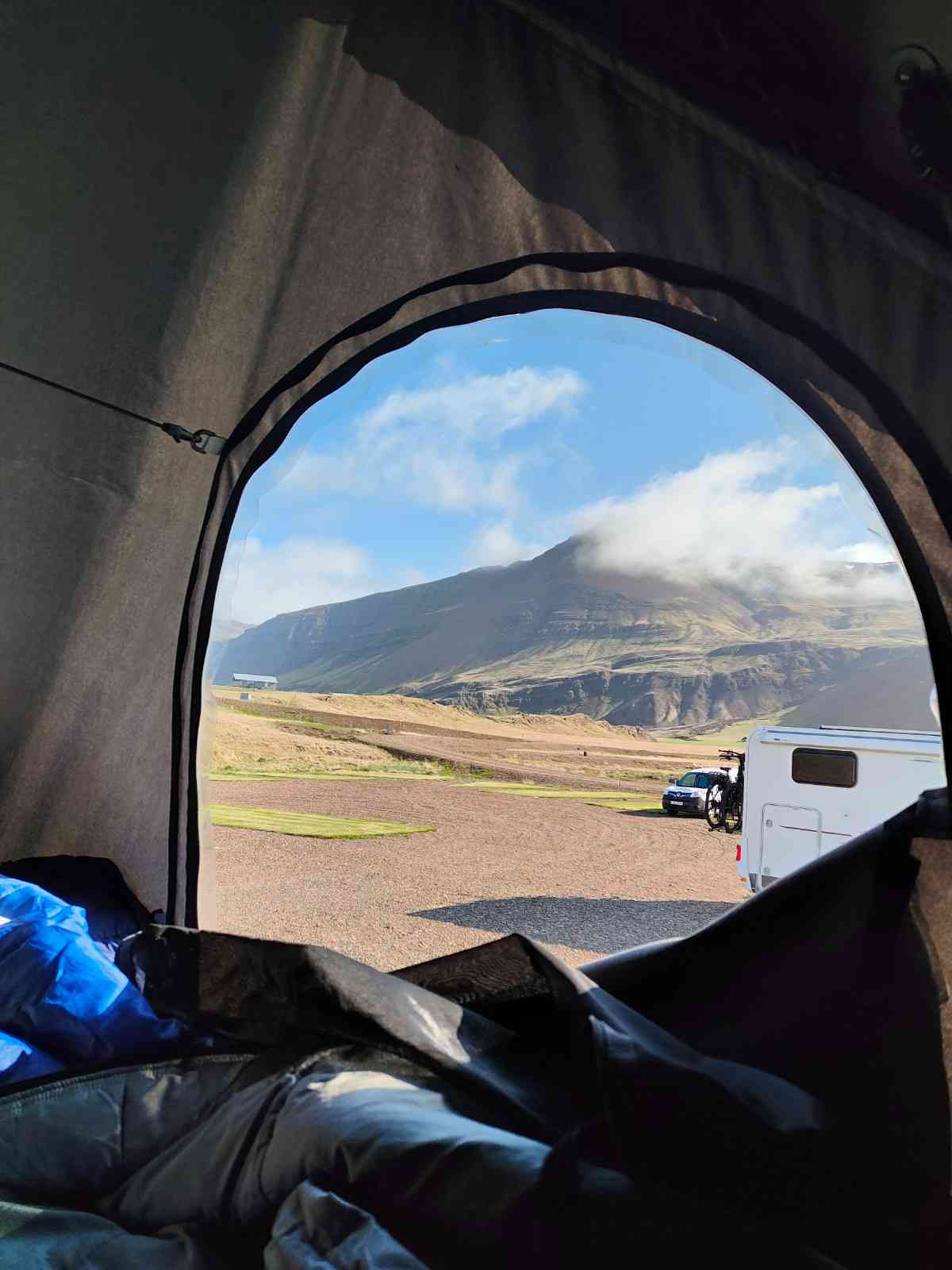
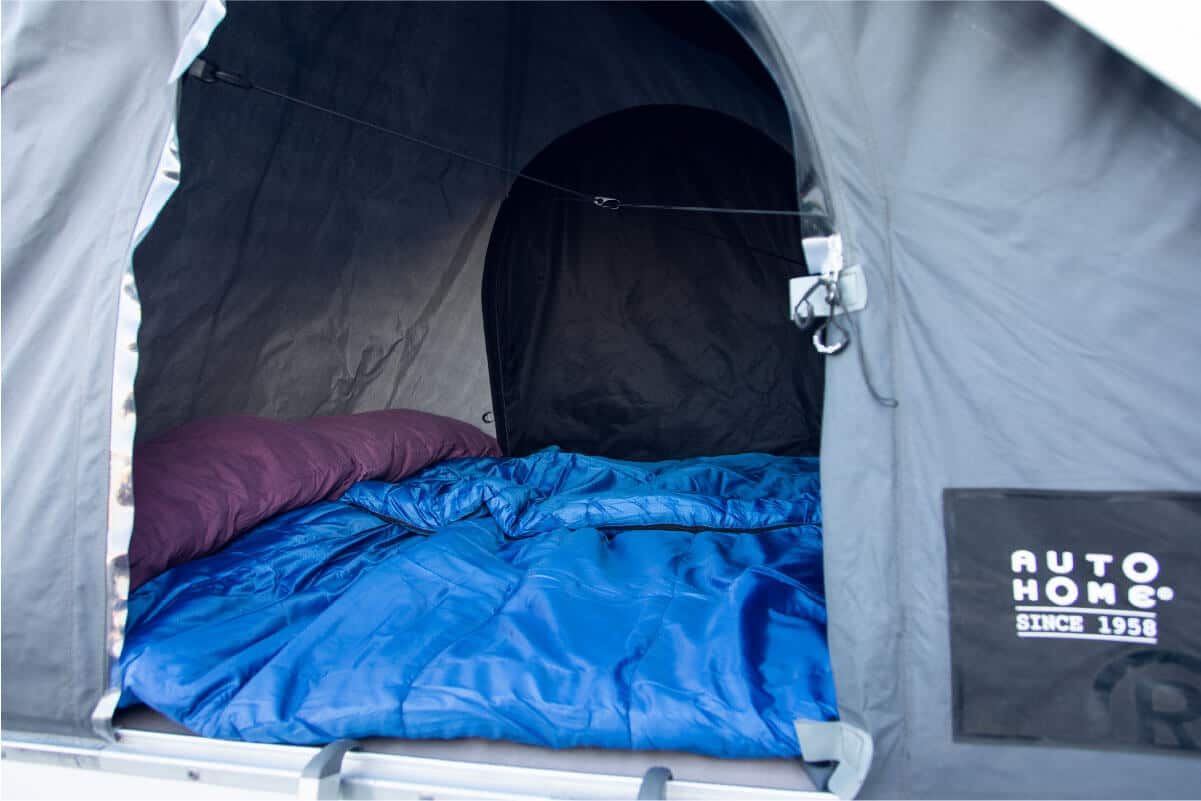
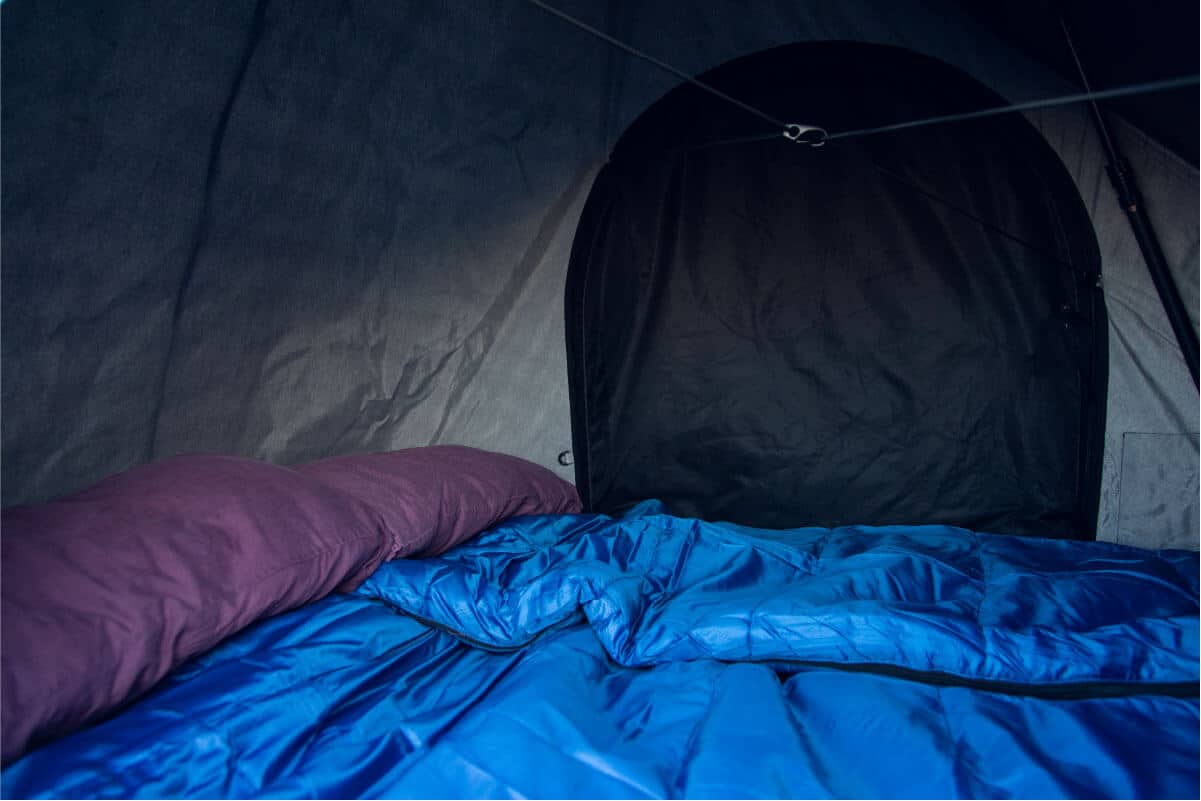
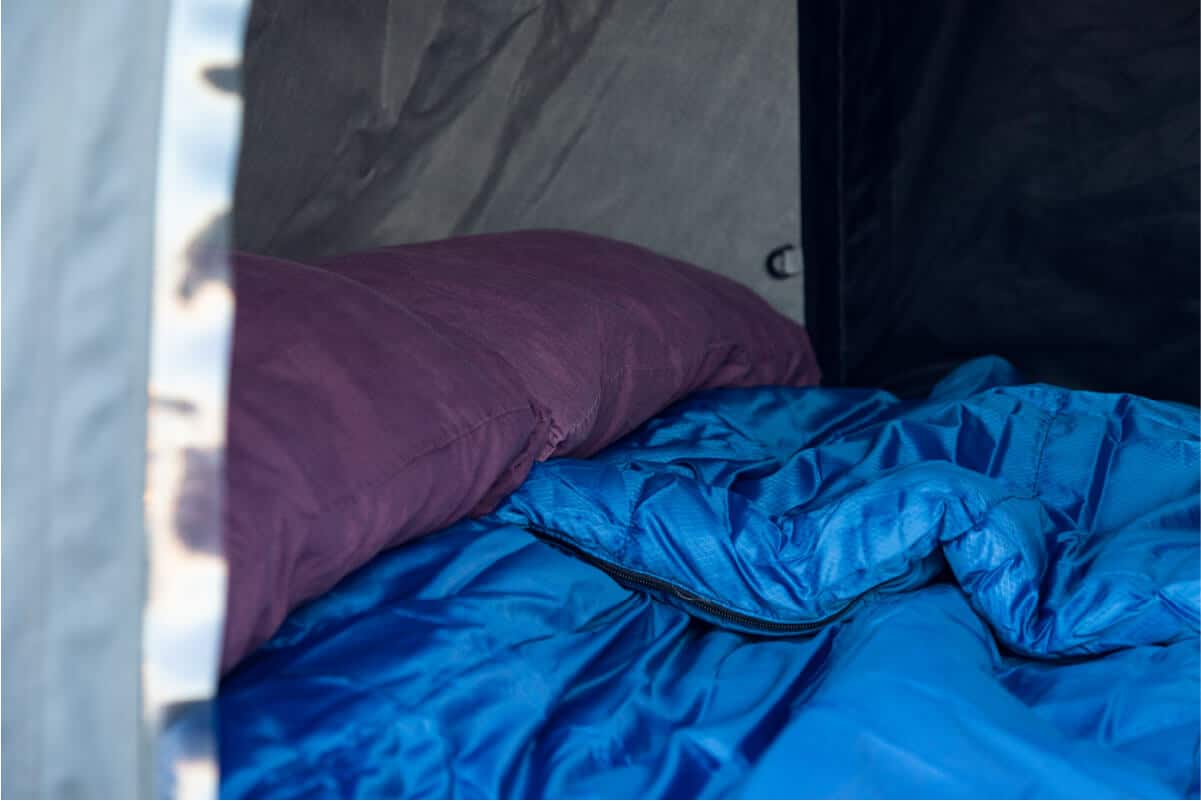
The tent sits folded flat on the roof rack until you’re ready to camp. Setup takes a few minutes: unclip it, fold down the ladder, and it’s ready. Inside you’ll find a foam mattress, two sleeping bags, a bed sheet, and pillows, all included in the rental. It sleeps two comfortably, with enough headroom to sit up and change without crawling around.
Being off the ground has its own logic in Iceland. You’re not pitching on wet grass or gravel, and there’s no tent floor to keep clean. The trade-off is exposure: the tent is water-resistant, not fully waterproof, and rated to withstand winds up to 20 m/sec. That’s fine for most summer nights on a sheltered pitch, but it’s worth checking the forecast before you choose an exposed campsite on a windy stretch of coast.
Access is via a fixed ladder, which stays attached to the vehicle, so there’s no separate piece of kit to lose or forget.
Built for Iceland’s F-roads
Iceland’s F-roads — the unpaved mountain routes into the Highlands — are legally restricted to 4×4 vehicles. Two-wheel-drive cars aren’t just discouraged, they’re not insured to be there. F-roads only open in summer once the snow clears, typically from late June to mid-September, and conditions can change overnight, so always check umferdin.is before you set off.
The Jimny meets that bar. It runs selectable four-wheel-drive with low-range gearing and around 21cm of ground clearance on the current model, enough for loose gravel, steep climbs, and the rutted surfaces that rule out a standard car. Its short wheelbase is an underrated advantage too: on narrow, switchback sections of track, a smaller footprint means fewer three-point turns and more confidence on tight bends. F35 (Kjalvegur) and F208 into Landmannalaugar are realistic routes for a standard rental 4×4 like the Jimny. F26 (Sprengisandur) is not — that one’s Super Jeep territory only, regardless of what you’re driving. Our full Highlands driving guide covers route-by-route detail if you’re planning to head into the interior.
That said, capability isn’t the same as permission. Off-roading, meaning leaving marked roads and tracks entirely, is illegal in Iceland and damages fragile terrain that takes decades to recover. The Jimny is built for F-roads, which are marked, legal, mapped routes. It is not built for driving wherever you like.
If your trip is centered on paved roads and the Ring Road rather than the Highlands, our 4×4 campers hub has a full lineup, or you may not need a 4×4 at all — our 4×4 vs 2WD guide will help you decide.
The honest answer depends on how you’re traveling. If it’s two of you, you’re packing light, and you want the freedom to reach F-roads without motorhome-sized running costs, the Jimny is one of the most practical options in our fleet. It’s also one of the cheapest ways into genuine 4×4 territory if budget matters as much as capability.
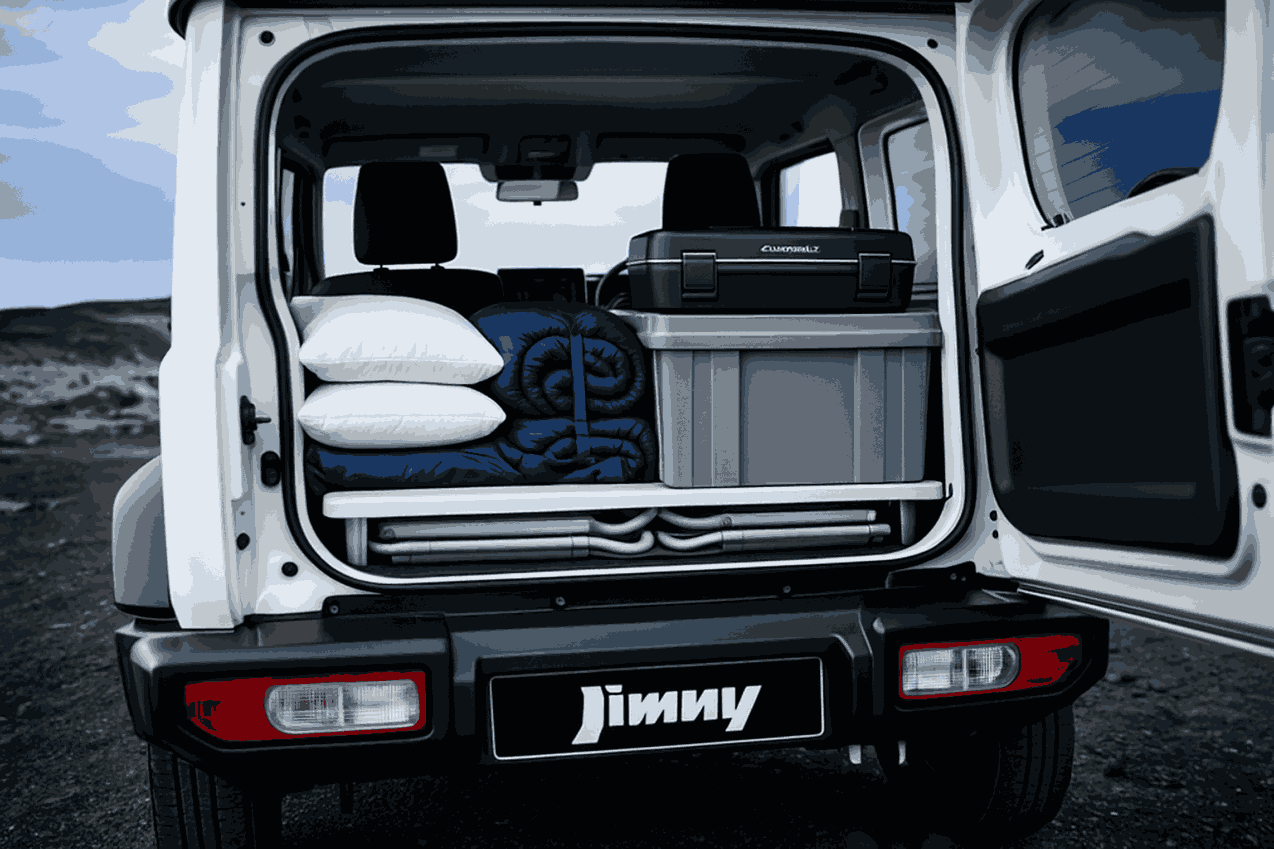
It’s less suited to a few situations. Luggage space is tight once the camping gear is loaded, so if you’re bringing large suitcases or traveling for more than a week or two, you’ll want to pack carefully or consider a bigger vehicle. Families or groups of three or more should look at our larger campers instead, since the Jimny only seats and sleeps two. If you’d rather have a kitchen sink and a proper indoor space to sit out bad weather, a motorhome will suit you better than a vehicle with a rooftop tent.
Not sure which camper actually fits your trip? Our camper van size guide walks through group size, route, and budget to help you land on the right vehicle before you book.
Explainer video
Check out how this all-time favorite camper works — inside and out.
Video instructions
See it in action
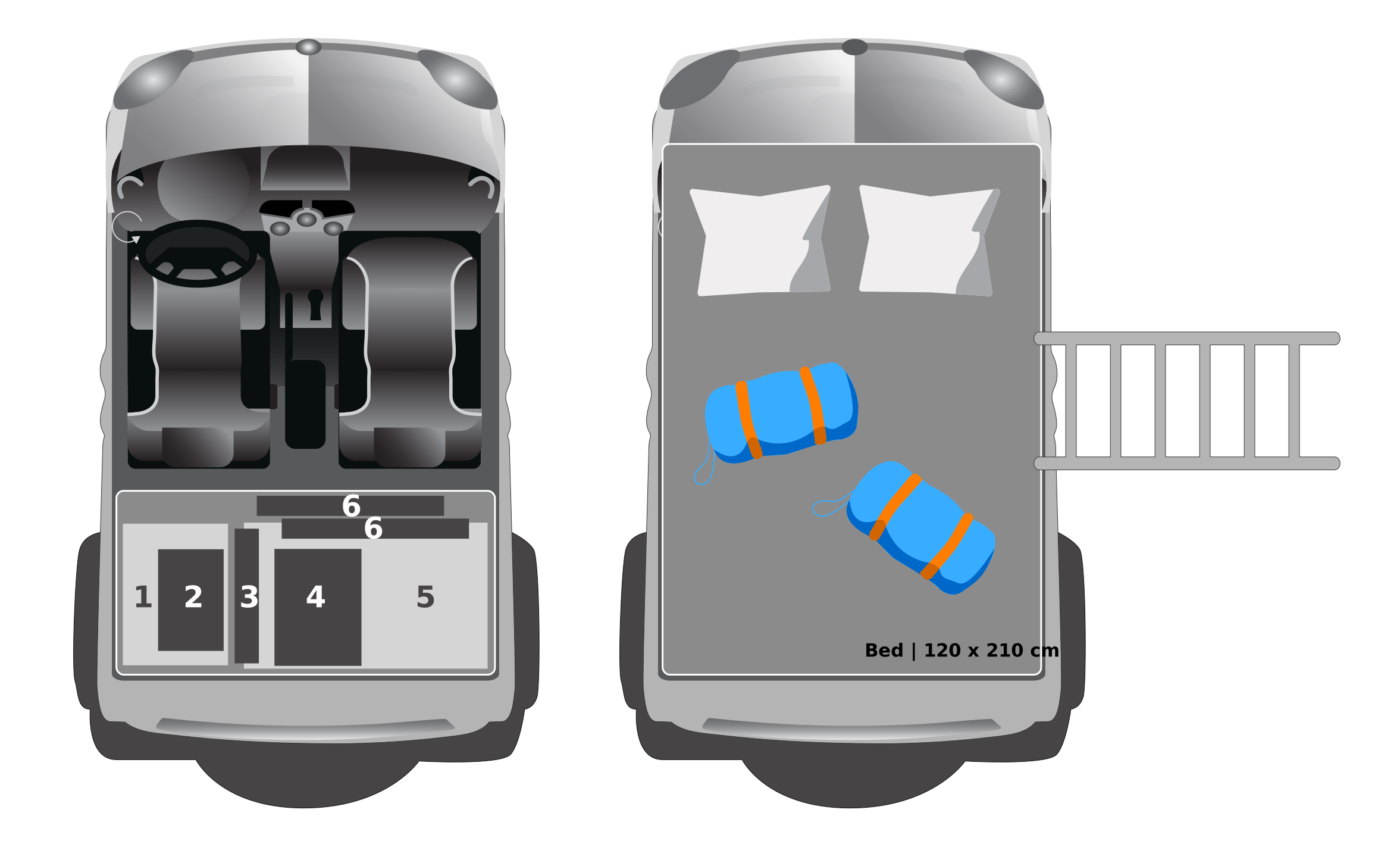
Floor plan
Included
1. Kitchen box
2. Portable stove
3. Water tank
4. Cooler box
5. Foldable table
6. Camping chairs
FAQ
The fuel tank holds around 40 litres and takes unleaded petrol (95 octane), widely available at fuel stations along the Ring Road and in most towns near F-road access points.
A few minutes each way. There’s no assembly beyond unclipping the cover and extending the ladder, so you can set up camp quickly even after a long driving day.
The tent is water-resistant rather than fully waterproof, and it’s rated for winds up to 20 m/sec. In exposed, high-wind conditions, choose a sheltered campsite where possible.
Trunk space is limited because the camping equipment takes up most of it, but soft, squashable bags fit better than hard suitcases.
No previous 4×4 experience is required, but F-roads demand more attention than paved driving — river crossings, loose gravel, and steep sections are common. Take it slow on your first F-road and stop if a crossing looks deeper or faster than you’re comfortable with.
Summer, roughly late June through mid-September, is when F-roads are open and accessible. Outside that window, the Jimny still works well for Ring Road travel, but the Highlands routes it’s built for will be closed.
CDW insurance is included in the standard rental price. Optional upgrades, like Premium or Platinum Plus coverage, are available if you want lower excess. Find out more about coverage options in our camper van insurance guide.