
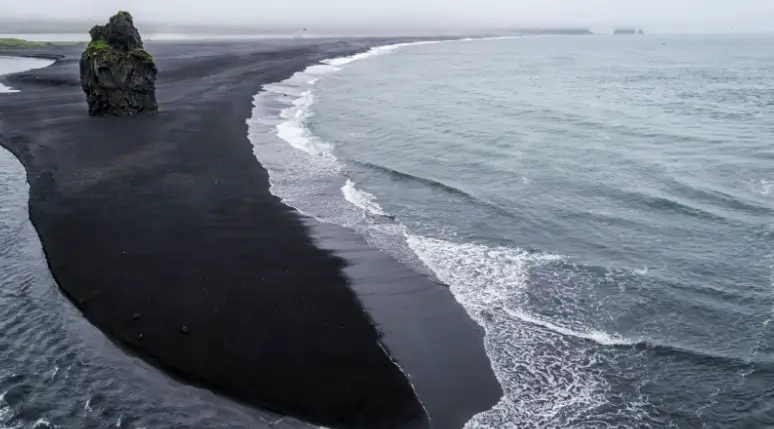
Iceland’s South Coast is one of the easiest and most convenient parts of the country to explore by camper van. But with so much to see and do, it’s worth giving the region more than a rushed day. The drive from Reykjavík to Höfn, including the detours in this guide, is about 625 km (388 miles). Plan three to five days if you want to make the best of the route, allowing time for waterfalls, black-sand beaches, glacier views, and overnight stops without spending every afternoon in the driver’s seat.
This guide follows the route east from the country’s capital to Höfn. It focuses on the order that makes sense in a rental camper van, practical places to stop overnight, and the one Highland detour that needs more planning than the paved Ring Road route.
Jump to:
- How many days do you need?
- The Reykjavík to Höfn route
- Where to camp on the South Coast
- Driving and parking safely
- Choosing a camper van
- FAQs
How Many Days Do You Need for the South Coast of Iceland?
Three days is the minimum we would suggest for the South Coast when traveling by camper van. It gives you a sensible first overnight around Vík, a second around Skaftafell, then time for Jökulsárlón and the drive to Höfn. Four or five days feels more relaxed, especially if you want to hike, stay at more than one campsite, or add the Þjórsárdalur and Hrauneyjar detour.
It is possible to see parts of the South Coast on a long day trip from Reykjavík, but that’s a very different experience to a leisurely camper van trip. A camper gives you the freedom to stop when the weather clears, or explore a place that catches your eye. Leave enough time to enjoy it.
South Coast Iceland Camper Van Trip at a Glance
The core route is Route 1 (the Ring Road) from Reykjavík through Selfoss, through Hella, Vík, Kirkjubæjarklaustur, Skaftafell, Jökulsárlón, and on to Höfn. Most travelers can follow that route in a standard 2WD camper van when conditions are suitable.
The route below adds optional side roads and stops. They are there to help you slow down and choose a realistic pace, not to turn every day into a checklist. Before setting out, check live road and weather information, particularly outside summer or when you are considering a gravel detour.
| Day | Route and key stops | Overnight and vehicle note |
| Day 1 | Reykjavík → Eyrarbakki (optional) → Hella/Hvolsvöllur → Seljalandsfoss → Skógafoss → Dýrhólaey/Reynisfjara → Vík | Vík or Þakgil. Main route is paved and suits a 2WD camper van when conditions are suitable. |
| Day 2 | Vík → Fjaðrárgljúfur → Kirkjubæjarklaustur → Skaftafell | Skaftafell. Build in time for parking, walks, changing weather, and any hike. |
| Day 3 | Skaftafell → Fjallsárlón → Jökulsárlón → Diamond Beach → Höfn | Stay at Skaftafell or continue to Höfn. 2WD suits Route 1 when conditions allow. |
| Optional detour | Þjórsárdalur → Route 32 → F26 toward Hrauneyjar → Route 26 return | Check conditions and rental terms. This winter-closed, gravel detour is where a 4×4 becomes necessary. |
Day 1: Reykjavík to Vík Via the Waterfalls
Leave Reykjavík and join Route 1 heading south. After roughly 22 km (13.7 miles), you can turn toward Þorlákshöfn, Eyrarbakki, and Stokkseyri if you would like a quieter coastal start. These small villages make a good change of pace before the main South Coast stops. Eyrarbakki also has a campsite in the village.
Back on Route 1, Hella and Hvolsvöllur are useful places to pause for supplies before you continue east. They are practical stops rather than sightseeing destinations: fill the camper with fuel and groceries before the more remote parts of the route.
Seljalandsfoss is the first major waterfall stop once you are back on the Ring Road. Gljúfrabúi, a secret waterfall hidden in a canyon, is nearby. A little farther east, a turn at crossroad 10 leads toward Seljavallalaug swimming pool; from the parking area, you will need to walk the final stretch to the pool.
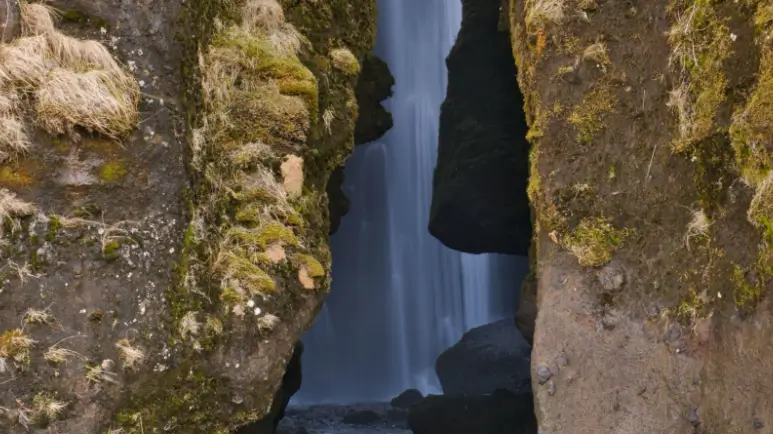
Skógafoss is about 6 km (3.7 miles) farther along if you have visited the pool. It is a good place to stretch your legs, and the trail beside the falls gives you a route up to the viewpoint and beyond. You can camp at Skógafoss if you want a straightforward first-night stop.
Continue toward Dýrhólaey and Reynisfjara black sand beach. Both involve a short walk from the parking area. Follow the posted warning signs and park only in designated places. The coast can look calm one minute and much less forgiving the next.
Vík is just beyond Reynisfjara and has a campsite. If you would prefer a more sheltered setting, Þakgil is another option. Take the turn at crossroad 13 and drive 16 km (9.9 miles) to the campsite. It is a good choice when you want to wake up closer to the scenery rather than the main road.
Camper van note: this day follows paved main roads and works well for a standard 2WD camper van when current conditions are suitable. If it is your first time driving in Iceland, aim to reach your campsite with time to settle in rather than trying to fit every stop into one afternoon.
Optional Detour: Þjórsárdalur and Hrauneyjar
If you have extra time before continuing east, the Þjórsárdalur Valley is a worthwhile change from the main route, with hiking options and even the chance to see a replica Viking longhouse at Þjóðveldisbærinn Stöng. Take a left at crossroad 4, drive 13 km (8.1 miles) to crossroad 5, then turn right into the valley. There is a campsite in the area, plus access toward Stöng and Gjáinn when road conditions allow.
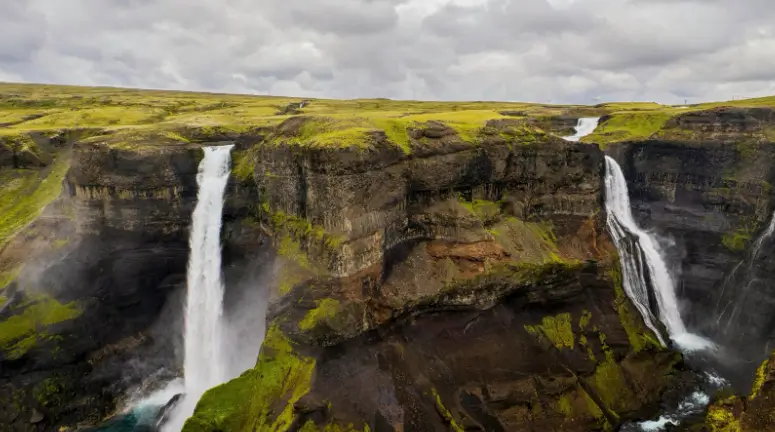
From there, Route 32 continues toward the edge of the Highlands. At crossroad 6, turn onto F26 toward Hrauneyjar. This section is not a casual add-on to a Ring Road itinerary. The F-road route is closed in winter, includes gravel, and needs current road-condition checks before you commit to it. Your vehicle choice and rental agreement matter here too. Make sure you’re familiar with the requirements for driving in the Highlands.
Hrauneyjar is a useful turnaround point. On the return, Route 26 runs for 75 km (47 miles) back toward the Ring Road, passing Þjófafoss. Keep your speed appropriate for the surface and never stop in the road for photographs. Use a proper parking area instead.
Camper van note: the paved Ring Road route does not require a 4×4 simply because it is on the South Coast. This optional Highland-edge detour is where a 4×4 becomes the appropriate choice. If this part of the trip is important to you, compare our 4×4 campers before you book and check the road status again on the day.
Day 2: Vík to Kirkjubæjarklaustur and Skaftafell
From Vík, keep heading east on Route 1 toward Kirkjubæjarklaustur. At crossroad 14, turn left and drive 3 km (1.9 miles) to Fjaðrárgljúfur canyon. Park safely, then take time to walk along the marked route.
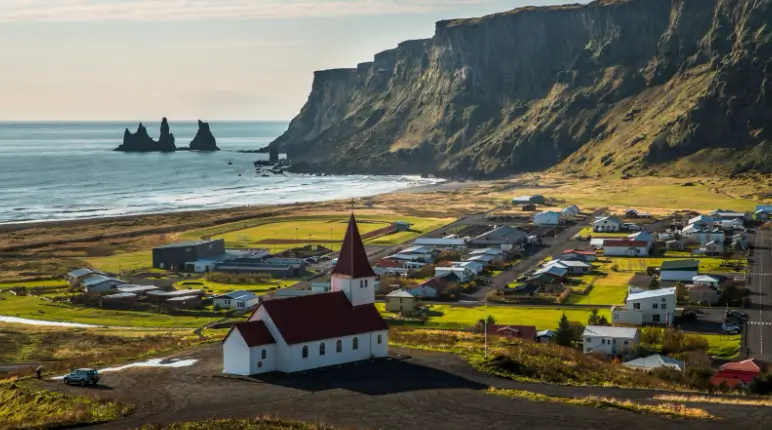
Before leaving Kirkjubæjarklaustur, restock fuel and groceries. Stjórnarfoss is north of the village, with Kirkjugólf nearby. The two stops are only about 0.7 km (0.43 miles) apart, and there is parking between them.
The drive east becomes more dramatic as you approach Vatnajökull. From Kirkjubæjarklaustur to the campsite at Skaftafell is about 69 km (42.9 miles). It is a sensible place to spend a night, or two if you want time for a hike or a glacier activity. The campsite gives you a practical base rather than forcing you to drive late after a full day of stops.
Camper van note: this is a good day to keep expectations realistic. A camper van lets you carry food, layers, and wet-weather gear with you, but it does not make the route shorter. Build in time for parking, walking from the lots, and changing weather.
Day 3: Skaftafell to Jökulsárlón and Höfn
From Skaftafell, continue east toward the glacier lagoons. Fjallsárlón is around 47 km (29.2 miles) from the campsite. It is the first lagoon you will reach and a useful stop before Jökulsárlón. There is also a longer hike toward Breiðárlón, so do not start it late in the day and tell someone where you are going.
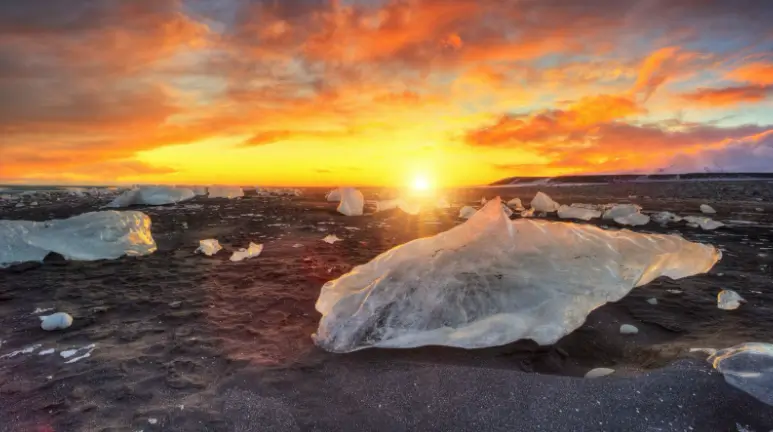
Jökulsárlón is 11 km (6.8 miles) farther east. Give yourself time to walk around the lagoon and cross to Diamond Beach, where ice from the lagoon reaches the black sand. For more detail on each stop, read our Jökulsárlón Glacier Lagoon guide and Diamond Beach guide rather than trying to cover both in one quick stop.
There is no camping by the lagoon. Plan to stay back at Skaftafell or continue to Höfn instead. From Jökulsárlón to Höfn is 79 km (49.1 miles). The traffic thins after the lagoon, but the smaller roads you see along the way often lead to private farms or are too rough for regular campers. Stay on appropriate public roads and use designated places to stop.
Camper van note: a standard 2WD camper van suits the main route to Jökulsárlón and Höfn when conditions allow. The better question is not whether you need a 4×4 for the famous stops. It is whether you are planning a particular detour that your vehicle is allowed and equipped to handle.
Where to Park and Camp Overnight on the South Coast
The South Coast is much easier when you choose overnight stops before you are tired. The campsites below are already part of the route above, so they work without forcing a long backtrack.
- Eyrarbakki: a simple first-night option if you have taken the coastal village detour and do not want to push all the way to Vík.
- Þjórsárdalur: useful if the valley and Highland-edge route are part of your plan. Only choose it after checking the conditions for the roads you intend to use.
- Skógafoss: practical for an early waterfall stop and a hike above the falls.
- Vík: a reliable overnight location close to Reynisfjara and Dýrhólaey.
- Þakgil: a more sheltered alternative beyond Vík. It takes additional driving, so allow time to get there.
- Skaftafell: a strong base for hiking and the glacier-lagoon section of the trip.
For a wider overview of designated sites, facilities, and planning tips, use our campsites guide. In Iceland, staying overnight outside of official campsites is prohibited in most cases, and camping or parking overnight on private or undesignated land requires explicit permission from the landowner. Don’t assume you can park overnight wherever a view looks tempting — stick to an official campsite, or get permission first if you’re considering another option.
Driving and Parking Safely on the South Coast
The South Coast is popular because the route is straightforward on paper. Conditions still change, and the driving day can be longer than it looks on a map. Check umferdin.is for live road information and vedur.is for weather before you leave, then check again if the forecast changes or you are heading away from Route 1.
The Hrauneyjar and F26 detour is closed in winter. Do not treat an open-looking gravel road as proof that it is appropriate for your vehicle. If your plan relies on that route, confirm the current status and your rental terms first. For more information, read our guide to when F-roads open.
At waterfalls, beaches, and viewpoints, use the designated parking areas. Do not stop in the travel lane for a photo. At Reynisfjara and Dýrhólaey, follow all posted warnings and keep the whole group aware of the conditions around them.
Choosing the Right Camper Van for This Route
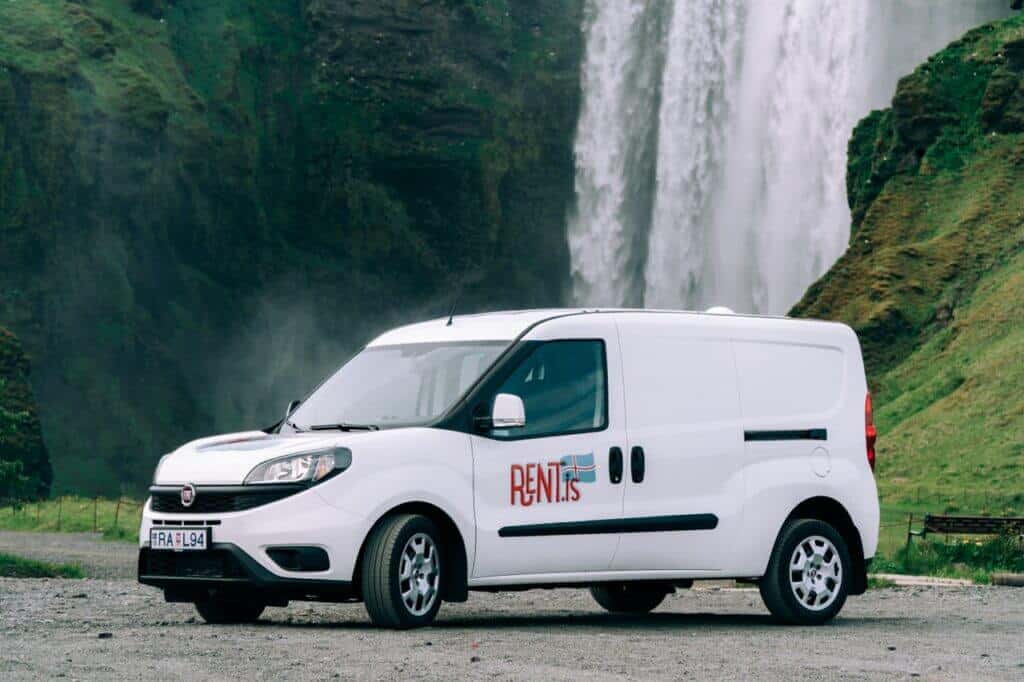
For the standard Reykjavík to Höfn route on Route 1, many couples and families will be comfortable in a 2WD camper van when current road and weather conditions suit it. Choose the size around the number of people, luggage, how much indoor space you need, and the season you are traveling in.
A 4×4 is not automatically the right choice for every South Coast trip. It becomes more relevant when you have a specific route in mind, such as the Þjórsárdalur and Hrauneyjar detour, and when that route is open and permitted for your vehicle. If you do not need that access, a standard camper van may be the simpler fit.
Start with our camper van options to compare the space and layout that work for your group. If the Highlands are central to your trip, look at the 4×4 campers and plan your route around the roads you are actually able to use.
FAQs
How many days do you need for the South Coast of Iceland?
Plan three days as a minimum for a camper van trip from Reykjavík to Höfn, with stops in Vík, Skaftafell, and Jökulsárlón. Four or five days gives you more flexibility for hikes, campsites, weather, and optional detours.
Can you drive the South Coast in a 2WD camper van?
Yes, the main South Coast route along Route 1 can suit a 2WD camper van when current road and weather conditions are appropriate. A 4×4 is not required just to see the main stops. It is more relevant for selected detours away from the paved route.
Where can you park overnight along the South Coast?
Staying overnight outside of official campsites is prohibited in most cases in Iceland, and any exception on private or undesignated land requires explicit permission from the landowner. Good route-based campsite options include Eyrarbakki, Þjórsárdalur, Skógafoss, Vík, Þakgil, and Skaftafell. Don’t assume a roadside viewpoint is an overnight spot — stick to an official campsite, or get permission first if you’re considering another option.
Is the Þjórsárdalur and Hrauneyjar detour open year-round?
No. The route described toward Hrauneyjar and F26 is closed in winter. Check Road.is on the day you plan to drive, then make sure the route is suitable for your vehicle and allowed under your rental agreement.
What is the difference between Jökulsárlón and Diamond Beach?
Jökulsárlón is the glacier lagoon where you can view the icebergs on the water. Diamond Beach sits across the road on the coast, where pieces of ice wash onto the black sand. They are close enough to visit together, but each has a different experience.
Is the South Coast safe to drive in a camper van?
The main route is manageable for many travelers, but road and weather conditions should guide your plan. Keep to suitable roads, check live updates before you leave, park only in safe designated places, and give yourself enough time so you do not need to rush.
Planning Your South Coast Camper Van Trip
The South Coast works best when you give it room to breathe. Keep the main Route 1 drive simple, choose your campsites before the evening, and treat the Highland-edge detour as a separate plan that needs the right conditions and vehicle.
View our camper van fleet to find the right fit for your route. If you are still deciding how this section fits into a longer trip, our Ring Road itinerary can help you connect the South Coast to the rest of Iceland.