
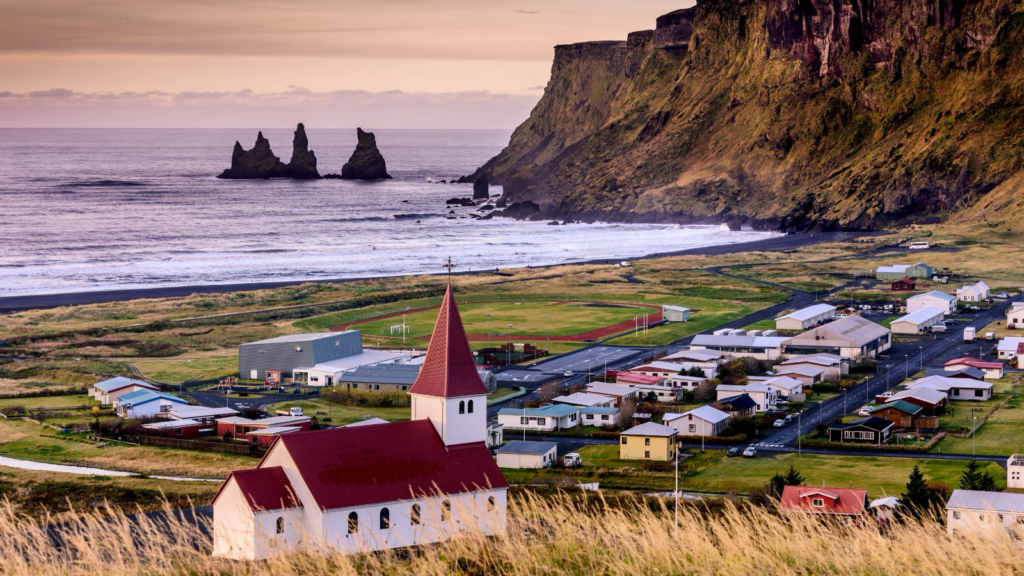
Can you drive Iceland’s Ring Road in a campervan over 7 days? Absolutely, and it’s actually the smartest way to do it. As Iceland’s leading campervan rental company, we’ve helped thousands of travelers complete the Ring Road loop, and here’s what hotel-based guides won’t tell you: a campervan eliminates accommodation hunting, lets you wake up to stunning landscapes instead of having to travel to them each day, and gives you the flexibility of a true adventurer. You’re not just visiting Iceland; you’re living in it.
This isn’t another generic Ring Road guide. This is from the campervan rental counter, the place where we see which vans handle the Eastfjords, track real fuel consumption across our fleet, and know exactly which campsites fill up first in summer. You’ll get honest vehicle recommendations matched to your group size, realistic campervan costs including Iceland’s new 2026 road tax, and day-by-day campsite picks based on where our customers actually stay.
Seven days is enough to complete the full 828-mile (1,332 km) loop and hit the major highlights without feeling rushed. You’ll drive 3-5 hours most days, cook breakfast, watch waterfalls, and fall asleep under the midnight sun. If you’ve got more time, 9-10 days adds breathing room. But if a week is your window, this itinerary makes it work: campervan style.
Not sure yet what you want to prioritise on your route? Our guide to things to do in Iceland covers every major experience by region and season before you commit to a day-by-day plan.
Quick Takeaways:
- The Ring Road covers 828 miles (1,332 km), which works out to around 118 miles (190 km) per day on a 7-day trip. Expect most days to include 3-5 hours of driving, with the rest of your time spent sightseeing.
- NEW FOR 2026: Road tax is now charged at 6.95 ISK/km (~$65-70 for full loop), but fuel prices have dropped 30%—total driving costs similar to 2025, just more transparent.
- Campervan wins: Lower accommodation costs (campsite fees only 1,500-3,500 ISK/person/night [$12-$30]), cook your own food, wake up at/near attractions, total flexibility.
- Book NOW: Popular campsites (Skaftafell, Mývatn) fill up fast in summer, and peak-season campervans often book out 3-4 months in advance.
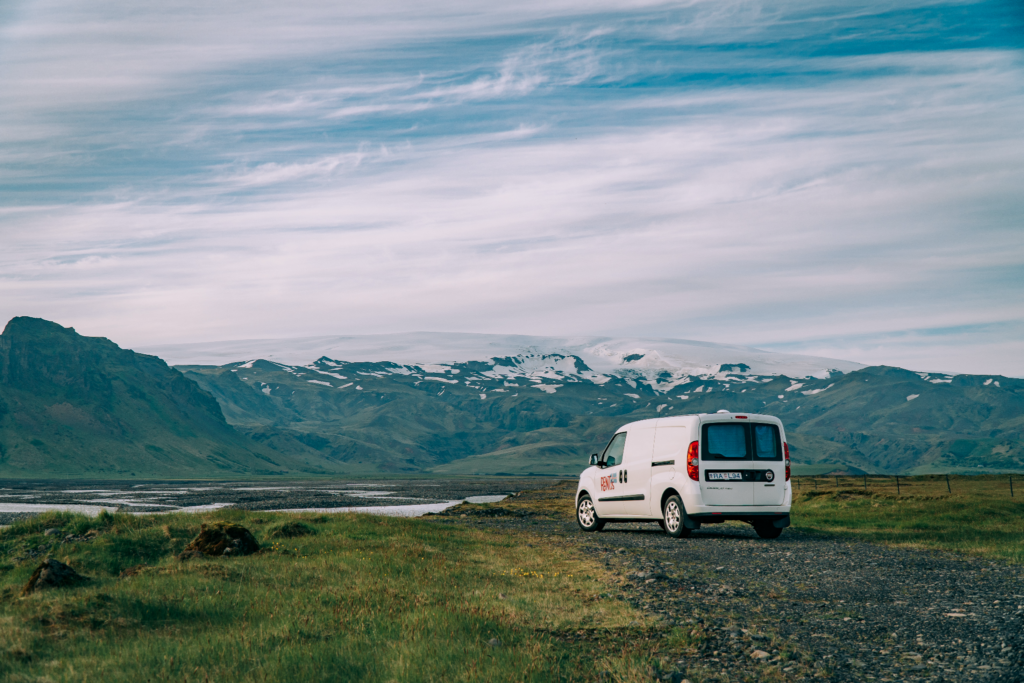
Pre-Trip Planning: The Expert’s Perspective
Choosing Your Campervan: What Actually Works
We rent hundreds of campervans every season. Here’s what works for the Ring Road versus what marketing photos promise.
Small Campervans (Fiat Doblo, VW Caddy, Renault Kangoo)
- Sleeping capacity: 2 people comfortably
- Pros: More affordable, excellent fuel economy, easy to drive and park, perfect for couples
- Cons: Cozy interior, you’ll spend more time outside, a limited kitchen workspace, and standing room varies by model
- Who they’re for: Couples, solo travelers comfortable with compact spaces, summer travel (May-September)
- Ring Road suitability: Excellent. 2WD is fine for the entire paved Route 1
Medium Campervans (Renault Trafic 3)
- Sleeping capacity: 3 people (2 adults + 1 child ideal)
- Pros: More headroom, proper kitchen space, comfortable for longer trips, and good storage
- Cons: Higher rental cost than some smaller options, slightly less efficient fuel economy
- Who they’re for: Small families, 2 people wanting more space, anyone planning 10+ days
- Ring Road suitability: Excellent. Slightly larger but still manageable everywhere
Large Campervans & Motorhomes (Renault Master, Motorhome 3, Crosscamp)
- Sleeping capacity: 4-5 people
- Pros: Full standing room, separate sleeping areas, real kitchen, bathroom (some models), feels like a tiny apartment
- Cons: Premium pricing, larger vehicle takes more focus to drive, lower fuel economy
- Who they’re for: Families of 4-5, groups wanting maximum comfort, winter travelers needing more insulation
- Ring Road suitability: Excellent for paved Ring Road. Some narrow sections in the Eastfjords require careful driving
4×4 Campervans (VW California 4×4, Toyota Hilux, Dacia Duster with Roof Tent)
- Sleeping capacity: 2-4, depending on model
- Pros: F-road access (Highlands), higher clearance for rough gravel, better in bad weather, roof tent models offer a unique experience
- Cons: Significantly higher cost, lower fuel economy, overkill if staying on Ring Road
- Who they’re for: Anyone planning F-road detours (Landmannalaugar, Þórsmörk), shoulder season travel (May/September), adventurers wanting Highland access
- Ring Road suitability: Excellent, but 2WD works fine if you’re not detouring to the Highlands. Save the premium unless you need F-road capability.
Our Recommendation for This 7-Day Ring Road Itinerary:
We suggest a small or medium campervan. The Ring Road is entirely paved, meaning you don’t need a 4×4. A VW Caddy or Fiat Doblo (for couples) or Renault Trafic 3 (for 3 people) handles it perfectly while saving you significant money over a week, compared to larger 4×4 models. If you’re a family of 4-5 or want maximum comfort, go for the Renault Master or a motorhome. For more help planning, use our family-friendly camper van planning guide before finalizing each overnight stop.
Real Campervan Costs: 2026 Iceland Ring Road Budget Breakdown
Let’s talk actual numbers. Campervan travel has a different cost structure than car plus hotel stays—higher upfront rental, near-zero accommodation, and major food savings.
Understanding the 2026 Road Tax
- Iceland switched from fuel taxes to per-kilometer charges on January 1, 2026
- Base rate: 6.95 ISK per kilometer (~$0.05/km or €0.045/km)
- Full Ring Road (1,332 km) = ~9,260 ISK road tax (~$65-70 or €60-65)
- Fuel prices dropped ~30%: Now 180-220 ISK/liter (was ~320 ISK/liter in 2025)
- Net result: Total driving cost unchanged, just more transparent. We handle road tax automatically—charged as a flat daily rate (~€9-11/day) or calculated at return.
7-Day Ring Road Budget Estimation by Campervan Type (2 People)
| Expense | Small Campervan | Medium Campervan | Large/4×4 |
| Campervan + Insurance | $1,208–$1,610 USD | $1,610–$2,013 USD | $2,013–$3,220 USD |
| Fuel (1,332 km) | $224–$282 USD | $247–$311 USD | $276–$368 USD |
| Road Tax (1,332 km) | $69–$75 USD | $69–$75 USD | $69–$75 USD |
| Campsites (7 nights, 2 people) | $121–$201 USD | $121–$201 USD | $121–$201 USD |
| Groceries (cooking most meals, per person) | $173–$230 USD | $173–$230 USD | $173–$230 USD |
| Parking + Activities | $115–$230 USD | $115–$230 USD | $115–$230 USD |
| TOTAL (2 people) | $1,909–$2,628 USD | $2,335–$3,060 USD | $2,765–$4,330 USD |
The Campervan Advantage:
Notice there’s no accommodation line? That’s the game‑changer. On this route, staying in hotels or guesthouses can easily add hundreds per night, while campsite fees for two people are a fraction of that cost. Those savings alone can more than cover the difference between renting a campervan and a regular car. Plus, by cooking your own meals, you cut a substantial chunk off your overall food budget, making the campervan one of the smartest value‑driven choices for exploring Iceland.
Cost-Saving Tips from the Campervan Counter
- Book 3-4 months ahead: Summer campervan prices can jump 40-60% as availability drops.
- Gravel protection is recommended: Flying rocks can cause a lot of damage.
- Cook most meals: Restaurant meals can run $20-40+. A week of groceries costs roughly $87–$115 USD per person.
- Fill up in towns: Remote station fuel can cost 16–24 cents USD more per liter
- Camp strategically: Some campsites have hot tubs/pools included (Laugarvatn, Mývatn)—try to use them instead of paying for hot spring entry wherever possible.
Day-by-Day Campervan Itinerary
Each day includes realistic driving times, campsite recommendations, water refill points, and campervan-specific tips. Remember: you’re not racing to hotels, so you can adjust on the fly.
Day 1: Keflavík Airport → Golden Circle → Selfoss Area
90 miles (140 km) | GPS: 2h 15min | Realistic: 4-5 hours with stops
Morning/Midday
Pick up your campervan at Keflavík. Our team will walk you through the kitchen setup, water tanks, power hookup, and sleeping configuration. Budget 30-45 minutes for orientation—it’s worth it.
Campervan tip: Drive to a Bónus supermarket in Keflavík or Reykjavík before leaving the city. Stock up on groceries for 2-3 days (bread, cheese, deli meat, eggs, pasta, coffee, breakfast supplies). This saves money, and you won’t find another proper supermarket until Selfoss.
Optional: Blue Lagoon (book your timeslot in advance, and allow 2-3 hours to enjoy the experience). It’s 15 minutes from the airport. If your flight lands after 2 pm, skip for now and save it for day 7.
Afternoon
Þingvellir National Park: This is where the North American and Eurasian tectonic plates meet. Park at P1 or P5 (day‑pass fee around $8–$10 USD depending on vehicle size; one payment covers all main lots). Walk to Öxarárfoss Waterfall (15 minutes each way). Campervan note: Parking lots accommodate large vehicles—no issues.
Fuel & Water: Fill up on fuel in Selfoss. Also check if you need a fresh water top-up (most rental campervans leave tanks full, but confirm before you drive off).
Evening
If time permits: Geysir geothermal area (Strokkur erupts every 5-8 minutes) and Gullfoss Waterfall. If your flight landed late, cook dinner at your campsite and save these for a sunrise visit tomorrow—you’ll have them nearly to yourself at 7 am.
Campervan advantage: No rush to check into a hotel. You control your schedule entirely.
Where to Camp – Night 1
Selfoss/Hella area campsites (your choice):
• Fossatún Camping (near Reykholt): Hot tubs included, kitchen facilities, beautiful setting. $32–$40 USD total per night for a campervan/tent pitch, plus small add‑ons per person if applicable.
• Skjól Campsite (Hveragerði): Indoor cooking area, hot tubs, close to hot river hike. $16–$20 USD range per pitch, with potential extra charges for services.
• Kidagil Campsite (near Hella): Basic but scenic, river views, less crowded. $12–$15 USD per night for the site/vehicle, with possible minor per‑person fees.
Facilities check: All have water hookup, dump station, showers, and electricity (small fee). Book ahead in peak summer.
Day 2: South Coast: Waterfalls, Black Sand Beach, Glaciers
128 miles (207 km) | GPS: 3h 15min | Realistic: 6-7 hours with stops
Morning
If you skipped Golden Circle yesterday, complete it this morning (add 2 hours). Otherwise, break camp and head east on Route 1.
Seljalandsfoss (9:30 am): One of Iceland’s most famous waterfalls, Seljalandsfoss lets you walk behind the cascade for a unique view. Campervan parking is available, but it starts filling up quickly by around 11 am, so arriving early is worth it. Bring a waterproof jacket — you will get soaked. Parking costs $6 USD.
Gljúfrabúi: Just a 10-minute walk from Seljalandsfoss, this hidden waterfall is tucked inside a narrow canyon and well worth the short detour. Reaching it means stepping through a shallow stream, so waterproof boots are a good idea.
Midday
Skógafoss: One of Iceland’s most powerful waterfalls, Skógafoss is an easy and worthwhile stop on the South Coast. Climb the 527 steps to the top for sweeping views and a good leg stretch after a few hours of driving. Parking costs about $6 USD, and the lot is campervan-friendly.
Sólheimasandur Plane Wreck (optional): Reaching the wreck involves a flat 4 km walk each way across black sand, so allow around 90 minutes in total. Unless you are especially keen to see it, this is one stop many travelers are happy to skip — it is a long walk for a quick photo. In most cases, your time is better spent at Reynisfjara.
Afternoon
Reynisfjara Black Sand Beach: With its black sand, basalt columns, and towering sea stacks, Reynisfjara is one of Iceland’s most dramatic beaches. Critical safety note: never turn your back on the ocean — sneaker waves here are extremely dangerous and have killed tourists. Stay well back from the shoreline at all times. Park in the main lot (which is free for now) and allow around 30 minutes.
Dyrhólaey Peninsula (optional, 15-minute detour): A great short detour for sweeping coastal views, a lighthouse, puffins from May to August, and the peninsula’s dramatic arch rock formation. Parking is free.
Evening – Campervan Dinner Strategy
Stop at Vík Krónan supermarket to restock before continuing east — it is the last proper grocery store until Höfn, about 124 miles (200 km) away. It is also a good place to fuel up. Then cook dinner at your campsite and enjoy one of the best parts of campervan travel: incredible views right outside your door.
Where to Camp – Night 2
Vík or Kirkjubæjarklaustur area:
• Vík Campsite: Right in town and well equipped with hot showers, electricity, and a dump station, Vík Campsite is a convenient overnight stop on the South Coast. It fills up fast in summer, so book ahead if you can. Prices start at around $16 USD per person and $16 USD per campsite/vehicle, with small extra charges for some services.
• Skaftafell Campsite (if you push ahead): Near the entrance to Vatnajökull National Park, this campsite puts you in a prime position for tomorrow’s hikes. Rates are usually around $15–$17 USD per pitch per night, and demand is high in June through August, so book ahead.
• Kirkjubæjarklaustur Campsite: Quieter, cheaper, and well equipped, this is a good alternative to the busier campsites farther east. Expect to pay around $13 USD per night for the site or vehicle, with small additional fees for extra people or optional services.
Day 3: Glaciers, Glacier Lagoon, Diamond Beach
170 miles (272 km) | GPS: 3h 45min | Realistic: 7-8 hours with stops
Morning
If you camped at Skaftafell, you’re already here. Otherwise, drive to Skaftafell (Vatnajökull National Park).
Hike to Svartifoss (Black Falls): Allow about 45 minutes each way for this moderately steep but manageable hike. The waterfall’s dramatic basalt column backdrop makes it one of Iceland’s most memorable short walks, and it is absolutely worth the effort. Starting between 8 and 9 am gives you the best chance of beating the crowds.
Optional: Book a glacier hike on Skaftafell Glacier (3-4 hours, book in advance). These guided hikes usually last 3-4 hours and should be booked in advance, especially in summer. Skaftafell is one of the most accessible places in Iceland to try glacier hiking, making it a great choice if you want to walk on ice during your trip.
Midday
Svínafellsjökull Glacier Viewpoint: Just 5 minutes off Route 1, this easy stop gives you a close-up view of one of Iceland’s most dramatic glacier tongues. Pull into the campervan-friendly gravel lot and follow the short walk to the viewpoint overlooking the glacier and lagoon. Allow around 15 minutes. Free to visit.
Jökulsárlón Glacier Lagoon: This is THE Iceland moment – a stunning glacier lagoon filled with icebergs drifting past around the clock. Park in the large free main lot, which is suitable for campervans, then walk the shoreline and keep an eye out for seals. Give yourself at least 1-2 hours here.
Boat tours: For a closer look at the icebergs, book a Zodiac or Amphibious boat tour on the lagoon. Tours last about 1 hour, usually cost around $80–$95 USD, and often sell out in advance. If your budget allows, this is one of the best ways to experience Jökulsárlón beyond the shoreline.
Campervan lunch tip: Make sandwiches to enjoy with your iceberg view. There’s a café here, but it’s often pricey and crowded.
Afternoon
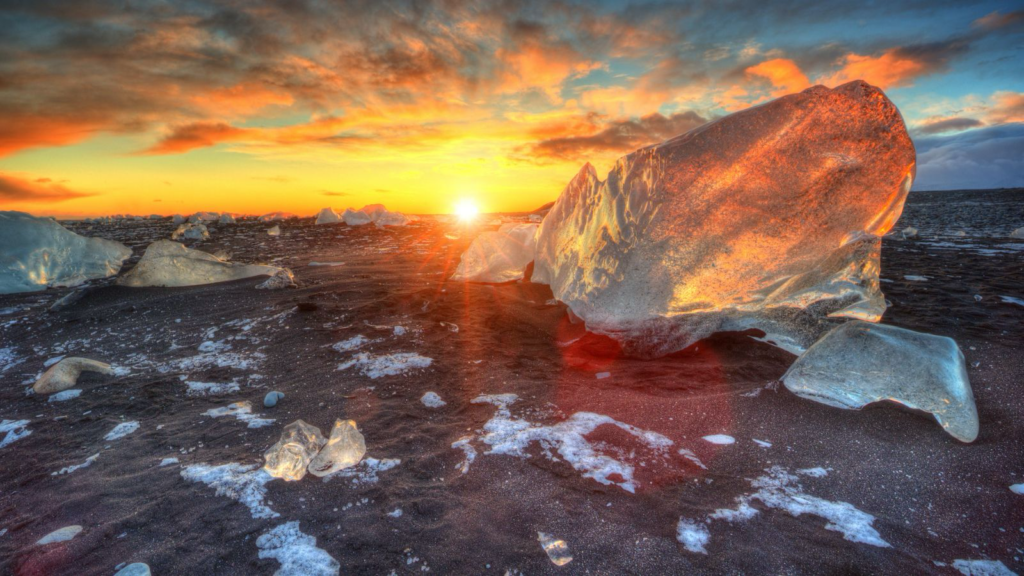
Diamond Beach: Located just across Route 1 from Jökulsárlón, Diamond Beach is where icebergs wash up on the black sand, creating one of Iceland’s most striking sights. Ice levels vary depending on the season and recent conditions, but it is often most dramatic in winter and spring. Budget around 30-45 minutes here.
Drive to Höfn (45 minutes). This is Iceland’s langoustine capital.
Evening
Höfn town: Stop here to restock groceries at Nettó or Samkaup, refill fresh water at the campsite, and fuel up before the drive to Egilsstaðir, around 111 miles (180 km) away. It is the last reliably convenient fuel stop on this stretch of the route.
Dinner: If splurging, try langoustine at Pakkhús or Hafnarbúðin (harbourside, $35–$52 USD per person). Otherwise, cook at camp—langoustine from the supermarket works too.
Where to Camp – Night 3
• Höfn Campsite: Centrally located and well equipped, Höfn Campsite offers hot showers, electricity, and a dump station, making it a practical overnight stop. Prices are usually around $14–$16 USD per campsite or vehicle, with small extra fees for some services or additional people. It can be windy here, so make sure everything is well secured if strong winds are expected.
• Djúpivogur Campsite (31 miles / 50 km past Höfn): Smaller, quieter, and more scenic, this campsite is a charming alternative to the busier overnight stops farther west. Expect to pay around $12 USD per site or vehicle, with occasional small extra charges. Fjord views are a nice bonus.
Day 4: Eastfjords: The Scenic Stretch
173 miles (281 km) | GPS: 4h 30min | Realistic: 7-8 hours with stops
Morning
Vestrahorn: Take the short detour off Route 1 toward Stokksnes to see one of Iceland’s most striking mountain views, with jagged peaks rising behind a black sand beach. Access is on private land and costs around $8 USD, with campervan parking available on site. Allow 30-45 minutes.
Fuel check: Fill up in Höfn before heading out. The next reliable fuel stop is Djúpivogur, around 40 miles (65 km) away, and after that, you may not find another good option until Egilsstaðir, about 75 miles (120 km) farther on. This is one of the longest fuel gaps on the Ring Road.
Campervan note: This is one of the stretches where fuel range matters most. Smaller campervans with 50-60L tanks can usually manage it with a buffer, and larger motorhomes with 70-80L tanks should have no trouble. Still, topping up in Höfn is the smart move.
Midday – The Eastfjords Drive
This is the Ring Road’s most scenic section, a winding coastal road through 10+ fjords. Mountains plunge straight into the sea. Your GPS says 2.5 hours from Djúpivogur to Egilsstaðir. Reality: 3.5-4 hours with photo stops.
The road twists through mountain passes—drive cautiously. Some sections have steep drop-offs. Passing spaces are frequent, but watch for oncoming traffic.
Campervan advantage: Pull over anywhere beautiful and make coffee. You’re driving a kitchen.
Small-town stops: Djúpivogur (stone egg art installation, cute harbor), Fáskrúðsfjörður (French history museum), Stöðvarfjörður (Petra’s Stone Collection—incredible if you like minerals).
Afternoon
Egilsstaðir: The largest town in East Iceland, Egilsstaðir is the best place to restock groceries, fuel up, and take care of any campervan basics before continuing on. You’ll find Bónus and Samkaup here, and it is the last proper supermarket stop before Akureyri, about 168 miles (270 km) away. A dump station is also available if needed.
Optional detour: Seyðisfjörður—Allow about 17 miles (27 km) each way and 1.5 hours total for this beautiful side trip over the mountain pass. The drive itself is a highlight, and the rainbow street leading to the Blue Church is Seyðisfjörður’s best-known stop. Go if the weather is clear and you have time; skip it if conditions are poor or you are tired, as the road is steep, winding, and requires focus.
Evening
Drive to the Lake Mývatn area (1h 45min from Egilsstaðir). Route 1 is generally in good condition on this stretch, but some sections have frost heaves, so it is worth taking it steady and watching your speed.
Evening activity: If you arrive before 9 pm and it’s clear, drive to Hverir geothermal area (5 minutes from Mývatn campsites). Sunset over the bubbling mud pots and steaming earth is one of the area’s most surreal sights.
Where to Camp – Night 4
Lake Mývatn area (Reykjahlíð village):
• Bjarg Campsite: A well-equipped and popular campsite with excellent facilities, including hot tubs, a kitchen building, and a dump station. Expect to pay around $16–$20 USD per person, plus $10–$15 USD for the vehicle, electricity, or similar peak-season extras. Book ahead in summer.
• Hlíð Campsite: More basic but usually cheaper, Hlíð is a good choice if you want a quieter campsite with nice views in the Mývatn area. Rates are typically around $13–$16 USD per person, with small extra fees possible for power or the campervan.
Campervan tip: The hot tub at Bjarg is a huge win after a long driving day. Worth the premium.
Day 5: Diamond Circle & Lake Mývatn Geothermal Wonders
162 miles (262 km) | GPS: 3h 45min | Realistic: 7-8 hours with stops
Morning
Base yourself at the same campsite tonight and spend the day exploring the Mývatn area by campervan, following a circular loop of nearby sights before returning later on.
Dettifoss: Europe’s most powerful waterfall, with an average flow of around 500 cubic meters per second, is one of the most impressive stops in North Iceland. From Mývatn, take Route 862 on the west side — it is paved, campervan-friendly, and takes about 45 minutes. Route 864 on the east side is rough gravel and is best avoided in a 2WD campervan unless you are confident driving on gravel and have enough ground clearance.
Walk from the parking area to the falls: The walk takes about 15 minutes each way, so allow around 1 hour total, including time at the viewpoint. The power is staggering—you’ll feel the ground vibrate.
Midday – Mývatn Geothermal Highlights
Drive back to the Mývatn area, then spend the midday hours exploring the area’s main highlights.
Námafjall Hverir: Famous for its bubbling mud pots, steaming fumaroles, and vivid geothermal landscape, Hverir is one of the most distinctive stops in the Mývatn area. The smell of hydrogen sulfide is strong, and it really does resemble rotten eggs. Stay on marked paths at all times, as the ground can be fragile and dangerous. Allow around 30 minutes. Free campervan-friendly parking.
Víti Crater: This blue-green crater lake is one of the easiest stops in the Krafla area, reached by a short walk from the parking area. It is a quick but worthwhile detour, and 20 minutes is usually plenty.
Campervan lunch: Make lunch at the Mývatn campsite between stops. Use your kitchen facilities, have a proper sit-down meal, then continue exploring.
Afternoon – Mývatn Nature Tour
Grjótagjá Cave: Best known as a Game of Thrones filming location, this cave is filled with vivid blue geothermal water and steam, creating one of the area’s most memorable short stops. The water is around 118°F (48°C), which is too hot for bathing, but it is absolutely worth seeing. Allow around 10 minutes.
Hverfjall Crater: One of the standout sights around Mývatn, Hverfjall is a huge volcanic crater with a short but steep 15-minute climb to the rim over loose gravel. The panoramic views from the top are excellent, especially on a clear day. It is often windy here, so a jacket is a good idea.
Dimmuborgir Lava Field: Nicknamed the “Dark Castles,” this lava field is filled with strange, twisted formations and some of the easiest walks in the Mývatn area. Loop trails range from 15 minutes to 1 hour, so you can spend as little or as much time here as you like. It is also another Game of Thrones filming location.
Skútustaðagígar Pseudocraters: Formed when lava flowed over wetlands and triggered steam explosions, these unusual craters are one of the most interesting geological stops around Lake Mývatn. The area is also excellent for bird watching, especially if you are hoping to spot some of the lake’s rare duck species.
Evening
Mývatn Nature Baths: North Iceland’s best-known geothermal spa, the Mývatn Nature Baths offer warm mineral water, fewer crowds than the Blue Lagoon, and much better mountain views. Entry usually costs around $35–$52 USD, and booking ahead is recommended. Budget 1.5–2 hours, and bring your own towel to avoid pricey rental fees.
Campervan advantage: You’re already staying at Mývatn. Drive back to the campsite after the baths, cook dinner, and sleep without rushing to a hotel check-in.
Where to Camp – Night 5
Same campsite as night 4 (Bjarg or Hlíð at Lake Mývatn). You’re staying put for 2 nights—no packing up the van.
Day 6: North Iceland: Goðafoss, Akureyri, West to Borgarnes
235 miles (380 km) | GPS: 5h | Realistic: 6-7 hours with stops
Morning
Break camp at Mývatn. This is the longest driving day of the itinerary: around 235 miles (380 km) to Borgarnes, or 168 miles (270 km) if you choose to overnight in Akureyri instead.
Goðafoss (“Waterfall of the Gods”): Around 45 minutes west of Mývatn, this impressive horseshoe-shaped waterfall sits just off Route 1, making it an easy and worthwhile stop. Park on either side of the river — or walk both for different angles. Allow about 20 minutes. Free, with campervan parking available.
Midday – Akureyri
Akureyri: Iceland’s second-largest town, with around 19,000 people, and the first proper urban stop since Reykjavík.
What to do: Take a 30-minute walk around downtown Akureyri, stop by Akureyrarkirkja for great views over town, browse a few shops, and restock at Bónus or Hagkaup. There is also a campervan service station here if you need to dump grey water or refill fresh water.
Fuel up: Fill up your tank here—there’s a long stretch ahead with 168 miles (270 km) to Borgarnes.
Lunch: Akureyri is a good place to stop for a sit-down meal, with plenty of restaurant options in town. Or, if you want to save money, pick up supplies and use your campervan kitchen instead.
Afternoon/Evening
Decision point: Stay in the Akureyri area tonight, or push through to the Borgarnes area.
Stay near Akureyri if you want a more relaxed day, with time to enjoy the town pool or explore a little more before camp. This is the better choice if you are feeling tired.
Push on to Borgarnes if you want to reduce tomorrow’s drive by about 62 miles (100 km) and give yourself more time in Reykjavík before heading to the airport. It is doable, but it makes for a longer day.
Break the drive: Stop at Kolugljúfur Canyon, around 15 minutes off Route 1, just past Hvammstangi. There is a short walk to the waterfall and narrow gorge, making it a worthwhile leg stretch before continuing on.
Where to Camp – Night 6
Option A—Akureyri area:
• Hamrar Campsite (Akureyri): Centrally located with all the required facilities. Nightly cost is usually around $16 USD per person, with extra fees for the campervan (about $10–$15 USD) and possible small charges for power or services. Great base if you want to stay near town.
Option B—Borgarnes area (if you pushed through):
• Borgarnes Campground: Located in the town center with full services available. Typical nightly fee is roughly $14–$16 USD per person, plus a vehicle or service surcharge.
• Fossatún Camping: About 18 miles (30 km) north of Borgarnes, Fossatún is a scenic and well-liked campsite with hot tubs and a beautiful riverside setting. Nightly rates are usually around $16 USD per person, with small extra charges for electricity or added facilities.
Day 7: Return to Reykjavík & Departure
Variable | Depends on night 6 location and flight time
Morning – If You Stayed Near Akureyri
Drive from Akureyri to Reykjavík: Allow about 5-6 hours to cover the 242 miles (390 km) to Reykjavík, making this one of the longer driving stretches of the trip. Leave by 7-8 am to avoid any holdups.
Break up the drive with a stop at Grábrók Crater, just off Route 1 near Bifröst. The hike to the top takes about 15 minutes and is a good chance to stretch your legs.
You should reach Reykjavík around midday. If you have an evening flight, there is usually still time for lunch, a quick look around the city, or a walk by the harbor.
Morning – If You Stayed Near Borgarnes
Drive from Borgarnes to Reykjavík: The drive is about 47 miles (75 km) and takes roughly 1 hour, giving you a full morning to spend in the city before heading to the airport.
Reykjavík: Use your time in the capital to visit Hallgrímskirkja for panoramic tower views, stroll along Laugavegur for shops and cafés, and explore the old harbor area. Allow around 2-3 hours. Entry to the church tower is about $8 USD.
Optional: Blue Lagoon — If you skipped it on day 1, this is a convenient time to go. The Blue Lagoon is about 20 minutes from Keflavík Airport, making it a good final stop before an afternoon flight. Be sure to book a timeslot in advance and allow around 2-3 hours.
Campervan Return
Drive to Keflavík Airport: It is about 45 minutes from Reykjavík, so aim to return your campervan 2-3 hours before your flight.
Return process: Expect a short inspection covering the undercarriage, windshield, grey water tank, and all included items such as bedding and kitchen gear. If you added gravel protection, windshield chips are covered. Allow 30-45 minutes for the return process and paperwork.
Campervan return tip: Top up the fuel tank before you arrive. Returning your camper with anything less than a full tank means that additional fuel is charged at a premium rate.
Grey water dump: If you didn’t dump at the last campsite, there’s a dump station near the airport. Ask us for the location when you return.
Flight Timing Tips
Morning flight (before 11 am): Stay near Keflavík Airport on night 6 instead of in Akureyri or Borgarnes. That means a very long drive on day 6 from the Mývatn area to the airport region, around 310 miles (500 km), but it makes an early departure much less stressful.
Afternoon or evening flight: Return your campervan 2-3 hours before departure. Keflavík is a relatively small airport, so security is usually quicker than at larger international hubs.
Campervan note: After a week on the road, returning the van can feel a bit like saying goodbye to a travel companion — slightly weird, but completely true.
Campervan Life: Practical Tips from the Rental Counter
Insurance That Matters for Campervans
We process hundreds of damage claims every season. Here’s what actually happens with campervans:
Gravel Protection (GP): Highly Encouraged
Big trucks constantly kick up stones on Icelandic roads; they hit your campervan’s windshield at high speed, and cracks happen. Without gravel‑damage protection, you can be responsible for the full cost of a new windshield, which is much larger and more expensive than a car’s. With gravel‑protection coverage, that kind of damage is usually covered, so you avoid a shock bill. The protection typically costs around $17–$29 USD per day—for most travelers, taking it out for every trip is the smart call.
Sand & Ash Protection (SAAP): Take It
Iceland has active volcanoes, and strong winds can whip up volcanic sand and ash, especially in the south and southeast—exactly the route most travelers drive on days 2–3. Over time, that sandblast‑like effect can deeply scratch your campervan’s paint, and sometimes even etch glass. Without Sand and Ash Protection (SAAP), you can be liable for the full repair cost, which adds up quickly. The coverage typically costs around $11–$17 USD per day—strongly recommended if you’re traveling March–October, when winds are strongest.
CDW vs SCDW
CDW (Collision Damage Waiver) usually comes with a $2,900–4,600 USD deductible for campervans. SCDW (Super Collision Damage Waiver) reduces that to roughly $400–$600 USD or zero for covered damage.
If you hit a sheep (yes, it happens), back into a campsite pole (also happens), or scrape a low‑clearance entrance (yep), you pay the deductible without SCDW. Over a 7‑day trip, SCDW typically adds about $115–$160 USD, but it can save you a $2,900+ USD liability in a single incident. We recommend it.
Fuel Strategy for Campervans
Where to Fill Up (Longer Gaps for Campervans):
Campervans use more fuel than cars (7-11 L/100km depending on size). Plan accordingly:
- Selfoss (Day 1): Last major station before the south coast
- Vík (Day 2): Fill here—next station is 43 miles (70 km) away
- Höfn (Day 3): CRITICAL—This is the longest fuel gap (112 miles/180 km to Egilsstaðir)
- Egilsstaðir (Day 4): Fill before heading north
- Akureyri (Day 6): Full tank before returning west
Fuel Tank Range by Campervan Type:
- Small campervans (Fiat Doblo, VW Caddy): 50-60L tanks, 7-8 L/100km consumption = ~400–465 miles/650-750 km range. Fill every 220–250 miles/350-400 km to be safe.
- Medium campervans (Renault Trafic): 60-70L tanks, 8-9 L/100km = ~435–500 miles/700-800 km range. Comfortable buffer for Eastfjords.
- Large motorhomes: 70-90L tanks, 9-11 L/100km = ~435–560 miles/700-900 km range depending on size. More forgiving.
- 4×4 campervans: 60-80L tanks, 10-12 L/100km = ~370–435 miles/600-700 km range. Worst fuel economy, more frequent stops.
Campervan Life: Common Mistakes
Things we see regularly that cost travelers time, money, or headaches:
- Not dumping grey water regularly: Your sink drains into a grey water tank (20-40L capacity). If you ignore it and it fills up, your sink stops draining. Dump every 2-3 days at campsites; it only takes 5 minutes.
- Forgetting to refill fresh water: You have 40-80L of fresh water for drinking/cooking. Refill at every campsite—it’s free. Running out mid-drive is annoying.
- Leaving food in the van overnight: Iceland has curious birds (and occasionally foxes). Lock your food in the van, and close vents. We’ve had ravens peck through screens.
- Not securing loose items before driving: That coffee mug on the counter will fly across the van the first time you brake. Secure everything.
- Underestimating wind: Iceland is WINDY. Open your sliding door carefully—wind can rip it open and bend hinges ($575+ USD damage). Face doors away from the wind when possible.
- Wild camping where it’s illegal: You MUST camp in designated campsites or on private land with permission. Wild camping is illegal and heavily fined ($345–415 USD), and can be much higher depending on circumstances. The parking lots at attractions are NOT campsites.
- Driving off-road: Even 10 meters. It’s illegal, $1,150+ USD+ fine, and specifically prohibited in your rental agreement. Moss takes 100+ years to regrow.
Frequently Asked Questions
Do I need a 4×4 campervan for the Ring Road?
No. The Ring Road (Route 1) is paved for its entire 828 miles (1,332 km). A standard 2WD campervan like our Fiat Doblo, VW Caddy, or Renault Trafic handles it perfectly in summer (May-September). You only need 4×4 if you plan F-road detours into the highlands (Landmannalaugar, Þórsmörk, Askja)—these roads require high clearance and 4-wheel drive. For this 7-day itinerary staying on Route 1, save roughly $790–$1,600 USD and rent a 2WD. The only exceptions are early May or late September, when the weather can be unpredictable, or if you specifically want Highland access.
Is 7 days enough in a campervan or will I feel rushed?
Seven days work beautifully in a campervan. Because you’re not checking in/out of hotels or hunting for restaurants, you actually have MORE flexibility than hotel-based travelers. You control your schedule completely. The longest driving day is day 6 (236 miles/380 km if pushing to Borgarnes) at 6-7 hours behind the wheel. Otherwise, you’re looking at 3-5 hours daily driving with the rest spent exploring. The campervan lets you adjust on the fly—wake up early and beat crowds to Jökulsárlón, or sleep in and skip something if you’re tired. Nine to ten days adds breathing room and shorter drives, but seven days absolutely works without feeling rushed.
How much does a 7-day Ring Road campervan trip actually cost?
For two people in a small campervan, a 7‑day Ring Road trip usually lands somewhere in the broad range of a couple of thousand dollars for a comfortable, reasonably stress‑free week. The campervan rental with insurance is the biggest chunk, then you add in fuel, tolls, and a modest amount for campsite stays, groceries, and a few paid activities. It’s generally more expensive to rent than a regular car, but you tend to save a noticeable amount on accommodation compared with hotels, and you can keep food costs under control by cooking for yourselves. Overall, the total often ends up feeling roughly on par with—or only a bit above—a car‑plus‑hotels trip, once you factor in those savings, while giving you a lot more freedom and a more relaxed, campervan‑style experience.
What about the new 2026 Iceland road tax for campervans?
Starting January 1, 2026, Iceland replaced fuel taxes with a per‑kilometer road‑usage charge, so you’re now paying a bit more through a daily road‑tax‑style fee and a bit less at the pump. The base rate for standard vehicles is about 6.95 ISK per kilometer (roughly $0.05/km), which means the full Ring Road loop (around 820miles/1,330 km) adds a relatively small amount to your total cost—on the order of a few hundred dollars spread across the rental, rather than a big fuel‑tax bump. Rental companies usually bake this into a flat daily fee charged per vehicle, so you don’t need to calculate mileage or worry about a surprise at the counter. Because the old fuel tax is gone, fuel prices dropped noticeably, so your overall driving cost feels roughly similar to 2025, just broken down differently. Campervans still use more fuel than cars (7–11 L/100 km), so your fuel cost runs higher, but the road‑tax charge per kilometer is the same for all light vehicles.
When’s the best time to drive the Ring Road in a campervan?
June through August is peak campervan season: near-endless daylight (midnight sun means 20+ hours of light), warmest weather (50–59°F/10-15°C average), and all roads and campsites open. Downsides: higher prices (campervan rentals 40-50% more expensive) and popular campsites (Skaftafell, Mývatn) book out months ahead. May and September are excellent shoulder months—fewer crowds, 30-40% cheaper campervan rentals, and still mostly good weather. Nights get cold (41–50°F/5-10°C), but campervans have heating. October-April is tough for campervan travel: limited daylight (4-5 hours in December), many campsites closed, road conditions unpredictable. If you want northern lights, visit September-October when nights are dark, but roads are still open, and most campsites are operational.
Do I have to book all campsites in advance?
For summer (June-August): YES, book ahead. Popular campsites—Skaftafell (glacier area), Mývatn (north), Vík (south coast)—fill up, especially sites with hot tubs or prime locations. Some turn away campers when full, forcing you to drive 30-60 miles (50-100 km) to the next site (exhausting after a full day). We see this happen regularly. Book your 7 nights as soon as you finalize dates. Most campsites take online bookings and offer flexible cancellation. May and September: You can wing it more—campsites rarely fill, though popular ones (Bjarg at Mývatn) can still be busy on weekends.
Can I cook most of my meals in the campervan?
Absolutely—and you’ll save significantly by doing it. Every Rent.is campervan comes with a 2‑burner gas stove, pots, pans, dishes, utensils, and a fridge, so you can cook anything you’d make in a basic kitchen: eggs, pasta, stir‑fries, soup, grilled sandwiches, and more. Gas canisters generally last the full week, and we’ll provide extras if needed.
Stock up on groceries in Reykjavík (Bónus supermarket is usually the cheapest option), then restock in Akureyri midway through your trip. Restaurant meals in Iceland are noticeably more expensive, so cooking most of your meals in the campervan can make a big difference to your overall budget while still letting you treat yourself to a few special meals out. Plus, there’s something magical about making coffee with a glacier view.
What if I’ve never driven or slept in a campervan before?
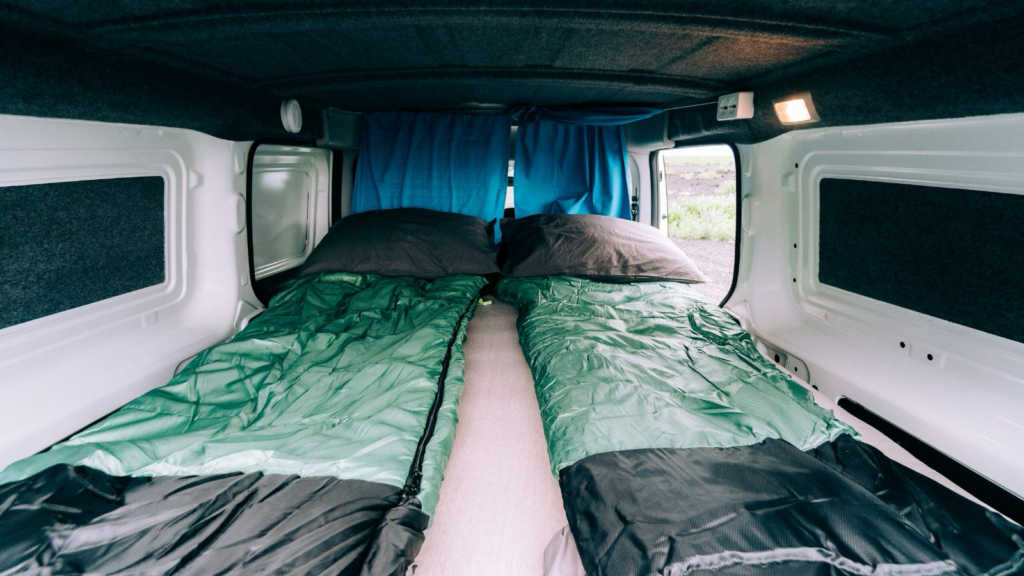
First-timers do this trip constantly. Campervans are easier than you think. They drive like slightly larger vans—just take corners slower and remember your height (watch for low branches at campsites). Parking is manageable; Iceland’s parking lots are campervan-sized. Sleeping: The beds are comfortable (real mattresses), and summer nights stay light, which helps if you’re not used to van life. Setup takes 5 minutes once you’ve done it once (convert dining table to bed, roll out sleeping bags, or arrange bedding). Most people adapt within the first day. Our team gives you a full 30-minute orientation at pickup—we’ll show you everything. If you’re nervous, pick a smaller campervan (VW Caddy drives almost like a car). By day 3, you’ll be a pro.
Can I do this trip solo in a campervan?
Absolutely. Iceland is one of Europe’s safest countries, and solo campervan travel is common. The challenge is that costs don’t simply halve. You still pay the full campervan rental, campsite fees are often per vehicle, and fuel doesn’t change with the number of travelers. That said, the campervan gives you a lot of flexibility and safety—you control your own schedule, you’re sleeping in a locked vehicle, and you can easily join other travelers at campsites, since the van‑life community is naturally social. Many solo travelers tell us the campervan is exactly what made their Iceland trip possible, letting them travel on their own terms without worrying about accommodation availability or eating alone in restaurants.
Ready to Experience Iceland’s Ring Road by Campervan?
A 7-day Ring Road trip by campervan is one of the best ways to see Iceland: more flexibility, more scenery, and a far more memorable experience than rushing between hotels. You can wake up near Jökulsárlón, cook breakfast surrounded by incredible views, and shape each day around the weather, the road, and the stops that matter most to you.
This guide is built around real campervan travel, with realistic driving days, practical campsite planning, honest cost expectations, and the details that make a difference once you are out on the road. At Rent.is, we help travelers choose the right campervan for Iceland every day, and that experience is behind the advice in this itinerary.
If you are ready to book, explore the campervan options at Rent.is or contact our team for help with vehicle choice, insurance, and route planning.