
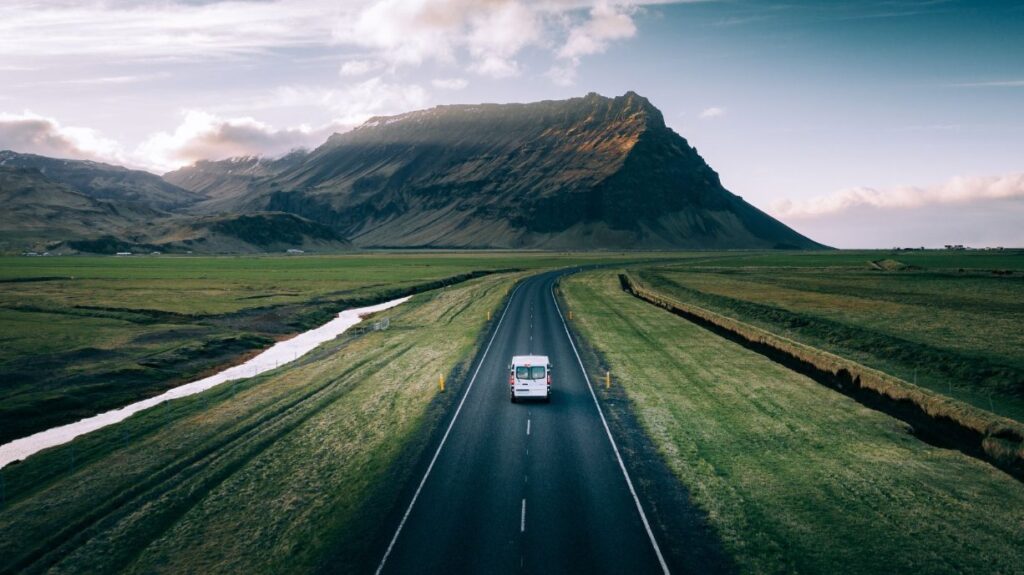
A road trip in a camper van across Iceland is an experience you want to savor, and to do that, you have to nail the planning. One of the key parts of this is knowing your budget and getting the most out of it. A real Iceland camper van budget is more than the daily rental rate for whichever camper you choose. In addition to planning for the vehicle, you’ll also need to consider 2026 road tax, insurance choices, fuel, campsites, food, WiFi, bedding, kitchen gear, route distance, and any extras that make the trip easier. In this guide, we’ll help you plan all of it.
- Quick answer
- What the base rate includes
- Mandatory costs
- Insurance
- Campsites
- Fuel
- Optional extras
- 10-day worked example
- Camper van vs hotel and car
- 2WD vs 4×4
- Legal and safety costs
- Surprise-cost checklist
- FAQ
Quick answer — how much does it cost to rent a camper van in Iceland?
The short answer is that the real cost of renting a camper van in Iceland is the base daily rental rate plus mandatory road tax, insurance choices, fuel, campsite fees, food, WiFi, bedding, kitchen equipment, and route-related costs.
The final trip total is usually higher than the advertised daily rate, especially for long trips, 4×4 campers, and full insurance.
That does not mean the daily rate is useless. It is the starting point. The problem starts when you compare one camper at a headline daily price against another without checking what is included. A lower daily rate can still be good value, but only if the insurance, mileage, road tax, bedding, cooking gear, pickup logistics, and add-ons are clear before payment.
| Trip cost item | Mandatory or optional | Why it matters |
| Base daily rental rate | Mandatory | The vehicle price for your dates |
| 2026 road tax | Mandatory on 2026 pickups | Rent.is charges 1,550 ISK per day on rentals picked up from January 1, 2026 |
| VAT | Included in Rent.is prices | Rent.is terms state local VAT of 24% is included in all prices |
| Insurance upgrades | Optional | Can reduce self-risk, but exclusions still apply |
| Fuel | Trip cost | Depends on route distance, fuel type, vehicle, and detours |
| Campsites | Trip cost | Camper van travel changes accommodation cost; it does not remove it |
| Extras | Optional | WiFi, bedding, kitchen gear, GPS, chairs, and other items can add up (some rental companies include some of these items – check what’s included with your vehicle) |
Compare Iceland camper vans by trip style before you judge one rental by daily rate alone.
Typical total cost ranges by trip length
Use the below as planning ranges, not quotes. Live rental pricing changes by season, vehicle size, demand, booking date, rental duration, and availability. Fuel also changes, and the route you choose can move the total more than you expect.
| Trip length | What to budget for | Planning note |
| 3 days | Vehicle, road tax, insurance choice, fuel, 2–3 campsite nights, food, extras | Short trips often have less time to offset fixed extras |
| 7 days | Vehicle, 7 days of road tax, fuel, campsites, food, optional comfort items | Good for South Coast, Snæfellsnes, or a faster Ring Road plan |
| 10 days | Vehicle, 10 days of road tax, Ring Road fuel buffer, campsites, food, extras | A common Ring Road planning window |
| 14 days | Vehicle, 14 days of road tax, more fuel, more campsites, larger food budget | Better for slower travel, Westfjords add-ons, or photography stops |
Advertised rate vs real trip cost
This is where camper van costs can feel confusing. The advertised rate is only one part of the trip; the real number is the amount you will pay before pickup, during the trip, and after return if any charges apply.
| What travelers compare first | What they should compare before booking |
| “$132/day × 10 days” (example) | Daily rate + road tax + insurance + fuel + campsites + food + add-ons |
| “Smallest camper is lowest price” | Smallest camper that still fits your route, season, luggage, sleep needs, and comfort level |
| “4×4 looks better” | 4×4 only if your actual route needs approved F-road/Highlands access or additional winter peace of mind |
Check live availability for your travel dates after you have built the full budget.
What is included in the base camper van rental price?
The base daily rate usually covers the camper van for the rental period. It does not automatically mean the full trip is covered.
For Rent.is, the details that matter most are the vehicle category, sleeping capacity, transmission, heating, equipment, road permissions, and insurance option. A compact camper for two travelers has a different cost profile than a family motorhome or a 4×4 camper with a rooftop tent. The right comparison is not “which camper has the lowest daily rate?” It is “which camper fits the route, group, season, and total budget?”
Before booking, open the Rent.is camper fleet and check each vehicle line by line. Ask whether the setup fits how you will actually travel. A couple doing the Ring Road in summer may care most about fuel, sleeping comfort, and kitchen setup. A family needs space, seat layout, luggage room, and a lower-stress pickup experience. A photographer or Highlands traveler will need to compare 4×4 camper options for F-road access.
What to check before booking
Use this checklist before you pay:
| Question to ask | Why it matters |
| Is mileage included or limited? | Long routes can change the budget fast |
| Is bedding included? | If not, bring it or add it before checkout |
| Is kitchen gear included? | Cooking is one of the main ways camper van travel helps control food costs |
| Is heating included and suitable for the season? | Winter and shoulder-season comfort depends on it |
| Is airport pickup or transfer included? | Pickup logistics can add cost or stress |
| What insurance is included? | Basic CDW is not the same as full protection |
| What is the self-risk or deposit? | A refundable hold still affects your available credit |
| Is road tax shown clearly? | From 2026, this is a real mandatory line item |
| Are extra-driver fees, WiFi, GPS, chairs, or tables added separately? | Small daily extras multiply on longer rentals |
| What are the fuel and cleaning return rules? | Avoidable return charges are still real costs |
Expert Tip: Take a screenshot or save the booking summary before payment. If anything looks vague, ask before you book. A few minutes of checking usually prevents the kind of final-bill surprise that makes a good trip feel more expensive than it needed to be.
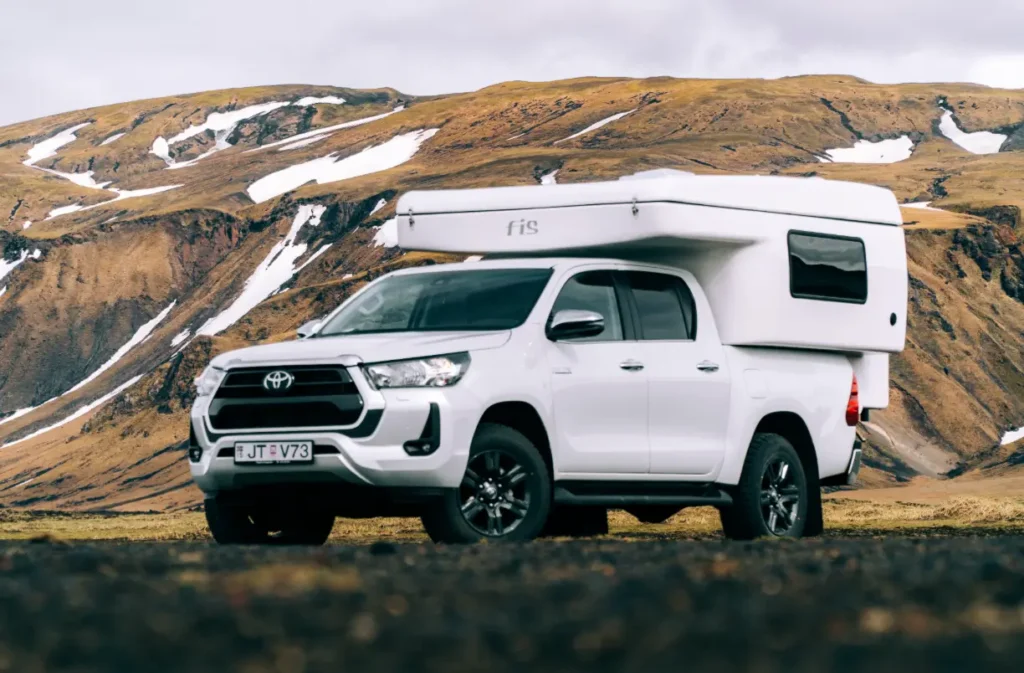
Mandatory costs — road tax, VAT, deposits, and unavoidable fees
Some camper van costs are choices. Mandatory costs are different: they apply because of tax, rental terms, deposits, or local requirements, so they need to be in your budget before you compare vehicles. This section separates the costs you cannot avoid from the extras you can choose based on your route, comfort level, and risk tolerance.
2026 Iceland road tax
Road tax is one of the most important 2026 costs to understand before renting a camper van in Iceland.
Iceland introduced a general road tax effective January 1, 2026. At Rent.is, we charge this road tax in advance. The cost will be 1,550 ISK per day (~$12 USD) on all rentals picked up from January 1, 2026.
That means:
| Rental length | Rent.is road tax calculation | Road tax total |
| 3 days | 1,550 ISK × 3 | 4,650 ISK (~$37 USD) |
| 7 days | 1,550 ISK × 7 | 10,850 ISK (~$86 USD) |
| 10 days | 1,550 ISK × 10 | 15,500 ISK (~$123 USD) |
| 14 days | 1,550 ISK × 14 | 21,700 ISK (~$172 USD) |
Don’t treat this as a small footnote. On a 10-day trip, road tax adds 15,500 ISK ($123) before fuel, campsites, food, insurance upgrades, or extras.
Fee structures can vary by rental company and contract. Rent.is uses the daily charge above. Other operators may handle the new system differently, so always check the rental agreement rather than assuming every company presents road tax the same way.
VAT, deposits, and card holds
Our terms state that local VAT of 24% is included in all prices. That helps when you are comparing totals, because the displayed price is not missing a separate VAT line.
Deposits are different. A deposit or card hold is not the same as a fee, but it still matters for budgeting. Our terms currently state that a refundable security deposit of 450,000 ISK ($3,570 USD) is taken at pickup if no Premium or Platinum insurance package is purchased, and that a mandatory refundable fines deposit of 15,000 ISK (~$120) applies regardless of insurance choice.
A deposit becomes a cost only if something triggers a charge: damage, fines, fuel shortfall, cleaning rules, missing accessories, or other rental-term issues. But your card still needs enough available credit for the hold and the trip itself.
Before pickup, check your card limit, insurance choice, and deposit responsibility. Do not leave that decision until you are tired after a flight into Keflavík.
Insurance costs — basic cover, gravel protection, premium cover, and what still is not covered
Basic insurance and self-risk
Insurance is one of the biggest reasons the final camper van price can look different from the daily rate.
Our rental price includes mandatory third-party liability, CDW, and accident insurance required by Icelandic law. Our basic CDW has a self-risk of 450,000 ISK (~$3,585); optional insurance packages can reduce the lessee’s liability. See our terms and conditions for more information.
Plain English version:
| Term | What it means |
| CDW | Collision Damage Waiver: basic damage cover with conditions |
| Self-risk/excess/liability | The amount you may still be responsible for if damage happens |
| Deposit | A card hold connected to your risk amount if no additional insurance is selected |
| Premium or Platinum package | Optional upgrades that can reduce liability, subject to terms and exclusions |
Note that basic CDW cover is not “full insurance.” Included insurance may still leave you exposed to a large self-risk amount, which is why many travelers choose a higher protection package.
Gravel, sand, ash, wind, tires, and exclusions
Iceland is not a normal rental environment. Gravel, wind, sand, ash, potholes, sudden weather shifts, narrow roads, and long distances all make insurance decisions more important.
Several damage types are not covered by basic CDW, including sand and ash damage, tire protection, wind-blown doors, damage caused by driving in rivers or watercourses, underside and chassis damage, rim damage, lost accessories, gross negligence, intoxicated driving, towing, and assistance.
That wording matters. Insurance is not permission to drive carelessly. It is also not permission for off-road driving, unsafe driving, unauthorized roads, or river crossings. Even higher insurance packages have exclusions.
For a mainstream summer route, you may still encounter gravel parking areas, wind, construction detours, or loose stones. For a winter trip, long Ring Road loop, South Coast plan, or Highland exploration ambitions, the decision becomes more important.
Photograph and film the camper van at pickup and return. Include the windshield, tires, rims, doors, bumpers, roof area, and any visible marks. We always advise the lessee to provide photographic proof taken at the start of the rental if damage is later identified.
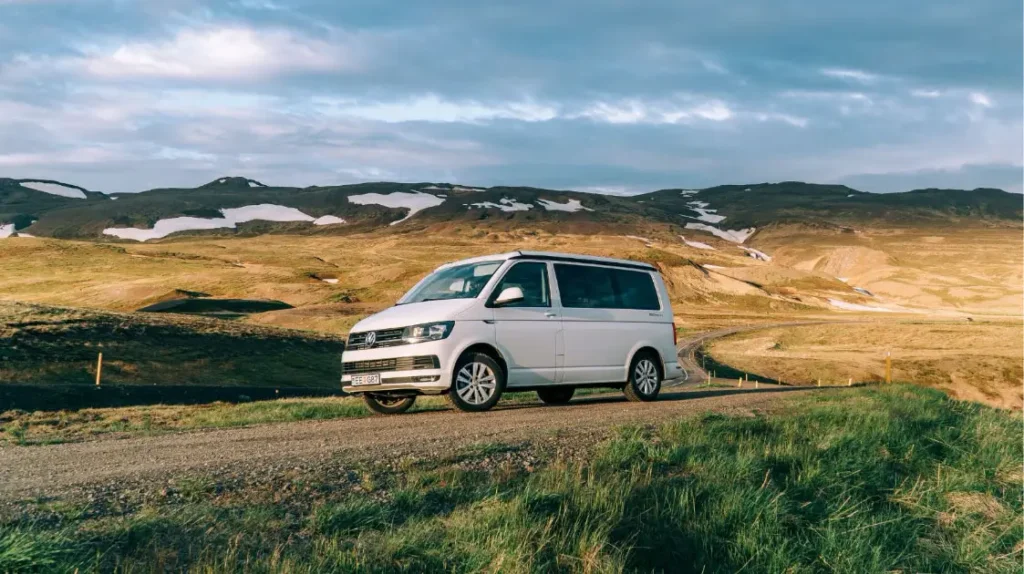
When full insurance may be worth it
Fuller protection may be worth considering if:
| Trip style | Why higher protection may help |
| Winter camper van trip | Weather, wind, visibility, and road conditions increase stress |
| Long Ring Road loop | More miles means more exposure |
| South Coast route | Wind and gravel are common concerns |
| Gravel-heavy itinerary | More loose-stone exposure |
| Photography trip | Early starts, late returns, and remote stops add pressure |
| Family trip | Lower stress can matter as much as lower cost |
| Limited credit-card buffer | A large deposit can affect trip spending |
The right answer is not “always buy the most expensive package.” The right answer is to choose the protection level that matches your route, season, confidence, and financial buffer.
Campsite costs — why per-person pricing surprises travelers
Campsites are usually part of the real camper van budget. A camper van combines transport and sleeping space, but it doesn’t remove accommodation planning.
The Environment Agency of Iceland states that spending the night in camper vans or similar vehicles outside organized campsites or urban areas is illegal unless the landowner or rightsholder has given permission. This means that camper van travelers must use official campsites unless you have sought explicit permission to stay elsewhere.
It also means that campsite fees belong in your camper van budget.
The part travelers often miss is per-person pricing. If a campsite charges per adult, two travelers do not pay the same as one camper van. Showers, electricity, laundry, or local taxes may also be separate.
2 adults, 10 nights campsite example
| Scenario | Calculation | Why it matters |
| Low per-person estimate | $10 × 2 adults × 10 nights = $200 | Good for simple planning, but may miss extras |
| Higher per-person estimate | $20 × 2 adults × 10 nights = $400 | More realistic for comfort planning |
| Extra services | Showers, electricity, laundry, or local fees | Check each campsite before arrival |
Use the Rent.is campsite guide and campground map to plan stops before pickup.
Camping Card — when it helps and when it doesn’t
The Camping Card can reduce campsite costs for the right itinerary, but it’s not an automatic saving for every traveler.
The official 2026 Camping Card costs ~$200 and gives discounted access to participating campsites for up to 28 nights for a family of two adults and four children under 16 (maximum). The card expires on September 15 each year, but some campsites may close earlier. Also, not every single campsite in Iceland participates in the scheme; a list of qualifying sites is shared on the website.
| Camping Card may help | It may not help |
| You are traveling in the valid season | Your trip is after many campsites close |
| Participating campsites match your route | Your route uses mostly non-participating sites |
| You have enough campsite nights to justify the cost | You only need a few nights |
| You are traveling as two adults or a family | You need facilities the card does not cover |
Read the Rent.is Camping Card guide and compare participating campsites against your route before buying.
Fuel costs — Ring Road, detours, diesel, petrol, and route choices
Fuel price baseline
Fuel is one of the biggest variable costs in an Iceland camper van trip. It depends on distance, vehicle efficiency, fuel type, weather, load, driving style, and detours.
As of June 22, 2026, GlobalPetrolPrices lists Iceland gasoline at 218.51 ISK (~$1.74) per liter and diesel at 248.23 ISK (~$1.98) per liter.
Use this formula:
Kilometers ÷ kilometers per liter × fuel price = estimated fuel cost
Example:
| Route distance | Efficiency assumption | Liters used | Petrol estimate at 218.51 ISK/L |
| 500 km | 10 km/L | ~50 L | 10,925 ISK (~$87 USD) |
| 1,322 km | 10 km/L | ~132.2 L | 28,888 ISK (~$228 USD) |
| 1,650 km | 10 km/L | ~165 L | 36,054 ISK (~$285 USD) |
| 2,000 km | 10 km/L | ~200 L | 43,702 ISK (~$346 USD) |
Note that these are calculator examples, not vehicle-specific guarantees. Swap in the fuel type and efficiency of your chosen camper. Exchange rates and fuel prices will also fluctuate.
A 10–25% distance buffer is practical because almost nobody drives only the map’s shortest line. If you are doing the Ring Road, read the villages along the Ring Road guide and the 10 days around Iceland Camperstory before finalizing the route.
2WD vs 4×4 fuel impact
A 4×4 camper can be the right choice when your route needs approved F-road or Highlands access. It can also increase total cost through the daily rate, fuel use, and insurance importance.
Do not choose 4×4 for status. Choose it because your itinerary needs it.
For a standard summer Ring Road plan, a 2WD camper is often enough if the route stays on permitted roads and conditions are suitable. For F-roads or Highlands access, compare approved 4×4 camper van options before building the budget.
Optional extras — WiFi, bedding, kitchen gear, extra driver, cleaning, and comfort items
Common camper van add-ons
Extras are not a bad thing, and they give you the option to enjoy your trip in the way that suits you. Hidden or misunderstood extras are the problem.
A small daily add-on can feel minor at checkout and then become a meaningful cost across 10 or 14 days.
| Add-on | Why travelers choose it | Budget note |
| WiFi hotspot | Navigation, communication, remote work | Check data limits and replacement responsibility |
| Bedding or sleeping bags | Saves luggage space | Important in colder seasons |
| Towels | Useful for campsites and pools | Easy to forget |
| Kitchen kit | Self-catering | Confirm what is already included |
| Camping chairs/table | Comfort at campsites | More useful in summer |
| GPS | Backup navigation | Offline phone maps may be enough for some |
| Child seat | Family travel | Must match child age and size |
| Extra driver | Reduces fatigue | Can be worth it on long routes |
| Cleaning service | Convenience | Return rules vary by vehicle |
| Accessories | Roof box, cables, tools, extras | Lost or damaged items may be charged |
Please remember that accessories such as a WiFi hotspot, GPS unit, kitchen utensils, sleeping bags, chairs, tables, roof box, or roof tent are among items that can create additional cost if lost or damaged.
Which extras are worth it?
Choose extras by traveler type:
| Traveler type | Extras worth considering |
| Couple on first Iceland trip | Bedding, WiFi, simple cooking setup |
| Family | Child seats, bedding, extra driver, comfort items |
| Photographer | WiFi, charging plan, extra driver, insurance upgrade |
| Remote worker | WiFi, power planning, comfortable sleeping setup |
| Winter traveler | Bedding, insurance upgrade, comfort-first setup |
| Cost-conscious traveler | Bring what fits in luggage, but do not cut comfort that affects sleep or safety |
10-day add-on multiplier
| Daily add-on | 10-day total |
| 1,000 ISK/day (~$8 USD) | 10,000 ISK (~$80 USD) |
| 2,000 ISK/day (~$16 USD) | 20,000 ISK (~$158 USD) |
| 3,000 ISK/day (~$24 USD) | 30,000 ISK (~$237 USD) |
| 5,000 ISK/day (~$40 USD) | 50,000 ISK (~$395 USD) |
When planning your Iceland budget, consider the necessary extras. The goal is not to avoid every add-on, but to pay for the ones that genuinely improve your trip.
Example 10-day Iceland camper van budget for 2 adults
This example is a planning template, not a guaranteed quote. Use it as guidance to help you work out the rough cost of your trip to Iceland.
Calculation breakdown:
- 10-day rental
- 2 adults
- Mid-size camper
- Road tax
- Ring Road-style route with detours
- 1,500 km (932 miles) planning distance
- Fuel price baseline from June 22, 2026
- Paid campsites
- Insurance upgrade selected
- WiFi and bedding added if not included
- Food and groceries
Line-item budget table
| Cost item | Example calculation | Estimated cost |
| Base camper rental | 10 days × live daily rate | 165,000 ISK |
| Road tax | 10 × 1,550 ISK | 15,500 ISK (~$124) |
| Insurance upgrade | 10 days × selected package | 49,000-69,000 ISK |
| Campsites | 2 adults × 10 nights × $10-20 | ~$200–400 |
| Fuel | 1,500 km ÷ 10 km/L × fuel price | ~32,777 ISK (~$260) petrol / ~37,235 ISK (~$295) diesel |
| Food and groceries | 10 days × 2 adults | ~5,000-8,200 ISK (~$40-64) per person, per day for a self-catered approach |
| WiFi | 10 days × daily add-on | 20,000 ISK |
| Bedding | Per person or per rental | Included with Rent.is, other rentals may charge |
| Kitchen extras | If not included | Crockery, cutlery, pans etc included with Rent.is, other rentals may charge |
| Extra driver | If needed | 1,500 ISK per day |
| Activities buffer | Pools, parking, tours, local fees | 6,300-25.000 ISK ($50-200) per person per day (major tours and excursions are what can push up the price, but they are optional) |
| Emergency buffer | Fuel, weather delays, replacement items | TBC |
Try to separate the “rental-company charges” from “trip costs after pickup” in your mind. The rental checkout may show the camper, road tax, insurance, and add-ons. Your trip budget still needs fuel, campsites, food, showers, parking, activities, and that emergency buffer.
Advertised price vs final cost
| Headline comparison | Real comparison |
| Daily camper rate × 10 | Daily camper rate × 10 + road tax + insurance + add-ons |
| Rental checkout total | Rental checkout total + fuel + campsites + food + route costs |
| Lowest daily price | Best-fit camper with transparent total cost |
This is where final-bill shock can happen. A traveler sees the daily rate, starts planning around that number, then later adds road tax, insurance, fuel, campsites, WiFi, bedding, and food. The company may not be hiding those costs; the issue is that travelers compare incomplete numbers, and the further they get into planning, the more they realise the true cost.

Is a camper van cheaper than hotels and a rental car in Iceland?
Where camper vans can save money
A camper van can be good value because it combines transport, sleeping space, and cooking flexibility. That can reduce hotel nights, restaurant spending, and the need to plan each day around fixed accommodation.
The value is strongest when:
- You want to self-cater most meals
- You want flexibility around weather and route changes
- You are driving a route with limited accommodation options
- You prefer fewer check-ins and check-outs
- You are traveling as a couple or small group with the right camper size
- You want your vehicle and sleeping setup in one place
For first-time travelers, this flexibility is often the real value. Iceland weather can change your plan. A camper van gives you more control without needing to cancel and rebook hotels every time the route shifts.
When hotels or a car may be better value
A camper van is not always the lowest-cost choice.
A hotel and rental car may make more sense when:
- Your trip is city-heavy
- You only have two or three days
- You want a private bathroom every night
- You are anxious about winter driving and sleeping in a vehicle
- You do not plan to cook
- You find unusually strong hotel pricing for your dates
Trust the full trip comparison, not the headline. A camper van can be excellent value for route control, flexibility, and self-catering. It should not be sold as the cheapest option for every traveler in every season.
Compare camper options by comfort level before deciding.
Why 4×4 campers cost more than 2WD campers
A 4×4 camper can increase the rental cost, fuel budget, and insurance costs. That extra cost can be worth it when the route needs approved Highlands or F-road access, but it is not worth paying for if the itinerary does not use it.
Compare 2WD camper vans and 4×4 campers by actual route, not by image.
F-roads, Highlands, and legal limits
F-roads are marked mountain roads. Driving approved open F-roads in the right permitted vehicle is different from leaving a marked road, which is illegal and damaging.
A 4×4 doesn’t mean that you can drive just anywhere with it, and it does not remove rental restrictions. It also doesn’t make river crossings safe or guarantee insurance coverage.
When it comes to booking a 4×4 for Highland travel, research thoroughly. Some of our campers are suitable for only certain Highland routes, while others will give you better exposure to the whole region. The key thing is to choose the right vehicle for your trip.
How to choose between a 2wd and 4×4
| Choose 2WD when… | Consider 4×4 when… | Do not attempt when… |
| Your route stays on permitted paved and standard gravel roads | Your itinerary includes approved F-roads and the vehicle is permitted | The road is closed |
| You are doing a standard summer Ring Road route | You are planning Highlands access | The vehicle is not authorized |
| You want lower rental and fuel cost | You accept higher cost for route access | You need to cross rivers without confirmed permission and coverage |
| You do not need Highlands access | You have checked road rules, weather, and rental terms | You plan to leave marked roads |
You cannot sleep just anywhere in a camper van
You can’t plan your budget around assuming you can sleep just anywhere in Iceland, because under most conditions, this is illegal.
That means campsite cost is not optional for most trips. It is part of responsible planning.
Use official campsites unless you have clear permission. Plan stops before pickup, especially in winter or shoulder season when some campsites may close or offer limited facilities. The Rent.is winter guide and winter camping guide can help with seasonal planning.
Off-road driving is not a budget hack
Off-road driving is illegal in Iceland. It damages fragile land and can create fines, recovery costs, repair bills, and insurance problems.
Do not confuse these three things:
| Term | Meaning |
| Marked paved road | Normal public road |
| Marked gravel road or open F-road | A road or track you may be allowed to drive if your vehicle and rental terms permit |
| Off-road driving | Leaving marked roads or tracks; illegal and not a shortcut |
Trying to save time or reach a spot illegally can become the most expensive decision of the trip. Stay on marked roads, follow closures, check weather, and follow the rental agreement.
How to avoid surprise camper van rental costs
Before booking
The best way to avoid surprise costs is to compare total trip cost before payment.
Real Iceland camper van budget checklist
| Budget line | Add your estimate |
| Base daily rate × rental days | ____ |
| 2026 road tax | ____ |
| Insurance package | ____ |
| Deposit or card hold | ____ |
| Fuel estimate | ____ |
| Campsite nights | ____ |
| Food and groceries | ____ |
| WiFi | ____ |
| Bedding | ____ |
| Kitchen gear | ____ |
| Extra driver | ____ |
| Cleaning or return rules | ____ |
| Parking, tunnels, activities | ____ |
| Emergency buffer | ____ |
| Total planning budget | ____ |
Compare providers using the same assumptions. If one quote includes WiFi, bedding, airport transfer, or a stronger insurance package, and another does not, those are not equal quotes.
Start with the camper that fits your group and route.
Before pickup and during the trip
Cost control does not stop after booking.
At pickup:
- Confirm the insurance package and self-risk.
- Confirm fuel return rules.
- Confirm cleaning rules.
- Confirm what equipment is included.
- Photograph and film the camper van.
- Check tires, windshield, doors, roof equipment, accessories, and existing marks.
- Save emergency and roadside support details.
- Ask before driving any route you are unsure about.
During the trip:
- Stay on permitted roads.
- Use official campsites unless you have clear permission.
- Keep fuel topped up before long rural stretches.
- Avoid last-minute route choices that require a different vehicle.
- Do not leave parking, tunnels, or fines unresolved.
Book with a clear budget and route plan.
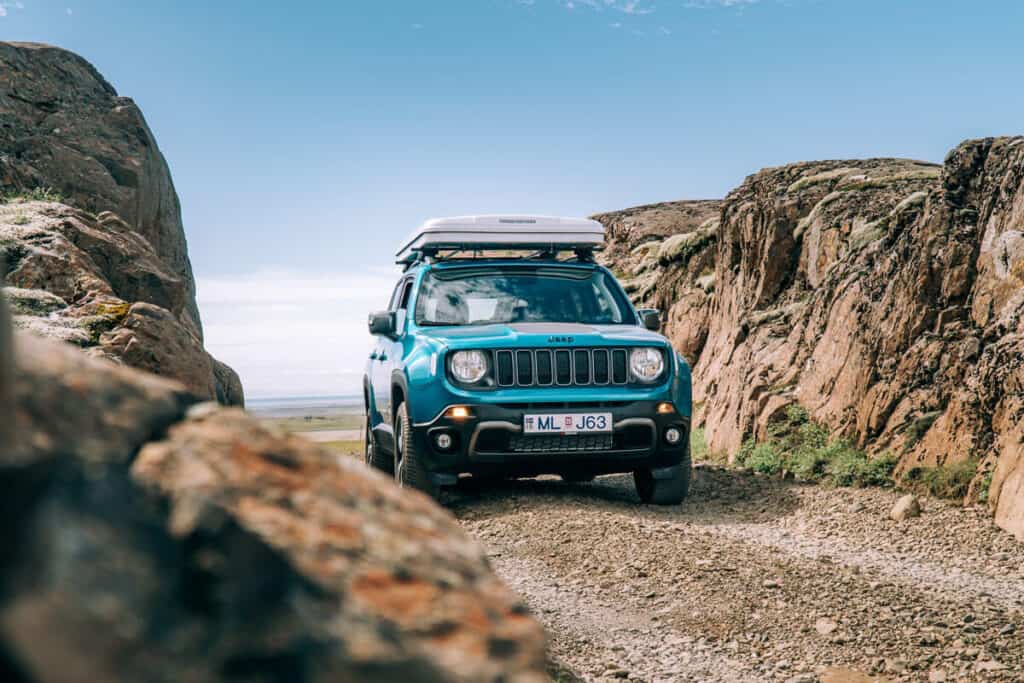
The real Iceland camper van rental cost is not one number on a booking widget. It is the full trip budget: vehicle, road tax, insurance, fuel, campsites, food, extras, route choices, and the decisions that reduce stress once you land.
Start with the route, season, group size, and comfort level. Then compare Iceland camper vans by what the trip will actually require, not just the lowest daily rate.
FAQ
How much does it cost to rent a camper van in Iceland?
A camper van rental in Iceland can range from a simple daily rate to a much higher final trip cost once you include road tax, insurance, fuel, campsites, food, and extras. The final number depends on season, vehicle size, rental duration, route, insurance, and what is included before checkout.
How much does an Iceland camper van rental cost per day?
Daily cost depends on season, vehicle size, transmission, 2WD versus 4×4 capability, included equipment, and insurance. Smaller two-person campers are usually more affordable and often more fuel-efficient, while larger campers, motorhomes, and 4×4 campers usually cost more per day. Use live pricing for your dates before comparing.
What extra fees should I budget for?
Budget for road tax, insurance upgrades, campsite fees, fuel, food, bedding, kitchen gear, WiFi, extra driver, cleaning rules, parking, tunnels, and activity costs. Rent.is charges a 2026 road tax of 1,550 ISK (~$12) per day for rentals picked up from January 1, 2026.
Are campsites charged per person or per vehicle in Iceland?
Many Iceland campsites charge per person, which surprises travelers who assume the camper van counts as one unit. Always check whether the campsite charges per adult, per vehicle, per tent, for electricity, or for showers. Two adults over 10 nights can pay much more than a single-person camping estimate.
Is the Camping Card worth it for an Iceland camper van trip?
The Camping Card can be worth it for longer summer trips using participating campsites. The official 2026 card costs around $204 and covers up to 28 nights for one family of two adults and four children under 16, but route, campsite availability, season, and closing dates matter.
How much does fuel cost for an Iceland Ring Road camper van trip?
Fuel cost depends on distance, vehicle efficiency, petrol or diesel, detours, weather, and driving style. As of June 22, 2026, gasoline was listed at 218.51 ISK/L and diesel at 248.23 ISK/L in Iceland. Use kilometers ÷ km per liter × fuel price to estimate.
Do I need full insurance for an Iceland camper van?
Not always, but it is worth considering if you are driving long distances, traveling in winter, visiting gravel-heavy areas, or want to reduce deposit and self-risk anxiety. Optional upgrades can reduce liability, but exclusions still apply.
Can you sleep anywhere in a camper van in Iceland?
No. Spending the night in camper vans or similar vehicles outside organized campsites or urban areas is illegal unless the landowner or rightsholder has given permission. Always budget for official campsites. Find out more information about camping regulations.
Do I need a 4×4 camper van in Iceland?
You usually do not need a 4×4 for a standard summer Ring Road trip on permitted roads, but you may need one for approved F-roads or Highlands routes. Choose the vehicle after you know your route, season, road permissions, and rental terms.
What is the cheapest camper van rental in Iceland?
The lowest-cost camper van is usually a small, simple, off-season vehicle with fewer extras. But the lowest daily rate is not always the best value. Compare the final price after road tax, insurance, campsites, fuel, included gear, pickup logistics, and deposit exposure.