
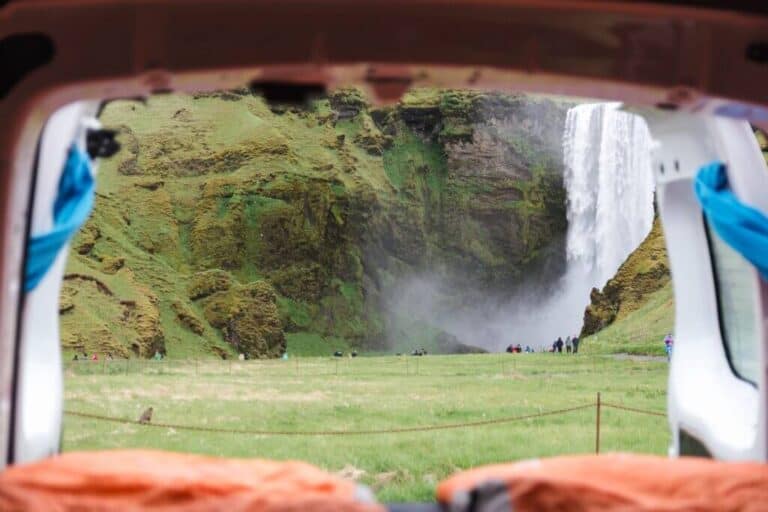
Camping is one of the most flexible ways to explore Iceland, but that flexibility works best when you know where you can legally stay. For camper van travelers, the simple rule is this: plan your overnight stops around designated campsites, then verify the campsite’s opening dates, payment method, road access, and facilities before you rely on it.
This guide brings the practical parts together in one place: a campsite map, the rules for camper vans, cost and facility guidance, seasonal planning notes, and campsite recommendations by route and region. Some Iceland campsites are seasonal, some operate year-round, and Highland campsites can require extra planning around F-roads, weather, and vehicle choice.
Before you choose a camper, think about your route, your season, your group size, how much you’ll need to pack, and whether your plan includes the Highlands or F-roads. Not every Iceland road trip needs a 4×4 vehicle, but your campsite route should match the vehicle you rent.
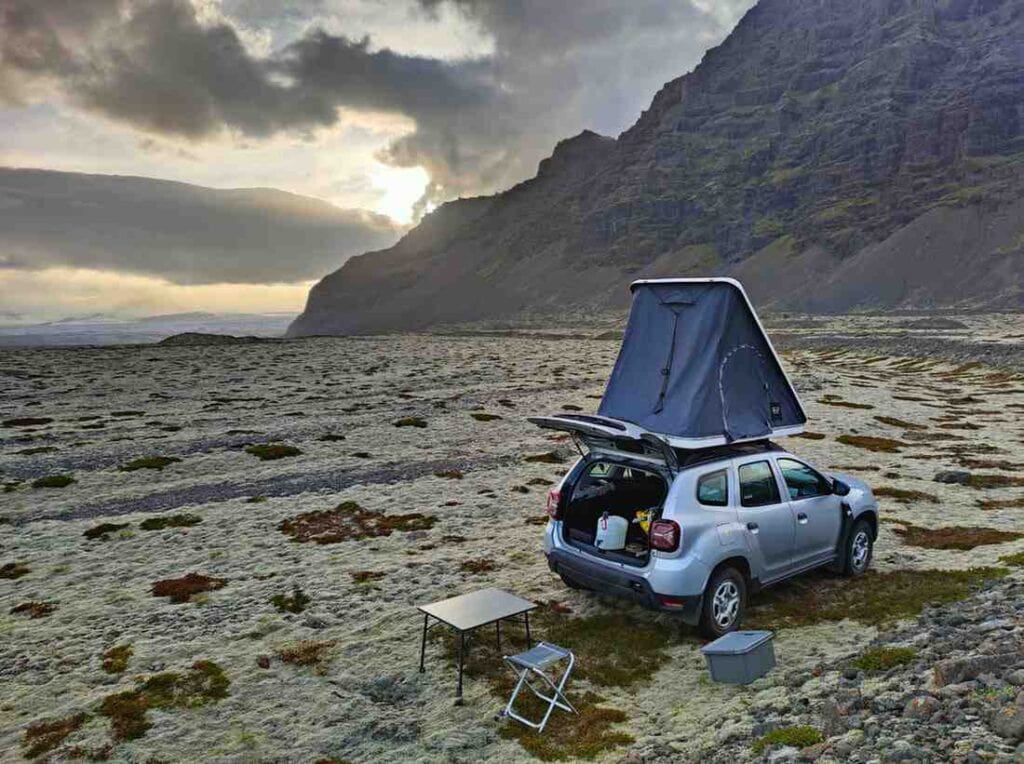
- Campsite map
- Camper van rules
- Costs
- Facilities
- How to choose a campsite
- Campsites to consider
- Seasonal campsites
- FAQs
Can you camp just anywhere in Iceland?
As tempting as it can be to set up camp along any one of Iceland’s beautiful landscapes, it’s not that simple. Camper van travelers cannot simply sleep anywhere in Iceland. Camper vans, caravans, tent campers, tent trailers, and similar vehicles need organized campsites or urban areas – unless the landowner or rightsholder has given permission. Traditional tent camping has limited exceptions, but camper van travelers should plan around designated campsites.
That’s the beauty of camper van travel; it gives you freedom during the day, but the overnight plan still needs to be legal and realistic. When in doubt, use a designated campsite rather than trying to interpret local rules after dark, and try to take advantage of the Iceland Camping Card where possible.
Camper Laws
The official camping guidance also separates traditional tent camping from vehicle camping. A single traditional tent may be allowed in some uncultivated areas under specific conditions, but that does not mean camper vans can park overnight wherever they like. If you are traveling in a camper van, motorhome, caravan, tent camper, or similar vehicle, use an organized campsite unless you have clear permission from the landowner or rightsholder.
Find out more in our guide to camping in Iceland.
Top tip from Rent.is: choose tonight’s campsite before the end of the driving day, then keep a backup within reach. That gives you time to check the map, road conditions, payment instructions, and facilities while you still have daylight and options. Also note that in peak seasons, you may not be able to find a space at a campsite on the day, so booking in advance is recommended.
Map of campsites in Iceland
The campsite map is the fastest way to find possible overnight stops near your route. Use it as a planning tool, not as a guarantee that every site will be open, staffed, or fully serviced on the day you arrive.
The map categories are:
- Seasonal campsites: usually open for the main travel season, but exact dates vary.
- Year-round campsites: open outside summer, though facilities may be reduced.
- Highland campsites: remote campsites that may involve F-roads, seasonal access, and 4×4-only route planning.
Highland campsites need extra care. Driving approved open F-roads is not off-road driving, but F-road access is seasonal, weather-sensitive, and vehicle-dependent. If your campsite route includes the Highlands, read our guide to driving in the Highlands and learn more about 4×4 rentals.
For road checks, payment tools, weather resources, and other planning support, keep our Iceland travel tools page handy while you plan.
Campsite details can change. If you find a campsite on the map that has changed its opening dates, facilities, or access rules, let us know at camperstories@rent.is so we can help keep the map up to date for other travelers.
How to choose the right campsite in Iceland
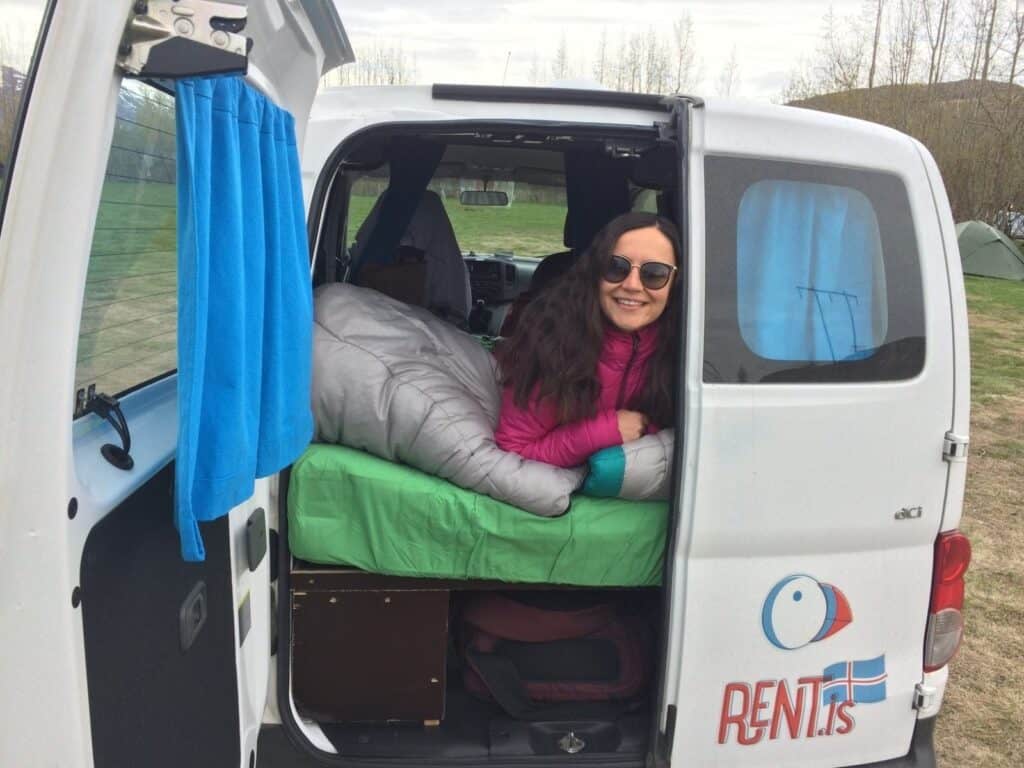
The right campsite depends on more than the nearest pin on the map. Your route, season, arrival time, vehicle type, and facility needs all matter. A campsite that works well in July may be a poor choice in November if services are reduced or nearby roads are difficult.
Before choosing a campsite, check:
- Is it open on your travel date?
- Does it accept camper vans?
- Is the access road suitable for your vehicle?
- Can you arrive late?
- Do you need to book?
- How do you pay?
- Are showers included or extra?
- Is there electricity?
- Is there a kitchen or indoor common area?
- Is there water refill and waste disposal?
- What is your backup campsite?
Off-season sites may still be open but operate with reduced services. That can mean no staffed reception, fewer showers, limited indoor space, or restricted access to electricity. Check current road conditions through umferdin.is and use SafeTravel for weather and safety planning before you commit to remote or winter routes.
| Situation | Prioritize this campsite type | What to verify |
| Late arrival | Year-round or simple self-check-in campsite | Payment method, reception hours, gate access |
| Winter trip | Confirmed winter campsite | Services, road conditions, electricity |
| Highlands route | Highland campsite | F-road access, 4×4 requirement, opening dates |
| Family trip | Full-service campsite | Showers, kitchen, playground, quiet hours |
| Cost-conscious trip | Transparent-fee campsite | Per-person fees, shower/electricity extras |
| Remote route | Route-adjacent campsite | Fuel, food, water, backup stop |
How much do campsites in Iceland cost?
Campsite prices in Iceland vary by location, season, age, vehicle, and facilities. Some campsites charge per person, some may charge by vehicle or camping unit, and some may have different rates for children.
A good guideline price would be 2,000–3,500 ISK ($~15 USD – $~27 USD) per person per night. Campsites in Iceland usually charge a nightly fee, but the exact 2026 range depends on the campsite, season, traveler age, and extra facilities such as showers, electricity, laundry, or overnight tax.
Common extras can include:
- Showers
- Electricity
- Laundry
- Washing machines
- Tourist or overnight tax
- Premium facilities
- Family or child-rate differences
The Iceland Camping Card can be useful for longer trips if your route matches participating campsites. For 2026, the card costs €179 ($~200 USD) and covers up to 28 nights for a family of 2 adults and up to 4 children under 16 at participating campsites, but electricity, showers, washing machines, and overnight tax may be extra. Always research the campsites you are interested in on the official Camping Card website for accurate information.
For more help budgeting, read our guide to Iceland trip costs.
| Cost item | What to expect |
| Campsite night fee | 2,000–3,500 ISK ($~15 USD – $~27 USD) |
| Shower | May be included or extra |
| Electricity | Often extra |
| Laundry | Usually extra if available |
| Camping Card | Useful for participating sites | |
| Tourist/overnight tax | May be charged separately |
What facilities do campsites in Iceland usually have?
Icelandic campsites range from very basic to full-service. Some offer little more than a place to park, toilets, and water. Others have showers, kitchens, laundry, electricity, Wi-Fi, or family facilities. Do not assume every campsite has the same setup.
Before you arrive, check whether the campsite has:
- Toilets
- Showers
- Hot water
- Kitchen or common room
- Laundry
- Electricity hookup
- Wi-Fi
- Water refill
- Waste disposal
- Playground or family facilities
- Nearby pool, shop, or gas station
For camper van travelers, electricity hookup matters more in cold weather, on longer stays, or when you need to charge camera gear, laptops, or other devices. Not every campsite offers electricity, and not every pitch may have access to it.
Waste disposal is just as important as showers or electricity. Use designated facilities only, and check our guide to campervan waste disposal sites before your trip so you know what to expect.
Are campsites in Iceland open all year?
Some campsites in Iceland are summer-only, some operate year-round, and some open outside summer with reduced services. “Open all year” does not always mean full facilities, staffed reception, or easy road access.
This matters most in March, October, November, and throughout winter. A campsite may appear on a map, but you still need to confirm whether it is open on your travel date, whether the facilities you need are available, and whether the roads are suitable for your vehicle.
| Season | Campsite planning advice |
| Summer | More campsites open, but popular areas may be busy |
| Shoulder season | Check opening dates carefully; services may be reduced |
| Winter | Use confirmed year-round campsites only; check roads and weather daily |
| Highlands season | Often limited and vehicle-dependent; verify F-road opening dates and 4×4 requirements |
For colder months, read our guide to winter camping in Iceland before you build your overnight plan. Winter camper van travel can work, but it needs more preparation around road conditions, open campsites, heating, electricity, and backup stops.
Do you need to book campsites in Iceland?
Booking needs vary by campsite, season, and location. Some campsites are simple to use, but you should not assume every site works the same way. In busy areas or during peak season, check the campsite’s latest booking or payment instructions before you arrive.
You should be especially careful if:
- You are traveling in July or August
- You are arriving late
- You are traveling with children
- You need electricity
- You need showers or laundry
- You are planning a remote route
- You are relying on a campsite in winter
- You are heading into the Highlands
Some campsites may use apps, websites, reception payment, or self-service payment. It’s important to look into this ahead of time as things can vary widely between sites.
This is another area where our tools and tips can come in handy.
Best campsites in Iceland for camper van travelers
The campsite list below is built around more than just great scenery. A good camper van stop should fit your route, your arrival time, your vehicle, and the facilities you need.
Opening dates, prices, amenities, booking rules, and road access can change. Each campsite in the list includes a custom note for elements to check before you travel.
Skaftafell
Best for: South Coast and Vatnajökull-area hiking
Region: South Iceland
Why stay here: Skaftafell works well for travelers building a South Coast or Ring Road route around Vatnajökull National Park, glacier-area scenery, and hiking. It is a strong overnight candidate when you want to spend time in the area instead of rushing through. The campsite itself is nestled within Vatnajökull National Park, surrounded by dramatic glaciers, lush vegetation, and scenic mountain views. The nearby trails lead to landmarks like Svartifoss waterfall and the edge of the Vatnajökull glacier, making this campsite ideal for experiencing Iceland’s natural beauty.
Camper van note: Verify current campsite facilities, booking or payment method, and opening season before arrival.
Check before you go: Opening dates, facilities, booking/payment, road access, fees
Nearby route value: Link this stop with South Coast and Ring Road planning. For detailed local logistics, read our Skaftafell campground guide.
Úlfljótsvatn
Best for: Golden Circle and Þingvellir-area planning
Region: Golden Circle
Why stay here: Úlfljótsvatn can be useful if your route needs an overnight stop near Þingvellir or the wider Golden Circle area. The lake setting may suit travelers who want a quieter stop near outdoor activities. This site is known for its proximity to Þingvellir National Park, a UNESCO World Heritage Site, and offers a tranquil atmosphere with opportunities for water activities like kayaking.
Camper van note: Confirm camper van access before adding this as a fixed overnight stop.
Check before you go: Opening dates, facilities, payment, camper van access, booking rules
Nearby route value: Good candidate for first or final route nights if it fits your Reykjavík, Keflavík, or Golden Circle timing.
Ásbyrgi
Best for: North Iceland canyon and hiking stop
Region: North Iceland
Why stay here: Ásbyrgi gives travelers a practical base for exploring the canyon area without turning the day into a long out-and-back drive. It suits routes focused on North Iceland nature rather than quick viewpoint stops. The campsite is part of Vatnajökull National Park and is located in a horseshoe-shaped canyon. Surrounded by towering cliffs, it offers a calm, isolated setting. Visitors can explore the stunning canyon, go hiking, or observe the abundant birdlife in the area.
Campervan note: Check access and facilities before committing, especially outside peak summer, as these conditions can be more variable in North Iceland.
Check before you go: Opening dates, payment, campsite rules
Nearby route value: Useful for North Iceland and Diamond Circle-style planning without turning this section into a full itinerary.
Egilsstaðir
Best for: East Iceland route reset
Region: East Iceland
Why stay here: Egilsstaðir is a practical East Iceland stop when your road trip needs services, route flexibility, or a pause between longer driving days. It can work well as a reset point before continuing through the Eastfjords or along the Ring Road. The campsite sits in a valley surrounded by mountains and near the beautiful Lake Lagarfljót. It’s a great starting point for discovering the remote beauty of the East, including beautiful waterfalls, trails, and wildlife.
Camper van note: Ensure the campsite has the services you need before relying on it for laundry, showers, electricity, or late arrival.
Check before you go: Facilities, booking/payment, electricity, water, waste disposal
Nearby route value: Strong fit for East Iceland and Ring Road planning.
Siglufjörður
Best for: North Iceland fjord town stop
Region: North Iceland
Why stay here: Siglufjörður gives a North Iceland route a town-based overnight option with fjord surroundings and local history. It can be a useful stop if your route follows the north coast rather than staying only on the main Ring Road line. The town of Siglufjörður is a charming fishing hub, and the campsite offers sweeping views of the fjords and mountains. Known for its rich history in the herring industry, this location provides a great opportunity to explore Iceland’s heritage and enjoy outdoor activities like fishing, hiking, and whale watching.
Camper van note: Weather and road access matter in this part of Iceland, especially outside summer.
Check before you go: Road conditions, opening dates, facilities, payment, camper van access
Nearby route value: Useful for North Iceland route variation and slower fjord travel.
Breiðavík, near Látrabjarg
Best for: Carefully planned Westfjords routes near Látrabjarg
Region: Westfjords
Why stay here: Breiðavík is the better verified campsite option for travelers visiting Látrabjarg. It sits on the road toward the cliffs, so it works better as a planned Westfjords overnight stop than trying to find somewhere near Látrabjarg late in the day. Látrabjarg is one of the most remote and awe-inspiring campsites in Iceland, located on the Westfjords’ southernmost point. Látrabjarg is home to one of the largest seabird colonies in Europe, including puffins. It’s a perfect spot for birdwatching, hiking, and taking in views of the stunning West Coast.
Campervan note: Do not rely on this as a late-night fallback without checking ahead.
Check before you go: Road access, opening season, facilities, campervan suitability, nearest backup campsite
Nearby route value: Westfjords route planning only; keep fuel, food, and daylight in mind.
Hellissandur
Best for: Snæfellsnes Peninsula overnight planning
Region: Snæfellsnes
Why stay here: Hellissandur can work well for travelers exploring the Snæfellsnes Peninsula. It gives you a route-based stop rather than forcing a long drive back after sightseeing. The site offers a secluded camping experience with panoramic views of the lava fields and mountains. Located close to Snæfellsjökull National Park and the iconic Snæfellsjökull glacier, this site is great for hiking, exploring volcanic landscapes, and discovering the region’s folklore and history.
Camper van note: Verify current campsite access, opening dates, and payment before using it as your planned overnight stop.
Check before you go: Facilities, booking/payment, campervan access, opening dates
Nearby route value: Useful for Snæfellsnes routes with a slower pace.
Húsafell
Best for: West Iceland inland route planning
Region: West Iceland
Why stay here: Húsafell can be useful if your route includes Hraunfossar, Barnafoss, or West Iceland inland stops. The planning value is simple: it may reduce unnecessary backtracking if your route is already heading through the area. The Húsafell site is located near Húsafell village, famous for its natural wonders, including the Hraunfossar and Barnafoss waterfalls. The hidden gem is a haven for outdoor enthusiasts, with trails through lava fields and forests, and it’s a great spot for those seeking peace and relaxation amidst Iceland’s remarkable landscapes.
Camper van note: Verify facilities, season, and access before arrival.
Check before you go: Opening dates, facilities, camper van access, payment
Nearby route value: Good fit for West Iceland plans that need an inland overnight stop.
Þakgil
Best for: South Iceland travelers who want a remote-feeling stop
Region: South Iceland
Why stay here: Þakgil is a remote paradise in South Iceland, tucked away between volcanic mountains and in a dramatic canyon. Known for its otherworldly beauty, Þakgil offers a quiet camping experience with access to trails, lava formations, and incredible views of the surrounding landscape. The setting can be rewarding, but the decision should start with road suitability, not scenery.
Camper van note: Verify road conditions and vehicle suitability before committing.
Check before you go: Road access, opening dates, vehicle suitability, facilities, payment
Nearby route value: South Coast planning, especially for travelers spending more time around Vík and nearby routes.
Höfn
Best for: Southeast Iceland and glacier-lagoon route stops
Region: Southeast Iceland
Why stay here: Höfn is a practical stop when your route includes Jökulsárlón, southeast Iceland, or longer Ring Road driving days. It gives travelers a town-based overnight option in a part of the country where timing can make a big difference. The campsite offers a unique campground surrounded by glaciers and beautiful fjords. It’s a go-to spot for glacier hiking, boat tours, and photography. Höfn also has a strong culinary tradition and is known for its lobster dishes.
Camper van note: Check facilities, payment, and late-arrival instructions before relying on it.
Check before you go: Opening dates, booking/payment, electricity, showers, waste disposal
Nearby route value: Southeast Iceland and Ring Road planning.
Grindavík
Best for: Reykjanes route
Region: Reykjanes
Why stay here: Grindavík, located on the Reykjanes Peninsula, is a peaceful spot close to the famous Blue Lagoon. The campsite provides easy access to geothermal pools and is a great base for exploring nearby volcanic landscapes, hot springs, and trails in the stunning Reykjanes UNESCO Global Geopark. Please note that the area frequently sees live volcanic activity, which can affect travel. Keep up to date on volcanic activity near Grindavík and thoroughly research before adding the campsite and region to your itinerary.
Check before you go: Current access, official local guidance, campsite status, road conditions, facilities
Nearby route value: Reykjanes planning only when current conditions support travel.
Heiðarbær
Best for: South Iceland route planning with access to nearby nature areas
Region: South Iceland
Why stay here: Heiðarbær can work as a quieter South Iceland overnight stop when it fits your route and driving time. It is useful for travelers who want a campsite away from the busiest South Coast stops while still keeping their next day’s plan realistic. Heiðarbær is located near the small village of Heiðarbær in southern Iceland. Surrounded by picturesque mountains and rolling hills, it’s a perfect spot for those seeking serenity in nature. The campsite offers easy access to the nearby Þórsmörk Valley, ideal for hiking and exploring Iceland’s rugged landscapes.
Campervan note: Check road conditions, arrival instructions, and facilities before you set out, especially if you are arriving late or traveling outside peak summer.
Check before you go: Opening dates, facilities, booking/payment method, campervan access, road conditions, and any seasonal service changes.
Nearby route value: Useful for South Iceland route planning when you want a practical overnight stop before continuing toward nearby hiking areas, waterfalls, or the next leg of your road trip.
Tungudalur (Ísafjörður)
Best for: Westfjords base near Hornstrandir
Region: Westfjords
Why stay here: Tungudalur sits a few kilometres outside Ísafjörður, in a valley beside the Bunárfoss waterfall, making it the practical base for the Westfjords rather than a stop in town itself. It suits routes built around Ísafjörður and the surrounding fjords, including access to the Hornstrandir Nature Reserve. The site is sheltered by trees, split into separate tent and camper/caravan areas, and has two service houses with showers, toilets, and a washing area.
Camper van note: Check access and facilities before committing, especially outside peak summer, as these conditions can be more variable in the Westfjords.
Check before you go: Opening dates, payment, campsite rules
Nearby route value: Useful for Westfjords and Hornstrandir-style planning without turning this section into a full itinerary.
Mosskógar
Best for: Capital Region base for Þingvellir-area routes
Region: Capital Region (Mosfellsdalur, near Mosfellsbær)
Why stay here: Mosskógar sits in a sheltered forest setting in Mosfellsdalur, just outside Reykjavík on the route toward Þingvellir National Park. It suits routes starting or ending near the capital rather than deep countryside stops, with a distinctive greenhouse used as a communal kitchen and lounge area.
Camper van note: Cash-only payment (ISK, EUR or USD)
Check before you go: Opening dates (sources vary between December 1 and mid-December closing), campsite rules.
Nearby route value: Useful for Capital Region and Þingvellir/Golden Circle-style planning without turning this section into a full itinerary.
Kleifar (Kleifar-Mörk)
Best for: Basic, low-key Ring Road stop in South Iceland
Region: South Iceland
Why stay here: Kleifar sits just 2.5 km from Kirkjubæjarklaustur, between Vík and Jökulsárlón, right beside the Stjórnarfoss waterfall. It suits travellers wanting a quiet, no-frills overnight stop on the Ring Road rather than a destination campsite in its own right.
Camper van note: Facilities are minimal, just two toilets and cold running water, with no showers on site. Confirm this before recommending it to travellers who need shower access, and note the swimming pool in Kirkjubæjarklaustur as a nearby alternative.
Check before you go: Opening dates, current facilities, campingcard.is validity, campervan access.
Nearby route value: Useful for South Iceland Ring Road routes between Vík and Jökulsárlón, without turning this section into a full itinerary.
Kerlingarfjöll
Best for: Highlands route planning
Region: Highlands
Why stay here: Kerlingarfjöll belongs in a Highlands route, which means the planning needs to start with season, road status, weather, and vehicle suitability. This is not a casual detour for a standard 2WD camper van.
Campervan note: Highlands access is seasonal and vehicle-dependent. Check F-road status before setting out, and compare whether a 4×4 camper rental in Iceland is required for your plan.
Check before you go: F-road status, opening dates, weather, facilities, booking/payment
Nearby route value: Read our guide to driving the Highlands in Iceland before adding this stop.
Vestrahorn
Best for: Southeast Iceland landscape and photography routes
Region: Southeast Iceland
Why stay here: Vestrahorn Campsite sits at the foot of Vestrahorn mountain on the Stokksnes peninsula, about 18 minutes from Höfn. The camping fee doubles as entry to Stokksnes beach and the Viking village film set, and staying overnight makes sunrise or sunset photography far easier than a day-trip stop.
Camper van note: No reservations, first-come, first-served, so arrive early in peak season to secure a spot. Facilities include hot showers, cooking area, and optional electricity.
Check before you go: Winter road conditions (site is open year-round, but access can be affected by weather), current fee, opening hours of the Viking Café for check-in.
Nearby route value: Southeast Iceland planning near Höfn and the Ring Road, particularly for travelers coming from or heading to Jökulsárlón (about 1 hour 10 minutes away).
Hallormsstaðaskógur (Höfðavík Campsite)
Best for: East Iceland forest and lake-area stop
Region: East Iceland
Why stay here: Höfðavík sits within Hallormsstaðaskógur, Iceland’s largest forest, on the shores of Lake Lagarfljót. It gives an East Iceland route a sheltered, wooded setting that contrasts with the open landscapes most of the country is known for, and suits travelers who want a quieter overnight stop near forest and lake rather than a stop built around a single landmark.
Camper van note: Höfðavík has electrical hookups and showers, which makes it a stronger camper van option than the forest’s other site, Atlavík. Bookable in advance or on-site.
Check before you go: Opening dates (approximately early May to mid-October), current facilities, advance booking, road conditions on Route 931.
Nearby route value: East Iceland and Ring Road planning, about 25 minutes from Egilsstaðir.
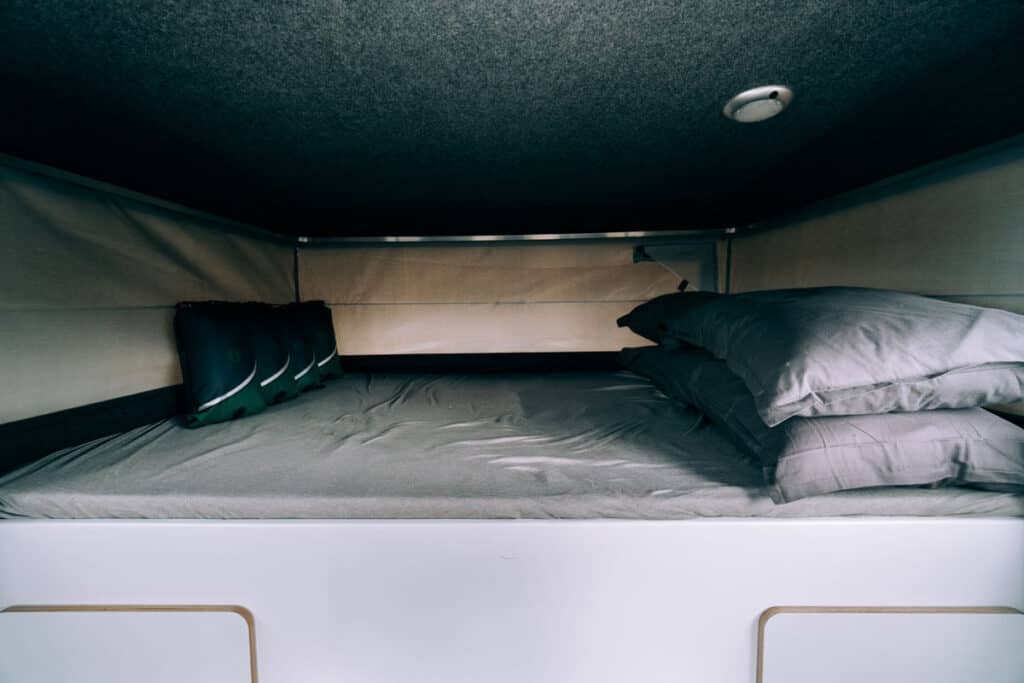
Systragil
Best for: North Iceland forest and valley stop near Akureyri
Region: North Iceland
Why stay here: Systragil sits in the Fnjóskadalur valley, facing Vaglaskógur birch wood, about 13–16 km (8-10 miles) from Akureyri. It suits travelers looking for a quiet, green base close to Akureyri and within easy reach of Goðafoss, Lake Mývatn, and Húsavík.
Campervan note: Confirmed suitable for tents, folding campers, and mobile homes, with electricity, showers, and washing facilities on site.
Check before you go: Current opening dates and pricing, as well as payment method.
Nearby route value: North Iceland routes near Akureyri, Goðafoss, and the Mývatn area, without turning this into a full itinerary.
Hólar
Best for: Skagafjörður and North Iceland cultural route stop
Region: North Iceland
Why stay here: Hólar sits in the Hjaltadalur valley in Skagafjörður, giving a North Iceland route a historic stop with real depth: it was one of Iceland’s two medieval episcopal centers and home to the country’s first printing press. The campsite sits within forest near Hólar University, Hólar Cathedral, and the Icelandic Horse History Centre.
Camper van note: No electricity on site. Basic facilities otherwise: toilets, hot and cold water.
Check before you go: Opening dates (approximately June 1 to October 1), facilities, payment method.
Nearby route value: North Iceland and Skagafjörður planning, with the campsite forming part of a linked network with Sauðárkrókur, Hofsós, and Varmahlíð sites.
Hveravellir
Best for: Highlands route planning
Region: Highlands
Why stay here: Hveravellir sits on the Kjölur route (F35), between the Langjökull and Hofsjökull glaciers, and is the only spot in the Highland interior with shower facilities and a real range of amenities. It rewards travelers who want a genuine geothermal stop, hot spring bathing, fumaroles, and hiking trails, deep in the interior, but it needs the same careful planning as any remote Highland route: check season, road status, weather, and vehicle suitability before you leave the main road network.
Camper van note: Not all camper vans are suitable for Highland access. A 4×4 is a legal requirement on F35, and standard 2WD vehicles cannot make this route.
Check before you go: F-road status, opening dates, weather, facilities, booking (huts should be reserved in advance for weekends; campsite is generally first-come).
Nearby route value: Use our Driving the Highlands in Iceland guide before adding this stop.
Heydalur
Best for: Westfjords remote-route planning with time to spare
Region: Westfjords
Why stay here: Heydalur suits travelers building a slower Westfjords route who want a genuine remote stop with a real payoff. The campsite sits at Hotel Heydalur, with free access to the hotel’s geothermal hot tubs and greenhouse pool included for anyone camping, alongside birdwatching, hiking, and horseback riding.
Campervan note: Access is via a gravel road (Route 633, not an F-road), and while a standard vehicle can usually manage it, some travelers recommend a 4×4 for peace of mind. Keep a backup campsite within reach, especially outside peak season, and check road conditions before you go.
Check before you go: Opening dates, facilities, road conditions on Route 633, payment method.
Nearby route value: Westfjords planning for travelers with enough time in the route, roughly 130 km from Ísafjörður.
Borgarfjörður Eystri
Best for: Eastfjords route stop with time to spare
Region: East Iceland/Eastfjords
Why stay here: Borgarfjörður Eystri campsite sits in the small village of Bakkagerði, at the foot of Álfaborg, giving travelers a well-equipped base for a slower Eastfjords stop rather than a quick pass-through. It suits hikers heading into the Víknaslóðir trail network and travelers timing a visit to the Hafnarhólmi puffin colony (roughly April to August).
Campervan note: The site has 40 electrical hookups and full campervan facilities, but it’s about 50 km (31 miles) off the Ring Road. Check access before driving in late in the day, and note that arrival requires a deliberate detour rather than a stop directly on the main route.
Check before you go: Opening dates, facilities, payment, road conditions on the approach road.
Nearby route value: Eastfjords route planning for travelers with enough time to detour off the Ring Road
Skógar
Best for: South Coast stop near Skógafoss
Region: South Iceland
Why stay here: Skógar campsite sits right next to Skógafoss, one of Iceland’s largest waterfalls, making it a practical way to stop near a major South Coast highlight instead of adding extra driving at the end of the day. It’s also the starting point for the Fimmvörðuháls hiking trail to Þórsmörk, and the Skógar Folk Museum and quieter Kvernufoss waterfall are both within easy walking distance.
Campervan note: Facilities here are genuinely basic; expect very few toilets and showers relative to peak-season crowds, coin-operated showers with limited hot water, and no cooking area. This is generally treated as a one-night stop for the location rather than a comfortable multi-night base. Note that the campsite was relocated in 2026 to a nearby grove of trees just off the Ring Road, so double-check current signage or directions rather than relying on older maps.
Check before you go: Current site location (post-2026 relocation), opening dates (usually year-round), fees (camping, shower, electricity, and separate Skógafoss parking charge), payment method, availability in peak season.
Nearby route value: South Coast and Ring Road campsites planning, ideal as a one-night stop between Seljalandsfoss/Reynisfjara-area routes.
Þingvellir National Park
Best for: Golden Circle and protected-area campsite planning
Region: Golden Circle
Why stay here: Þingvellir works well for a Golden Circle overnight stop, especially for travelers who want more time in the national park itself. As a UNESCO World Heritage Site on the rift valley between the North American and Eurasian tectonic plates, it’s also the site of Iceland’s first parliament, but the practical point for campers is following the designated campsite areas and posted park rules rather than camping freely.
Camping within the park is only permitted at four designated sites, all in or near the Leirar area:
- Nyrðri-Leirar — open year-round, electricity for motorhomes, closest to the service centre
- Syðri-Leirar — summer season, electricity for motorhomes
- Fagrabrekka — summer season, tents only
- Vatnskot — summer season, tents only, set by the lake at an abandoned farm site
See details of each campsite here.
Camper van note: Only Nyrðri-Leirar and Syðri-Leirar offer electricity hookups; Fagrabrekka and Vatnskot are tents only. As a protected area, water use is asked to be kept sparing since there’s no geothermal heating on site. Verify exact site rules before arrival.
Check before you go: Which of the four sites suits your setup, booking (not required but advisable in July/August), payment, vehicle/electricity rules, and note that all park campsites are closed on June 19–20, 2026.
Nearby route value: Golden Circle, Reykjavík-area, and first/last-night planning, about 45 minutes from Reykjavík.
Camping etiquette in Iceland
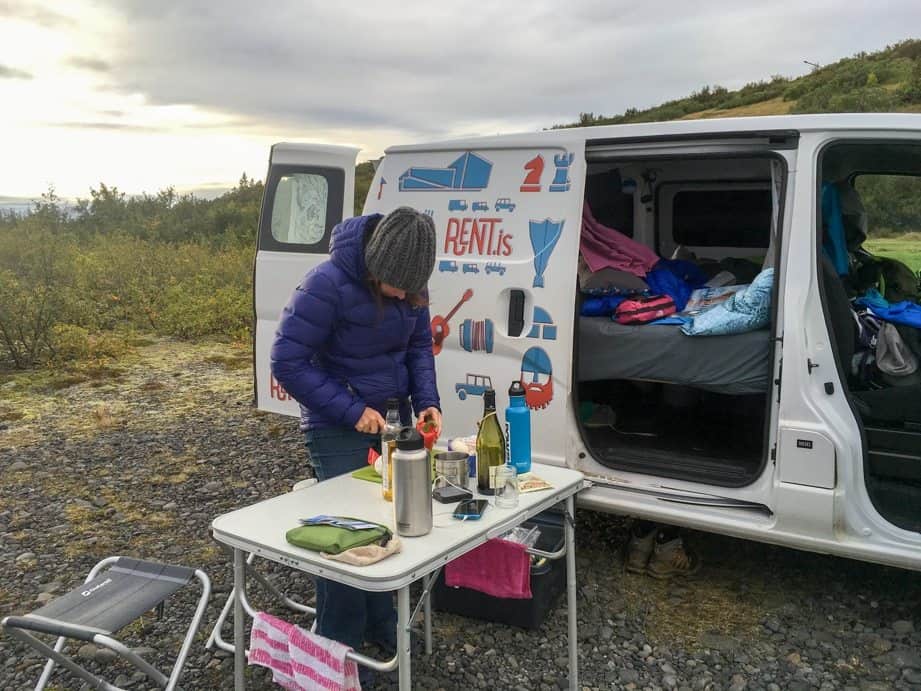
Good campsite behavior keeps Iceland’s campsites welcoming for the travelers who come after you. Most of it is simple: use the facilities properly, keep noise down, and leave the site ready for the next person.
When staying at Iceland campsites:
- Respect quiet hours
- Use designated waste disposal only
- Keep kitchens and shared rooms clean
- Do not park across multiple spaces
- Do not empty greywater or toilet waste outside proper disposal points
- Follow campsite signs and staff instructions
- Pack out trash if bins are full or unavailable
- Be careful with lights, music, doors, and engine noise in busy camper van areas
- Give neighboring campers space
If your camper van has toilet or wastewater facilities, plan ahead for where to empty camper van waste in Iceland. Never leave waste outside official disposal points.
What to bring for campsite stays in Iceland
You do not need to pack as if every campsite is remote, but you should be ready for basic facilities, late arrivals, and fast-changing weather. Keep the campsite essentials easy to reach, not buried under luggage.
Bring:
- Warm layers
- Waterproof outerwear
- Easy food for late arrivals
- Refillable water container
- Headlamp or small light for facilities
- Towel and shower items
- Charging cables and adapters
- Card, coins, or payment app if required
- Trash bags
- Any personal medication
- A backup food option for remote stops
Before hitting the road with your camper, check how your camper’s heating, charging, water, and storage setup works. That small check can make your first campsite night much easier.
For the full trip list, use our Iceland camper van packing list.
Camper van campsite planning by route
Campsite planning should follow your route, not the other way around. Decide how far you realistically want to drive, choose a campsite before the end of the day, then keep a backup if weather, road conditions, or arrival timing changes.
| Route / region | Campsite planning note |
| Ring Road | Plan stops by driving time, not just distance |
| South Coast | Popular stops can be busy in summer |
| Golden Circle | Good for first or final nights near Reykjavík/Keflavík routes |
| Snæfellsnes | Useful for slower peninsula trips |
| Westfjords | Remote; always keep a backup |
| East Iceland | Good for route resets and longer Ring Road pacing |
| North Iceland | Weather and road checks matter outside summer |
| Highlands | Seasonal, 4×4-dependent, weather-sensitive |
| Winter routes | Use confirmed year-round sites only |
The Ring Road is easier when you plan overnight stops around realistic driving days. The Westfjords and Highlands need more caution because backup options can be farther apart. In winter, your campsite plan should be built around confirmed open sites, current road conditions, and daylight.
Choosing the right camper van for your campsite route
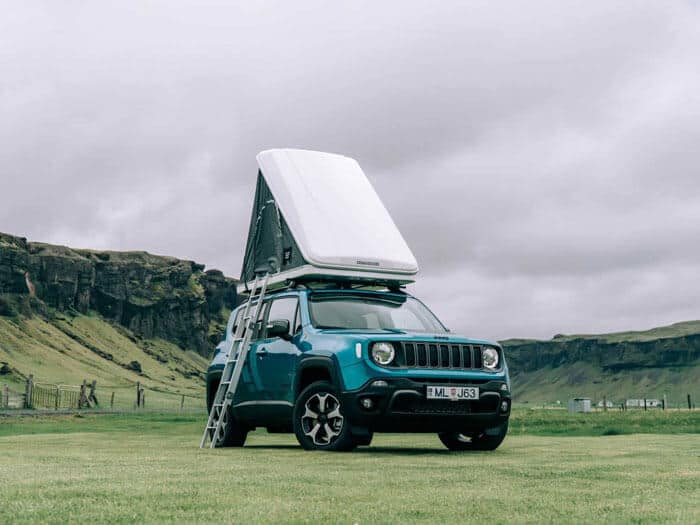
Not every Iceland route needs a 4×4. If your plan stays on paved roads and standard gravel roads that are open and suitable for your vehicle, a 2WD campervan may be the right fit. If your route includes F-roads or the Highlands, a standard 2WD camper van is not the right vehicle. Find out more about choosing between a 2WD or 4×4 camper.
Think about:
- Route type
- Season
- Group size
- Sleeping comfort
- Heating
- Storage
- Cooking setup
- Charging needs
- Whether you need electricity at campsites
- How long you are traveling
Families and longer trips often need more space. Winter trips need more planning around heating, confirmed open campsites, and backup stops. Photography travelers may care more about charging, storage, and route access.
FAQs about campsites in Iceland
Is wild camping allowed in Iceland?
Wild camping is heavily restricted in Iceland. Camper van travelers should use organized campsites unless they have clear permission from the landowner or rightsholder. Traditional tent camping has limited exceptions, but campervan travelers should not rely on those exceptions for overnight parking.
Can I sleep in a camper van anywhere in Iceland?
No. Camper vans, caravans, tent campers, tent trailers, and similar vehicles generally need organized campsites or urban areas unless permission has been granted by the landowner or rightsholder. Use the campsite map to plan tonight’s stop, then verify that the campsite is open and suitable.
Do I need to book campsites in advance?
It depends on the campsite, season, and location. In high season, popular areas, or late-arrival situations, check ahead before you drive there. Do not assume every campsite uses the same booking or payment system.
How much do campsites in Iceland cost?
Campsite costs vary by site, season, traveler age, vehicle, and facilities. Showers, electricity, laundry, and overnight tax may cost extra. The Iceland Camping Card may help on longer trips using participating campsites.
Are campsites in Iceland open all year?
Some campsites are seasonal, some are year-round, and some open outside summer with reduced services. Always verify the campsite’s current opening dates and facilities before relying on it, especially in March, October, November, and throughout winter.
What facilities do Iceland campsites usually have?
Facilities vary. Common possibilities include toilets, showers, kitchen or common room, water refill, laundry, electricity, Wi-Fi, and waste disposal. Do not assume every campsite has every facility.
Is the Camping Card worth it?
The Camping Card can be useful for longer trips if your route matches participating campsites. It may be less useful if your trip is short, your route does not match the included campsites, or you need facilities that cost extra.
Can I use Parka or apps to pay for campsites?
Some campsites may use apps, websites, reception payment, or self-service payment, but payment methods vary. Always check the campsite’s current instructions before arrival.
Are Highland campsites suitable for all camper vans?
No. Highlands access is seasonal and may require a suitable 4×4 vehicle. If you’re considering a trip beyond Krossá, our guide has all the information you need on how to get to þórsmörk, parking and transfer options.
Where can I empty camper van waste in Iceland?
Use designated disposal facilities only. Never empty toilet waste or greywater at a campsite, roadside stop, or natural area unless it is an official disposal point.
Plan your Iceland camping trip with Rent.is
A good camper van trip in Iceland starts with a realistic route, legal campsites, weather checks, and the right vehicle for where you want to go. Once you know your route and season, choosing the camper becomes much easier.
Rent.is can help you compare campers by group size, comfort needs, season, and route type. If you are staying on the Ring Road, traveling with family, planning a winter trip, or considering Highland campsites, choose a camper that fits the actual trip — not just the number of seats. Contact us if you’re unsure which option makes sense for your Iceland road trip.
If you’re still deciding whether a camper van or hotel is the right choice for your trip, our Iceland camper van vs hotel guide has a full cost comparison by trip length — including how the Camping Card changes the numbers.