
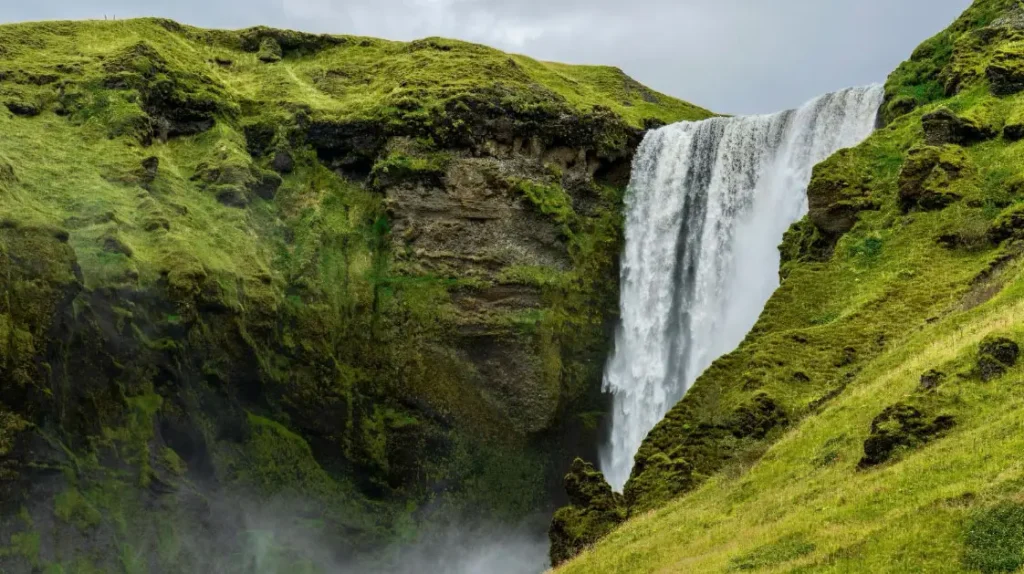
As tempting as it may be to set up camp anywhere along Iceland’s glorious landscapes, it’s something you simply can’t do. Wild camping with a camper van is illegal in Iceland, and it can get you fined. You have to stay at a designated campsite every night. Tents have a narrow exception on uncultivated private land if the owner agrees, but that exception doesn’t extend to vehicles. Campsite fees run roughly 2,000–3,500 ISK (~$15-27) per person per night.
Can You Wild Camp in Iceland? The Rule That Changes Everything Else
Here’s the fact that decides where you’re allowed to sleep for the rest of your trip: if you’re driving a camper van, motorhome, or any vehicle you plan to sleep in, wild camping isn’t an option. You need a designated campsite every single night.
This surprises people because Iceland’s reputation for wide-open, unspoiled nature makes “just park somewhere scenic and sleep” feel like it should be allowed. It isn’t, and the rule is stricter for vehicles than most travel guides make it sound.
Tents vs. Camper Vans — Different Rules
Under Act No. 60/2013 on Nature Conservation, tents get a narrow exception. Along public routes in inhabited areas, you can pitch a traditional tent for one night on uncultivated land, as long as there’s no campsite nearby and the landowner hasn’t restricted access. Iceland’s Environment Agency (Umhverfisstofnun) is the official source for these rules, and they set out exactly when you need permission and where camping is off-limits.
Camper vans, motorhomes, caravans, and similar vehicles don’t get that exception. The same legislation makes it illegal to spend the night in a vehicle outside a designated campsite or urban area unless the landowner has given permission — and that permission requirement effectively rules out casual roadside overnights.
As a camper van operator, we can state this plainly: the rule applies to every vehicle in our fleet, every night, with no gray area. That’s not a legal technicality we’re hedging around; it’s the operating reality for anyone renting a camper here, and it shapes how you’ll plan your route.
Where Camping Rules are Even Stricter
Some areas remove the tent exception entirely — you can only stay at an official designated campsite, with no landowner-permission workaround. Iceland’s national parks — Þingvellir, Vatnajökull, and Snæfellsjökull — fall into this category, along with popular natural areas including Mývatn and Fjallabak. Designated campsites do exist in these areas, so you’re not shut out of staying nearby — you just can’t rely on the tent exception that applies elsewhere.
A number of specific landmarks are protected from any overnight camping at all, even at a designated site nearby, including Álafoss, Dimmuborgir, Dyrhólaey, Hverfjall, and Kirkjugólf. If a stop on your route falls into this category, plan to camp at the nearest official campsite in the wider area and visit the landmark itself during the day.
How Much Does Camping Cost in Iceland?
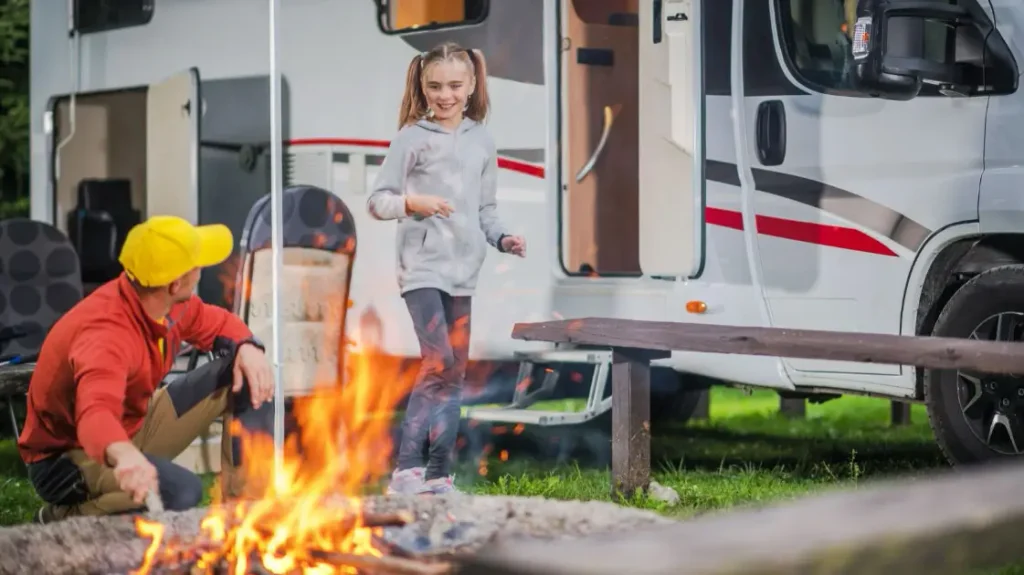
Budgeting for campsite fees is straightforward once you know the range. Most Icelandic campsites charge between 2,000–3,500 ISK (~$15-27) per person per night, depending on location and facilities.
That price usually covers a pitch for your tent or vehicle and access to basic facilities. Showers and electricity hookups often cost extra on top of the base fee, so check what’s included before you assume a quoted price covers everything.
Pricing varies by site, and infrastructure is a big part of why. Sites run by national parks, like Ásbyrgi, tend to charge more because they maintain more facilities. Price alone doesn’t predict how good a site actually is, though — a cheaper site with fewer amenities can still be a better night’s sleep than an expensive one in the wrong location. That’s exactly why it’s worth reading what to expect at a site before you arrive, which we cover further down.
Is the Iceland Camping Card Worth It?
Most guides answer this with “it depends on your trip length” and leave you to work out the math yourself. We’d rather just run the numbers with you.
2026 Camping Card Facts
The Iceland Camping Card costs €179 (~$200) for 2026. It covers up to 28 nights for one family — defined as two adults and up to four children under 16 — at participating campsites around the country.
The card expires on 15 September every year, no matter when you bought it, and some participating sites close even earlier than that. Not every campsite in Iceland accepts the card, so check the participating site list before you plan a route around it.
The Break-Even Math
At 2,000–3,500 ISK (~$15-27) per person per night, paying as you go, against a flat $200 for the card, break-even for a couple lands somewhere around 4-7 nights depending on which end of the nightly range your chosen sites fall on. Below that, you’re likely better off paying per night. Above it, the card starts saving you real money.
The card makes the most sense on longer trips — ten nights or more — especially if your route is a multi-stop itinerary like the Ring Road that touches a lot of participating sites along the way. It makes less sense on a short trip, or if your route concentrates in an area where few sites take the card.
Browse our fleet to find the perfect camper for your adventure
Check Availability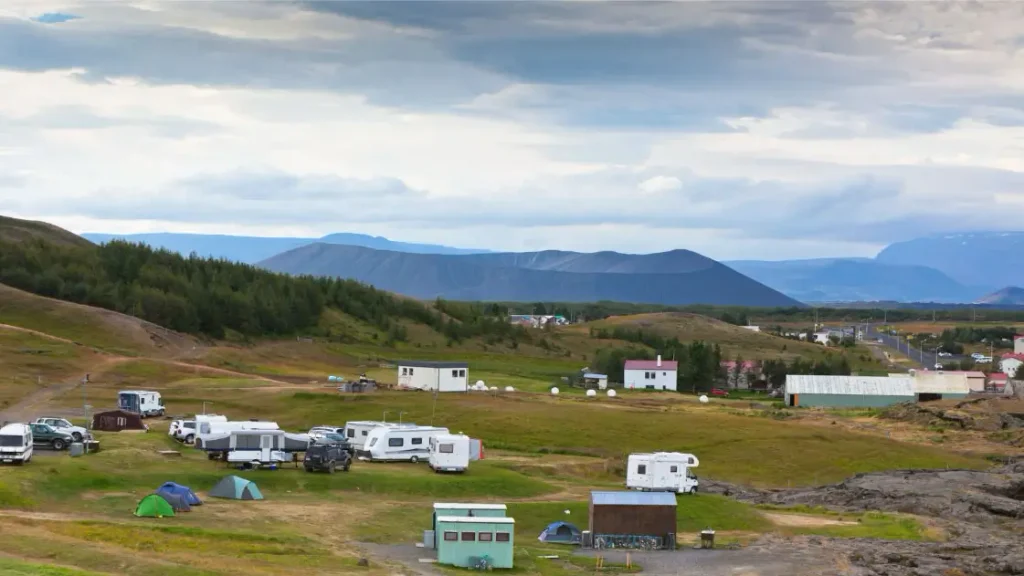
How Do You Pay at Icelandic Campsites?
This is one of the most repeated questions travelers ask before their trip, and it’s rarely answered cleanly.
Card vs. Cash
Most Icelandic campsites accept card payment, either on arrival or through a warden check-in process. A smaller number of rural or informal sites still run on a cash-only or honesty-box basis.
The Parka app lets you prepay for participating sites ahead of time, which cuts down on payment friction when you roll in tired after a long driving day.
Do You Need to Book Iceland Campsites in Advance?
Short answer: usually not. But there are two real exceptions worth knowing before you assume you can wing it everywhere.
The General Rule — No Booking Needed
Many Icelandic campsites work on a first-come-first-served basis. Outside two specific windows, they rarely fill up, so you can generally plan your route day by day and expect to find a spot.
The Two Real Exceptions
The Reykjavík-area sites get genuinely busy during peak summer, from June through August, simply because tourist density is highest closest to the international gateway.
The other exception has a name: Verslunarmannahelgi, Iceland’s first-Monday-in-August bank holiday weekend — August 1–3, 2026. It’s the country’s biggest domestic travel weekend, and campsites nationwide see a real demand spike, not just a generic “summer is busier” bump.
Naming the actual weekend, rather than hand-waving at “peak season,” is the kind of detail that actually changes how you plan those specific nights.
How to Pre-Book When You Want To
The Parka app lets you prepay or reserve a spot at participating sites if you’d rather lock something in ahead of time. The Camping Card doesn’t do this — it’s a payment mechanism, not a booking system, so having the card doesn’t guarantee you a pitch on a night a site is full.
What to Expect at an Icelandic Campsite
This isn’t a US-style campground network with a consistent facilities standard from site to site. What you get varies a lot, and assuming otherwise is where first-timers get caught out.
Facilities Vary Widely — Don’t Assume
Some sites — Þakgil, Svínafell, and Ásbyrgi among them — offer showers, electricity hookups, communal kitchens, laundry, and even playgrounds. Others give you toilets and running water and nothing else. Even where showers and electricity are available, they often cost extra on top of your pitch fee.
Check a specific site’s listing on Tjalda.is or in the Parka app before you arrive, rather than assuming based on what the last site had.
What to Bring
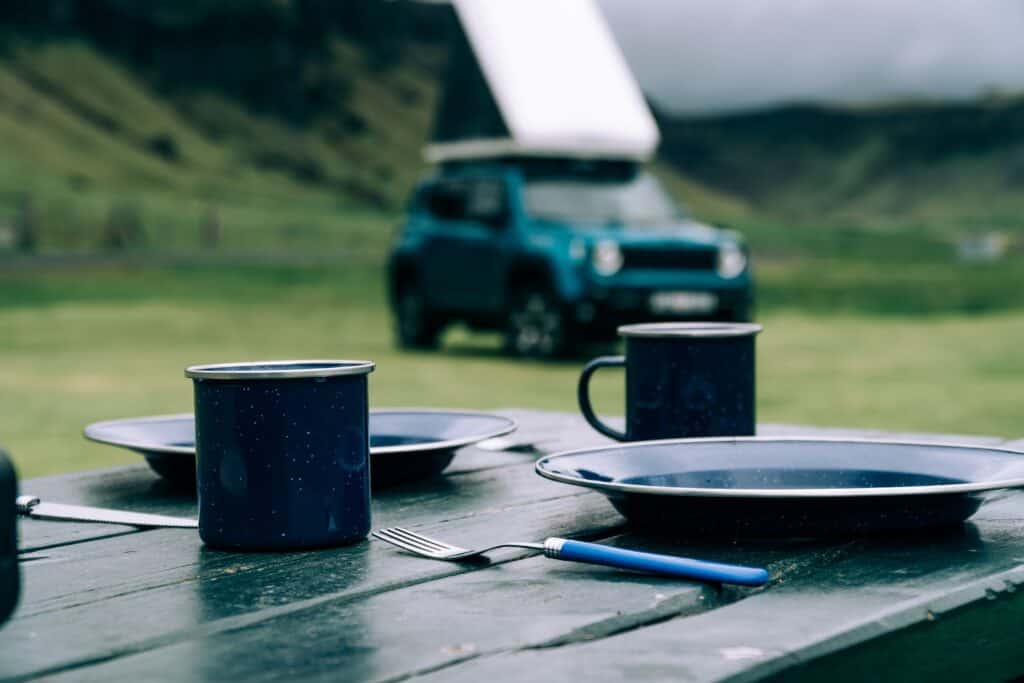
Pack a warm sleeping bag suited to Iceland’s conditions — temperatures swing even in summer, and a bag rated for a mild climate elsewhere won’t cut it here. If you’re renting with us, a suitable sleeping bag is already provided, so you can leave that one off your packing list. If you’re planning to cook for yourself, most camper vans — our fleet included — come with basic dinnerware and cooking equipment as standard.
How to Find Campsites in Iceland
Once you know the rules and the rough cost, the last piece is actually finding sites along your route.
Tjalda.is and the Parka App
Tjalda.is works as a site-finder tool for planning routes and checking what’s available in a given area.
The Parka app (parka.is) handles booking, payment, and site information, and it’s available on both iOS and Android. Between the two, you can plan a realistic route without relying only on a single company’s branded map — worth knowing since most competitor guides only point you toward their own listings.
Frequently Asked Questions
Is wild camping legal in Iceland?
No. Wild camping with a camper van or any vehicle is illegal in Iceland — you must use a designated campsite every night. Tents have a narrow exception on uncultivated private land with the landowner’s permission, but this doesn’t apply to vehicles.
How much does the Iceland Camping Card cost in 2026?
The Camping Card costs €179 (~$200) for 2026 and covers up to 28 nights for one family (two adults and up to four children under 16) at participating sites. It expires on 15 September regardless of purchase date.
Is the Camping Card worth it for a short trip?
Not usually. Based on typical per-night campsite pricing, break-even for a couple lands around 4-7 nights. On a trip shorter than that, paying as you go is generally cheaper.
Do Icelandic campsites take card or cash?
Most sites accept card payment on arrival or through a warden check-in. A handful of smaller or more remote sites still operate on a cash-only or honesty-box basis, so it’s worth carrying some cash as a backup.
Can I camp for free anywhere in Iceland?
No. Every night in a camper van needs to be spent at a designated, paid campsite. Tents have a very limited private-land exception with permission, but there’s no free option that applies to vehicles.
What’s the penalty for wild camping in Iceland?
Wild camping in a vehicle without permission is a finable offense under Icelandic law.
Do I need a 4×4 to reach Iceland’s campsites?
Most campsites are reachable in a standard 2WD camper van. A 4×4 only becomes necessary if your route includes F-roads or Highland areas, which have their own access rules and season windows.
Ready to Plan Your Route?
Now that you know where you can legally stay, roughly what it costs, and whether the Camping Card fits your trip, the next step is matching a camper to your route and season. Find your camper and start planning with confidence.