
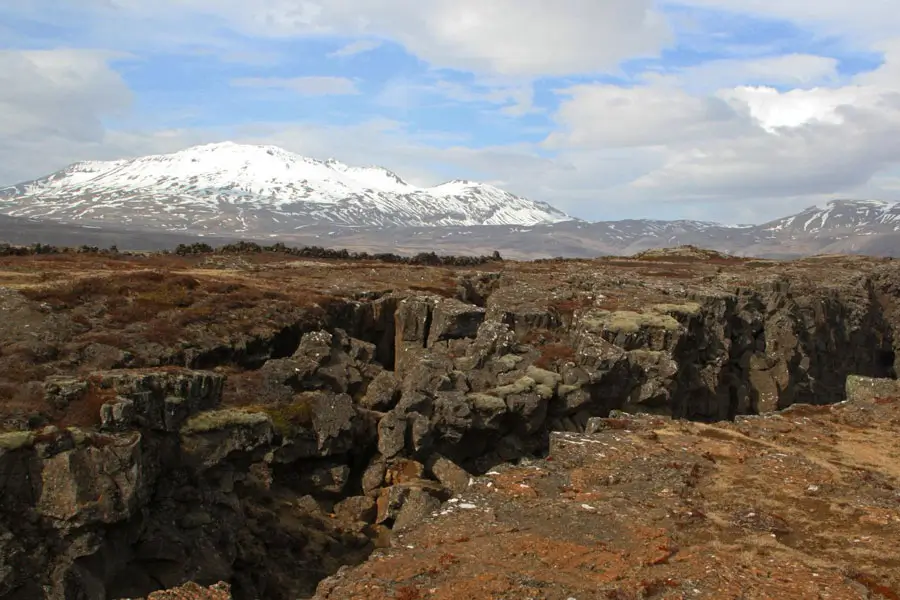
Þingvellir National Park, where the North American and Eurasian tectonic plates are slowly pulling apart, sits about 45 minutes from Reykjavík. It’s a UNESCO World Heritage Site and the birthplace of Icelandic democracy: the world’s oldest parliament, Alþingi, was founded here in 930 AD. Entry to the park is free, and it’s open 24 hours a day, every day of the year. For camper van travelers on a self-drive Golden Circle route, it’s typically the first stop — and often the one that takes longer than planned.
Where Two Tectonic Plates Meet — The Geology of Þingvellir
Iceland sits directly on the Mid-Atlantic Ridge, the boundary where the North American and Eurasian plates meet. At Þingvellir, you can see that boundary on land — one of only a handful of places on Earth where this is possible.
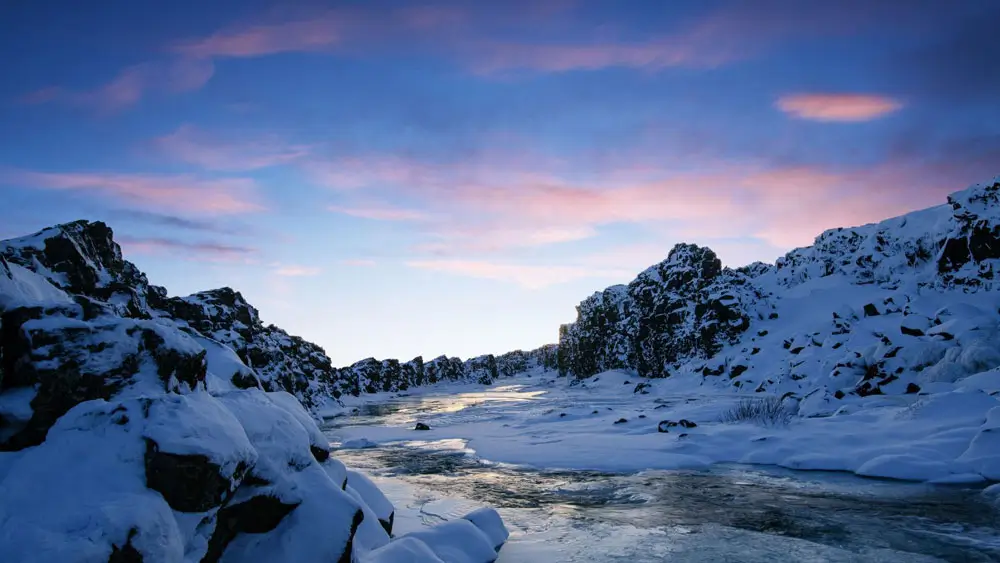
The park occupies a rift valley formed roughly 10,000 years ago, after the last Ice Age. As the two plates pull apart, they create a widening gap in the landscape that grows by about 2 cm (0.78 inches) every year. Over millennia, this movement has produced the dramatic fissures, gorges, and cliffs that define the park’s landscape.
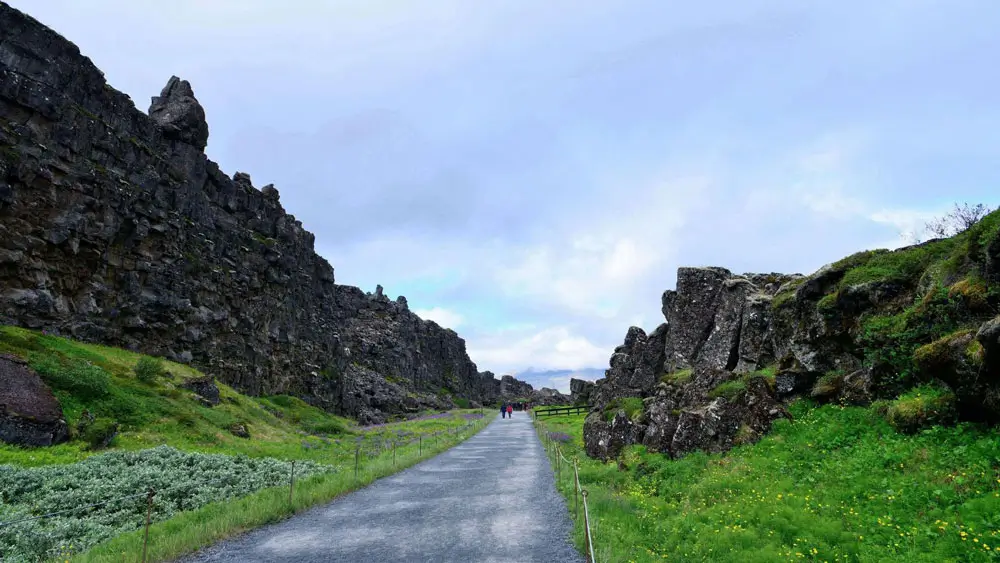
The most visible feature of this process is Almannagjá Gorge — a 4.9-mile (8-kilometer) canyon that marks the western boundary of the rift. Walking through it puts you physically between two continents. The eastern wall is the Eurasian plate; the western wall is North American.
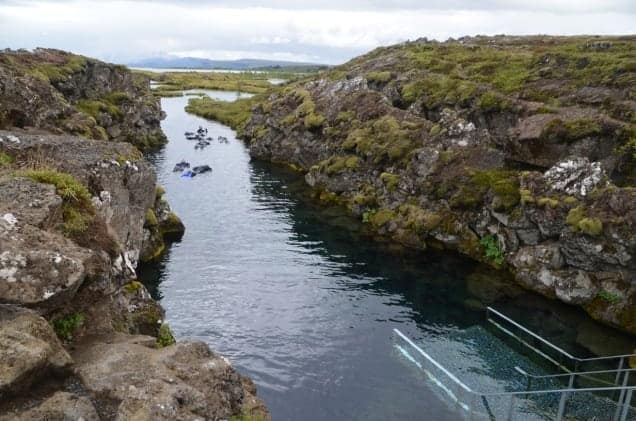
Silfra fissure, in the eastern part of the park, formed during an earthquake in 1789. It quickly filled with glacial meltwater from Langjökull, which filters through the surrounding lava field for roughly 100 years before reaching the fissure. That filtering process is why Silfra has some of the clearest water on Earth, with horizontal visibility reaching 260 feet (80 meters).
The History Behind Iceland’s Most Sacred Ground
The name Þingvellir translates roughly as “Assembly Plains.” From 930 AD until 1798 — a span of nearly 870 years — Icelandic chieftains and lawmakers gathered here each summer for Alþingi, the national assembly. It’s the oldest parliament in the world.
The assembly took place at Lögberg, the Law Rock, where the Law Speaker stood to recite the legal code from memory. Decisions made here shaped Icelandic society for centuries: in 1000 AD, Iceland’s conversion to Christianity was agreed here by consensus, while private worship of Norse gods remained permitted.
The site was formally designated a national park in 1928, marking the 1,000th anniversary of Alþingi. In 2004, UNESCO declared it a World Heritage Site, recognizing its dual significance — geological rarity and historical importance combined in a single landscape.
Þingvallakirkja, the small white church near the assembly site, was built in the 11th century and stands today as one of the oldest buildings in Iceland. A small cemetery beside it holds the graves of Icelandic poets and public figures.
What to Do at Þingvellir — The Main Attractions
Walk Through Almannagjá Gorge
The main walking route starts at the Hakið viewing platform above the gorge at P1 parking. From there, you descend into Almannagjá and walk between the walls of two tectonic plates — a path that has been worn by Icelanders for over a thousand years.
The full assembly site loop takes around two to three hours at a comfortable sightseeing pace. Along the way, you’ll pass Lögberg (marked by an Icelandic flag), Öxarárfoss waterfall — which drops 44 feet (13 meters) off the edge of the gorge — Þingvallakirkja church, Drekkingarhylur (the Drowning Pool, a dark-historied pond used for executions until 1739), and Peningagjá (the Coin Fissure, where people toss coins into crystal-clear water). The path is well-signed and well-maintained.
Shorter walks extend north to the waterfall in about 20 minutes from P1. Longer trails lead to the ruins of abandoned farms — Hrauntún, Skógarkot, and Vatnskot — for those who want to get further into the landscape. For more hiking routes across Iceland, our dedicated guide has the full picture.
To directly answer one of the most common questions: yes, you can walk between the North American and Eurasian tectonic plates at Þingvellir. Almannagjá Gorge is where this happens.
Snorkel or Dive at Silfra Fissure
Silfra is the only place in the world where you can snorkel or dive directly in the crack between two tectonic plates. The water, fed by Langjökull glacier, stays at 35–43°F (2–6°C) year-round and never freezes — which means the fissure is accessible in every season.
Snorkeling Under the Rift
The two submerged rifts within the park are known as Davíðsgjá and Silfra. You can enjoy a diving or snorkeling session beneath the continents. These sports are popular because the water is crystal clear and allows divers to swim closer to the rifts and see them within the lakes. Volcanic eruptions have ripped apart the mountains creating a base, and glacial water has filled the holes, creating the lake. A dry-suit diving certificate is a must in case you want to dive. However, entering the caves isn’t allowed.
Incredible Hiking Trails
The most popular trail is the Öxarárfoss Waterfall Trail. It leads to
The visibility, up to 260 feet (80 meters), is consistently rated among the best in the world. Guided tours provide dry suits; you cannot access Silfra for snorkeling or diving independently — a certified guide is required. Book your tour in advance, particularly in summer. Access is from P5 parking, near Þingvellir Church.
Read our guide to Silfra Fissure.
Fish Lake Þingvallavatn
Þingvallavatn is the largest natural lake in Iceland. Its isolation from other water sources for roughly 10,000 years has allowed an unusual ecosystem to develop: the lake holds brown trout (up to 30 lbs/13.6 kg) and four distinct species of Arctic char found nowhere else.
A day fishing license costs 2,500 ISK ($20), or 9,900 ISK ($79) for a full season Fishing Card (April 20–September 15). Licenses are sold at the service centre at Leirar, or can be booked online in advance. Official regulations mean that you can only fish with a fly rod and that brown trout must be released. The best fishing window is mid-April to early June.
Visit the Visitor Centre and Join a Ranger Walk
The Visitor Centre at Hakið (P1 parking) runs a paid interactive exhibition covering the park’s geology and history. It’s open May–October 9am–6pm and November–April 9am–5pm. During summer, park rangers lead guided walks, which can be a good option for first-timers or families who want context beyond the information boards.
Spot the Game of Thrones Filming Locations
Yes — some scenes from Game of Thrones were filmed here. Þingvellir stood in for the Vale of Arryn, the mountainous region in the show’s Seven Kingdoms. Öxarárfoss Trail appeared in Season 4, episodes 5 and 8, where Arya and the Hound travel through the Bloody Gate. The narrow passage through Almannagjá doubled as the approach to the Eyrie. The park’s connection to the show has made it a secondary draw for fans who arrive with a specific trail map in hand.
Planning Your Golden Circle Day — Where Þingvellir Fits
Þingvellir is the first stop on the Golden Circle route when driving clockwise from Reykjavík. The full Golden Circle route covers three main sites: Þingvellir, Geysir, and Gullfoss.
For self-drive travelers, the recommended sequence is:
Þingvellir first. The park is open 24/7, and tour buses typically arrive mid-morning. If you leave Reykjavík at 7–8am, you’ll have the gorge nearly to yourself. Allow 1.5–2 hours minimum for a stop here; longer if you’re hiking or have a snorkeling tour booked.
Your next stop will be Geysir, located about 45 minutes east of Þingvellir. This geothermal area is home to bubbling hot springs, steaming vents, and the famous Strokkur geyser. Strokkur is the most active geyser in the area, erupting every 6–8 minutes, so you will not have to wait long to see it in action. Allow around 45–90 minutes here, depending on how much time you want to spend walking around the geothermal field, taking photos, and watching a few eruptions.
Finish your trip at Gullfoss, around 10 minutes from Geysir. This powerful two-tiered waterfall is one of the most dramatic stops on the route, with viewing paths that let you take it in from different angles. Allow around 45–60 minutes here, giving yourself enough time to walk between the viewpoints, take photos, and enjoy the scenery before heading back.
The full loop back to Reykjavík takes 8–10 hours from door to door, depending on stops. If you’re spending the night in the area — at the Þingvellir campsite or a guesthouse near Geysir — you can split it across two days and avoid the afternoon crowds at all three sites.
Camper Van Parking at Þingvellir — What You Need to Know
There are three designated parking lots in the main visitor area. The fee is 1,000 ISK ($8) for a standard passenger car with five or fewer seats, and 1,200 ISK ($9.50) for vehicles with 6–9 seats — which covers most camper vans and minibuses.
A single payment covers all three lots for the day, so you can move between them without paying again.
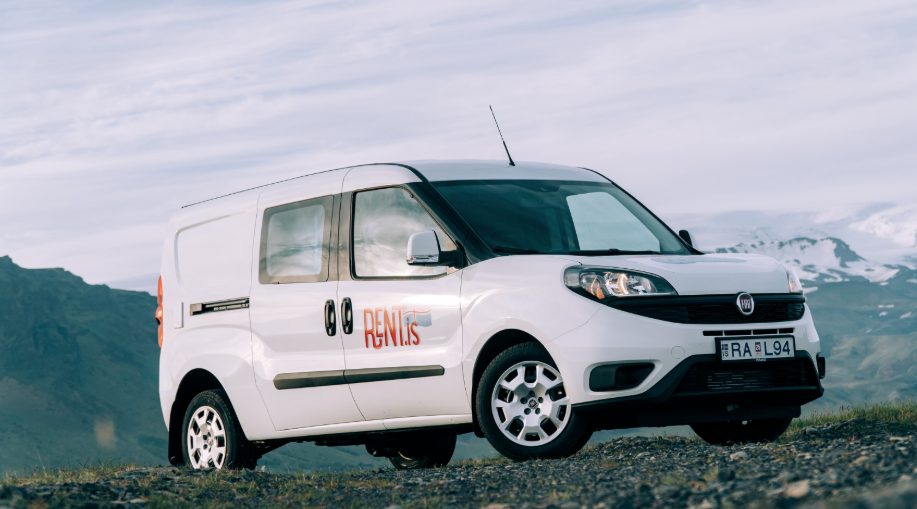
P1 — Hakið (Visitor Centre): The main lot, at the upper end of Almannagjá Gorge. This is where the Visitor Centre is, along with payment machines and the primary trailhead. It’s the best starting point for the assembly site walk. For most Rent.is camper vans, this is the lot to use first.
P2 — Efri-Vellir: Located east of P1, below Öxarárfoss, off road 362. Closer to the waterfall end of the trail.
P5 — Valhöll: The lot closest to Silfra fissure and Þingvellir Church. Essential if you have a snorkeling or diving booking at Silfra — tour operators will direct you here.
You can pay at machines located at the Visitor Centre, the restroom building, P2, and P5, or pay online at checkit.is. The Hakið lot uses a camera system that reads license plates, so the payment is linked to your registration. If you have a disabled parking permit, you’re exempt from the fee but still need to register your plate at the Visitor Centre or email the park via reikningar@thingvellir.is.
There are no dedicated motorhome or oversized vehicle bays. All camper vans park in the standard lots. P1 offers the most space and the best facilities access.
Camping at Þingvellir National Park
The park has four campsites, all within walking distance of the assembly site or on the lake shore. This is one of the few places in Iceland where you can camp directly inside a UNESCO World Heritage Site — and for motorhome travelers, Þingvellir offers genuine overnight infrastructure.
Nyrðri-Leirar (Year-Round)
This is the main campsite at the park, located north of road 36, next to the service centre. A large grass field accommodates tents, camper vans, and motorhomes. Electricity hookups for motorhomes run along the access road. There’s a utility hut with four toilets, two showers, picnic tables, and laundry facilities (token-operated, tokens sold at the service centre). This is the only campsite open year-round; however, the outdoor sinks are not accessible during the winter months.
Syðri-Leirar (June 1–September 15)
South of road 36, a short walk from the service centre. The campsite is basic but has toilets, two showers, picnic tables, grilling facilities, and a chemical toilet disposal point for motorhomes. Electricity connections are also available.
Fagrabrekka and Vatnskot (June 1–September 15 — Tents Only)
Fagrabrekka sits opposite Syðri-Leirar by road 361. The site is for tents only, with basic facilities, and a walking path to Þingvellir which takes about 30 minutes each way. Vatnskot, which is also for tents only, is on the shore of Þingvallavatn. These are quieter spots that are typically favored by anglers.
Campsite prices:
Adults (18–66): 1,800 ISK ($14) per night
Seniors/disabled: 900 ISK ($7)
Electricity hookup: 1,100 ISK ($8.70) per 24 hours
Accommodation tax: 400 ISK ($3.20) per unit (tent, camper van, motorhome)
Stay 3 nights, get the 4th night free (at the service centre)
Groups of 10+ receive a 15% discount on adult rates
No advance booking is required, but you can book online at thingvellir.is. Payment can also be made on arrival at the service centre.
Is Þingvellir a Good Overnight Stop?
For camper van travelers, yes — particularly if you have a Silfra snorkeling booking early the next morning, or if you want to experience the park after the day-trip crowds leave. Nyrðri-Leirar handles motorhomes with hookups. The service centre keeps morning hours so you can sort payment on arrival if needed. For a broader view of where to stay on wheels across the country, our campsites in Iceland guide covers the full picture.
Getting to Þingvellir from Reykjavík
Þingvellir is 27.7 miles (44.6 km) from central Reykjavík — roughly 45 minutes by car. Drive north on Road 1 (Ring Road) for about 10.5 miles (17 km) to the Mosfellsbær roundabout, then take Road 36 east for approximately 18.6 miles (30 km) to the park.
There’s no direct public bus service. Taxis run to the park but at high cost for the return trip. For most visitors, self-driving is the only realistic option — which is one reason the Golden Circle and a camper van work so well together.
Visiting Þingvellir in Winter
The park is open year-round, and the main assembly site paths are maintained daily through winter. Smaller trails to the abandoned farms are less maintained and can be icy or snow-covered — stick to the main route if conditions are uncertain.
Road 36 can be icy or snow-covered in winter. Rental vehicles in Iceland come with winter tires as standard between October and April, which meets the road’s requirements under typical conditions. For more challenging winter driving or if you’re continuing to any F-roads on your trip, our 4×4 camper vans are worth considering — though Þingvellir itself has no unpaved or restricted roads.
Silfra is accessible for snorkeling and diving year-round, as the water never freezes. The park’s dark skies and distance from Reykjavík’s light pollution make it a reasonable Northern Lights viewing location — though the aurora depends entirely on solar activity and cloud cover.
Find out more about winter camping in Iceland.
Practical Information
Entry: Free. Open 24 hours, 365 days a year.
Visitor Centre: Open May–October 9am–6pm, November–April 9am–5pm. Interactive exhibition inside (paid).
Parking: 1,000 ISK/$7.90 (5 or fewer seats) / 1,200 ISK/$9.50 (6–9 seats). Pay at machines on-site or online at checkit.is.
Camping: From 1,800 ISK ($14)/adult/night. Electricity hookup: 1,100 ISK ($8.70)/24 hrs.
Drones: Not permitted anywhere in the park.
Dogs: Permitted but must be kept on a leash at all times.
Hidden fissures: Exist throughout the park. Watch your footing and supervise children carefully.
Contact: +354 488 1800 | thingvellir@thingvellir.is
If you’re planning to drive the Golden Circle — or further around the Ring Road — our fleet covers everything from compact camper vans suited to couples to motorhomes with full hookup capability. Browse camper vans and filter by size, season, and features.
FAQ
Is there an entrance fee for Þingvellir National Park?
There’s no entrance fee. The park is free to enter and open 24/7. You do pay for parking — 1,000 ISK ($8) for a standard passenger car (5 or fewer seats) or 1,200 ISK ($9.50) for larger vehicles up to 9 seats. One payment covers all three parking lots for the day.
Do I need a guided tour, or can I visit Þingvellir independently?
You can explore the park independently. The main assembly site is well-signed, and the walking routes are clearly marked. The Visitor Centre has maps and information. The one exception is Silfra fissure — snorkeling and diving there requires a certified guide and booked tour. You can’t access the water independently.
How do I add Þingvellir to a self-drive Golden Circle itinerary?
Start at Þingvellir first thing in the morning — the park is 45 minutes from Reykjavík and far quieter before 10am. Allow 1.5–2 hours for the main walk, then head east on Road 36 to Geysir (45 minutes), and finish at Gullfoss (10 minutes from Geysir). The full loop back to Reykjavík takes 8–10 hours. If you’re in a camper van, consider staying at the Þingvellir campsite and splitting the Golden Circle across two days.
Is Þingvellir accessible in winter without a 4×4?
Yes, for the main park areas. Road 36 is a paved highway and passable with winter tires — which are mandatory on all Icelandic rental vehicles from October through April. The assembly site paths are maintained daily in winter. A 4×4 isn’t needed unless you’re also planning to drive F-roads on the same trip. The park itself has no unpaved or restricted roads.
Which site should I spend the most time at — Þingvellir, Geysir, or Gullfoss?
Most people find Þingvellir takes the most time because there’s more to explore on foot. Budget 1.5–2 hours minimum, or 3+ hours if you’re hiking the full trail or have a Silfra booking. Geysir is high-impact but compact — 45–90 minutes is plenty. Gullfoss is a 30–60 minute stop. If time is limited, don’t rush Þingvellir.
What does Þingvellir mean in English?
Þingvellir translates as “Assembly Plains” or “Parliament Plains.” Þing means assembly or parliament (the same root as the Icelandic parliament’s name, Alþingi), and vellir means plains or fields. Pronounced approximately “Thing-vet-lir.”
Can I camp at Þingvellir if I’m traveling in a motorhome?
Yes. Nyrðri-Leirar, the year-round campsite at the park’s service centre, has electricity hookups along the access road suitable for motorhomes. Syðri-Leirar also accepts motorhomes from June 1 to September 15. The other two sites (Fagrabrekka and Vatnskot) are for tents only.