
June is Iceland’s peak summer month, and it earns that status. The Midnight Sun is at its most intense, temperatures are warm and pleasant, and the landscape is as green and alive as it will be all year. If you’ve been trying to decide between summer months, June has one thing neither July nor August can match: the sun barely sets, and on the longest days around the solstice, it doesn’t set at all.
That comes with trade-offs. June is busy, campsites fill up fast, and F-road access to the Highlands is less certain than it is in July or August — conditions vary, and the opening dates shift year to year. A camper van won’t solve any of that, but it does mean you’re not waiting for a hotel checkout time before you can move. When the light is extraordinary at midnight, you go. That’s the June advantage.
Is June the Right Time for You to Visit?
| Pros | Cons |
|---|---|
| Midnight Sun at its peak around the solstice | F-roads may not open until late June |
| Warmest, greenest landscapes of the year | Peak season — campsites book up fast |
| Puffin season just getting started | Northern Lights not visible in June |
| Whale watching season in full swing | Higher rental and accommodation prices |
| Lupine fields in bloom across the south | Some Highland routes still closed early month |
| Long daylight for flexible driving schedules | Blackout blinds essential for sleeping |
What’s the Weather Like in Iceland in June?
June is one of Iceland’s warmest months, with average daytime temperatures of 10–13°C (50–55°F) in the south and around Reykjavík. The north runs slightly cooler at 8–11°C (46–52°F), and the Highlands can sit as low as 4–6°C (39–43°F) even on calm days. Rain is a regular feature — Iceland’s weather shifts quickly and without much warning — but June tends to bring longer dry spells than the autumn and winter months. Wind is consistent across the country and should factor into every packing decision.
Check vedur.is for forecasts before you travel and each morning on the road.
The figures below cover south Iceland, the Reykjavík area, and the South Coast, where most camper van routes begin and where the majority of travelers spend most of their time. Temperatures in the north and Highlands typically run 2–4°C (3–7°F) cooler.
May to August Monthly Temperature Comparison — South Iceland
| Month | Average High | Average Low | Avg. Rainfall |
|---|---|---|---|
| May | 10°C (50°F) | 4°C (39°F) | 44mm (1.7 in) |
| June | 12°C (54°F) | 7°C (45°F) | 50mm (2.0 in) |
| July | 13°C (55°F) | 8°C (46°F) | 52mm (2.0 in) |
| August | 14°C (57°F) | 9°C (48°F) | 56mm (2.2 in) |
How Many Hours of Daylight Does Iceland Get in June?
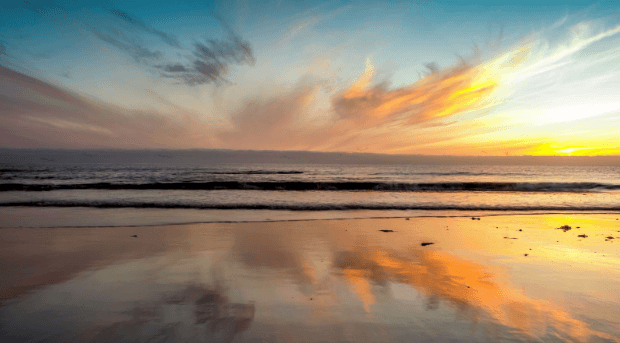
More than almost anywhere else on earth. Around the summer solstice on June 21, Reykjavík sees approximately 24 hours of continuous daylight — the sun dips toward the horizon around midnight but doesn’t fully disappear. By the start of June, you’re already looking at 22–23 hours of usable light.
For a camper van trip, this changes everything about how you plan your days. There’s no race against sunset, no sense that you need to be at a viewpoint by a certain time or you’ll miss the light. The golden hour stretches for hours rather than minutes, and it happens twice: once in the late evening and again in the early morning. Driving at 11 PM in full light feels surreal the first time and completely normal by day three.
The practical catch is sleeping. The light doesn’t dim enough to be ignored, and a camper van without good blackout blinds or curtains will have you wide awake at 3 AM in bright sunshine. An eye mask is a reasonable backup, but proper window covers make a real difference on a 10-day trip.
As a result of all this daylight, there’s one thing June cannot offer: the Northern Lights. Aurora activity requires darkness, and June has none. If seeing the Northern Lights is your priority, plan your trip for late September at the earliest — October through February gives you the best odds. Read our guide to the Northern Lights in Iceland for full timing and forecasting details.
What to Do in Iceland in June
June’s defining feature is the light, and the best June experiences are built around it.
Chase the Midnight Sun
The solstice falls on June 21, and the days either side of it are the most dramatic. Head somewhere with an unobstructed horizon — the Snæfellsnes Peninsula on the west coast is a favorite for midnight sun photography, with the glacier volcano Snæfellsjökull as a backdrop. The Reykjanes Peninsula is closer to Reykjavík and still delivers. A camper van means you can position yourself exactly where you want to be and wait it out.
Watch Whales
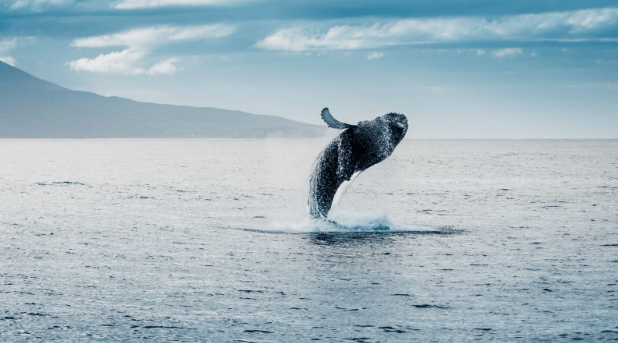
June is one of the best months for whale watching in Iceland. Humpbacks, minkes, and white-beaked dolphins are commonly spotted on tours from Húsavík on the north coast — widely considered Iceland’s whale watching capital — and from the Old Harbor in Reykjavík. Tours run daily through the summer and quickly book up, so reserving ahead of time is worthwhile.
See the Puffins
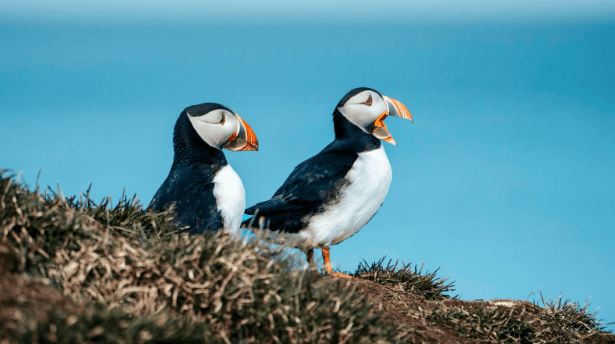
Iceland’s puffin colonies arrive in late April and May and are in full swing through June. The Westfjords, Vestmannaeyjar (Westman Islands), and the cliffs at Látrabjarg are the most reliable spots. Unlike August, you’re at the start of the season in June — the birds are active, the colonies are full, and you have months of season ahead rather than days.
Walk Among the Lupines
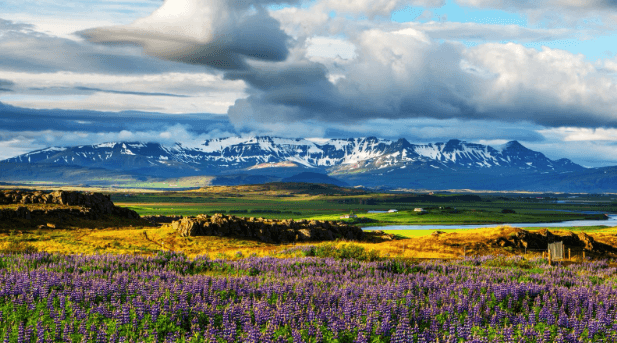
The Nootka lupine — a purple wildflower introduced to Iceland in the 1940s to combat soil erosion — blankets roadsides and hillsides across the south in June. It’s divisive among Icelanders, as it’s an invasive species that’s changed the landscape significantly, but undeniably photogenic. The South Coast and areas around Vík are particularly vivid.
Hike the Highlands — if they’re open
Late June gives you a shot at the Highlands, but it’s not guaranteed. See the F-roads section below for what to check before you plan around it.
Can You Drive F-Roads in June?
It depends on the year and the route. Unlike August, when F-roads are reliably open across the board, June is variable. Most Highland routes open sometime between late May and early July, and the exact dates shift based on how much snow fell the previous winter and how warm the spring has been.
As a rough guide, the Kjölur route (F35) tends to open earliest, often by mid-June, as it sits at a lower elevation and doesn’t require serious river crossings. Routes to Landmannalaugar (F208) and Þórsmörk (F249) typically follow in the second half of June, but can run later. The Sprengisandur (F26) is generally the last to open and shouldn’t be assumed accessible in June without checking.
The Road.is website is the only source worth trusting for current F-road status — check it before you commit any part of your itinerary to a Highland route, and check it again the morning you plan to go. Conditions can change after a single night of rain.
If the Highlands are the reason you’re traveling, August gives you greater certainty. If you’re flexible and willing to adapt the itinerary, late June can absolutely deliver — just don’t build a fixed plan around it. See our full guide to driving the Highlands for route detail.
Which Camper Van Is Best for June?
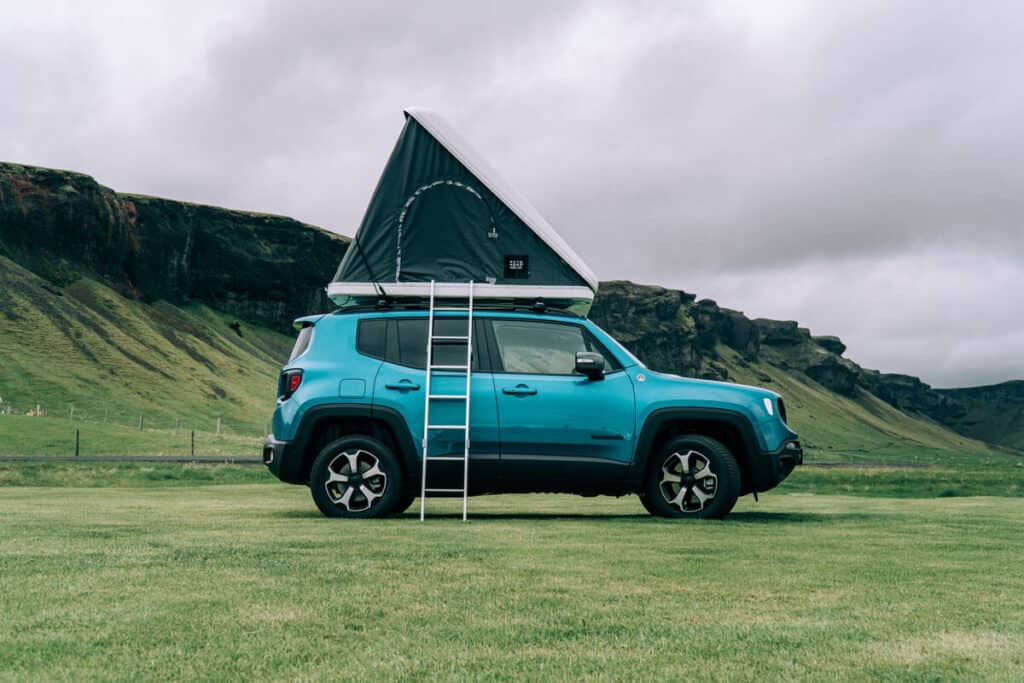
June is one of the easiest months to travel in Iceland by camper van. Daylight is almost endless, road conditions are generally stable, and most travelers sticking to the Ring Road won’t need a full 4×4 setup. If you’re planning to drive into the Highlands later in the month, though, choosing an F-road-approved vehicle becomes important.
Best for couples exploring the Ring Road or the South Coast
Fiat Doblo Maxi or Renault Kangoo Camper
These smaller campers are ideal for two people planning a straightforward summer road trip. They’re economical to drive, simple to handle on Iceland’s paved routes, and practical for longer itineraries without feeling oversized.
Best for couples planning Highland routes later in June
Dacia Duster 4×4 Roof Top Tent or Suzuki Jimny 4×4
If your itinerary includes mountain roads or Highland detours once routes begin opening, these are the most suitable compact 4×4 options. The Duster offers more interior space and comes with a roof-top tent setup, while the Jimny is lighter, smaller, and particularly capable on narrower or rougher tracks. Both are approved for Iceland’s F-roads.
Best for families or small groups
Renault Master 5 or Motorhome 4
The Renault Master 5 is the practical choice for families or groups who want space without overcomplicating the drive. It seats and sleeps five, making it a strong value option for a Ring Road itinerary. The Motorhome 4 is better suited to travelers who want a roomier, more self-contained setup, with extra comfort for longer June road trips.
Best for a more comfortable road trip setup
VW California Beach 2026 Hybrid or Crosscamp Lux 600
These models suit travelers who prioritize comfort and a more polished camper van experience. The new California Beach Hybrid delivers a smooth drive with updated features and modern efficiency, while the Crosscamp Lux 600 gives you noticeably more living space — a good fit for couples or smaller groups spending extended time on the road.
What to Pack for Iceland in June
June feels like summer, and some days it genuinely is. But Iceland’s weather doesn’t stay cooperative for long, and the temperature gap between a sunny afternoon on the south coast and a highland hike the next morning can be significant. Pack for variation, not for the best-case forecast.
Clothing
- Waterproof jacket and pants — non-negotiable regardless of the forecast
- Fleece or mid-layer for evenings, Highlands, and any day the wind picks up
- Lightweight merino base layers — regulate temperature well and dry fast
- Sturdy waterproof hiking boots
- Warm hat and gloves, especially if highland routes are on the itinerary
- Swimwear for hot springs and geothermal pools
Sleeping
- Blackout eye mask or window covers — more important in June than any other month
- Light sleeping bag or warm layers for cooler nights
Gear
- Sunscreen — UV levels can catch people off guard, even under cloud cover
- Reusable water bottle — tap water across Iceland is excellent and free
- Portable power bank
- Camera or phone with a wide-angle lens for midnight sun shots
- Offline maps downloaded before departure
Practical
- Campsite bookings confirmed before you land
- Road.is and vedur.is bookmarked on your phone
- Iceland Camping Card, if you plan to use it
For more, see our full guide to packing for Iceland.
Best Routes for a June Camper Van Trip
The Ring Road
The full 1,332 km (828-mile) loop is achievable in June for any camper van — 2WD or 4×4. Allow 7–10 days for a comfortable pace. June light makes the east fjords and north coast particularly striking, and the long days mean you’re not rushing between stops. Our Ring Road guide covers the route day by day.
The Snæfellsnes Peninsula
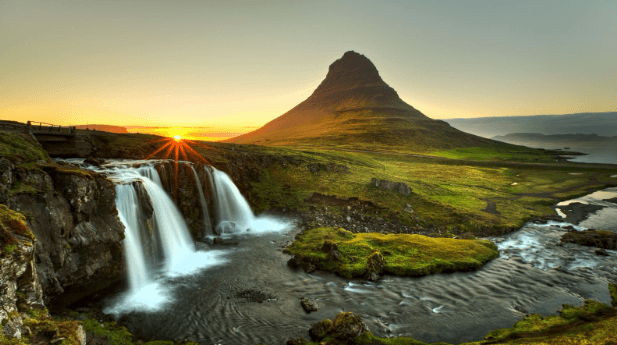
A 2–3 day extension from Reykjavík that earns its place in June, specifically for the Midnight Sun. The peninsula stretches west into the Atlantic and offers clear western horizon views for late-night photography. Snæfellsjökull glacier, the Kirkjufell mountain, and a string of fishing villages make this one of the most varied short routes in Iceland.
South Coast Focus
The South Coast between Reykjavík and Jökulsárlón Glacier Lagoon — roughly 380 km (236 miles) — is the most accessible and most photographed stretch of Iceland. Waterfalls, black sand beaches, glacier tongues, and the Diamond Beach are all within a few hours of each other. Puffin colonies at Dyrhólaey are active through June. A focused 4–5 day trip covering the South Coast is a strong option for first-time visitors who want to see a lot without overextending.
Highlands (Late June Only)
If F-roads are confirmed open and a 4×4 is in your booking, the Kjölur route or a run to Landmannalaugar in the final week of June can be exceptional — quieter than August, with snow still visible on the higher peaks. Check road.is the day before and have a backup plan ready.
For broader summer planning, see our guide to summer in Iceland.
Plan Your June Trip to Iceland
June gives you Iceland with the lights on — literally. The days are long enough to remove almost every constraint from a road trip itinerary, the landscape is green and active, and the wildlife calendar is just getting started. It’s not the most certain month for Highland access, and it’s not the cheapest, but for a first visit or a trip built around the Midnight Sun experience, it’s hard to argue against.
Book early, pack for all conditions, and don’t underestimate the sleeping situation. Everything else will fall into place on the road.
Iceland in June: Frequently Asked Questions
Is June a good month to visit Iceland?
Yes — it’s one of the best. The Midnight Sun is at its peak, temperatures are warm by Icelandic standards, puffin and whale watching seasons are in full swing, and the landscape is at its most vivid. The main considerations are that it’s peak season, so booking campsites and vehicles well in advance is essential, and F-road access to the Highlands isn’t guaranteed until late in the month (or beyond, potentially).
Can you see the Northern Lights in June?
No. The Northern Lights require darkness, and June has almost none — daylight runs close to 24 hours around the solstice. Aurora activity simply isn’t visible during this period. If the Northern Lights are your main reason for visiting, plan for late September at the earliest. October through February offers the best combination of darkness and aurora activity.
Are F-roads open in June?
Some routes open in mid-to-late June, but it’s not guaranteed across the board. The Kjölur route (F35) tends to open earliest. Landmannalaugar and Þórsmörk typically follow in the second half of June. Always check road.is for the current status before committing to any Highland route — and check again the morning you plan to travel.
What is the Midnight Sun like in Iceland in June?
Around the solstice on June 21, the sun doesn’t fully set in Reykjavík. It dips close to the horizon around midnight, creating an extended golden hour that lasts several hours before the sun climbs again. For the best views, head somewhere with a clear western horizon — the Snæfellsnes Peninsula is a popular choice. Read our guide to the Midnight Sun in Iceland for more.
Do I need a 4×4 camper van for a June trip?
Not necessarily. If your itinerary sticks to paved roads — the Ring Road, South Coast, Snæfellsnes — a standard 2WD camper van is perfectly adequate. A 4×4 is only required if Highland F-roads are on your itinerary, and only once they’re confirmed open. See our 4×4 camper vans if the Highlands are part of your plan.
How far in advance should I book for June?
As early as possible. June is peak season, and popular vehicles book out months in advance. Booking 4–6 months ahead is sensible for specific models or dates. Campsites along the south coast and in popular areas should also be reserved before you land — walk-up availability is not reliable in peak season. Check our guide to campsites in Iceland for planning advice.