
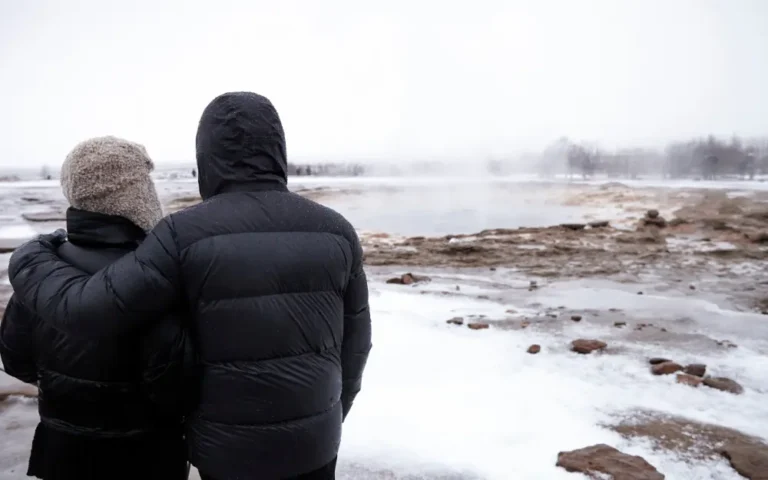
Iceland sits on top of one of the most geothermally active spots on the planet. The Mid-Atlantic Ridge runs straight through the country, and the result is thousands of hot springs scattered across the landscape — from roadside pools you can park next to in five minutes, to river valleys that require a 3-hour round-trip hike, to purpose-built lagoons in dramatic coastal settings.
If you’re planning a self-drive trip, this guide will help you work out which springs fit your route, which ones are free, which need a 4×4 camper van, and which campsites put you closest to a soak.
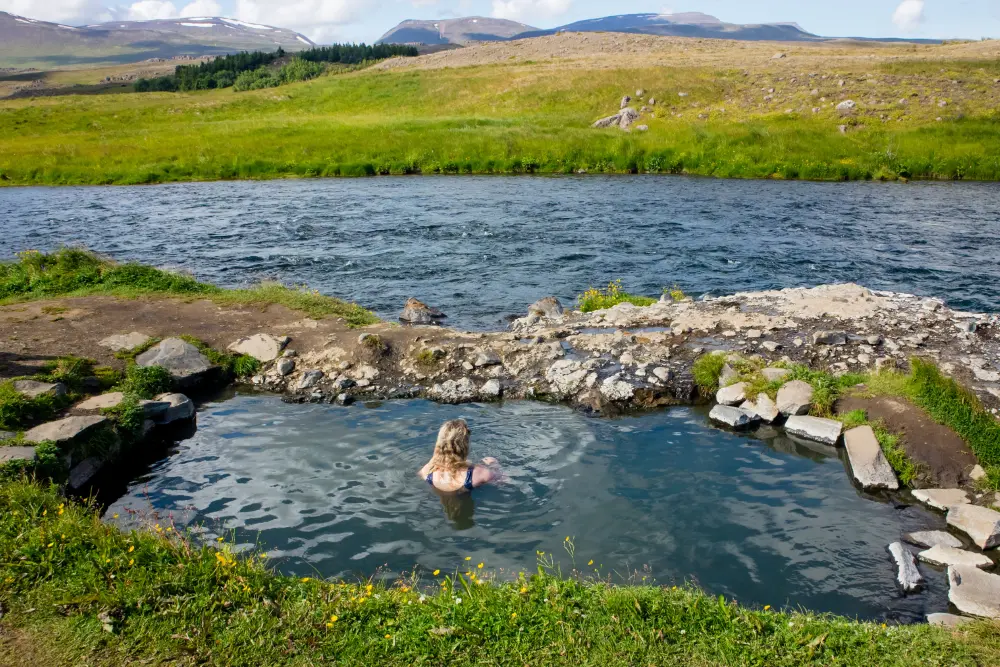
Iceland’s Hot Springs at a Glance
Iceland has over 800 hot springs. The majority sit between 20°C (68°F) and 100°C (212°F), with the best bathing pools landing in the 36–42°C (97–108°F) range. They’re heated entirely by geothermal activity — no boilers, no chemicals — and most flow continuously, replacing the water naturally.
What makes them different from spas elsewhere is the setting. You’re often outdoors, in wind, rain, or snow, surrounded by lava fields, mountains, or ocean. The contrast between cold air and warm water is part of the point. Locals use hot pools the same way others use coffee shops — as somewhere to decompress and talk.
For camper van travelers, hot springs are a natural part of the rhythm. A long day on the Ring Road ends well in a pool. The key is knowing which ones are on your route, and planning an hour or two around them rather than treating them as an afterthought.
How to Plan Your Hot Springs Stops
A few practical points before you start marking the map.
Free vs. paid: Several of Iceland’s best hot springs are completely free to use — Reykjadalur, Seljavallalaug, and Landmannalaugar are among them. The paid lagoons (Secret Lagoon, Hvammsvík, Earth Lagoon, Sky Lagoon) offer facilities — changing rooms, showers, lockers — and tend to be busier in summer. Pre-booking is recommended for all paid options from June to August.
4×4 vs. standard camper van: Most hot springs are accessible on paved roads or good gravel. A handful — particularly those in the Highlands — require a capable 4×4 with high clearance. The guide below flags this clearly for each location. If you’re planning Landmannalaugar, you’ll need a 4×4 camper van — it’s not optional.
Season matters: Seljavallalaug is open year-round but can be cold and algae-affected in winter. Landmannalaugar is inaccessible between roughly October and June when the F-roads close. The paid lagoons are open year-round and are actually quieter in winter, which suits some travelers better.
Campsite proximity: The guide below notes the nearest campsite to each spring so you can plan an overnight stop around a soak. If you’re still working out your broader route, the Iceland camping guide covers sites region by region
Free Hot Springs in Iceland
Reykjadalur — the Hot Spring River
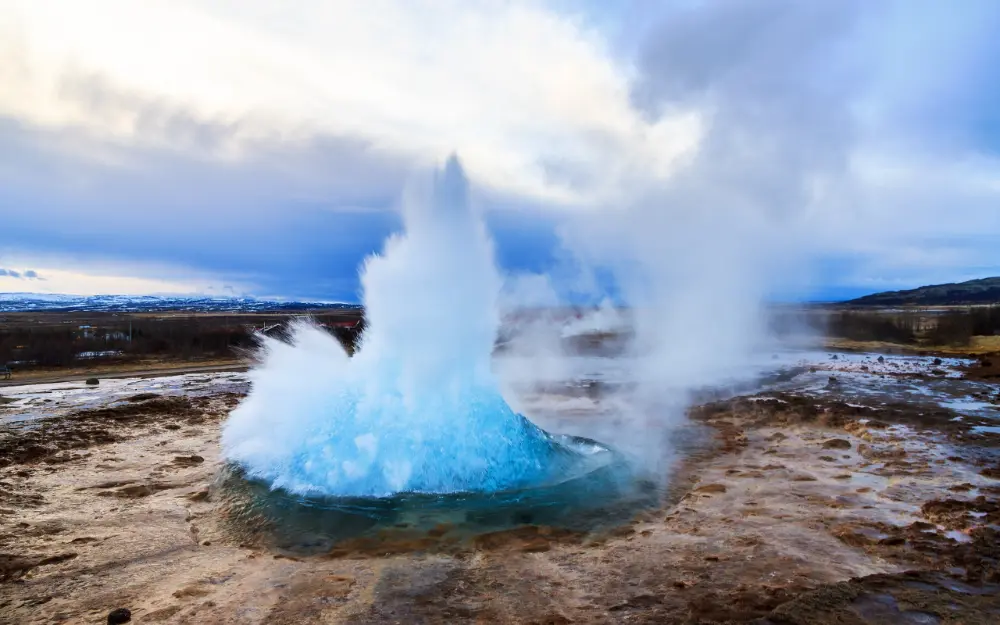
Reykjadalur is the most popular free soak in Iceland, and for good reason. It’s a geothermal valley above Hveragerði, about 45 km (28 miles) east of Reykjavík, where a hot river winds through the landscape at a steady 30–40°C (86–104°F). You don’t soak in a pool here — you wade into a flowing river and find a spot where the temperature suits you.
Getting there involves a 3.5 km (2.2-mile) hike from the car park — roughly 45 to 60 minutes each way, moderate gradient, no technical terrain. The path is well-marked. Go early in the morning to beat the crowds; mid-morning from June to August can get congested.
Driving notes: Take Route 1 east from Reykjavík and exit at Hveragerði. The trailhead car park is signposted. Parking costs around 1,000 ISK (approximately $7 USD) via the Parka or EasyPark apps.
There are no real changing facilities at the river itself — change at the car park or wear your swimsuit under your clothes for the hike.
Nearest campsite: Hveragerði Campsite is right in town, 5 minutes from the trailhead and a good base for a morning hike before heading east on Route 1.
Seljavallalaug — Iceland’s Oldest Public Pool
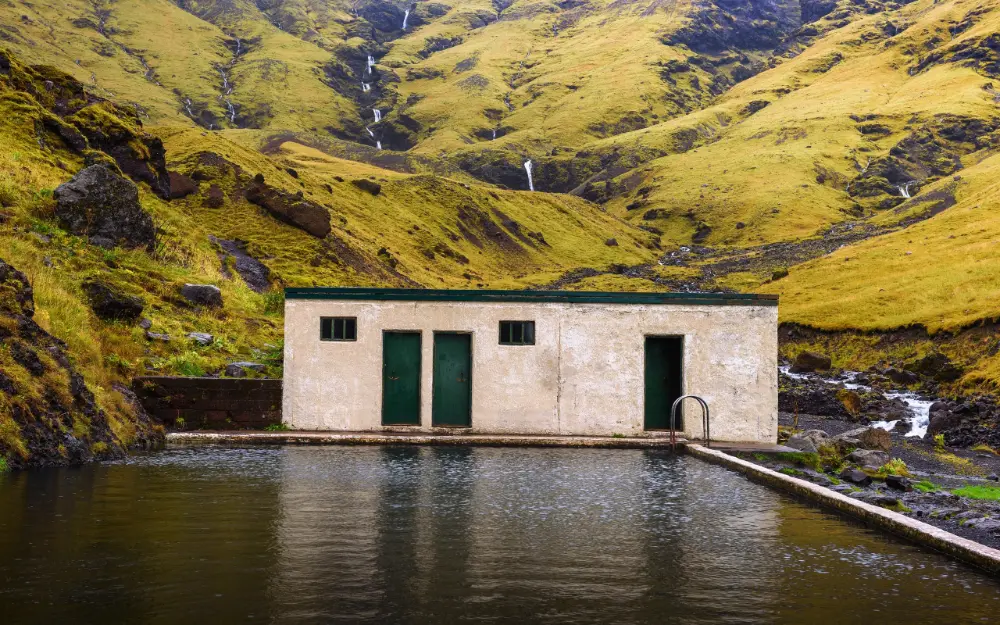
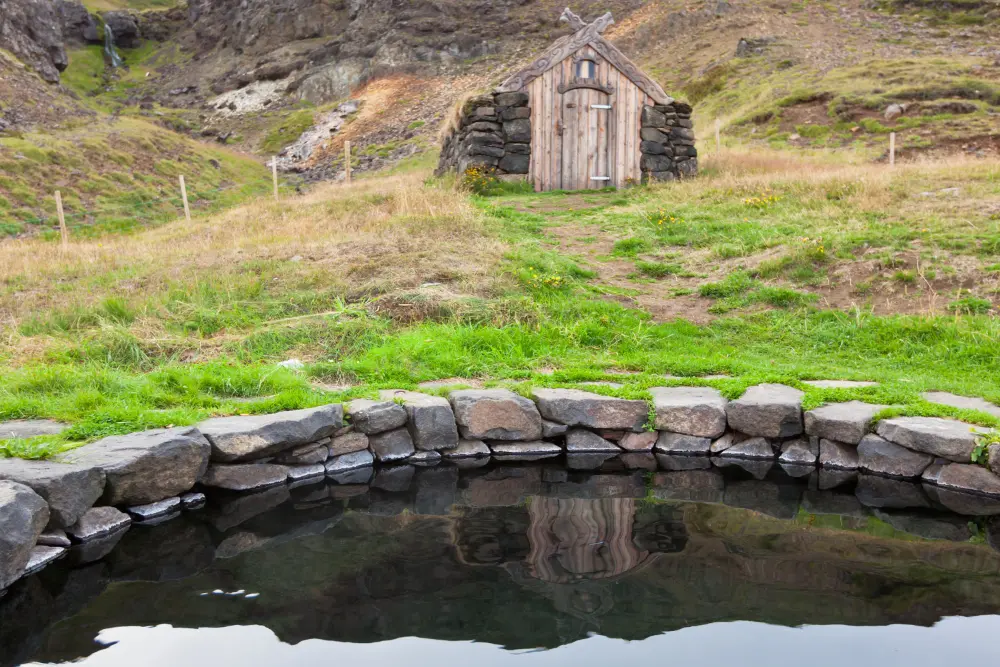
Built in 1923, Seljavallalaug is a 25-meter outdoor pool fed by a hot spring in a dramatic mountain valley in South Iceland. Entry is free — no ticket, no booking, no crowd management. You walk in, change in the basic hut beside the pool, and get in.
What it has going for it is the setting: tucked into a narrow gorge, surrounded by steep mountainside, with a stream alongside. The water temperature varies — some parts run warmer than others — and there’s no filtration system, so the water carries some algae. That’s part of the character. Go in with the right expectations, and it’s one of the best free experiences in the country.
Driving notes: From the Ring Road between Skógar and Vík, turn onto Route 242. The car park is about 800 m (0.5 miles) down a gravel road. From there, it’s a flat 15-minute walk into the valley.
Nearest campsite: Skógar Campsite, near Skógafoss waterfall, is 15 minutes away on the Ring Road.
Landmannalaugar — the Highland Classic
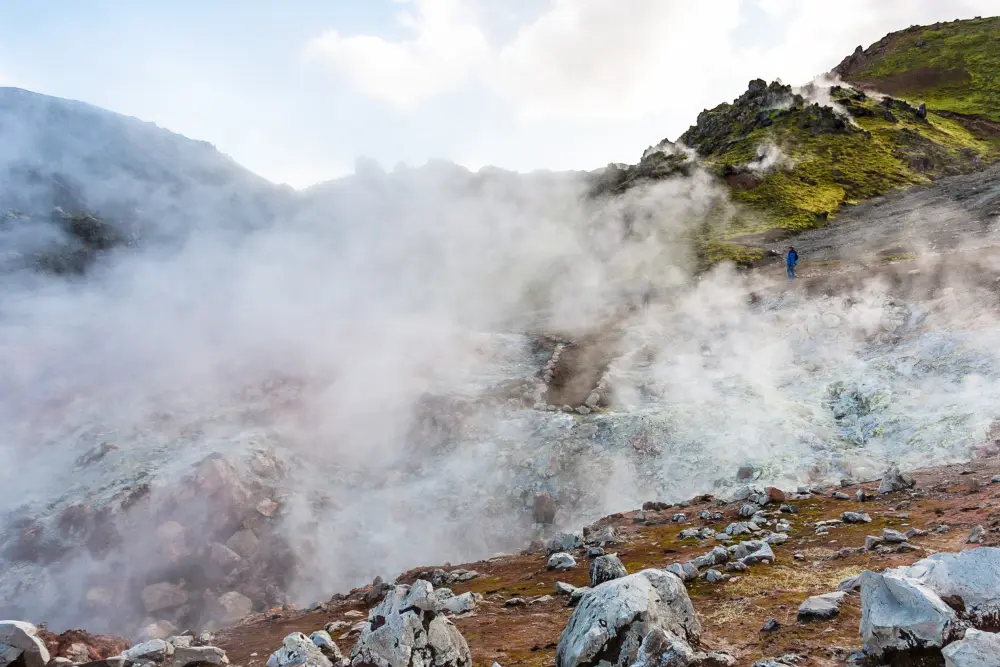
Welcome to the most famous hot spring in Iceland’s interior, and the starting point of the Laugavegur trail. The natural pool is formed where a geothermal stream of around 50°C (122°F) mixes with cold glacial meltwater, producing a comfortable bathing temperature. You’re surrounded by rhyolite mountains in shades of ochre, green, and rust — it’s unlike anywhere else in Iceland.
The catch is access. Landmannalaugar sits at the end of Route F208, which includes river crossings. A proper 4×4 camper van is mandatory — standard camper vans cannot attempt this route. Check the Highlands driving guide for a full breakdown of the F-road rules and what your vehicle needs to handle them.
Highland roads are typically open from late June to late September. Always check umferðin.is before heading out, as road conditions can change overnight without warning.
Nearest campsite: Landmannalaugar Highland Hut has a campsite on-site, right next to the hot spring.
Important note: Rental insurance does not cover water damage from river crossings.
Paid Hot Springs in Iceland
Secret Lagoon (Gamla Laugin) — Golden Circle
This is Iceland’s oldest swimming pool, dating back to 1891. The Secret Lagoon sits near Flúðir in the Golden Circle area, and what makes it work is the contrast with the bigger paid lagoons: it’s genuinely natural, the setting is low-key, and the price is reasonable. The pool holds at 38–40°C (100–104°F) year-round.
Entry costs 4,500 ISK (~$32 USD) for adults and 260 ISK (~$2 USD) for children under 14. The facilities include changing rooms and a small bistro. Pre-booking is recommended in summer.
What makes it work well for camper van travelers is the location. It sits right on the Golden Circle route and is a natural end-of-day stop — the drive from Geysir takes about 15 minutes. Paid entry keeps the crowd size manageable, and the pool rarely feels overcrowded outside of peak summer.
Driving notes: From the Golden Circle, head south on Route 30 toward Flúðir. The lagoon is clearly signposted. The road is paved all the way — no 4×4 needed.
Nearest campsite: Flúðir Campsite is 5 minutes away. Alternatively, Selfoss Campsite is 40 minutes east and works as a base for the wider South Iceland area.
Hvammsvík — Whale Fjord
Here, you’ll find eight natural hot springs set directly on the Atlantic Ocean in Hvalfjörður (Whale Fjord), 56 km (35 miles) north of Reykjavík. The springs are arranged across a rocky shoreline, and the water temperature shifts slightly with the tide — a detail that makes the experience feel genuinely connected to the environment rather than engineered.
Entry ranges from around $50-83 for the “Natural” ticket option, which includes access to natural outdoor changing facilities. Other packages are available. The difference is primarily access to the indoor facilities and sauna. The outdoor pools are the main event regardless of which tier you book.
Driving notes: 56 km (35 miles) from Reykjavík via the Hvalfjörður tunnel or the scenic road around the fjord. The scenic route adds around 30–40 minutes but is worth it for the views. The road is paved throughout — you will not require a 4WD.
Nearest campsite: There are limited camping options directly in Hvalfjörður. Reykjavík Campsite or Mosfellsdalur Campsite work well as bases.
Earth Lagoon (formerly Mývatn Nature Baths) — North Iceland
The northern counterpart to the Blue Lagoon, Earth Lagoon is a large geothermal lagoon near Mývatn lake in North Iceland. The water holds at 36–40°C (97–104°F), is rich in minerals, and has the same milky blue-green color that makes the Blue Lagoon famous — but in a less commercial, less busy setting.
The baths were rebranded as Earth Lagoon and closed for a full rebuild at the start of 2026. The lagoon has since reopened and offers entry from 7,900 ISK (~$63) for the “Essential” package.
Driving notes: 4 km (2.5 miles) east of Reykjahlíð village on Route 1 near Mývatn. The road is paved and does not require an approved 4×4. The Ring Road guide covers how to sequence North Iceland over two to three days.
Nearest campsite: Mývatn Campsite (Reykjahlíð) is 10 minutes from the baths. Book ahead in summer to guarantee a pitch.
Sky Lagoon — Reykjavík
Sky Lagoon is a clifftop infinity lagoon on the Reykjanes peninsula, 10 minutes from central Reykjavík. The main pool faces the Atlantic, and the seven-step spa ritual — hot pool, cold plunge, sauna, steam, scrub — is structured more like a wellness experience than a simple soak. This is more spa than hot spring, priced accordingly, and worth including if you’re spending a day in Reykjavík before or after your route.
The classic package starts at ~$125 for adults and ~$63 for children over the age of 12.
Driving notes: Kársnesbraut, Kópavogur, near Reykjavík. Easy to reach in a standard camper van, and also accessible by bus from the city center.
Hot Springs by Region
Here’s how to slot hot spring stops into a Ring Road or regional itinerary.
Reykjavík and Reykjanes
The best nearby stop is Hvammsvík, 56 km (35 miles) north of the city in Whale Fjord — close enough for a half-day detour before or after a Reykjavík night. Sky Lagoon, just 10 minutes away, is the city option that’s great for your first or last evening. Reykjadalur, 45 km (28 miles) east, sits just off Route 1 and is ideal as your first morning stop heading south.
Campsite suggestion: Start your first night at Hveragerði Campsite, walk to Reykjadalur in the morning, then head east along the South Coast.
Golden Circle and South Iceland
Secret Lagoon at Flúðir is the natural add-on to any Golden Circle loop — quieter than the main sites and right off Route 30. Seljavallalaug sits between Skógar and Vík on the South Coast, another 45 minutes east. Standard camper vans handle everything on this stretch — there’s no 4×4 needed for any of the South Iceland springs.
Campsite suggestion: Skógar Campsite, directly below Skógafoss — one of the most dramatic campsite locations in Iceland, and a 15-minute drive from Seljavallalaug.
North Iceland
Mývatn is the anchor stop. The lake, the lava formations at Dimmuborgir, Hverfjall crater, and the Earth Lagoon baths can fill a full day.
Grjótagjá is worth a mention here: a small lava cave with a luminous blue geothermal pool inside. The water is currently too hot for bathing — around 50°C (122°F) due to volcanic activity — and swimming is not permitted, but it’s a 10-minute stop from the main road and genuinely extraordinary to look at.
Campsite suggestion: Mývatn Campsite in Reykjahlíð. Central for all Mývatn-area stops — book ahead in summer.
The Highlands
Landmannalaugar is the only spring on this list that requires both a 4×4 and a specific window of the year — open from roughly late June to late September. If you’re going, combine it with the Laugavegur trail or at minimum the day hike up Bláhnúkur for the rhyolite panoramas. Read the Highlands driving guide before you go.
Safety and Etiquette
At the hot springs
Test the temperature before you get in: Geothermal pools vary significantly — some sections of the Reykjadalur river run hotter than others, and what looks calm on the surface can be scalding at the source. Wade in gradually and retreat if the water begins to feel too hot.
Don’t approach boiling springs: The ground around any geothermal feature can contain unpredictably hot patches and superheated vents. Stay on marked paths and keep a distance from any spring that’s actively steaming or bubbling.
Shower before you swim: This is standard practice in Iceland and isn’t optional at the paid facilities — showers are required before entering any pool. At free springs like Seljavallalaug, there may be basic facilities or none at all. Come prepared.
Leave the area as you found it: No soap, shampoo, or sunscreen in the natural springs. At free pools like Seljavallalaug, pack out everything you brought in. Some of these pools sit on private land or conservation areas — continued access depends on visitors treating them with respect.
On the roads
If you’re routing to Landmannalaugar or any Highland destination, check umferðin.is on the morning of travel. F-roads can close overnight without warning, and conditions on a Highland track can change dramatically after rain.
For any Highland driving, let someone know your route and expected return time. Phone signal is limited or non-existent in the interior. You can also register your travel plans at SafeTravel.
When to Visit
Summer (June–August): Every spring on this list should be accessible, though Landmannalaugar depends on the opening of the F-road. Long days mean you can hike to Reykjadalur in the evening light or reach Landmannalaugar without rushing. The trade-off is crowds — free springs like Reykjadalur are busiest in July, and paid lagoons book up weeks in advance.
Autumn (September–October): Landmannalaugar closes in late September or October depending on snowfall. The paid lagoons quiet down significantly and offer better value. The free springs remain open and are often at their most dramatic — steam visible against cold air, fewer people on the trails.
Winter (November–March): Ready to enjoy the Northern Lights window? Soaking in an outdoor pool while auroras move overhead is one of those experiences that’s hard to overstate. Hvammsvík and Secret Lagoon are good winter choices. Seljavallalaug can be cold and algae-affected but remains open. The Highlands are completely inaccessible.
Spring (April–May): Highland roads are still closed, so Landmannalaugar is off the table until at least late June. Some free springs can be cold and muddy. The paid lagoons are open and quieter than summer — a genuinely good window for the rest of the list.
FAQ
Are there free hot springs in Iceland?
Yes — Reykjadalur, Seljavallalaug, and Landmannalaugar, among others, are all free to use. Reykjadalur charges for parking (around $7 USD).
Can I visit hot springs in a standard camper van?
Most hot springs on the Ring Road and in South and North Iceland are accessible in a standard camper van. The exception is Landmannalaugar, which sits behind the F208 Highland route. F-roads require a 4×4 with proper clearance — it’s a road access requirement, not a recommendation. See the Highlands driving guide for full detail on which routes need what.
Do I need to book in advance?
For paid lagoons — Secret Lagoon, Hvammsvík, Sky Lagoon, and Earth Lagoon — pre-booking is strongly recommended in summer. Slots fill up, particularly in July and August. The free springs don’t require booking, but popular ones like Reykjadalur can get busy on the trail by mid-morning in peak season.
What should I bring to a hot spring?
Swimsuit, towel (unless the facility provides them — check in advance), flip-flops for changing rooms, and a dry bag for your clothes while you’re in the water. For free springs with no facilities, bring a change of clothes, extra footwear, and a warm layer for afterward — you’ll be wet, and the wind in Iceland is real.
Is the Blue Lagoon worth it?
The Blue Lagoon is the most expensive geothermal experience in Iceland, with entry from around $84, and it’s genuinely good — the water quality and facilities are exceptional. It’s also one of the most commercial experiences in the country. If you want atmosphere and scale, it delivers. If you want something quieter and less staged, Secret Lagoon or Hvammsvík offer a different experience for less money.
Can I swim in the hot springs while pregnant?
Soaking in hot water above 38°C (100°F) is generally not recommended in the first trimester and should be limited at any stage of pregnancy. Speak with your doctor before visiting. At facilities like Sky Lagoon and Hvammsvík, staff can advise on pool temperatures on arrival.
Iceland’s geothermal landscape is one of the reasons a self-drive trip here is unlike anywhere else. Plan a route that puts a hot spring at the end of a long driving day — your body will thank you.
Ready to plan your route? Browse our full fleet of camper vans and find the right vehicle for where you’re headed.