
Since 2012, Rent.is has completed over 20,000 camper van rentals across 30+ countries. An analysis of booking data and 368 firsthand traveler diaries shows the average Iceland camper van trip lasts 7 days; 65% of bookings fall in summer (June–August) but October is the most represented month in traveler story submissions; 7 in 10 travelers mention the Ring Road but only 30–40% complete the full loop; and the most common traveler misconception is that Iceland’s weather will be worse than it actually is. The top booking nationalities are the US, Spain, and France.
Travel content about Iceland tends to tell you what you should do. We thought it would be more useful to show you what real visitors have actually done with their time in Iceland, and what our 14 years of operating Iceland’s largest camper van fleet have shown us about how self-drive travel here really works.
The data below draws on two sources: Rent.is operational booking data from our 500-vehicle fleet and approximately 20,000 rental trips per year, and a corpus analysis of 368 firsthand trip diaries submitted by customers to our Camperstories archive between 2012 and 2025.
Together, they give a more complete picture than either source alone, with booking data showing what people do at scale and the diaries showing how they experienced it.
How Long People Actually Stay
Standard travel guides recommend 10 to 14 days for Iceland. The data from both our booking system and our traveler diaries tells a different story.
The most common rental duration in our booking data is 7 days. The average across the 368 trip diaries we analyzed was 7.6 days. Both data sources converge on the same finding: most people are making Iceland work in a week.
Trip duration has remained stable over the last three years, without getting shorter or longer. The 7-day Iceland trip is the norm, not the exception.
What changes with more time isn’t whether you can do Iceland; it’s how deeply you can explore. A week covers the Ring Road’s highlights and the Golden Circle. Ten days adds the Westfjords or the Highlands. Two weeks lets you slow down significantly.
The Routes People Choose — and How Far They Go
The Ring Road (AKA Hringvegur or Route 1) is the most talked-about itinerary for Iceland. But talking about it and completing it are different things.
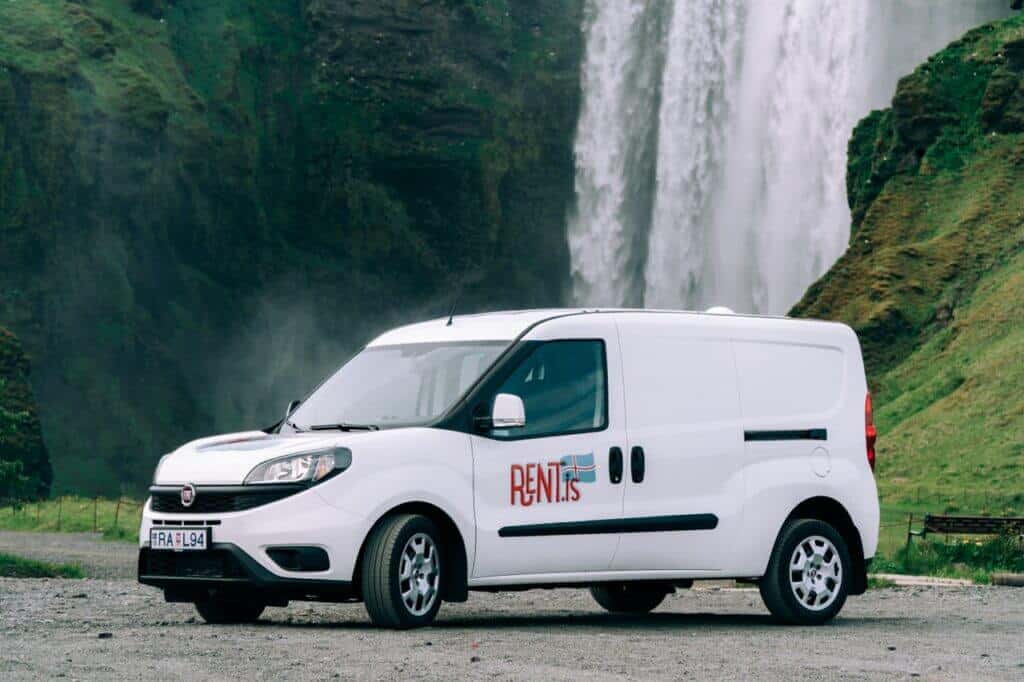
71% of travelers in our diary analysis mentioned the Ring Road. Our operational data tells us only 30–40% of renters complete the full 1,332-km (828-mile) loop. Most combine a partial Ring Road route with the Golden Circle and South Coast — the corridor that concentrates Iceland’s most iconic stops within a manageable distance.
| Route/Region | Operational Data | Story Diary Data |
| South Coast/South East | Most popular route by booking activity | No stories related to this. |
| Golden Circle | Second most popular overall | 50% of story diaries |
| Ring Road (partial or full) | Most mentioned in diaries | 30–40% complete the full loop |
| Snæfellsnes Peninsula | Fourth overall | 35% of story diaries |
| Westfjords | Growing year-on-year | 17% of story diaries |
| Highlands/F-roads | Seasonal, 4×4 required | 8,000–10,000 customers/year |
The South Coast’s dominance makes sense. Seljalandsfoss, Skógafoss, Reynisfjara, Jökulsárlón, and Vatnajökull are all accessible on Route 1 without any detour — and most can be done in a standard camper van. 49% of story diarists mentioned Seljalandsfoss and Skógafoss; 67% mentioned Jökulsárlón.
The Westfjords are the most notable growth story. Interest has grown noticeably in recent years, though the region remains a detour that suits longer trips.
The Highlands see approximately 8,000–10,000 customers per season attempt F-roads or Highland routes — that’s roughly 40–50% of annual rental trips. A 4×4 is required to enter Highland areas. Standard camper vans are not permitted on F-roads.
Vehicle Choice: Most People Don’t Need a 4×4
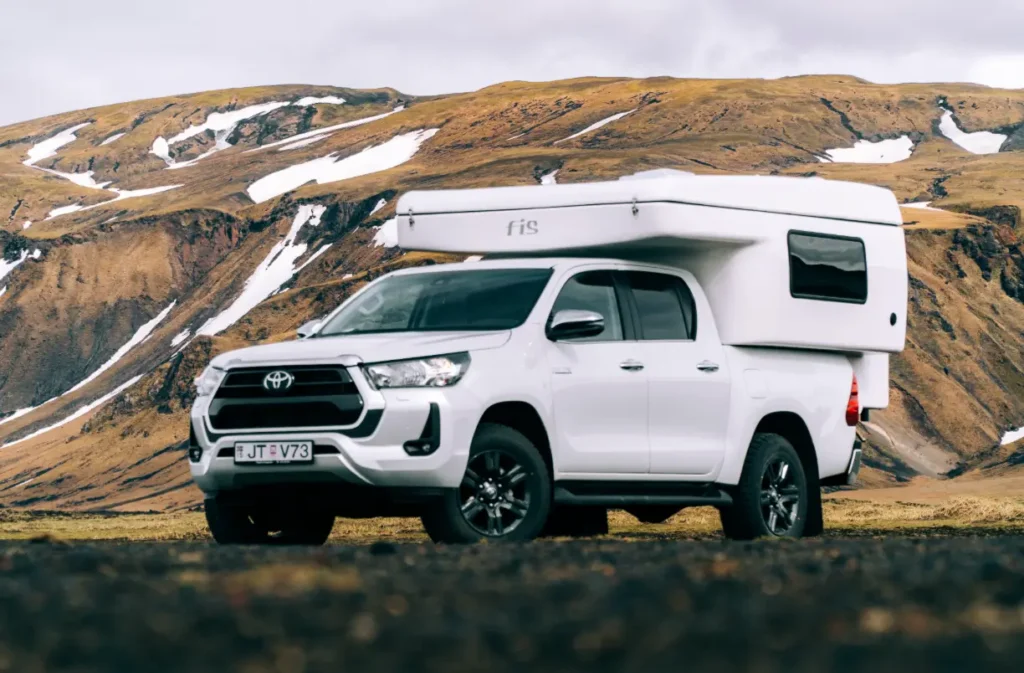
The 4×4 vs standard camper van question is one of the most common things Iceland travelers search for. The booking data gives a clear answer: 20% of Rent.is rentals are 4×4 vehicles. The other 80% are standard camper vans.
That share hasn’t grown over the last three years, and customers rarely upgrade to 4×4 after initial booking.
This matches what the traveler diaries show. Only 8% of stories mentioned 4×4 or 4WD vehicles by name. Most travelers drove the Ring Road in a standard camper van without issue.
The nuance: a 4×4 is essential if you’re planning Highland routes or difficult terrain. It’s optional for the Ring Road and South Coast. Most travelers visiting Iceland for the first time don’t need one — but the ones who do, really do.
When People Visit — and Why October Stands Out
Booking data shows peak season (June–August) accounts for 65% of annual rentals. That’s the expected summer concentration.
What’s less expected: October is the single most popular month in our traveler diary dataset, accounting for 31% of all stories — more than July and August combined.
| Season | Operational Data | Story Diary Data |
| Summer (June–August) | 65% of annual bookings | 32% of story diaries |
| Autumn (Sept–Oct) | Shoulder season – No data | 41% of story diaries |
| Winter (Nov–Feb) | 10–15% of annual bookings | 12% of story diaries |
| Spring (Mar–May) | Shoulder season – No data | 15% of story diaries |
The gap between booking share and diary representation suggests autumn travelers are significantly more likely to write up their trips. The October effect is real, thanks to cooler temperatures, meaningful Northern Lights potential, thinner crowds, and lower prices than peak summer.
Off-season booking (October–March) is down approximately 20% in 2026 compared to 2025 — worth monitoring, though seasonal variance year-on-year is not uncommon in Icelandic tourism.
Winter travel (November–February) accounts for 10–15% of bookings. Northern Lights are the primary driver. Many winter travelers are specifically structured around aurora chasing, and a camper van is the most practical vehicle for it, because you can follow the forecast.
The Northern Lights Effect
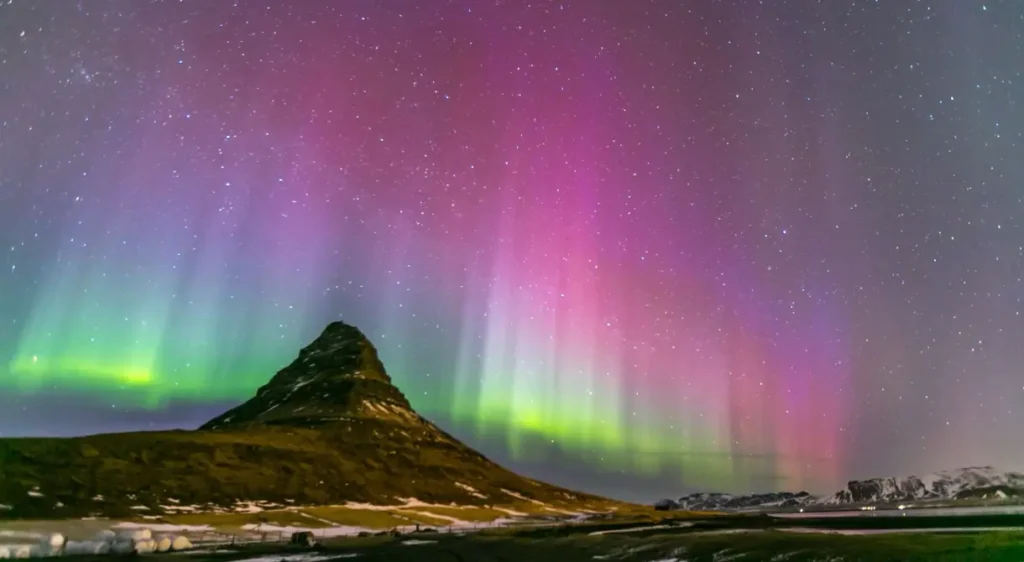
46% of traveler diaries explicitly mention the Northern Lights. For nearly half of Rent.is customers, aurora viewing is a primary motivation — not a bonus.
Northern Lights tourism has meaningfully affected winter booking patterns. The aurora season (roughly September to March) now drives a distinct booking cohort separate from the summer leisure traveler.
The practical reality for aurora chasers: you need dark skies, clear weather, and the flexibility to move. Iceland’s cloud cover is unpredictable, and the aurora can appear anywhere away from light pollution. A camper van lets you position yourself overnight, which is why it’s become the preferred vehicle type for serious aurora seekers.
What People Are Actually Doing
| Activity | Story Diary Data | Context |
| Waterfalls | 90% of story diaries | Drive-past feature on Ring Road — not a detour for most |
| Hot springs/geothermal pools | 84% of story diaries | Consistently surprised first-time visitors |
| Glaciers/ice caves | 76% of story diaries | Seasonal — ice caves winter only |
| Hiking | 69% of story diaries | Day hikes are common; multi-day less so |
| Northern Lights | 46% of story diaries | Primary motivation for many winter travelers |
| Puffins | 28% of story diaries | Seasonal — May to August only |
| Whale watching | 15% of story diaries | Húsavík excursion for Ring Road travelers |
Hot springs are a consistent theme in the diaries regardless of nationality or season. Iceland has hundreds of natural geothermal pools, roadside hot pots, and municipal swimming pools — travelers who discover this describe it as one of the highlights of the trip.
Who Is Traveling
| Traveler Type | Story Diary Data | Notes |
| Couples | 59% of story diaries | — |
| Friend groups | 36% of story diaries | — |
| Solo travelers | 22% of story diaries | Higher than most comparable destinations |
| Honeymooners/anniversary travelers | 14% of story diaries | — |
Solo travel came up in 22% of stories — higher than most people expect. Iceland consistently ranks as one of the world’s safest countries, and a compact camper van is well-suited to solo travelers. Many solo diarists described the format as one of their best decisions.
One in seven stories referenced a honeymoon, anniversary, or engagement trip, which is consistent with Iceland’s positioning as a romantic destination.
Where Travelers Come From
Rent.is serves customers from 30+ countries every year. By booking volume, the top three nationalities are the US, Spain, and France. Italy, France, and Canada have shown the fastest growth over the last two to three years.
| Country | Operational Data | Story Diary Data |
| United States | #1 by booking volume | 20% of story diary mentions |
| Spain | #2 by booking volume | 5% of story diary mentions |
| France | #3 by booking volume | 4% of story diary mentions |
| Germany | Established market | 9% of story diary mentions |
| Canada | Fastest growing (with Italy/France) | 8% of story diary mentions |
| United Kingdom | Established market | 7% of story diary mentions |
| Italy | Fastest growing | 3% of story diary mentions |
There’s a notable difference in vehicle preference between UK and US travelers: US customers are more likely to rent motorhomes, while UK customers tend toward camper vans. Routes chosen are broadly similar between the two groups.
The story diary data skews toward English-language submissions — Spanish, French, and Italian travelers are likely underrepresented in the diary corpus relative to their actual booking share.
The Most Common Traveler Misconception
After 14 years and 20,000+ rentals, the most common misconception we see from travelers is that Iceland’s weather will be worse than it is.
The concern is usually rain, wind, and darkness — particularly for winter visitors or autumn travelers. The reality is more nuanced. Iceland’s weather is changeable and fast-moving, but it’s rarely an obstacle to travel. The bigger practical issue many first-timers don’t anticipate is parking — Iceland’s most popular locations now have significant congestion management, and some sites charge for parking.
On the road safety side: the most common issues our team handles daily are flat tires and empty batteries — not dramatic incidents. Iceland’s roads are significantly safer than travelers often fear. The areas that warrant real caution are F-roads and river crossings, which require a 4×4 and appropriate technique. Non-4×4 vehicles on F-roads do occasionally get stuck — which is why the requirement exists.
About This Data
Operational data is sourced from Rent.is booking records and fleet operations, covering the 2024–2025 period. All figures are approximate unless otherwise stated. Fleet size: approximately 500 camper vans. Annual rentals: approximately 20,000 trips/140,000 rental days. Countries served: 30+.
Story diary analysis draws on 368 trip diaries published in Rent.is’s Camperstories archive — firsthand accounts submitted by customers between 2012 and 2025. Month and seasonal data is derived from date signals within stories. Trip duration is based on explicit day-count references. Nationality data reflects self-identified mentions and covers a subset of the archive.
View the full Camperstories archive
Frequently Asked Questions
How long should I spend in Iceland for a camper van trip?
Seven days is the most common rental duration in Rent.is’s booking data, and the average across 368 traveler diaries is 7.6 days. A week covers the Ring Road’s main highlights, the Golden Circle, and the South Coast. For the Westfjords or Highlands, plan for 10–12 days.
What is the most popular time of year to visit Iceland by camper van?
Summer (June–August) accounts for 65% of annual bookings. However, October is the most represented month in traveler diaries — more stories were written about October trips than July and August combined. October offers Northern Lights potential, open roads, thinner crowds, and typically lower prices than peak summer.
Do I need a 4×4 camper van in Iceland?
80% of Rent.is rentals are standard camper vans. A 4×4 is required for F-roads and Highland routes, but the Ring Road and South Coast — Iceland’s most popular itineraries — can be driven in a standard camper van. If you’re not planning Highland or river-crossing routes, you likely don’t need one.
What are the most popular routes in Iceland?
The South Coast/South East is the most active route by booking data. The Golden Circle is visited by half of all travelers. 30–40% of renters complete the full Ring Road. The Snæfellsnes Peninsula and Westfjords round out the top five, with Westfjords interest growing year-on-year.
When is the best time to see the Northern Lights in Iceland?
The Northern Lights are visible from approximately September to March when the skies are dark enough. October–February offers the best combination of darkness and reasonable road access. A camper van gives you the flexibility to follow clear-sky forecasts and position yourself away from light pollution overnight.
Is Iceland good for solo camper van travel?
22% of trip diaries in our archive describe solo travel — higher than most comparable adventure destinations. Iceland consistently ranks as one of the world’s safest countries. A compact camper van is practical for one person, and many solo travelers describe the format as one of their best travel decisions.