
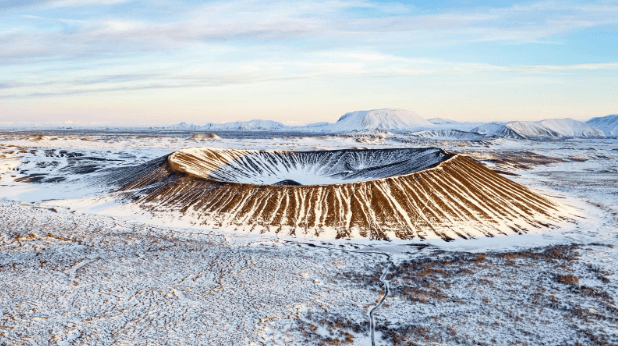
November is Iceland’s most demanding month for travelers — and for some, its most rewarding. The nights are long, the weather is genuinely challenging, and the Highlands have been closed for weeks. What November offers in return is up to 19 hours of darkness ideal for hunting the Northern Lights, an Iceland almost entirely free of other tourists, and prices that reflect the drop in demand. It’s not the month for everyone, but for travelers who come prepared, it delivers an experience that no summer visit can replicate.
The honest version: November requires the right vehicle, the right gear, and a flexible itinerary. With those three things in place, it works.
Is November a Good Time for Your Visit to Iceland?
| Pros | Cons |
| Up to 19 hours of darkness — peak aurora conditions | Iceland’s stormiest month — severe weather possible |
| Lowest crowd levels of any visited month | All F-roads are closed, the Highlands are off limits |
| Lowest prices of the autumn/winter season | Very short daylight window — 5–6 hours by month end |
| Ring Road stays open and accessible | Snow possible at lower elevations |
| Geothermal pools and hot springs are still operating | Some campsites closed or reduced facilities |
| Genuinely off-the-beaten-track experience | 4×4 essential — not optional |
Iceland’s Weather in November
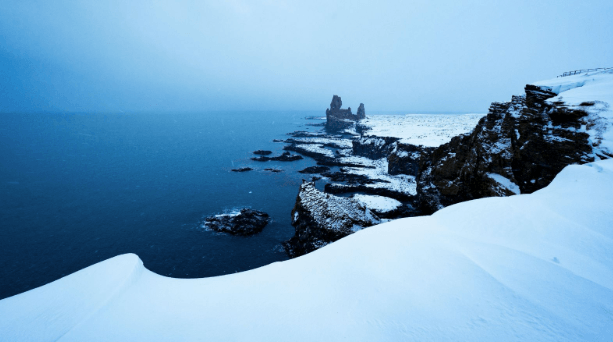
November is Iceland’s stormiest month on average. Temperatures in the south drop to -1–3°C (30–37°F), and the north and higher elevations regularly sit below freezing for days at a time. Snow at sea level is possible across the country, and in the north and east, it’s a reasonable expectation rather than a surprise.
Wind is the defining feature of November weather. Iceland sits in the path of North Atlantic low-pressure systems, and November is when they arrive most frequently and most forcefully. Storm-force winds are not unusual, and safetravel.is will issue warnings that should be taken seriously — not as a reason to stay inside, but as genuine guidance on when driving conditions are unsafe.
The practical upshot is that November itineraries need to be built around flexibility. A route that’s perfectly reasonable on a calm day can become genuinely difficult in a storm. Check vedur.is each morning without exception, monitor safetravel.is for active warnings, and be sure to have a backup plan for days when the weather dictates a rest day.
The figures below cover the weather in South Iceland. The north and east will typically run 3–5°C (5–9°F) cooler, with a higher likelihood of snow and ice on roads.
September to December Temperature Comparison — South Iceland
| Month | Average High | Average Low | Avg. Rainfall |
| September | 11°C (52°F) | 6°C (43°F) | 67mm (2.6 in) |
| October | 7°C (45°F) | 3°C (37°F) | 72mm (2.8 in) |
| November | 3°C (37°F) | -1°C (30°F) | 79mm (3.1 in) |
| December | 2°C (36°F) | -2°C (28°F) | 79mm (3.1 in) |
How Dark Does It Get in Iceland in November?
It gets very dark. At the start of November, Reykjavík sees around 9–10 hours of daylight. By the end of the month, that’s down to just 5–6 hours, with sunrise around 10 AM and sunset before 4 PM. The days feel short in a way that’s hard to appreciate until you’re in it — a late breakfast and a slow start can genuinely cost you most of the usable light.
The upside is considerable for aurora hunters. With 18–19 hours of potential darkness by late November, the window for Northern Lights activity is longer than almost any other month. You don’t need to stay up until 3 AM to get dark-sky time; darkness arrives by late afternoon and stays through until mid-morning.
For sightseeing, the short daylight window rewards early starts and focused planning. Waterfalls, coastal viewpoints, and lava fields all look different in November’s low, cool light, often more dramatic than the same spots in midsummer. But you need to be there between roughly 10 AM and 3 PM to make the most of it.
Are the Northern Lights Visible in November?
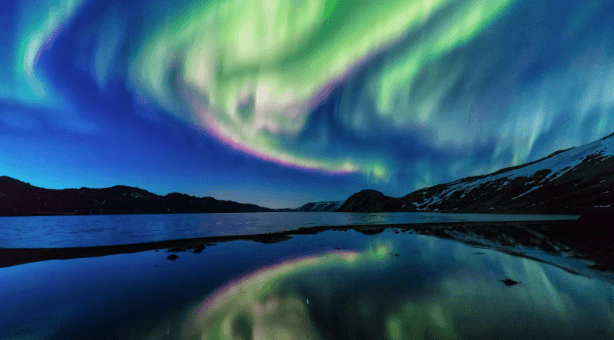
Yes, November is one of the best months of the year for aurora activity. The combination of long nights, Iceland’s position under the auroral oval, and typically strong solar activity in autumn and early winter makes November a genuine Northern Lights month rather than a hopeful one.
The caveat, as always, is cloud cover. November’s storm systems bring significant cloud, and overcast nights are common. The Northern Lights don’t penetrate clouds, which means patience and flexibility matter more in November than in clearer months. The approach that works: check Aurora forecasts alongside weather forecasts, identify which direction offers the clearest skies, and be prepared to drive toward them. An hour’s drive from Reykjavik can put you under a completely different sky on the right night.
The east of Iceland, less affected by Atlantic weather systems than the south and west, tends to offer clearer skies more consistently through November. If Northern Lights are your primary reason for traveling, building part of your itinerary around the east fjords and eastern Ring Road is worth considering.
For detailed forecasting guidance and the best apps to use, read our guide to the Northern Lights in Iceland.
Which Roads Are Open in November?
The Ring Road and all paved national highways remain open in November, though conditions on them are different from summer. Ice, snow, and reduced visibility are all realistic. Roads in the north and east are more frequently affected than the south coast, and mountain passes on the Ring Road — particularly in the east — can close temporarily during severe weather.
All F-roads and Highland routes have been closed since around October 1st and will not reopen until late spring at the earliest. There is no Highland access in November, and no exceptions.
Road.is is essential daily reading in November — not just for F-road status but for live conditions on the paved network. Road closures, ice warnings, and visibility alerts are updated regularly and should be checked before any significant drive. Safetravel.is runs alongside it for storm and safety warnings.
For background on what the Highland routes offer when they do open, see our guide to the Highlands — useful context if you’re planning to return in summer.
Road accessibility — November
| Route | November Status | Notes |
| Ring Road (Route 1) | Open — conditions variable | Ice and snow possible; check road.is daily |
| South Coast roads | Generally open | Best conditions in November; least snow risk |
| Snæfellsnes Peninsula | Open — exposed | Atlantic-facing; storm conditions possible |
| North and East Iceland | Open — more winter conditions | Higher snow and ice risk; check road.is |
| All F-roads and Highlands | Closed | No exceptions; closed until late spring |
What Can You Do in Iceland in November?
November’s short days and difficult weather narrow the activity window, but they don’t close it. The key is concentrating sightseeing into the middle of the day and treating evenings as aurora time rather than downtime.
Chase the Northern Lights
This is what November is for. Long, genuinely dark nights from late afternoon through to mid-morning give you a longer window than any summer month can offer. Position yourself away from light pollution — the Reykjanes Peninsula, the south coast east of Vík, and the east fjords are all strong choices — and track the forecast.
Visit Waterfalls and Coastal Landmarks
Skógafoss, Seljalandsfoss, and the black sand beaches at Reynisfjara are all accessible and dramatically lit in November’s low-angle daylight. The reduced crowds make these stops feel entirely different from August — you may have some of Iceland’s most-photographed landscapes entirely to yourself.
Soak in Geothermal Pools
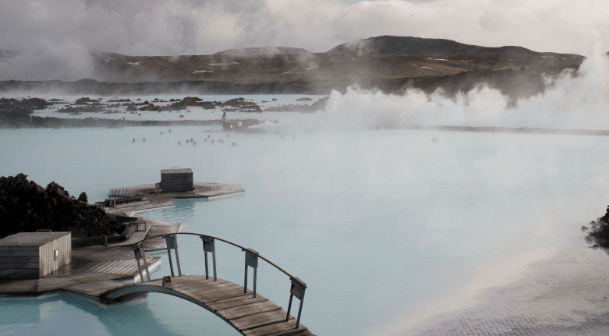
Hot springs and geothermal pools operate year-round and are arguably at their best in November. Sitting in 38–42°C (100–108°F) water while cold air and possibly snow swirl around you is a distinctly Icelandic experience. The Blue Lagoon, Fontana, and numerous municipal pools all operate through winter.
Explore Reykjavík
With shorter days and more time sheltering from weather, November is a good month to spend real time in Reykjavík. The city’s museums, restaurants, and cultural venues are all operating, and the lack of summer crowds makes it a more local experience. The Iceland Airwaves music festival typically runs in early November and draws international acts to venues across the city.
What to Pack for Iceland in November
November demands more than any other month covered in this series. The cold is sustained, the wind is significant, and conditions can shift from manageable to genuinely harsh in an hour. Packing light is not an option.
Clothing
- Heavy insulated waterproof jacket — a summer rain shell is not sufficient
- Waterproof pants with thermal lining or separate thermal leggings underneath
- Merino wool thermal base layers — top and bottom
- Heavyweight fleece or down mid-layer
- Insulated, waterproof boots with good grip — ice traction matters
- Warm hat covering the ears, lined gloves or mittens, and a neck gaiter
- Multiple pairs of wool socks — wet feet in November are miserable
Aurora gear
- Warm layers you can pull on immediately for a late-night aurora alert
- Tripod for long-exposure photography
- Hand warmers — useful for both comfort and keeping camera batteries alive in the cold
Practical
- Head torch — essential from mid-afternoon onwards
- Portable power bank — cold temperatures drain batteries faster than usual
- Offline maps downloaded before departure
- Road.is, vedur.is, and safetravel.is, bookmarked and checked daily
See our guide to packing for Iceland for a full breakdown.
Which Camper Van Is Best for November?
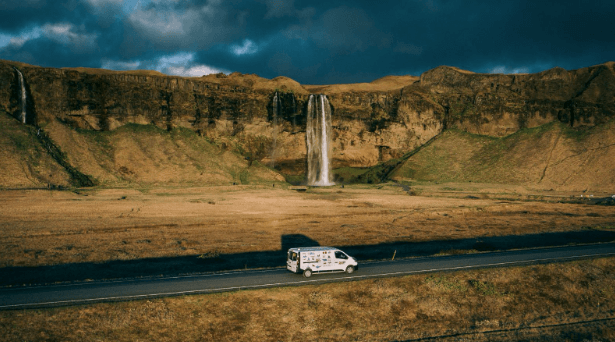
November is the month when the vehicle decision matters most. A 4×4 is not a preference here — it’s the practical baseline for safe, confident travel in conditions that can include ice, snow, and high winds on roads that are technically open but far from easy.
Beyond drive type, November also changes how much time you spend inside the vehicle. With 5–6 hours of daylight by month’s end and long evenings to fill between aurora checks, the living space and heating system of your camper van matter in a way they simply don’t in August. Comfort and insulation earn their keep in November.
For couples
VW California 4×4 or VW California Beach 2026 Hybrid
Both offer the best combination of enclosed sleeping, 4×4 capability, and interior comfort in the two-person category. For November specifically, the insulated cabin and proper bed setup are a meaningful upgrade over a roof tent — you’re not climbing out into sub-zero air to get to sleep, and the vehicle holds warmth better overnight. The 2026 Hybrid is the newest and most refined option in the fleet.
For couples on a tighter budget
The Renegade is 4×4, automatic, and capable in November conditions. The roof tent works in November with the right sleeping kit — a sleeping bag rated to -10°C (14°F) or below, and a good liner. It’s a colder sleeping setup than an enclosed camper van, but manageable for travelers who are properly equipped and comfortable in cold environments.
For families or groups
Renault Master 5 or Toyota Hilux 4×4 Camper
For a family prioritising interior space and warmth, the Renault Master 5 offers the most living room in the fleet — five berths, a full kitchen setup, and enough space to spend a long November evening comfortably inside. It’s 2WD, which is the one trade-off: adequate for the south coast in settled conditions, but less reassuring if the weather deteriorates or you plan to push north or east. The Toyota Hilux gives a family of four the 4×4 capability and all-weather confidence that November demands, with a more compact but well-equipped interior.
For a premium experience
The Crosscamp Flex is 2WD, but it’s worth understanding what that means in practice for November. It’s approved for select F-roads in summer conditions, which speaks to its build quality, and on the paved network in November, the diesel heating system, full kitchen, convertible interior, and 230V campsite hookup make it one of the most comfortable bases in the fleet for long, dark evenings. It seats and sleeps four, and the enclosed living space is a genuine advantage over a roof tent setup when temperatures drop. The honest caveat: if your November itinerary takes you north or east, where ice and snow are more likely on paved roads, a 4×4 is the safer choice. For a south coast-focused trip in settled conditions, the Crosscamp Flex offers a level of interior comfort that the 4×4 options don’t match.
Browse our full camper van fleet
Get Ready to Experience November in Iceland
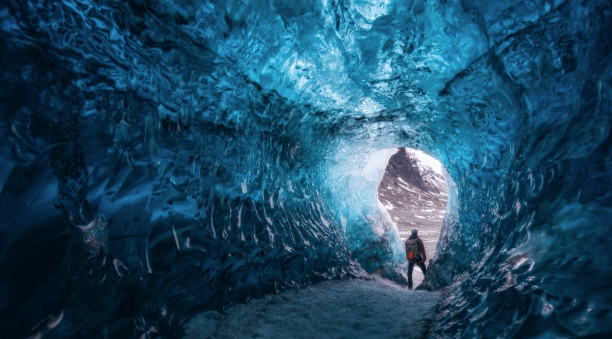
November asks the most of any month in this series. The weather is the least predictable, the days are the shortest, and the margin for being underprepared is the smallest. But the things November offers — long aurora nights, empty roads, a version of Iceland that most visitors never see — are genuinely worth the extra planning.
Get the right vehicle, pack for the cold properly, and treat the forecast as your daily itinerary anchor rather than background information. November rewards the traveler who works with it.
Frequently Asked Questions
Is Iceland worth visiting in November?
For the right traveler, genuinely yes. November offers the longest Northern Lights windows of the year, an Iceland almost entirely free of tourists, and prices well below peak season. The demands are real — storms, short days, cold temperatures, and no Highland access — but travelers who prepare properly and stay flexible consistently find November one of Iceland’s most memorable months.
How cold is Iceland in November?
Average daytime highs in the south reach 3°C (37°F), dropping to around -1°C (30°F) overnight. The north is colder, and wind chill makes temperatures feel significantly lower than the figures suggest. Snow at lower elevations is possible across the country. Warm, layered, waterproof kit is non-negotiable.
Are the Northern Lights visible in November?
Yes — November is one of the best months for aurora activity. Up to 19 hours of darkness by month’s end gives you a long window each night, and Iceland’s position under the auroral oval means activity is frequent. Cloud cover is the main obstacle. Staying flexible, tracking forecasts, and being prepared to drive toward clearer skies are the habits that make the difference between seeing them and missing them.
Are roads safe in November?
The Ring Road stays open, but conditions vary significantly. Ice, snow, and reduced visibility are all realistic, particularly in the north and east. Check road.is and safetravel.is every morning. A 4×4 camper van handles November road conditions considerably more confidently than a 2WD vehicle.
What is there to do in Iceland in November?
More than you might expect. Northern Lights hunting, waterfalls, and coastal landscapes in dramatic low winter light, geothermal pools, and Reykjavík’s cultural venues are all fully accessible. The Iceland Airwaves music festival runs in early November. The short days require focused planning, but the experiences available are genuinely good — and almost entirely crowd-free.
Are campsites open in November?
Some are, but not all. A number of campsites close or significantly reduce facilities from October or November onwards. Always check directly with individual sites before relying on them, and see our guide to campsites in Iceland for current information. Our guide to winter camping in Iceland covers what the experience looks like in practice during the colder months.