
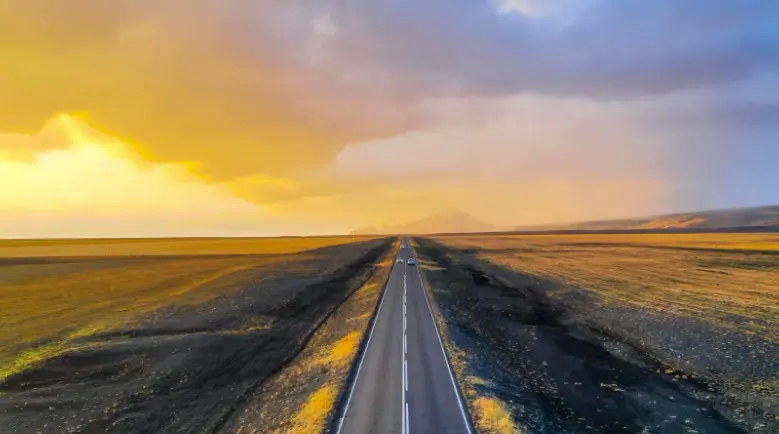
Route 1, also known as Iceland’s Ring Road, is a roughly 821-mile (1,322 km) loop around the island and one of the world’s great road trips by camper van. This guide covers everything you need to plan it: distance, timing, vehicle choice, campsites, road safety, and what to check before you go.
Iceland Ring Road Quick Facts
| Route | Route 1 (Ring Road) |
| Total distance | ~821 miles / 1,322 km |
| Starting point | Reykjavík (most travelers begin and end here) |
| Recommended trip length | 7 days minimum; 10–14 days for a comfortable pace |
| Road type | Mostly paved; some gravel sections in the East |
| Vehicle | Standard camper van suitable for Route 1 in normal conditions; 4×4 recommended in winter |
| Open year-round? | Yes, though winter driving can require extra planning |
| Campsite availability | Widespread in summer; limited to year-round sites in winter |
| Check before you drive | Road.is (road conditions) · SafeTravel.is (travel conditions) · Vedur.is (weather) |
Discover more facts about Iceland.
What is the Ring Road in Iceland?
Iceland’s Ring Road, officially Route 1, is a paved road that loops around the main part of the island, covering approximately 821 miles (1,322 km). It passes through every major region of Iceland except the Westfjords and the Snæfellsnes Peninsula, and connects the country’s most visited landscapes: the South Coast, the Eastfjords, Lake Mývatn in the north, and the western region near Snæfellsnes. Most of the route is paved, with some gravel sections in the east.
Our data shows 71% of travelers mention the Ring Road in their trip diaries — but only 30–40% complete the full loop. See what real trips look like.
Iceland Ring Road Map: What Route 1 Includes and Skips
Route 1 features many popular destinations and hidden gems, but it doesn’t cover everything. Several of the country’s most dramatic regions sit off the Ring Road entirely and require a separate detour — or a dedicated trip of their own.
| On Route 1 | Not on Route 1 |
| South Coast (black sand beaches, waterfalls) | Westfjords |
| Eastfjords | Snæfellsnes Peninsula |
| Lake Mývatn and the north | Highlands and F-roads |
| Vatnajökull National Park area | Most of the Golden Circle |
| Reykjavík and the west | Interior volcanic regions |
The Golden Circle is the most common point of confusion: a small section overlaps with Route 1, but the majority is a separate loop and is best treated as a day trip add-on from Reykjavík rather than part of the Ring Road itself.
The Highlands are only accessible via F-roads, which require a 4×4 and are not part of Route 1. Do not attempt F-roads in a standard camper van.
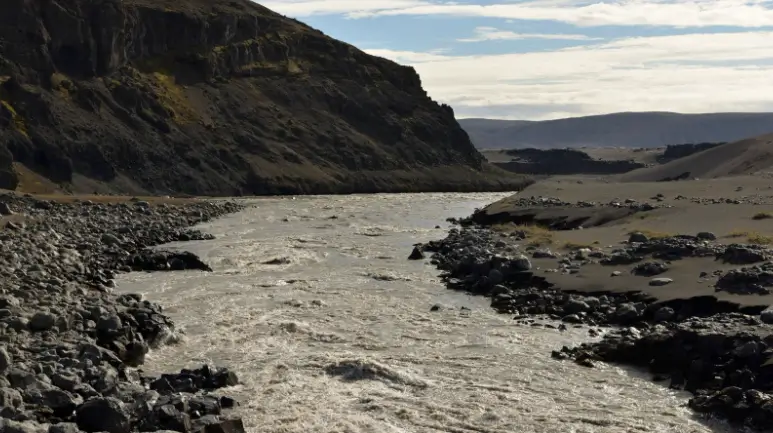
Vatnajökull National Park — home to glaciers, waterfalls, and volcanic landscapes — sits just off the Ring Road in the southeast and is well worth the short detour.
The Ring Road Route
How many days do you need for Iceland’s Ring Road?
Most travelers drive the Ring Road in 7 to 14 days. How long you need depends on your pace, how many detours you want to take, and whether you plan to linger or keep moving.
| Trip length | Pace | What’s realistic |
| 7 days | Fast | The full loop with limited stops. Suits travelers who want to complete the route and have seen Iceland before. Expect long driving days. |
| 10 days | Comfortable | The full loop with time for key detours — Vatnajökull, the South Coast, Lake Mývatn. Recommended for first-time visitors. |
| 14 days | Relaxed | The full loop plus extended detours such as Snæfellsnes, the Golden Circle, or the Eastfjords. Best for photographers and slow travelers. |
If you only have 5 or 6 days, consider driving a section of the Ring Road rather than rushing the full loop — the South Coast alone makes for an excellent shorter trip.
Planning to drive Route 1? Check camper van availability for your dates.
Which direction should you drive the Ring Road?
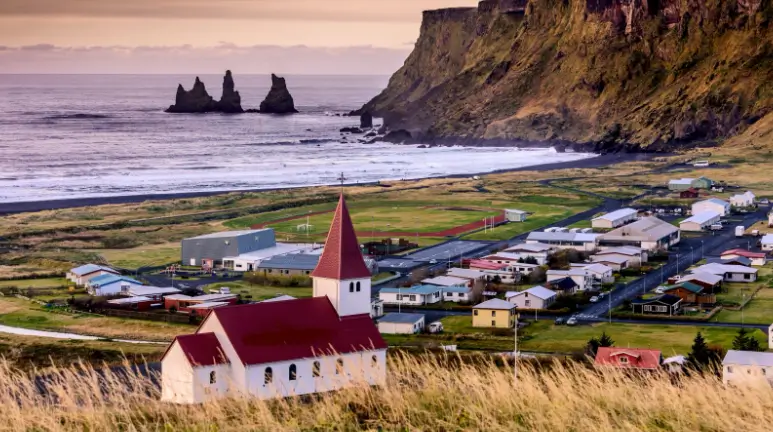
Most travelers start in Reykjavík and have to make one early decision: do you head south first, or north? There’s no wrong answer, but here’s how the two options play out.
Heading south first
- You hit the South Coast — the most popular stretch of the Ring Road — early, while your energy is high
- Waterfalls, black sand beaches, and glaciers make for a strong opening few days
- If the weather is bad in the north, you’re already heading away from it
- Morning light works well heading east along the South Coast
Heading north first
- A quieter start through the west before things get busier
- You save the South Coast for the return leg, which some travelers prefer as a finale
- If the south is bad weather-wise on day one, you can pivot north immediately
- Evening light suits the north coast heading east
Our advice: let the weather lead. Check Road.is and Vedur.is the morning you set off and head in whichever direction has the better forecast. Iceland’s weather can change fast, and the Ring Road works just as well in either direction.
Can you drive the Ring Road in a camper van?
Yes, Route 1 is well-suited to camper van travel. The road is paved for the majority of its length, campsite coverage is extensive in summer, and the route itself is straightforward with very few complex junctions or navigational decisions.
Planning to drive the Ring Road in a group or with family? The Renault Master 5 seats and sleeps 5, offering the perfect opportunity to explore at your own pace. If you’re looking for a bit more comfort for a smaller group, the Crosscamp Flex 541 delivers, catering up to 4 passengers and 4 sleepers.
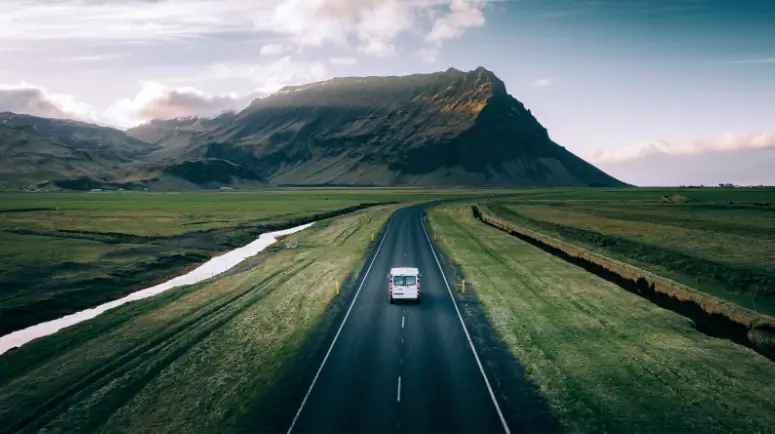
A few things to plan for:
- Road surface: Most of Route 1 is paved, but there are gravel sections in the east. These are drivable in a standard camper van — just reduce your speed and take extra care in wet conditions.
- Driving distances: Some stretches between towns are long. Plan your daily distances in advance so you’re not arriving at a campsite after dark, especially in shoulder season.
- Weather: Conditions can change quickly in Iceland. Check SafeTravel.is and Vedur.is each morning before setting off.
- Seasonal considerations: In summer, a standard camper van handles Route 1 well. In winter, a 4×4 camper van is strongly recommended — see the next section for more on vehicle choice.
Do you need a 4×4 for the Ring Road?
For Route 1 in normal summer conditions, a standard camper van is fine. Whether you need a 4×4 depends on when you’re traveling and where you plan to go beyond the Ring Road itself.
In summer (June–August) and shoulder season (May, September), a standard camper van handles Route 1 well. In winter (October–April), a 4×4 camper van is strongly recommended — ice, snow, and reduced visibility make four-wheel drive a sensible choice rather than an upgrade.
If your plans extend beyond Route 1 into the Highlands or any F-roads, a 4×4 is not optional — it’s a legal requirement. F-roads are mountain tracks that require high clearance and four-wheel drive, and standard camper vans are prohibited on them regardless of conditions. For more on what lies beyond Route 1, see our guide to driving the Highlands in Iceland.
Best Time to Drive the Ring Road
The Ring Road is open year-round, but the experience varies significantly by season. The right time to go depends on what you’re prioritizing: daylight, crowds, road conditions, or campsite availability.
| Season | Dates | Daylight | Road conditions | Campsites | Best for |
| Summer | June–August | Nearly 24 hours | Excellent | Fully open | First-time visitors, families, photographers |
| Shoulder | April–May & September | Long days | Generally good; check daily | Most open | Fewer crowds, autumn colours in September |
| Winter | October–March | Short days | Variable; ice and snow possible | Limited to year-round sites | Northern lights, experienced winter drivers |
Summer is the most straightforward time to drive the Ring Road. Roads are in good condition, all campsites are open, and the near-constant daylight gives you flexibility to stop whenever something catches your eye.
Shoulder season, particularly September, is increasingly popular. Crowds thin out, the landscape takes on autumn colours in September, and conditions are still manageable for most drivers. April and May can bring unpredictable weather, but reward travelers who are prepared to be flexible.
Winter driving is possible but requires genuine preparation. Daylight is limited, some campsites close, and road conditions can change quickly. The payoff is the Northern Lights and a version of Iceland that very few visitors see.
For a fuller picture of what to expect each month, see our guides to the best time to visit Iceland and Iceland weather by month.
Camping Along the Ring Road
One of the best things about driving Route 1 in a camper van is how well set up Iceland is for it. Campsites are plentiful along the Ring Road, well-maintained, and conveniently spaced — your biggest challenge is choosing where to stop.
In summer, you’ll have no shortage of options. Campsites open up across the whole country from around May, and by June the full network is running. Use our Iceland campground map to plan your overnight stops before you set off — knowing where you’re sleeping each night takes a lot of pressure off long driving days. Find out more about saving on camping with the Iceland Camping Card.
If you’re traveling in the winter or shoulder season, stick to year-round campsites. These are heated, staffed, and far safer than remote sites if weather conditions deteriorate. Check the forecast on Vedur.is each evening, and don’t commit to a remote stop if conditions are uncertain.
Along the way, you’ll pass through some of Iceland’s most charming small towns and villages, many of which have campsites right in or near the center. For a full guide to what you’ll find en route, see our guide to villages along the Ring Road.
For a full list of options, see our guide to campsites in Iceland. Before you pick your sites, it’s worth knowing the legal side too — our guide to camping in Iceland covers where you can and can’t stay overnight in a campervan, plus realistic per-night costs.
Want to know what a Ring Road camper van trip actually looks like day by day? Read Colin and Liza’s story or check out our 7 Day Ring Road Itinerary.
Road Rules: Speed Limits, Bridges, and Animals
Before you set off, it’s worth knowing the basics of driving in Iceland. For a fuller introduction to local road rules, see our guide to driving in Iceland.
Speed limits
Speed limits on Route 1 vary depending on the road surface and whether you’re passing through a town or village.
| Road type | Speed limit |
| Urban and populated areas | 50 km/h (31 mph) |
| Residential areas | 30 km/h (18 mph) |
| Rural gravel roads | 80 km/h (49 mph) |
| Rural paved roads | 90 km/h (55 mph) |
Speed cameras are common in populated areas. The road can feel open and empty on long stretches, but stick to the limits — fines are significant.
Single-lane bridges
There are still a number of single-lane bridges along the Ring Road. Signs will warn you before you reach one. When you see the sign:
- Reduce your speed and approach slowly
- Check whether a vehicle is already on the bridge or approaching from the other side
- If another car arrives first, pull to the right and wait for them to clear
- If you arrived first, cross — but only when you’re certain the other driver has stopped
- Never rush a single-lane bridge, regardless of how clear it looks
Animals on the road
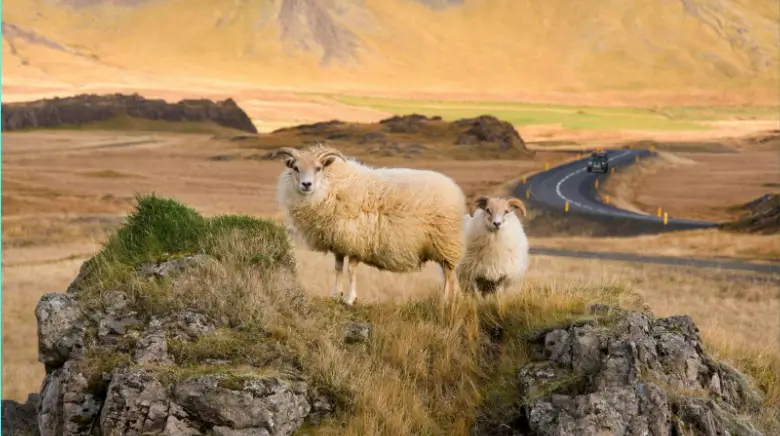
Between late spring and September, sheep roam freely across Iceland — including on and around the Ring Road. They are unpredictable, so slow down whenever you spot them near the road. If you hit a sheep, you are legally required to report it to the farmer and may be liable for compensation.
You may also encounter horses and cows being herded across the road, and on the east side of the island, there’s a chance of spotting reindeer. Slow down and give all animals plenty of space.
Gas Stations on the Ring Road
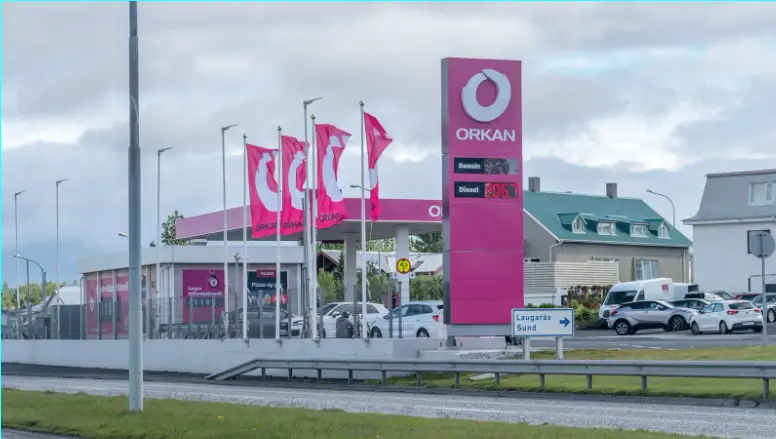
Gas stations in Iceland are more than fuel stops — in smaller villages along the Ring Road, they often serve as the local community hub. You can fill up the camper van, grab food, use the facilities, and get a genuinely useful weather or road condition update from whoever’s behind the counter. And in 99% of them, you can get an Icelandic hot dog. Order it með öllu — with all the condiments — it’s the standard local order and well worth it.
A few practical notes for fuel planning on Route 1:
- Don’t let the tank drop below half. Some stretches of the Ring Road, particularly in the east, have long gaps between stations. Running low in a remote area is an easily avoidable problem.
- Check the billboards. Local gas station noticeboards often have information about events, road closures, or conditions ahead — surprisingly useful when you’re passing through unfamiliar areas.
- Card payments are standard, but always have a backup. Some smaller or automated stations can have connectivity issues.
Iceland Ring Road FAQs
What is the Ring Road in Iceland?
Iceland’s Ring Road — officially Route 1 — is a paved road that loops around the main part of the island. It connects the country’s major regions and is the most popular road trip route in Iceland.
How long is Iceland’s Ring Road?
Route 1 is approximately 821 miles (1,322 km).
How many days do you need for the Ring Road?
Seven days is the minimum for a fast loop with limited stops. Ten days is more comfortable for first-time visitors, and 14 days gives you time for detours like Snæfellsnes, the Golden Circle, and the Eastfjords.
Can you drive the Ring Road in a camper van?
Yes. Route 1 is paved for most of its length and well served by campsites in summer. Plan your daily distances in advance, check conditions each morning, and choose a 4×4 camper van if you’re traveling in winter.
Do you need a 4×4 for the Ring Road?
Not for Route 1 in summer or shoulder season — a standard camper van is suitable. A 4×4 is strongly recommended in winter, and is a legal requirement if you plan to drive any F-roads or Highland routes.
Can you drive the Ring Road in winter?
Yes, but it requires careful planning. Daylight is limited, some campsites close, and road conditions can change quickly. Check Road.is and SafeTravel.is before every driving day.
Is the Golden Circle part of the Ring Road?
No. A small section overlaps with Route 1, but the Golden Circle is best treated as a separate day trip add-on from Reykjavík rather than part of the Ring Road itself.
Where can you camp along the Ring Road?
Campsites are plentiful along Route 1 in summer. Use our Iceland campground map to plan overnight stops, and stick to year-round sites if traveling in the winter or shoulder season.
Plan your Ring Road camper van trip with Rent.is
Route 1 is one of the most rewarding camper van routes in the world, and one of the most manageable. With the right vehicle, a loose plan, and a daily check of the conditions, it’s a trip that tends to exceed expectations.
When you’re ready to check dates and find the right camper van for your route, we’re here.