
- Quick Facts About Iceland
- What Are 5 Facts About Iceland?
- How Big Is Iceland? Size, Scale and Driving Distances
- Where Is Iceland Located?
- Why Iceland Is Called the Land of Fire and Ice
- Nature Facts About Iceland
- Cultural and Historical Facts About Iceland
- Fun and Weird Facts About Iceland
- Travel Facts About Iceland Visitors Should Know
- What These Iceland Facts Mean for a Camper Van Trip
- Iceland Facts FAQs
- Ready to Explore Iceland by Road?
Iceland is easy to recognize on a map, but harder to understand until you start planning a real trip. The country is compact compared with many destinations, yet weather, daylight, road distances, campsites and remote regions can make each travel day feel very different. Being such a fascinating country, Iceland elicits many questions from visitors.
This guide brings together essential facts about Iceland, fun facts, weird facts, size and driving context, and the practical things visitors should know before they arrive. Some facts are here because they are interesting. Others matter because they can change your route, your season, your vehicle choice, or how relaxed your camper van trip feels.
Quick Facts About Iceland
| Fact | Detail | Why this matters for your trip |
|---|---|---|
| Country | Iceland | A Nordic island country in the North Atlantic. |
| Capital | Reykjavík | Most visitors start or finish their trip in the capital area. |
| Main international airport | Keflavík International Airport | This is the main arrival point for international travelers, not central Reykjavík. |
| Population | 394,324 on 1 January 2026 | Iceland has a small population, so services can be spread out once you leave the capital area. (Statistics Iceland) |
| Area | About 103,000 km² / about 40,000 sq mi | Iceland may look small, but routes still need realistic driving days. (Robert Schuman Foundation) |
| Official language | Icelandic | Place names can look unfamiliar, so save routes and campsite names carefully. Icelandic has been Iceland’s official language since 2011. (Norden) |
| Currency | Icelandic króna, ISK | Useful for planning food, fuel, campsites and activity costs. Check Wise for latest currency conversion. |
| Time zone | GMT / UTC+0 | Iceland does not change clocks for daylight saving. |
| Driving side | Right-hand side | Important for visitors arriving from the UK, Ireland, Australia, New Zealand or Japan. |
| Emergency number | 112 | Call 112 in an emergency. The national emergency number is available 24/7. (112.is) |
| Ring Road distance | More than 1,300 km | The Ring Road connects Reykjavík to nearly every region and shapes many self-drive itineraries. (Vegagerðin) |
| Region | North Atlantic / Nordic region | Iceland’s northern location affects seasons, daylight, weather and route planning. |
What Are 5 Facts About Iceland?
Here are five useful facts about Iceland for travelers:
- Iceland is a North Atlantic island between North America and Europe.
- Reykjavík is the capital and the main urban base for many first-time visitors.
- Iceland sits on the Mid-Atlantic Ridge, which helps explain its volcanoes, geothermal areas and dramatic landscapes.
- Glaciers, lava fields, hot springs, waterfalls and black sand beaches can all fit into one road trip.
- Iceland’s Ring Road is more than 1,300 km long, so self-drive travelers should plan in days, not just distance.
The main thing to remember is that Iceland facts are not just trivia. They help you understand how the country works as a travel destination. Size affects your itinerary. Weather affects your driving day. Daylight affects how much you can comfortably see. Campsites affect where you can legally sleep. Vehicle choice affects which roads and regions are realistic.
How Big Is Iceland? Size, Scale and Driving Distances
Iceland is about 103,000 km², or roughly 40,000 square miles. It is not a huge country by land area, but it can feel larger on the road because the places visitors want to see are spread around the coast, across peninsulas, and sometimes far from major services.
For many visitors, the most useful comparison is not “how big is Iceland?” but “how much of Iceland can I comfortably see in the time I have?” A five-day trip, a seven-day trip and a two-week trip can feel very different, even if they follow some of the same roads.
| Comparison | Approximate scale | Travel meaning |
| Iceland land area | About 103,000 km² / 40,000 sq mi | Compact by country size, but not tiny for road travel |
| Ring Road | More than 1,300 km | A full loop needs time for stops, weather and sleep |
| Reykjavík to major regions | Varies by route | The capital is not close to every major landscape |
| Highlands and F-roads | Seasonal and route-dependent | Requires the right vehicle and open approved roads |
The Ring Road in Iceland is the main road-tripping reference point because it circles much of the island. It was completed in 1974, spanning more than 1,300 km, and connecting Reykjavík to nearly every other region. That makes it one of the most important roads for visitors, but it is not the whole country. It does not include every fjord, peninsula, Highland route, or detour.
This is where many first-time Iceland travelers misjudge the map. A place may not look far away in straight-line distance, but your actual route may follow the coast, slow down for conditions, or include long stops at waterfalls, beaches, glaciers or viewpoints. In winter, the daylight window can be shorter. In summer, the long daylight can make late sightseeing possible, but it should not turn every day into an overpacked driving day.
A camper van helps because you can build your trip around the route instead of returning to the same hotel base each night. You still need to plan legal overnight stops, driving time, fuel stops, food, showers, and weather checks. The advantage is flexibility, not permission to ignore the basics.
Road-trip reality: Iceland is not demanding because it is enormous. It is demanding because weather, daylight, scenery stops, remote services and road conditions can change how much distance feels realistic in one day.
A good way to plan is to start with your number of days, then choose your route. For a short trip, focus on one region instead of forcing a full loop. For a longer trip, the Ring Road may make sense if you leave time for slow sections, extra stops and weather changes. Read the full guide to the Ring Road in Iceland before deciding whether a full loop fits your trip.
Compare camper options for your route. Choose a camper based on the season, group size, route and whether your plans include approved open F-roads or the Highlands.
Check AvailabilityIs Iceland Small? Why It Feels Bigger on the Road
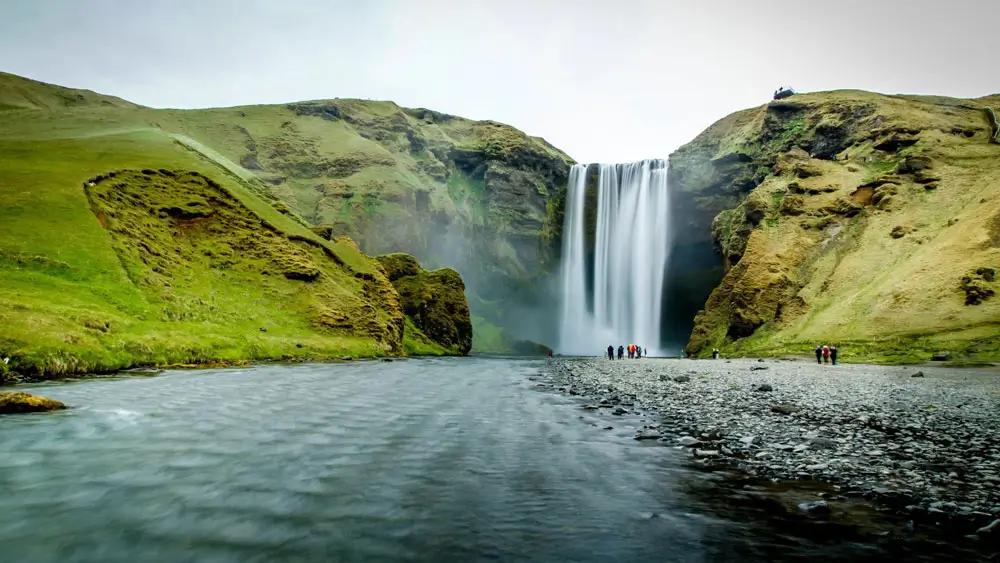
Yes, Iceland is small compared to many countries. But it often feels bigger once you start driving.
That is because the visitor experience is not measured by straight-line distance. It is measured by real travel time. A route can include single-lane bridges, gravel sections, changing weather, scenic stops, fuel planning, campsite locations and daylight limits. None of those things make Iceland difficult everywhere, but they do make realistic planning important.
A common first-time mistake is trying to “collect” too many places in one day. That can turn a good route into a rushed one. Iceland is better when you have enough time to stop, make food, check conditions, walk to viewpoints and change plans if the weather moves in.
This is why an Iceland self-drive tour should be planned around the experience you want, not just the number of miles you can technically cover. A relaxed route usually gives you a better trip than a long list of stops with no room to breathe.
Where Is Iceland Located?
Iceland is in the North Atlantic, between North America and Europe. It lies near the Arctic Circle and is usually grouped with the Nordic countries. For travelers, that location helps explain the country’s long summer daylight, short winter days, changeable weather, strong coastal influence, and big seasonal differences.
Most international visitors fly into Keflavík International Airport on the Reykjanes Peninsula, outside Reykjavík. From there, many travelers stay in the capital area first or collect a rental vehicle and begin a road trip.
Iceland is also geologically unusual. The country sits on the Mid-Atlantic Ridge, where the North American and Eurasian plates move apart. That helps create the volcanic landscapes, geothermal activity, and fissures seen in places such as Þingvellir and elsewhere in the country.
This geography matters when planning because Iceland is not a simple city-break destination once you leave Reykjavík. Weather can change quickly, roads can feel remote, and services are not available at every stop. A little planning goes a long way.
Why Iceland Is Called the Land of Fire and Ice
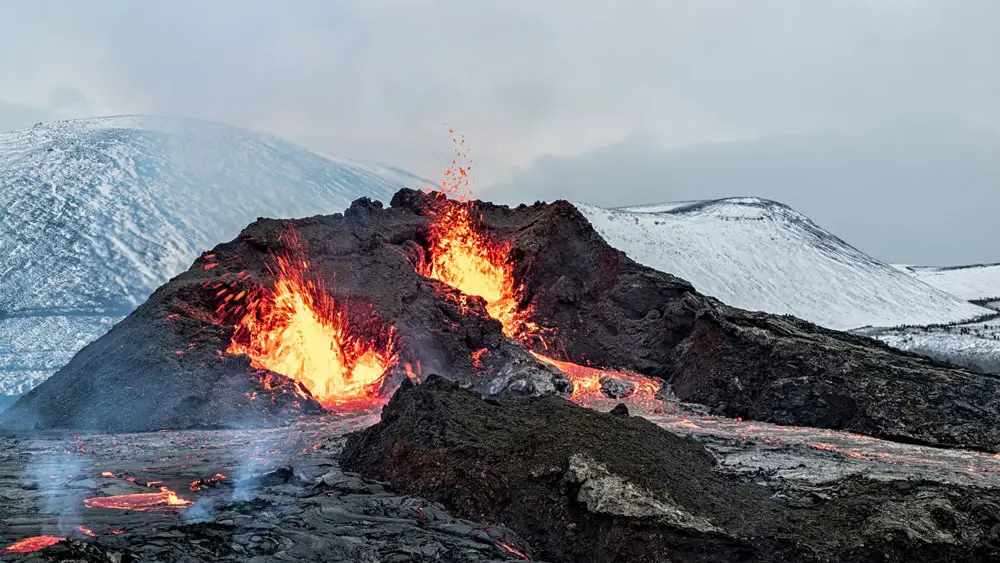
Iceland is often called the land of fire and ice because volcanic and geothermal activity, along with glaciers and ice caps, shape the same island. The “fire” refers to Iceland’s volcanoes and geothermal activity, while the “ice” refers to its glaciers and ice caps, including Vatnajökull and other large ice-covered areas.
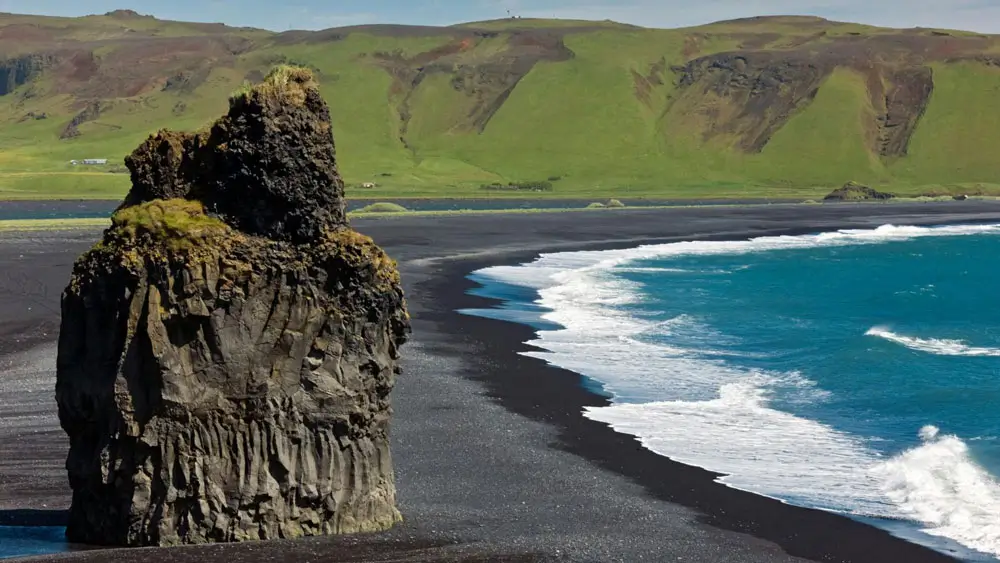
This is more than a nickname. It reflects the contrast travelers see on the road, where lava fields, steam vents, glacier views, black sand beaches, waterfalls, and snow-covered mountains can all appear on the same trip. It also helps explain why routes and conditions can change quickly, because Iceland’s landscapes are active, exposed, and weather-sensitive.
Geothermal energy is part of daily life in Iceland, too. Visitors often notice it through outdoor swimming pools, hot water, geothermal areas and hot springs in Iceland. That connection between landscape and daily life is one of the reasons Iceland feels different from many other road-trip destinations.
| Myth | Reality |
| “Fire and ice” is just a nickname. | It describes the real mix of volcanic, geothermal and glacial landscapes. |
| Volcanoes and glaciers are only scenery. | They affect routes, road planning, safety checks and where visitors can go. |
| You need to chase every famous spot to experience it. | Many road trips show this contrast naturally, especially if you plan enough time. |
| Current eruption information can be treated as evergreen. | Live volcanic activity changes and should only be covered with maintained official updates. |
Nature Facts About Iceland
Iceland’s nature is the first reason many travelers become interested in the country. The useful part is knowing what those natural facts mean for your trip.
| Nature fact | Where travelers often experience it | What it means for your trip |
| Iceland has glaciers and volcanic landscapes close together | South Coast, Southeast Iceland, Highlands viewpoints | You can see varied landscapes in one route, but conditions can change quickly |
| Waterfalls are found across many regions | South Coast, North Iceland, West Iceland | Build in time for short walks and photo stops |
| Black sand beaches are part of the volcanic coastline | South Coast and other coastal areas | Follow safety signs and do not treat wave conditions casually |
| Geothermal water shapes daily life | Pools, hot springs, geothermal areas | Bring swimwear and plan time for pools, not just sightseeing |
| Northern Lights are seasonal | Darker months | Sightings depend on darkness, clear skies and solar activity |
| Midnight Sun affects summer travel | Around the summer months | Long daylight helps with flexibility, but rest still matters |
| Moss and lava fields are fragile | Lava-field regions | Stay on marked paths and avoid damaging sensitive ground |
Iceland Has Glaciers, Volcanoes and Geothermal Areas Close Together
One of the most interesting facts about Iceland is how close different landscapes can feel. You are not choosing between a glacier trip, a volcanic landscape trip, or a geothermal trip in the same way you might in a larger country. Depending on your route and season, you may experience several of these in a few days.
That does not mean every road is simple or every place is available year-round. It means route planning should leave room for variety. A camper van trip can work especially well here because you can move with your route and avoid returning to the same base each night.
The Northern Lights and Midnight Sun Happen in Different Seasons
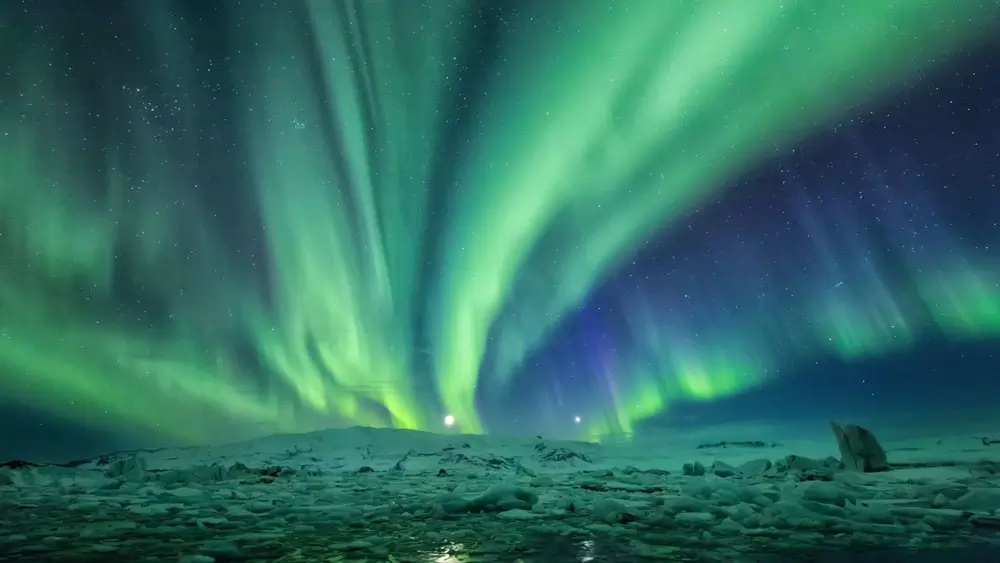
The Northern Lights and Midnight Sun are both strongly connected to Iceland’s northern location, but they do not happen at the same time.
The Northern Lights need dark skies, so they are a winter-season reason to visit. They are never guaranteed because visibility depends on solar activity, cloud cover and darkness. The Midnight Sun is a summer experience, when daylight stretches very late and can make road trips feel more flexible.
This seasonal contrast is one reason the best time to visit Iceland depends on what you want from the trip. Winter can suit Northern Lights and quieter landscapes. Summer can suit longer travel days, open seasonal routes and late-evening sightseeing. Each season has trade-offs.
Iceland daylight by season: what it means for your trip
| Season | Approximate daylight pattern | What this means for travellers | Planning note |
| Winter | Short daylight hours, with the darkest period around December and January | Plan fewer stops per day and avoid building routes that depend on long driving windows | Best for Northern Lights potential, but routes need more flexibility |
| Spring | Daylight increases quickly through March, April and May | More usable travel time, but weather can still change quickly | Good for less-rushed road trips before peak summer |
| Summer | Very long daylight, with the brightest period around June and July | Late sightseeing is possible, but long daylight should not mean overpacked driving days | Best season for long routes, open seasonal roads and flexible sightseeing |
| Autumn | Daylight decreases through September, October and November | Routes need more margin again, especially later in the season | Good balance for quieter travel, but check weather and road conditions carefully |
Iceland’s Weather Can Change Quickly
Iceland’s weather is part of the travel experience, not a small detail. A calm morning can become a windy afternoon, and conditions can vary between regions. This matters most when you are driving, camping, visiting exposed beaches, or planning longer travel days.
Before setting out, travelers should check reliable weather and road-condition sources, like road.is and vedur.is. For planning, a broader Iceland weather by month guide can help you understand seasonal patterns before you book. Day-to-day decisions still need current checks.
Good Iceland travel planning leaves space for changes. That may mean switching the order of stops, shortening a drive, staying an extra night near a region, or choosing a route that better fits the conditions.
Cultural and Historical Facts About Iceland

Iceland is not only about landscapes. Culture, language, books, swimming pools, names and local traditions all shape the visitor experience.
Icelandic is the official language, and it is still central to daily life. English is widely used in tourism, but place names, road signs, campsite names and local information often use Icelandic names. Learning a few sounds and saving names carefully can make your trip easier.
Iceland also has one of the world’s best-known parliamentary histories. Alþingi, or the All Thing, is often described as one of the oldest parliamentary institutions in the world, founded in 930 AD.
The country has a strong literary tradition, from the Icelandic sagas to modern books. It also has a strong swimming-pool culture. Local pools are not just for exercise; they are everyday social spaces and a good way for travelers to experience normal Icelandic life.
Icelandic naming traditions are another point visitors often notice. Many Icelanders do not use inherited family surnames in the way common in many countries. Instead, names often use a patronymic or matronymic system connected to a parent’s first name. For example, a male and female sibling with a father named Erik will have different surnames. The female’s surname will be Eiríksdóttir (meaning ‘Erik’s daughter’) and the male’s will be Erikson (meaning ‘Erik’s son’).
The Icelandic Language Is Still Central to Everyday Life
Icelandic is not just a heritage language used for special occasions. It is the official language and part of daily life across the country. For visitors, the most practical place this shows up is in names.
Place names can be long, and some letters may be unfamiliar. That is normal. Save campsite names, road names and town names in your map app before you drive.
For more context, read our guide to what language they speak in Iceland.
Icelandic Horses Are a Big Part of the Country’s Identity
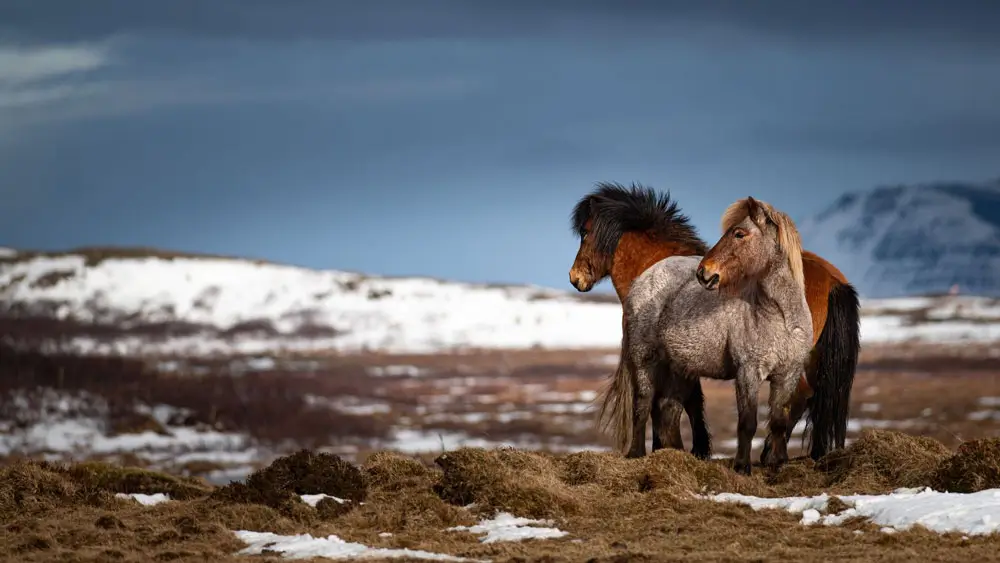
Icelandic horses are a familiar sight on many road trips. They are part of Icelandic history, farming, riding culture and modern tourism. Visitors often notice that they are smaller than many horse breeds, but they should still be called horses, not ponies.
Rules around the import and export of horses in Iceland are strict. To protect the lineage of the Icelandic horse, no other horses can be imported into the country, and each Icelandic horse can only leave the country once.
If you stop to look at horses from the road, use safe pull-offs and respect private land. Do not stop suddenly in traffic or feed animals without permission.
Fun and Weird Facts About Iceland
Some Iceland facts online are useful. Others are exaggerated, outdated or repeated without much context. This section keeps the fun side, but focuses on facts that are worth knowing before a trip.
- Iceland has no public railway system. That makes buses, tours, domestic flights, rental cars and camper vans more important for travelers.
- Iceland does not use daylight saving time. This can make trip planning simpler, but daylight changes dramatically by season.
- Icelandic names often work differently from inherited family surnames. This is part of the culture, not a visitor novelty.
- Swimming pools are part of everyday life. Outdoor pools are used year-round, and they can be a good practical stop on a camper van route.
- The Yule Lads are part of Icelandic Christmas tradition. They are often more mischievous than the single Santa figure many travelers know.
- Icelandic horses are unique to the country’s identity.
- Beer was illegal for decades, and reintroduced in 1989.
- Many visitors are surprised that Iceland has so few people for its size. The population was 394,324 on 1 January 2026, so once you leave the capital area, many regions can feel open and quiet.
OPTIONAL QUIZ MODULE – TEST YOUR ICELANDIC KNOWLEDGE
Note: Is the retired iceland trivial quiz module found here still accessible? If so, it could be embedded here. If not, do not include it.
Travel Facts About Iceland Visitors Should Know
This is where Iceland facts become travel decisions. If you are visiting by road, the useful question is not only “what is interesting about Iceland?” It is “what does this mean for my route?”
“The question first-time visitors often ask too late is not just how far they can drive in a day, but how many useful hours they actually have once they account for weather, daylight, stops, food, fuel and campsites. Iceland can look simple on a map, but a better trip usually comes from planning fewer stops properly rather than trying to cover too much.” -[Name, Title at Rent.is]
| Travel fact | What it means for your trip |
| There are no public trains in Iceland | Plan around buses, tours, domestic flights, rental cars or camper vans |
| Weather can change quickly | Keep plans flexible and check conditions before driving |
| Daylight changes a lot by season | A summer route and winter route should not be planned the same way |
| Campsites matter | Camper van travelers need legal overnight stops |
| The Ring Road is long enough to need realistic planning | A full loop needs enough days, not just driving stamina |
| Not every route needs a 4×4 | Vehicle choice depends on season, road type and whether F-roads or Highlands are included |
| F-roads are not the same as off-road driving | Off-road driving is illegal; approved open F-roads are designated roads |
| Fuel and food stops need planning | Services can be spread out, especially outside the capital area |
There Are No Trains in Iceland
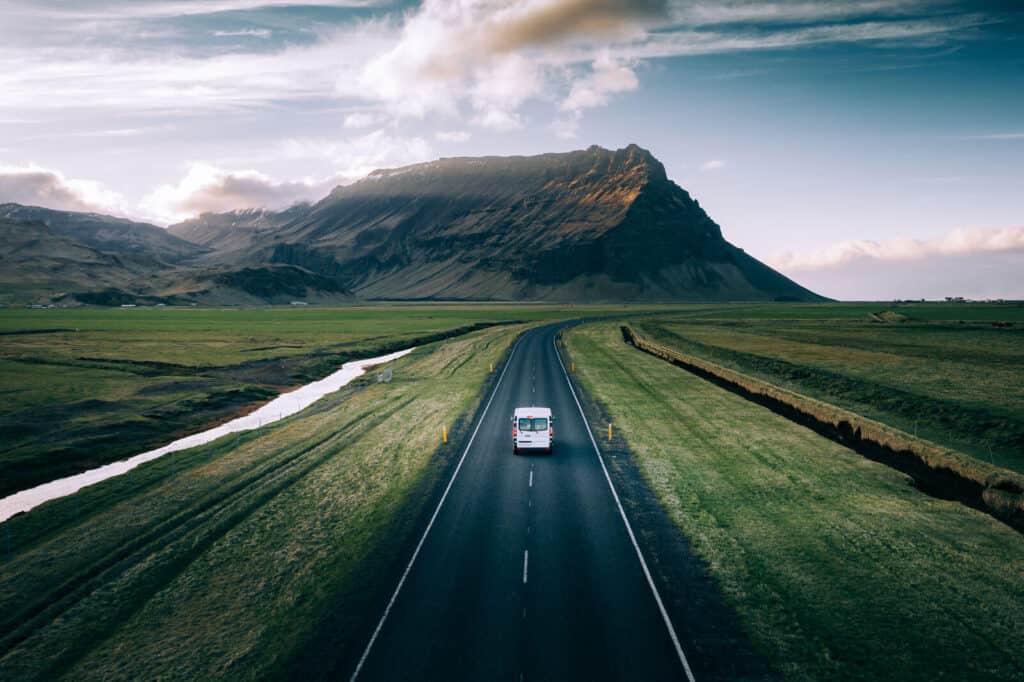
Iceland does not have a public railway system, which surprises many first-time visitors.
That does not mean Iceland is hard to travel around, but it does mean you should plan transport before you arrive. Some visitors use tours. Some use buses. Some fly domestically between regions. Many choose a rental car or camper van because it gives more control over timing and stops.
For travelers who want to move between landscapes, campsites and viewpoints without returning to the same base each night, a camper van can be a practical option. It is not the only way to travel, but it fits the way many people want to experience Iceland by road. For more detail, read the guide on how to get around in Iceland.
Not Every Route Needs a 4×4
If your plan is a straightforward summer route on paved roads, a standard camper may be the right fit. If your plan includes approved open F-roads or the Highlands, a standard 2WD camper van is not the right vehicle. F-roads are mountain roads with specific vehicle requirements, seasonal access and conditions that need checking before travel.
This is not off-road driving. Off-road driving is illegal in Iceland and should never be encouraged. Driving on approved open F-roads is different, and still requires the right vehicle, route planning and current condition checks.
If your route includes the Highlands, read the guide to driving the Highlands in Iceland and compare 4×4 camper rental in Iceland options before choosing your camper.
Camping Rules Matter
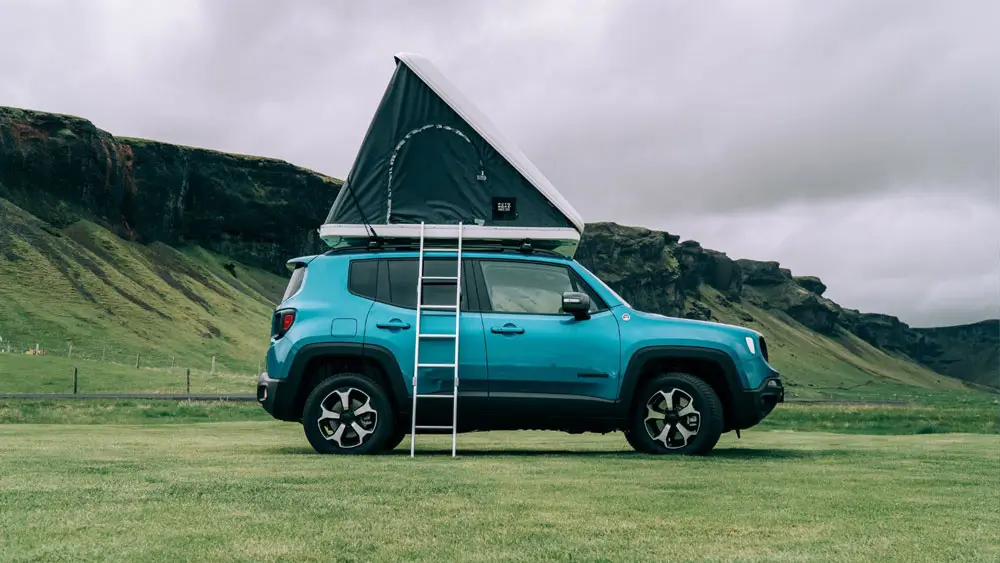
Camper van travel gives you flexibility, but it does not mean you can sleep anywhere. Travelers need to plan legal overnight stops and use campsites where required, as wild camping is illegal in Iceland.
This matters for both visitors and Iceland. Campsites help protect sensitive nature, keep facilities manageable and make road trips more comfortable. They also make your own trip easier because you can plan showers, toilets, charging, cooking and safe overnight parking.
Before you build your route, check campsites in Iceland and match your overnight stops to the distance you realistically want to drive each day.
CTA card: Planning a Highlands or F-road route? See 4×4 campers for Highlands and F-road routes, and check current road conditions before travel.
What These Iceland Facts Mean for a Camper Van Trip
Facts about Iceland are useful because they help you choose the right route, season and camper.
| Iceland fact | Planning impact | Next step |
| Iceland is about 103,000 km² | Do not plan by map size alone | Give yourself enough days |
| The Ring Road is more than 1,300 km | A full loop needs time for stops and weather | Read the Ring Road guide |
| Iceland has no public railway system | Independent travelers need a transport plan | Compare self-drive and camper van options |
| Weather changes quickly | Routes need flexibility | Read the weather by month guide |
| Daylight changes by season | Winter and summer trips feel very different | Choose the best time to visit Iceland |
| Campsites matter | Overnight stops should be planned legally | Map campsites before you go |
| F-roads and Highlands need the right vehicle | 2WD is not right for those routes | Compare 4×4 campers |
| Group size affects comfort | Sleeping and storage space matter | Compare Iceland campers |
For a short trip, focus on fewer regions and enjoy them properly. A three- or four-day Iceland route should not try to behave like a full Ring Road trip. You will usually have a better experience choosing one realistic area, such as the South Coast, West Iceland, the Golden Circle, or the Reykjanes Peninsula, and leaving enough space for weather, meals, walks and unplanned stops.
For a full Ring Road trip, give yourself enough days to stop, rest and adjust. The distance is only one part of the decision. You also need to think about how often you want to cook, where you will sleep, which detours matter most, and whether your route gives you enough time outside the camper. A rushed Ring Road loop can turn into long driving days with very little time to enjoy the places you came to see.
For a winter trip, be more conservative with driving time and daylight. Shorter days mean fewer usable sightseeing hours, and weather can change how far you should travel in one day. A flexible route is more useful than a packed schedule. It is better to have one or two optional stops you can skip than to build a plan that only works in perfect conditions.
For a Highlands route, choose the correct vehicle and check whether roads are open. A 4×4 camper may be necessary for approved open F-roads, but it does not mean you can drive off-road or ignore conditions. Vehicle choice should follow the route, season and road rules, not the other way around.
A good camper van trip starts before pickup. Think about where you want to go, what season you are traveling in, how many people are sleeping in the camper, and how much comfort you need. Then choose the vehicle that fits the route, rather than choosing the route after the vehicle.
Iceland Facts FAQs
What are 5 facts about Iceland?
Five useful facts about Iceland are: Iceland is a North Atlantic island, Reykjavík is the capital, Iceland has volcanic and geothermal activity, glaciers cover parts of the country, and the Ring Road is more than 1,300 km long. These facts matter because they shape weather, landscapes, driving distances and route planning.
What is Iceland most famous for?
Iceland is famous for volcanoes, glaciers, hot springs, waterfalls, black sand beaches, the Northern Lights, the midnight sun and road trips. Many visitors come for the landscapes, but the best trips also account for weather, daylight, road conditions and realistic driving distances.
How big is Iceland?
Iceland is about 103,000 km², or about 40,000 square miles. It can look compact on a map, but road trips take longer than the size suggests because routes, weather, stops, daylight and remote services all affect travel time.
Is Iceland small?
Iceland is small compared with many countries, but it does not always feel small on the road. Major sights are spread across different regions, and travelers need to plan around weather, campsites, fuel, daylight and road conditions.
Why is Iceland called the land of fire and ice?
Iceland is called the land of fire and ice because volcanic and geothermal landscapes exist alongside glaciers and ice caps. The phrase is useful because it explains much of what visitors see on a road trip: lava fields, hot springs, glacier views, black sand beaches and dramatic terrain.
Are there trains in Iceland?
Iceland does not have a public railway system. Visitors usually plan around buses, tours, domestic flights, rental cars or camper vans, depending on their route and travel style.
What are some weird facts about Iceland?
Some weird or surprising facts about Iceland are that it has no public trains, Icelandic naming traditions work differently from inherited family surnames, outdoor swimming pools are part of everyday life, and Icelandic horses are culturally important. Some viral Iceland facts are exaggerated, so each claim should be checked before publication.
Is Iceland easy to travel around?
Iceland can be straightforward to travel around with good planning. The main things to account for are weather, daylight, road conditions, campsites, fuel stops and how remote some regions can feel. A camper van can make travel flexible, but it still needs a realistic route.
Ready to Explore Iceland by Road?
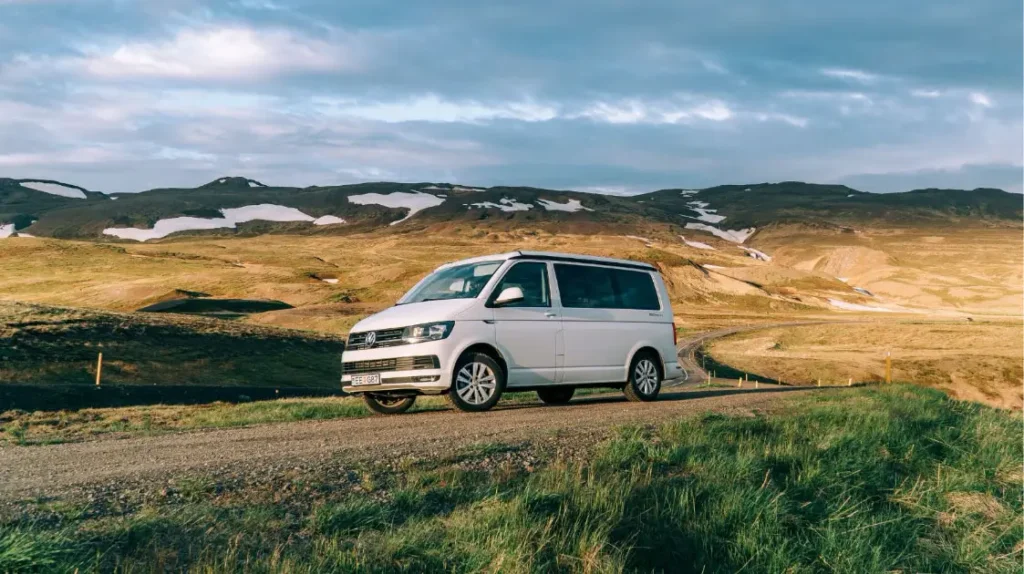
Iceland facts are more than interesting details. They help you plan a better trip. The country’s size, weather, daylight, road network, campsites and landscapes all affect how your route will feel once you are here.
Before you choose a camper, think about your season, route, group size and whether your plans include approved open F-roads or the Highlands. Then compare Iceland campers and choose the setup that fits the trip you want to take.
Choose the right camper for your Iceland trip or check camper van availability.