
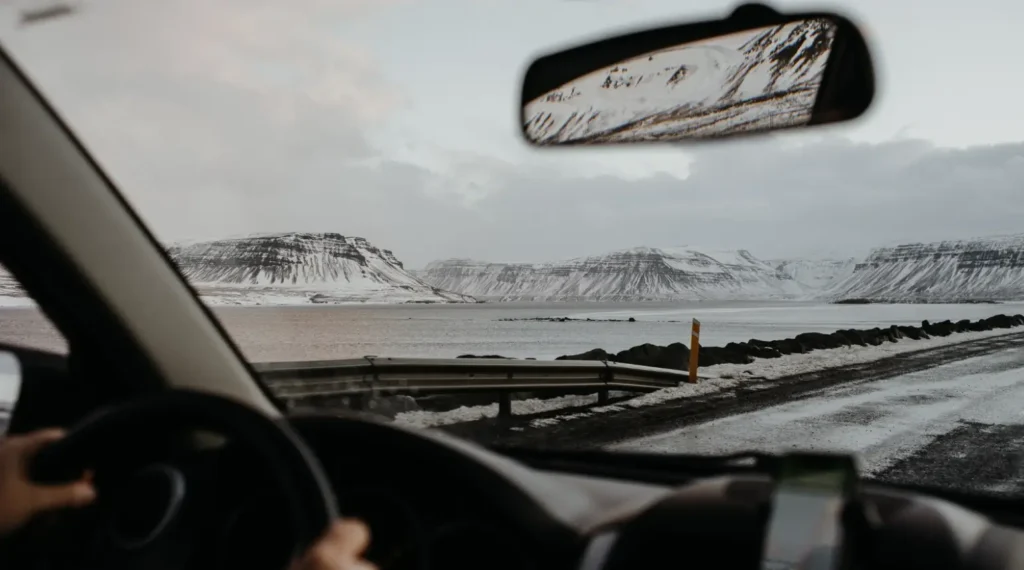
Iceland’s weather is famously changeable, and as much as we can tell you about the monthly trends, you simply have to continuously check conditions as you go. To check whether it is safe to drive in Iceland today, use umferdin.is for road status, vedur.is for weather and wind warnings, and safetravel.is for regional safety alerts. Check all three every morning, then check again before a long drive. If the route and conditions do not agree with your plan, change the plan.
In This Guide
- – How to Check Road Conditions in Iceland
- – Reading the Umferdin.is Road-Status Colors
- – Understanding Wind Warnings
- – Your Daily 2-Minute Check
- – What Roads Will You Encounter in Iceland?
- – Driving Laws and Rules in Iceland
- – Speed Limits in Iceland
- – Practical Safety Tips for Driving in Iceland
- – Frequently Asked Questions
- – Make the Conditions Part of the Plan
How to Check Road Conditions in Iceland
The official road map is not something to check once while planning your trip. It is a live tool for deciding whether the route in front of you is open and suitable today.
Start with umferdin.is, the traffic-information service run by the Icelandic Road and Coastal Administration. It shows the latest reported road conditions, closures, weather-station readings, wind measurements, and cameras around the road network. The map can be zoomed to an individual route, so check the complete drive, not just your starting point.
Then compare that route with the Icelandic Met Office warnings. A road may be open, but wind, snowfall, or poor visibility could make the drive a bad choice for your vehicle and experience.
Finally, read SafeTravel’s current travel conditions. SafeTravel adds regional alerts and practical safety guidance, and it lets you register a travel plan when you are heading into remote areas.
Reading the Umferdin.is Road-Status Colors
The map uses colors to label the reported condition of each road section. Open the map and click the exact section you intend to drive, because two parts of the same route can have different conditions. Use the table below to help you understand the meanings of the colors you may see on the map.
| Map color | Official status | What it means for a camper van driver |
|---|---|---|
| Green | Easily passable | The section is reported as passable, but still check wind, visibility, and later parts of the route. |
| Light blue | Slippery spots | Expect isolated icy patches. Slow down early and leave more space for braking. |
| Dark blue | Slippery | Traction is reduced. Reconsider the drive if you are not confident in these conditions. |
| Purple | Extremely slippery | Conditions are much more demanding. Delay or reroute unless official and rental-company advice supports proceeding. |
| White | Snow-covered | Snow partially or completely covers the road surface. Check whether your vehicle, tires, visibility, and experience are suitable. |
| Orange | Difficult conditions | The road surface has a thick snow covering and is unsafe for standard vehicles. |
| Black | Not in service | Do not attempt the section. Choose another route or wait for the status to change. |
| Red | Closed | The road is closed and not passable. Do not drive past a closure or barrier. |
| Dark Gray | No information | Current conditions are not confirmed. Do not assume that gray means clear. Seek an update before using a remote route. |
The site also shows webcams and readings from roadside weather stations. A camera can help you understand visibility and surface conditions at a specific point, while station data shows the measured wind and gusts nearby. Check the timestamp before relying on either.
Understanding Wind Warnings
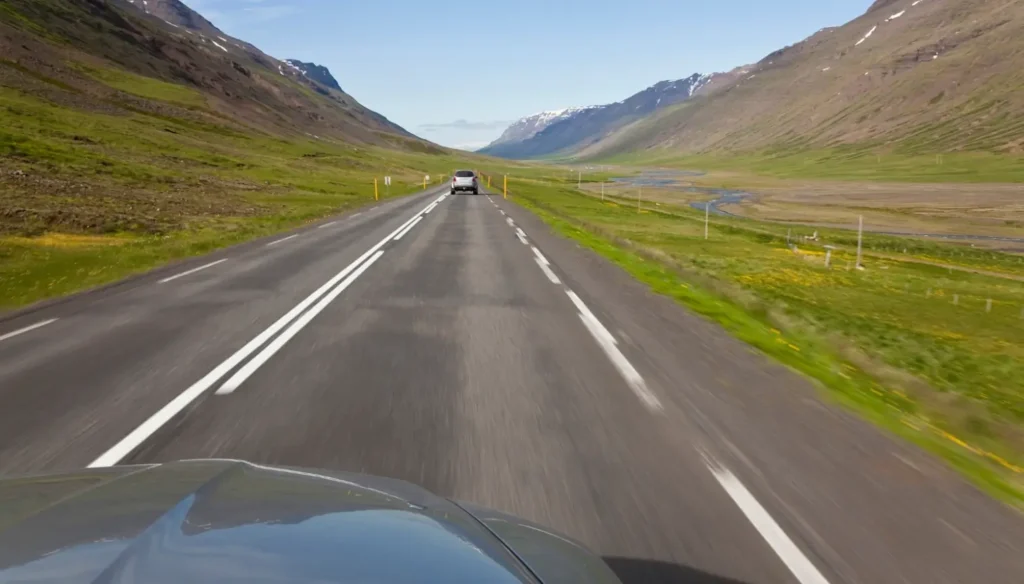
The Icelandic Met Office uses yellow, orange, and red warnings. Yellow means potentially hazardous weather that may affect travel and requires care. Orange indicates a higher-impact event likely to disrupt transport and create dangerous conditions. Red is reserved for extreme, very hazardous weather with a high likelihood of major disruption.
The warning color matters, but a driver should also check the wind speed and gust forecast along the route. Camper vans and motorhomes have a larger side area than a small car, so a crosswind can push the vehicle across the lane, pull at the steering, and make exposed bridges, coastal roads, and mountain stretches harder to control.
The Ring Road stretch past Vík is a common spot for stronger-than-expected wind; even a green rating on umferdin.is doesn’t tell you what’s happening at Reynisfjara’s exposed bend. Higher-profile campers catch more crosswind than lower vehicles — if you’re driving a camper like the Renault Master 5 or a motorhome, expect more sensitivity on these exposed stretches, and adjust your wind threshold accordingly.
SafeTravel’s camper van driving guidance recommends not driving camper vans and motorhomes when the windspeed is equal to or above 15 m/s (54 km/h or 33 mph).
| Wind information | Camper van decision |
| No warning | Check the route-level wind and gust forecast anyway. Exposed sections can be windier than your starting point. |
| Yellow warning | Read the warning details, check your complete route, and be ready to delay or shorten the drive. |
| Orange warning | Driving may be dangerous, and transport may be disrupted. Do not set off without clear official and vehicle-specific advice. |
| Red warning | Stay off affected roads and follow official instructions. |
| Wind at 15 m/s (54 km/h / 33 mph) | Camper vans and motorhomes should not be driven. Make alternative plans. |
If wind rises while you are already driving, reduce speed smoothly, keep both hands on the wheel, avoid overtaking, and stop at a safe place if control becomes difficult. When parked, face the vehicle so the wind does not catch an open door; open one door at a time and hold it firmly while doing so.
Your Daily 2-Minute Check
Repeat this before every driving day:
1. Open umferdin.is. Follow every section of your planned route, looking for closures and difficult, snow-covered, or slippery stretches.
2. Open vedur.is. Check active warnings, wind speed, and gusts for the route and destination, not only Reykjavík.
3. Open safetravel.is. Read regional alerts and register a travel plan if you are heading somewhere remote.
4. Compare the three. An open road is not automatically a sensible road for a camper van in strong wind.
5. Decide: go as planned, shorten the drive, reroute, or wait.
Check every morning and again before any drive longer than two hours. If conditions delay you, use our campsites in Iceland guide to find a legal place to stop rather than pushing ahead to the planned destination.
Note on mobile signal: Signal drops out in parts of the Highlands, the Westfjords, and some remote coastal stretches. Download the 112 Iceland app before you go — it can share your location with emergency services even with limited connectivity, and it’s worth having open by default on longer remote drives.
What Roads Will You Encounter in Iceland?
The Ring Road and Golden Circle are named driving routes, gravel describes a road surface, and F-roads are a separate classification of mountain road. They are grouped here because each affects route planning, driving technique, and vehicle choice differently. This is not a complete classification of Iceland’s roads, but it covers the routes and surfaces most useful to visitors. Whatever road you choose, always check the live road status and weather before setting off.
The Ring Road
Route 1, better known as the Ring Road, circles Iceland. Much of it is paved, and the general maximum speed limit on paved rural roads is 90 km/h (56 mph).
A 2WD camper van can suit a trip that stays on the Ring Road and other standard routes in suitable conditions. Detours, the season, and the current forecast can change that decision, so plan the route before choosing the vehicle.
The Golden Circle
The Golden Circle is a shorter sightseeing route near Reykjavík and can work as a day trip. Read our Golden Circle guide for route planning specifics rather than relying on this general driving guide.
Gravel Roads
Many rural and secondary roads in Iceland have gravel surfaces. Slow down before the surface changes, leave extra space from the vehicle ahead, and avoid sharp braking or steering. Loose stones can reduce grip and damage paintwork or windscreens, while potholes and corrugations can make a camper van harder to control.
F-Roads
F-roads are mountain roads in the Highlands. A 4×4 is legally required, and the roads open only during the summer season when the Icelandic Road and Coastal Administration considers them ready. Opening dates vary by road and year, so check the live status rather than planning around one fixed date.
A 4×4 badge does not mean a rental vehicle is approved for every F-road. Road classification, the rental agreement, vehicle capability, and river conditions are separate checks. Most rental insurance policies, including ours, do not cover damage from river crossings — this includes water ingress, engine damage, or being swept off course, even in a qualifying 4×4. See our guide to choosing the right camper van insurance for what’s covered and what isn’t.
Confirm your planned route with the team at Rent.is before driving it, and never attempt a river crossing if you are unsure. If your 4×4 camper isn’t suitable for your itinerary, we’ll tell you.
For more depth, read our guide to driving the Highlands and compare our 4×4 campers.
Driving Laws and Rules in Iceland
The core Iceland driving rules are straightforward:
– Drive on the right.
– Everyone in the vehicle must wear a seatbelt.
– Keep headlights on at all times.
– Obey posted signs, road closures, and temporary instructions.
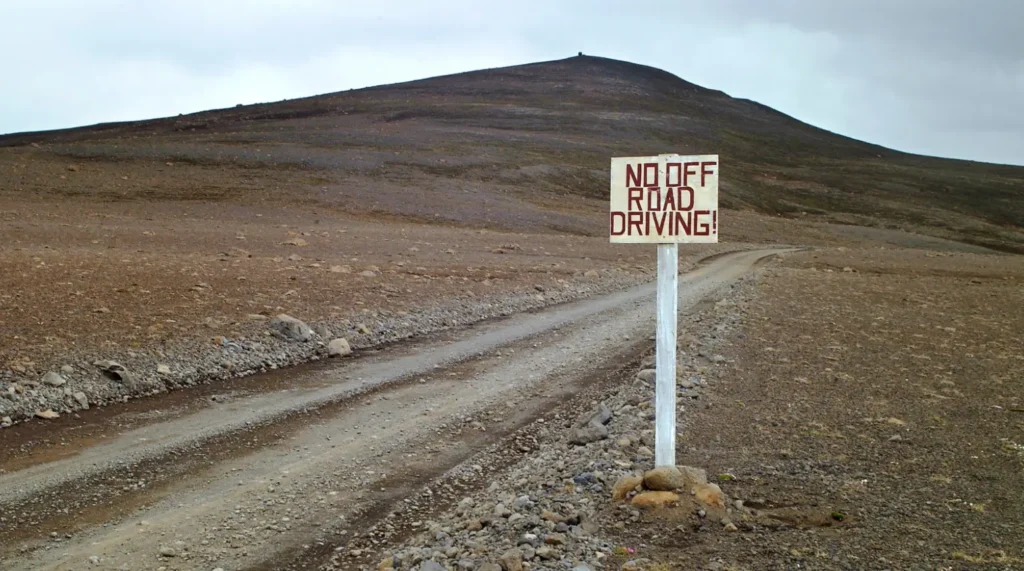
– Never drive off-road. This remains illegal even in a 4×4.
An F-road is still a marked road. Driving away from marked roads damages fragile ground and is not made legal by choosing a more capable vehicle.
Our Iceland road signs guide explains warning signs, one-lane bridges, gravel transitions, and F-road markers before you encounter them.
Speed Limits in Iceland
The general limits are 50 km/h (31 mph) in urban areas, 80 km/h (50 mph) on gravel rural roads, and 90 km/h (56 mph) on paved rural roads. A lower posted limit always takes priority.
These are maximum limits, not targets. Wind, loose gravel, ice, poor visibility, sheep, road tunnels and single-lane bridges may require a much lower speed. Slow down before the surface changes, not after the tires reach gravel or ice.
Practical Safety Tips for Driving in Iceland
Plan fuel stops
Fuel stations become less frequent on remote routes, and the gaps can be bigger than a map suggests. In the Westfjords, for instance, settlements are spread out enough that some legs between stations stretch past 120 km (roughly 75 miles) — the Flókalundur area is one example. Do not wait for the warning light before looking for the next stop. Our guide to gas prices and fuel stops in Iceland can help you plan.
Watch for animals
Sheep and other animals can move onto rural roads. Reduce speed when visibility is limited and be ready to stop without swerving into another lane. One of our past customers ran into more sheep than they expected on their Golden Circle trip.
Make a flexible plan
Leave enough space in your itinerary to wait out a road closure or storm. If every overnight stop depends on completing a long drive, one weather change can make the rest of the trip unnecessarily rushed.
Winter adds shorter daylight, snow, ice, and a greater chance of closure. Our winter camping guide covers the wider preparation needed for the season.
Know where you can legally stop
Wild camping with a vehicle is restricted in Iceland — camping is generally only permitted at designated campsites, except in very limited circumstances on private, unmarked land with landowner permission. If a closure or storm forces an unplanned overnight stop, head for the nearest official campsite rather than pulling off remote roads.
Check alerts, not social media reports
Another traveler’s photo may show yesterday’s conditions on a different section of road. Use official live sources for the decision in front of you.
Stay informed on volcanic activity
Iceland’s location on the Mid-Atlantic Ridge makes it one of the most volcanically active places on Earth, and recent years have seen a marked uptick in eruptions, especially on the Reykjanes Peninsula. While eruptions are closely monitored and road closures near active zones are enforced quickly once declared, it’s worth checking the current situation via the Icelandic Met Office before you set out, particularly if your route runs anywhere near Reykjanes or south Iceland. Our guide to volcanic eruptions in Iceland covers the history and latest activity if you want the fuller picture.
Frequently Asked Questions
What do the colors on umferdin.is mean?
The colors show the reported condition of each road section. Green means easily passable; light blue, dark blue, white, and purple show increasingly difficult ice, snow, or driving conditions; black means impassable; red means closed; and gray means no current information. Click the route section and read the live legend before driving.
How do I know if it is too windy to drive in Iceland?
Check the warning and route-level wind forecast on vedur.is. SafeTravel recommends not driving camper vans and motorhomes at 15 m/s (54 km/h / 33 mph) or above.
When do F-roads open in Iceland?
F-roads open during the summer, but there is no single opening date for every road. Snow, thawing ground, damage, and maintenance all affect the timing. Find out more in our guide to F-road opening dates, check the current status on umferdin.is, and confirm that your rental vehicle is approved for the planned route.
What side of the road do people drive on in Iceland?
People drive on the right in Iceland. Take extra care at roundabouts, one-lane bridges, and after stops if you normally drive on the left.
Is off-road driving illegal even with a 4×4?
Yes. Off-road driving is illegal even in a 4×4. Stay on marked roads and tracks. F-roads are marked mountain roads, not permission to drive across open ground.
Do I need a 4×4 to drive in Iceland?
Not for every trip. A 2WD camper van like the VW Caddy Camper can suit the Ring Road, Golden Circle, and other standard routes in suitable conditions. You need a 4×4 for F-roads, but you must still confirm that the rental vehicle is approved for the specific route. Our 4×4 vs 2WD camper van guide explains the choice.
How often should I check Iceland road conditions?
Check every morning and again before a drive longer than two hours. Recheck after a weather warning, route change, or long stop because conditions can change during the day. The Icelandic saying “Don’t like the weather? Just wait five minutes” shows just how changeable the weather can be!
Make the Conditions Part of the Plan
Good driving decisions in Iceland start before the engine. Check the road, check the wind, read the safety alerts, and be willing to change the route. That two-minute routine gives you a clearer answer than any fixed itinerary can, and ultimately, ensures that you and your party stay safe.
If you are planning a standard road trip, compare our camper vans. If your route includes the Highlands or F-roads, view the 4×4 fleet and ask us whether the camper is approved for your planned roads. We are only one email away and would love to help.