
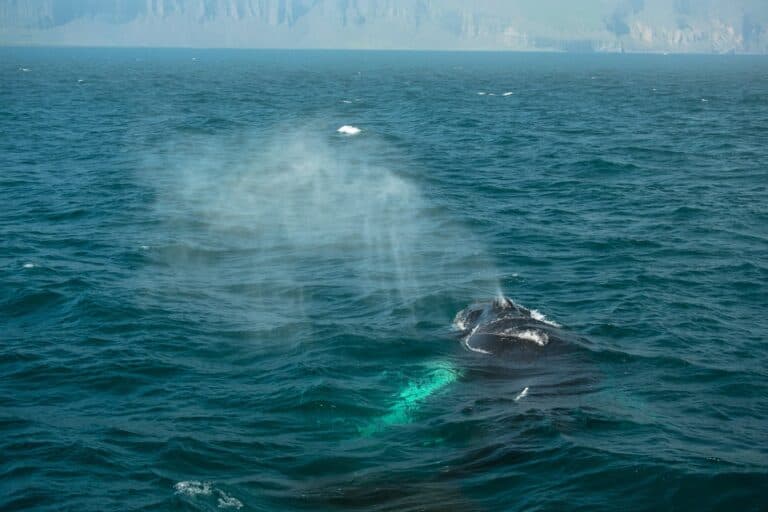
With nutrient-rich waters and an abundance of marine life, Iceland stands as one of the world’s top whale watching destinations, home to an especially lively whale season. Iceland also hosts a diverse range of wildlife, from dolphins and harbour porpoises to puffins skimming the waves. But it’s the humpbacks, minkes, and orca whales that remain the true crowd-pleasers, drawing visitors back year after year.
Exploring Iceland via camper van gives you the flexibility to chase clear skies and adjust your trip for optimal whale watching. In this guide, we’ll walk you through the ideal times to go, the best places to spot marine activity, and answer all of your questions about whale season in Iceland.
When Is the Best Time for Whale Watching in Iceland?
The best time to visit Iceland to see whales is between April and September. Summer’s calmer waters and clearer days create the best chances for spotting these breathtaking mammals. Specifically, June, July, and August are peak whale season. Iceland visitors can spot the greatest variety of species during this time, including humpbacks, minkes, and blue whales.
Visiting in the winter will give you an opportunity to see orcas, as well as other marine wildlife, including dolphins and porpoises. White-beaked dolphins and harbour porpoises are non-migratory, so you can typically spot these species year-round.
Whale Species You Can See in Iceland
Both migrating whales and year-round coastal species move through Iceland’s waters, giving travelers plenty to look for. Here are the ones you’re most likely to see:
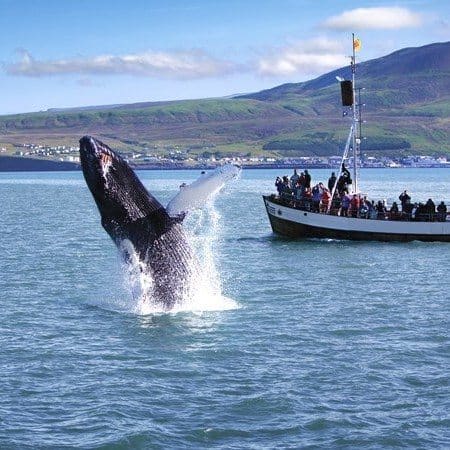
- Humpback whales: Find these beauties breaching during the summer months, when they migrate to Iceland for the food-filled waters.
- Minke whales: These agile and curious whales are known for approaching boats and getting near the coastline.
- Orcas: As pack hunters, orcas are often spotted searching for food in the winter.
- Blue whales: Less frequently spotted but always breathtaking, these whales show up in the summer.
- Sperm whales: Often seen in the spring and summer months, these whales are known for their dramatic tail flukes.
- Dolphins: These playful and social animals can be seen near the coast year-round.
No matter what time of year you go, you can almost always enjoy a front seat to a marine mammal show in Iceland.
Best Places to Go Whale Watching in Iceland
Each coastal area of Iceland provides a unique vantage point, so you can enjoy different marine animal highlights between the country’s shorelines. Here’s what you can expect in each region:
- Húsavík. Known as Iceland’s “Whale watching capital,” this area’s rich underwater ecosystem gives way to frequent sightings. Húsavík is easily accessible via the Ring Road and is known for a diversity of whale species.
- Reykjavík / Faxaflói Bay. Visitors can join year-round tours from these locations, making them ideal for camper van travelers beginning their trip in the capital. The Ring Road also connects to this region, which is known for its minke and humpback sightings.
- Akureyri / Eyjafjörður. Akureyri is a city situated on Eyjafjörður, one of Iceland’s longest fjords. The area’s calm waters attract humpback whales and are ideal for a northern Iceland road trip. Access these areas via Route 82 and Route 83, which connect Ring Road to Dalvík and Hauganes.
- Snæfellsnes Peninsula. Here you can spot plenty of Orca activity, especially in the winter. Route 54 loops around the peninsula and offers access to the whale watching hotspots of Ólafsvík and Grundarfjörður.
Deciding when to see whales in Iceland often comes down to which region you plan to visit. Different areas enjoy whale activity during different times of the year.
What to Expect on a Whale Watching Tour in Iceland
When whale watching, Iceland tours aren’t one-size-fits-all. In fact, you can pick the type of tour that matches your pace and comfort level.
To that point, traditional wooden boats are best for those looking for comfort and open to a relaxed pace. RIB speedboats, meanwhile, are ideal for those after a thrilling experience. Whichever vessel you choose, most whale watching tours last two to three hours.
Keep in mind that Icelandic weather can change rapidly. However, most whale tours will launch, rain or shine. Just be prepared with layers and waterproof items.
Also, most tours keep groups small to maximize viewing potential. Therefore, you shouldn’t find yourself fighting through a crowd to get a first-row seat. During the summer, well-known for being peak Iceland whale watching season, the chances of sightings are so high that some operators even offer a guarantee.
Out on the water, tour operators follow responsible whale watching guidelines and ask guests to do the same. For operators, that means keeping 100 to 300 meters of distance from marine life and limiting time spent near each pod to avoid causing stress.
Your captain will also avoid loud noises and sudden maneuvers to keep the animals calm. Guests should avoid feeding or touching the whales, and littering is strictly prohibited.
Tips for Getting the Best Whale Watching Experience
Knowing how to prepare for your whale watching trip will ensure it’s memorable for all of the right reasons. Here are some tips to keep in mind:
- Pack motion-sickness medication. Iceland’s waters can get rough, and you don’t want queasiness to ruin your adventure.
- Consider morning tours for calmer waters if you’re prone to seasickness.
- Bring a camera with a zoom lens. You won’t be allowed to get close to the whales, so you’ll want the option to zoom in for that iconic shot.
- Pack layers. Icelandic weather is unpredictable, and the air can get cold out on the high seas.
Thankfully, traveling with our Iceland campers provides extreme flexibility, allowing you to rebook your tour if the weather isn’t optimal for whale watching. Simply travel to another nearby attraction until conditions improve.
Planning Your Whale Watching Trip With a Camper Van
As we mentioned earlier, camper van travel gives you unmatched freedom when chasing the best whale watching conditions. Instead of sticking to fixed schedules or locations, you can follow the weather, adjust your route, and stay close to the ports that offer the most promising tours.
If you plan to explore more remote areas, a 4×4 camper rental in Iceland becomes especially useful. It gives you the traction and clearance needed for rougher terrain while still keeping you close to early morning departures from nearby harbors.
For a route that never disappoints, consider taking the Golden Circle, one of Iceland’s most popular sightseeing routes along the southwest region. It easily connects to the capital of Reykjavík, where you can choose between several different whale tours. If you want to explore the north, you can take Ring Road to Húsavík, Iceland’s whale-watching capital. It’s a longer drive, but well worth it for the wildlife sightings.
Experience Iceland’s Incredible Whale Season with Rent.is
Celebrated for its world-class whale watching, Iceland gives travelers the chance to see remarkable marine mammals in every season. With a little preparation, nearly any month can be the best time to see whales in Iceland, especially when you know where to position yourself along the coast.
With an Iceland camper van rental, you can stay flexible, follow the weather, and position yourself near the most active whale watching spots. That freedom gives you the best chance of seeing everything from breaching humpbacks to dolphins racing beside your boat. Contact us today to book your camper van and begin your journey.
Frequently Asked Questions About Whale Season in Iceland
Yes. Iceland is home to more than 20 whale species, including humpbacks, minkes, orcas, blue whales, and several smaller coastal species, making it one of the premier destinations for viewing these epic animals
During the summer whale season, Iceland visitors have a 95–98% chance of seeing whales. Winter sightings are possible but less predictable.
Yes. You can go whale watching from Reykjavík, with tours departing from the Old Harbour throughout the year. Reykjavík is one of the easiest locations for launching your whale watching excursion