
- Iceland: Quick Facts
- Best Time to Visit Iceland
- How Long Do You Need in Iceland?
- How Much Does Iceland Cost?
- Iceland Itineraries
- Driving in Iceland
- Things to Do in Iceland
- Food and Practicalities
- The Ring Road
- Regions and What to See
- Plan Your Iceland Trip
- Frequently Asked Questions
Iceland is a country that rewards the people who plan for it properly. The distances are real, the weather changes fast, and the best places are rarely the ones closest to the parking lot. This guide covers everything you need to make confident decisions before you travel: when to go, how long to spend, what it costs, where to go, and how to get around.
One thing worth saying upfront: Iceland is a driving destination. Public transport outside Reykjavík is limited, tours cover the highlights but not the gaps between them, and the experience of pulling over whenever you want, on your own schedule, is genuinely different from any other way of seeing the country. If you’re planning a trip to Iceland, choosing your vehicle early is one of the most important decisions you’ll make.
Ready to get started? Let’s dig into the subject of Iceland travel below!
Iceland: Quick Facts
- Currency: Icelandic króna (ISK). Cards are accepted almost everywhere; cash is rarely needed.
- Driving: Right-hand side of the road
- Language: Icelandic; English is widely spoken
- Time zone: GMT+0 year-round (Iceland does not observe daylight saving time)
- Typical trip length: 7–10 days for the Ring Road; 5 days minimum for the South Coast
- Do you need a car? Yes, for anything beyond Reykjavík. Public transport outside the capital is very limited.
- Electricity: 230V, Type F sockets (same as mainland Europe)
- Visa: Schengen Area rules apply
Best Time to Visit Iceland
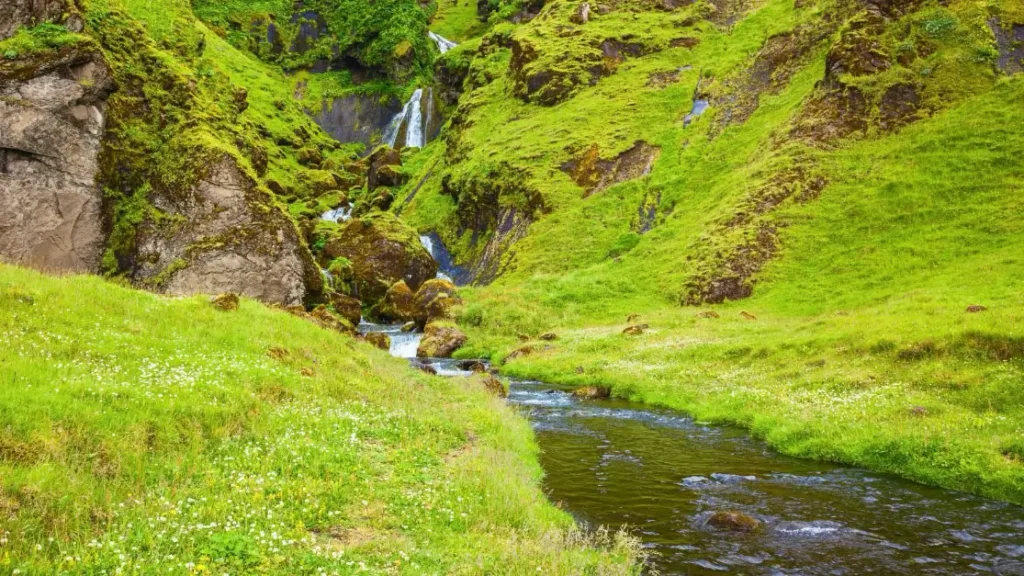
There is no single best time to visit; it depends entirely on what you want from the trip. Summer (June–August) gives you near-permanent daylight and access to the highland interior, but crowds and prices are at their peak. Winter (November–February) means Northern Lights and far fewer tourists, but short daylight hours and roads that require a capable vehicle. The shoulder seasons, particularly September to October and April to May, are often the sweet spot: lighter crowds, lower prices, and enough daylight to cover serious ground.
| Summer (Jun–Aug) | Winter (Nov–Feb) | Spring (Apr–May) | Autumn (Sep–Oct) | |
| Daylight | 20–24 hrs | 4–6 hrs | 13–17 hrs | 8–13 hrs |
| Northern Lights | No | Best chance | Possible (Apr) | Good (Sep–Oct) |
| F-roads open | Yes (from late Jun) | No | Opening late May | Closing from Sep |
| Crowds | High | Low–moderate | Low–moderate | Moderate |
| Prices | Highest | Lower | Moderate | Moderate |
For a full breakdown of what each season looks like on the ground, see our best time to visit Iceland guide.
How Long Do You Need in Iceland?
Most people need at least seven days to feel like they’ve seen the country rather than just passed through it. Here is a realistic breakdown by trip length.
5 days: Enough for Reykjavík, the Golden Circle, and the South Coast as far as Jökulsárlón Glacier Lagoon. You will cover the highlights, but at a fast pace, with little room for detours or being flexible with bad weather days.
7–10 days: The most practical window for driving the full Ring Road. Seven days is doable but tight; ten days gives you time to explore side roads, spend more than one night in areas you like, and absorb delays without stress.
14+ days: Recommended if you want to include the Westfjords, the Highlands, or the Snæfellsnes Peninsula properly. These areas are not far on a map, but the roads are slower, and they deserve more than a single overnight stop.
One region that often gets underestimated: the East. Most Ring Road drivers rush through the Eastfjords to stay on schedule. If your itinerary has no slack, the East is usually what gets sacrificed.
How Much Does Iceland Cost?
Iceland is expensive relative to most European destinations, but the gap narrows significantly if you self-cater and combine transport and accommodation with a campervan rental. As a rough guide:
| Budget | Mid-range | Comfort | |
| Accommodation | Camping: ISK 2,000–4,000 (~$14–28) | Guesthouse: ISK 18,000–30,000 (~$130–215) | Hotel: ISK 35,000–60,000+ (~$250–430) |
| Food | Self-catered: ISK 3,000–5,000 (~$21–36) | Mix: ISK 8,000–14,000 (~$57–100) | Eating out: ISK 15,000–25,000 (~$107–179) |
| Daily total (per person) | ISK 8,000–12,000 (~$57–86) | ISK 35,000–55,000 (~$250–393) | ISK 70,000–120,000+ (~$500–857) |
Fuel, paid attractions, and campervan rental costs all factor in too. For a full breakdown of what to budget for each part of your trip, see our Iceland trip cost guide.
Iceland Itineraries
3–4 Days: Reykjavík and the South Coast
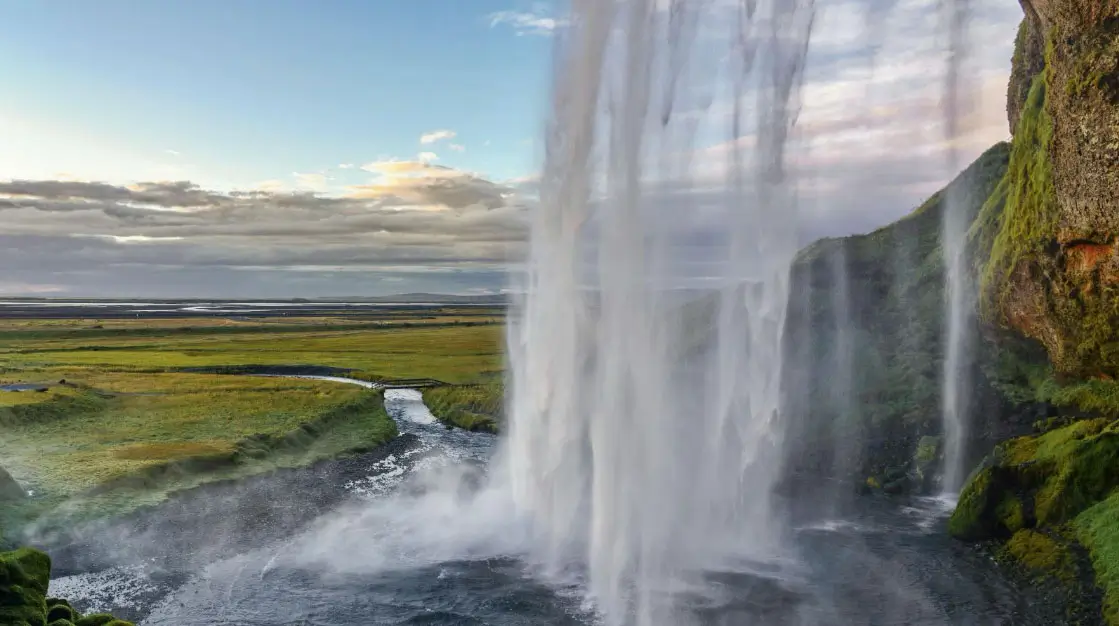
The most manageable intro to Iceland, and the right choice if your time is genuinely limited. Base yourself in or near Reykjavík and cover the Golden Circle (Þingvellir, Geysir, Gullfoss) on day one, then head east along the South Coast over the following days: Seljalandsfoss, Skógafoss, the black sand beach at Reynisfjara, and Jökulsárlón Glacier Lagoon if you push far enough. Four days gets you there and back comfortably; three days means an early start every morning.
7 Days: The Ring Road
Seven days is the most popular window for the Ring Road, and it is doable, but treat it as a minimum rather than a comfortable pace. Driving clockwise from Reykjavík is the most common approach.
Day 1: Reykjavík to Vík (187 km / 116 miles) South Coast highlights: Seljalandsfoss, Skógafoss, Reynisfjara black sand beach. Overnight in or near Vík.
Day 2: Vík to Jökulsárlón (200 km / 124 miles) Skaftafell Nature Reserve, Svartifoss waterfall, Jökulsárlón Glacier Lagoon and Diamond Beach. Overnight near the lagoon.
Day 3: Jökulsárlón to Höfn or Egilsstaðir (150–260 km / 93–162 miles) The Eastfjords begin here. The drive itself is the attraction: narrow roads, steep fjords, small fishing villages. Overnight in Höfn or push further to Egilsstaðir.
Day 4: Egilsstaðir to Mývatn (260 km / 162 miles) Lake Mývatn area: Dimmuborgir lava fields, Námaskarð geothermal area, Mývatn Nature Baths. Overnight at Mývatn.
Day 5: Mývatn to Akureyri and west (approx. 100–150 km / 62–93 miles) Goðafoss waterfall, Akureyri (Iceland’s second city), whale watching from Húsavík if time allows. Overnight near Akureyri or Húsavík.
Day 6: North Iceland to the Snæfellsnes junction (approx. 300 km / 186 miles) A longer driving day heading back west along the north coast and down toward the west. Overnight in Borgarnes or the Snæfellsnes area.
Day 7: Return to Reykjavik (75–180 km / 47–112 miles) Morning stop at Snæfellsjökull glacier or Kirkjufell mountain if routing via Snæfellsnes, then back to Reykjavík for your flight.
10+ Days: Ring Road Plus
Ten days or more allows you to add what the 7-day itinerary sacrifices. The most worthwhile additions are the Westfjords (best accessed from the northwest, budget at least two to three days), the Snæfellsnes Peninsula as a proper stop rather than a drive-through, and more time in the Eastfjords. The Highlands (accessible only by 4×4 from late June) can also be incorporated on a longer trip, typically via the Kjölur or Landmannalaugar routes.
Driving in Iceland
Iceland makes the most sense as a driving trip. Public transport outside Reykjavík is limited, and a car or camper van gives you the freedom to stop when something catches your eye, camp where you want, and cover ground on your own schedule.
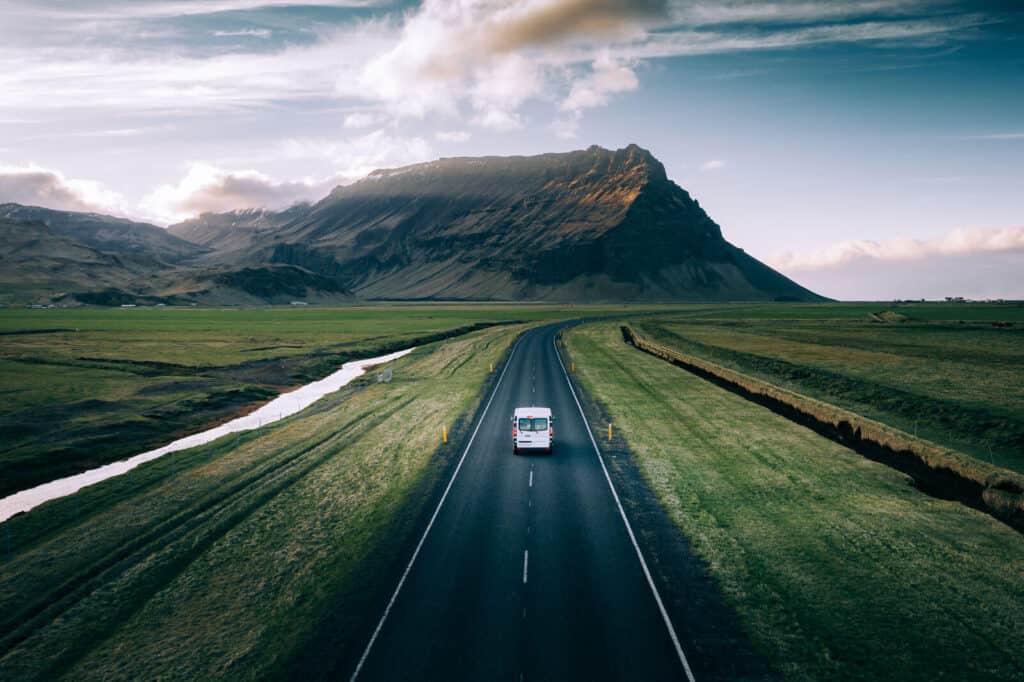
A few things worth knowing before you go:
- F-roads are highland interior tracks, marked with an “F” on maps. They require a 4×4, are closed until at least late June, and are illegal to drive in a standard rental car. Check road.is for current conditions before setting out each day.
- Speed limits are 90 km/h (56 mph) on paved rural roads, 80 km/h (50 mph) on gravel, and 50 km/h (31 mph) in towns. Fines are steep.
- Single-lane bridges are common outside the main routes. The first vehicle on the bridge has priority; the other waits.
- Weather changes fast. Check en.vedur.is alongside road.is every morning, especially in winter.
- Headlights on at all times, regardless of conditions. It’s a legal requirement.
- Never drive off marked roads. The terrain looks solid, but it often is not, and the damage is irreversible. It also carries a significant fine.
For a full guide to road rules, vehicle choice, and winter driving, see how to drive in Iceland.
Choosing your vehicle: A standard 2WD car covers the Ring Road and South Coast without issue in summer. For winter travel, F-roads, or the Highlands, you need a 4×4. A camper van combines your transport and accommodation into one, which simplifies logistics and cuts costs considerably.
Compare 4×4 rentals for winter driving
Things to Do in Iceland
Glacier and Ice Cave Tours
Iceland has around 269 glaciers, covering roughly 11% of the country’s total area. Vatnajökull, in the southeast, is the largest glacier in Europe and the starting point for most guided glacier hikes and ice cave tours. Ice caves are only accessible in winter, when the ice is stable enough to enter safely; the season typically runs from November through March. Guided tours are mandatory for both glacier hikes and ice caves; do not attempt either without a guide.
Geothermal Pools and Hot Springs
Geothermal pools are not just a tourist attraction in Iceland; they are part of daily life. The Blue Lagoon on the Reykjanes Peninsula is the most famous and the most expensive, worth visiting if you book in advance and factor the cost into your budget. Beyond that, the country has dozens of public swimming pools, natural hot springs, and lesser-known soaking spots that require a short hike to reach. The Mývatn Nature Baths in the north are a quieter alternative to the Blue Lagoon. For a full rundown of options, see our hot springs guide.
Northern Lights
The Northern Lights are visible in Iceland from mid-September through to early April, on clear nights away from light pollution. They cannot be guaranteed; solar activity and cloud cover both play a role. The best approach is to check the forecast on en.vedur.is, get away from Reykjavík and be patient. A camper van makes this significantly easier: you can chase clear skies without being tied to a fixed location. See our Northern Lights guide for timing and forecast tips.
Whale Watching
Húsavík in the north is considered the whale watching capital of Europe, with high sighting rates for humpback and minke whales from May through October. Reykjavík and Akureyri also offer tours. Expect to pay around ISK 12,000–15,000 (~$86–107) per person for a standard boat tour.
Hiking
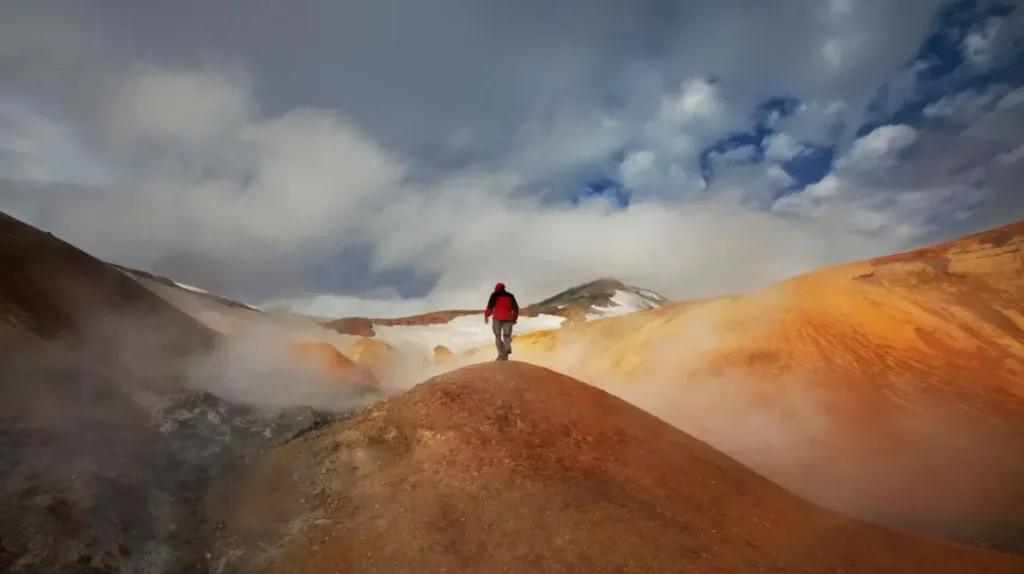
Iceland has many hiking trails ranging from easy coastal walks to multi-day wilderness routes. The Laugavegur trail, running 55 km (34 miles) from Landmannalaugar to Þórsmörk, is one of the most celebrated hikes in Europe and requires booking hut accommodation well in advance for summer departures. For something more accessible, the trails around Þingvellir, Skaftafell, and the Snæfellsnes Peninsula are all manageable without specialist equipment.
Puffins
Puffins arrive in Iceland between May and August to nest. The largest colonies are at Látrabjarg in the Westfjords, Borgarfjörður Eystri in the east, and on the Westman Islands. They are remarkably unafraid of people at close range, which makes them one of the more straightforward wildlife encounters in Iceland.
Food and Practicalities
Food
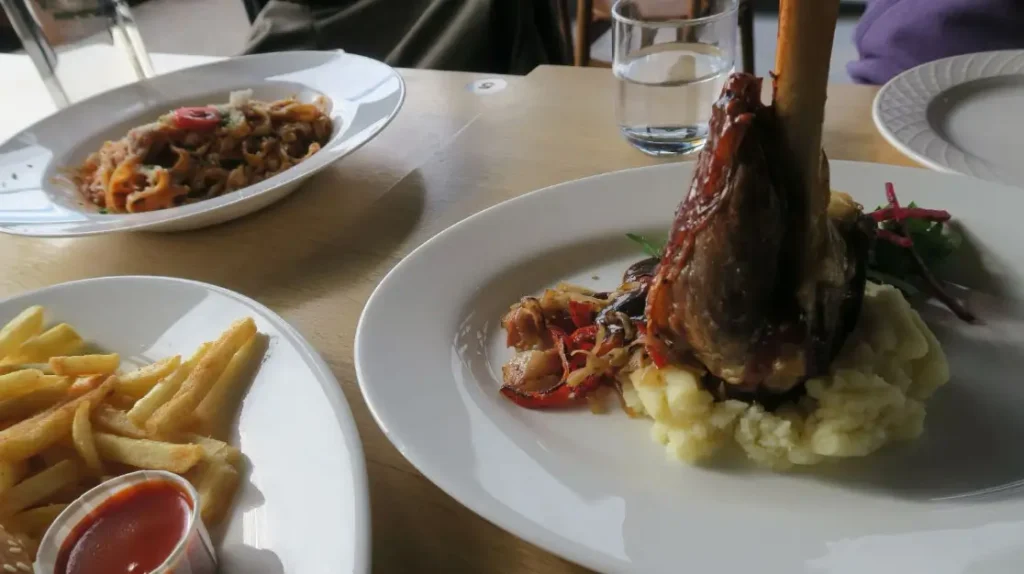
Icelandic food is built around what the country produces: fish, lamb, dairy, and root vegetables. A few things worth trying:
Skyr is a thick, high-protein dairy product, closer in texture to strained yogurt than anything else. It has been part of the Icelandic diet for over a thousand years and is available everywhere, including petrol stations.
Plokkfiskur is a traditional fish stew made with white fish, potatoes, and onions. Simple, filling, and one of the more honest representations of everyday Icelandic cooking.
Lamb is excellent. Icelandic sheep roam free in the Highlands over summer, and the meat reflects it. Slow-cooked lamb soup (kjötsúpa) is a staple worth ordering when you see it.
Hákarl is fermented Greenlandic shark, buried and cured for months before serving. It has a powerful ammonia smell and a taste to match. It is served in small cubes at food festivals and a handful of traditional restaurants; most Icelanders do not eat it regularly.
Eating out in Reykjavík is expensive by most standards. Self-catering from supermarkets (Krónan and Bónus are the most affordable chains) cuts costs substantially, which is one of the practical advantages of travelling by campervan.
Practicalities
Tipping: Not expected or customary. Service is included in prices.
Mobile and data: Coverage is good on the Ring Road and in populated areas. The highlands and some remote coastal areas have gaps. Local SIM cards are available at the airport and in Reykjavík; Síminn and Nova are the main providers.
Driver’s license: A full, valid driving licence from your home country is accepted. An international driving permit is not required for most nationalities.
Electricity: 230V, Type F sockets. Standard European two-pin plugs work without an adapter.
Water: Tap water in Iceland is cold, clean, and comes straight from glacial sources. There is no need to buy bottled water.
Emergency number: 112 for police, fire, and ambulance. The 112 Iceland app allows you to register your location with emergency services and is worth downloading before you travel.
The Ring Road
Route 1, known as the Ring Road, circles the entire country and is the backbone of most Iceland itineraries. The full loop is 1,332 km (828 miles) and takes around 16–17 hours of pure driving time, which in practice means seven to ten days at a realistic pace with stops.
The road is paved and manageable in a standard 2WD car during summer. Winter is a different matter: sections can close without much notice, and ice and snow make a 4×4 with winter tires the sensible choice from October through April.
The Westfjords, Snæfellsnes Peninsula, and most of the Highland interior are not covered on the Ring Road, and all require detours or separate trips. If those are on your list, factor in the extra time.
For distances, highlights, and an interactive map of the full route, see our Ring Road travel guide.
Regions and What to See
Reykjavík
Reykjavík is where most trips begin and end, and it’s worth at least a full day rather than just a transfer stop. The old harbor area, Hallgrímskirkja church, and Laugavegur street are the core of what most visitors see. The city also has a legitimate food and bar scene, and several of the best geothermal pools in the country are within easy reach, including the Blue Lagoon Iceland, located about 48 km (30 miles) southwest on the Reykjanes Peninsula.
South Iceland and the Golden Circle
The South Coast is the most visited part of Iceland and the logical starting point for any road trip. Waterfalls, black sand beaches, glacier lagoons, and the Vatnajökull ice cap are all within a few hours of Reykjavik. The Golden Circle, a 300 km (186-mile) loop from the capital, takes in Þingvellir National Park, the Geysir geothermal area, and Gullfoss waterfall. It’s easily done as a day trip, but worth slowing down if your schedule allows. See our South Iceland travel guide and Golden Circle guide for full details.
East Iceland
The Eastfjords are the part of the Ring Road most people rush through, which means they are also the quietest. The fjords are deep and narrow, the fishing villages are small and unhurried, and the drive itself, particularly the mountain roads above the coast, is some of the best in the country. Egilsstaðir is the main service town; Seyðisfjörður, a short detour east, is one of the most photogenic villages in Iceland. See our East Iceland travel guide.
North Iceland
The north is anchored by Akureyri, Iceland’s second city, which has enough to fill a day or two on its own. The surrounding area includes Goðafoss waterfall, Lake Mývatn and its geothermal landscape, and Húsavík, the best base for whale watching in Iceland. The northeast coastline is the most remote stretch of the Ring Road: long distances between stops, very few tourists, and a landscape that feels genuinely untouched. See our North Iceland travel guide.
The Westfjords
Only around 14% of visitors to Iceland make it to the Westfjords, which is partly why it is worth going. The fjords here are deeper and more dramatic than anywhere else in the country, the roads are slower, and the sense of space is unmatched. Látrabjarg, Europe’s westernmost point, hosts one of the largest puffin colonies on the continent. Budget at least two to three days; it is not somewhere to pass through. See our Westfjords travel guide.
Snæfellsnes Peninsula
Snæfellsnes is often called Iceland in miniature: glaciers, lava fields, fishing villages, black sand beaches, and Kirkjufell, the country’s most photographed mountain, all within a compact peninsula about 90 km (56 miles) long. It works as a two-day detour from Reykjavík or as part of a longer loop. See our Snæfellsnes travel guide.
The Highlands
The Highlands are only accessible by 4×4, are only open from roughly late June to early September, and require more preparation than any other part of Iceland. They are also unlike anywhere else in the country: vast, volcanic, and almost completely empty. The Kjölur route (F35) is the most accessible highland road; Landmannalaugar is the most popular destination, known for its multicolored rhyolite mountains and natural hot springs. Register your route at safetravel.is before heading in. See our Highlands driving guide.
Westman Islands
The Westman Islands (Vestmannaeyjar) sit off the south coast and are reached by ferry from Landeyjahöfn, a crossing of around 35 minutes. Only Heimaey is inhabited. The island has an active volcanic history: a 1973 eruption destroyed a third of the town overnight, and the lava fields and buried houses are still visible. There is also a large puffin colony on the south cliffs and an excellent museum telling the story of the eruption. You can bring a campervan on the ferry. See our Westman Islands travel guide.
Plan Your Iceland Trip
Iceland is a straightforward country to travel in once you understand how it works: the distances, the seasons, the road conditions, and the value of having your own vehicle. Most of the planning comes down to three decisions: when to go, how long to spend, and what to drive.
If you are ready to start putting the pieces together, the next step is sorting your vehicle. Browse our camper vans and 4x4s, or contact us if you have questions about which vehicle suits your itinerary.
Frequently Asked Questions
Do I need a 4×4 to drive in Iceland?
Not for the Ring Road or South Coast in summer. A standard 2WD car handles the main paved routes without issue from June through September. You need a 4×4 for F-roads, Highland routes, and winter driving on any route outside the main ring road. If you are travelling between October and April or planning to leave the paved road at any point, a 4×4 is the safer choice.
Can I drive the Ring Road in 7 days?
Yes, but it is tight. Seven days is enough time to cover the full loop if you average around 190 km (118 miles) of driving per day and keep stops focused. Ten days is a more comfortable pace and gives you room for detours, bad weather days, and areas worth spending more time in, particularly the Eastfjords and the north.
Is Iceland safe to travel solo?
Iceland consistently ranks among the safest countries in the world. Solo travel, including solo road trips, is common and well supported. The main practical consideration is driving alone in remote areas in winter: tell someone your route, check road and weather conditions daily, and download the 112 Iceland app before you go.
Do I need travel insurance for Iceland?
Yes. Standard travel insurance should cover medical expenses, trip cancellation, and vehicle-related incidents. If you are planning glacier hikes, ice cave tours, or any adventure activities, check that your policy covers them specifically, as some require additional coverage.
What is the best way to see the Northern Lights?
Get away from Reykjavik, check the aurora forecast on en.vedur.is, and go out on clear nights between mid-September and April. A camper van gives you the flexibility to relocate if cloud cover moves in. There are no guarantees, so build enough nights into your trip to give yourself a realistic chance.
Can I visit Iceland on a budget?
Yes, with the right approach. Camping or traveling by camper van cuts accommodation costs significantly. Self-catering from supermarkets like Bónus keeps food costs manageable. Many of the best things in Iceland, waterfalls, beaches, hiking, and the midnight sun, cost nothing. The main expenses are flights, vehicle rental, fuel, and any paid attractions you choose to add.
How far in advance should I book accommodation?
For summer travel (June–August), book as early as possible, particularly for popular stops on the South Coast and anywhere on the Ring Road. Campsites are generally first-come, first-served and do not require advance booking. For shoulder season travel, a few weeks’ notice is usually sufficient outside of specific event weekends.
Are F-roads open year-round?
No. F-roads are closed from approximately October through to late May or early June, depending on snowmelt. Opening dates vary each year and are confirmed by the Icelandic Road and Coastal Administration. Check road.is for current status before planning any Highland routes.