
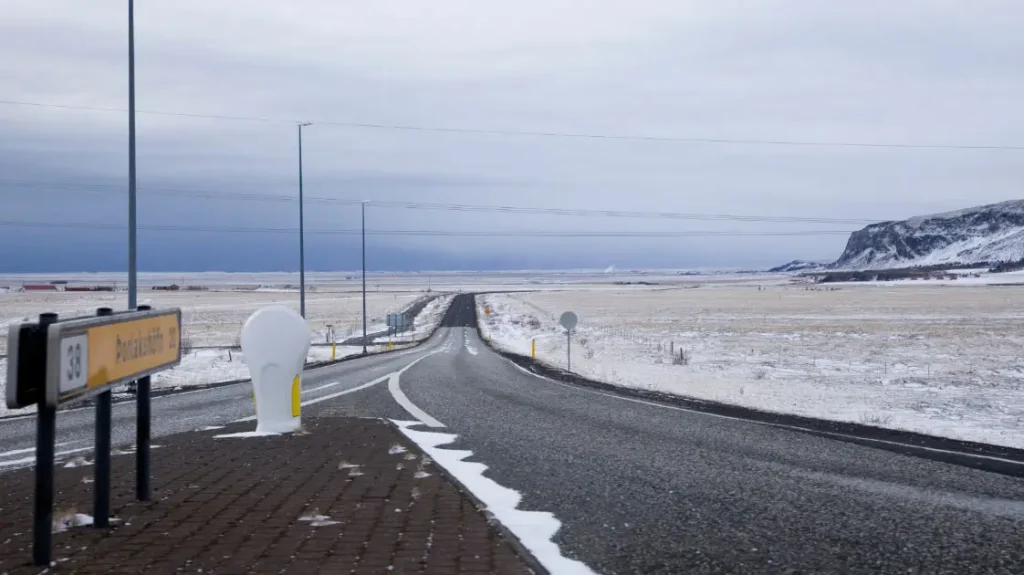
Winter is one of the most rewarding times to road-trip Iceland. The roads are quieter, the landscapes are dusted with snow, and on clear nights the Northern Lights can dance right above your camper. Plenty of visitors drive here every winter and have a wonderful time, and with the right preparation, you can too.
Driving in Iceland in winter can be very safe when the road is open, the weather is suitable, visibility is good, and you feel comfortable with snow, ice, wind, and shorter days. So rather than asking “Is Iceland drivable in winter?” the more useful question is “Is this route sensible for me today?”
The answer can change from one day to the next, and sometimes within the same day. The good news is that checking only takes a few minutes. Before every significant drive, take a quick look at the Icelandic Road and Coastal Administration’s live traffic map at umferdin.is, the Icelandic Met Office forecast and warnings at vedur.is, and SafeTravel alerts. If conditions no longer suit your vehicle, experience, or daylight, it’s completely normal to adjust the plan. Locals do it all the time.
We’ve been helping travelers explore Iceland by camper since 2012, and this guide shares what we’ve learned along the way. It’s for travelers who want a realistic way to make these decisions, without assuming every winter day is dangerous or that a 4×4 makes every route sensible.
In this guide
- What winter driving in Iceland actually feels like
- Winter conditions decision table
- Should you drive in Iceland in winter?
- The 6 checks to make before you drive
- When should you change your plans?
- Which winter routes are easier to plan?
- How to plan a winter itinerary that can absorb bad weather
- Do you need a 4×4 for winter driving in Iceland?
- What to do if conditions get worse while you’re driving
- Common winter-driving mistakes visitors make
- A simple winter driving checklist
- Frequently asked questions
What winter driving in Iceland actually feels like
Winter driving here is less about one dramatic hazard and more about several smaller factors combining at once. A paved road can be open but icy. A route that felt straightforward in daylight can feel very different after dark. A forecast can look manageable at your destination while an exposed section of road between you and that destination is much windier.
That’s why winter planning works best when you think in layers: road status, weather, visibility, daylight, vehicle, and your own confidence.
Ice and black ice
Ice is tricky because grip can change before the road looks obviously different. Wet-looking pavement can be slippery, especially when temperatures are around freezing, and conditions are changing.
This is where Iceland surprises a lot of experienced winter drivers. Because of the surrounding ocean, temperatures along the coast often sit right around 32°F (0°C) for days at a time, swinging above and below freezing. That cycle of melting and refreezing creates far more ice and slush than steady deep cold does. So whether you’re used to snowy winters in Minnesota, the Alps, or Scandinavia, Iceland’s roads may behave differently than you expect at home. And if you’re coming from somewhere with milder winters, like much of the UK, you’ll likely meet more ice in a single week here than in a typical year back home.
Icelanders even have a word for the worst of it: flughált, which roughly translates as “flying slippery,” for roads so icy they could send a vehicle flying off the road. If you ever hear a local use it, take it as your cue to stay put.
The practical response is simple: drive to the conditions rather than the posted maximum speed. Leave more space, slow down before bends, and avoid abrupt steering or braking. For reference, the speed limit on paved rural roads is 90 km/h (56 mph), 80 km/h (50 mph) on gravel, and usually 50 km/h (31 mph) in towns. In winter, these are maximums, not targets.
Every Rent.is camper is fitted with studded tires throughout the winter season as standard, which makes a real difference on icy roads. Even so, studded tires improve traction but don’t remove the risk of ice. Your route choice and driving style still matter.
Snow, drifting snow, and poor visibility
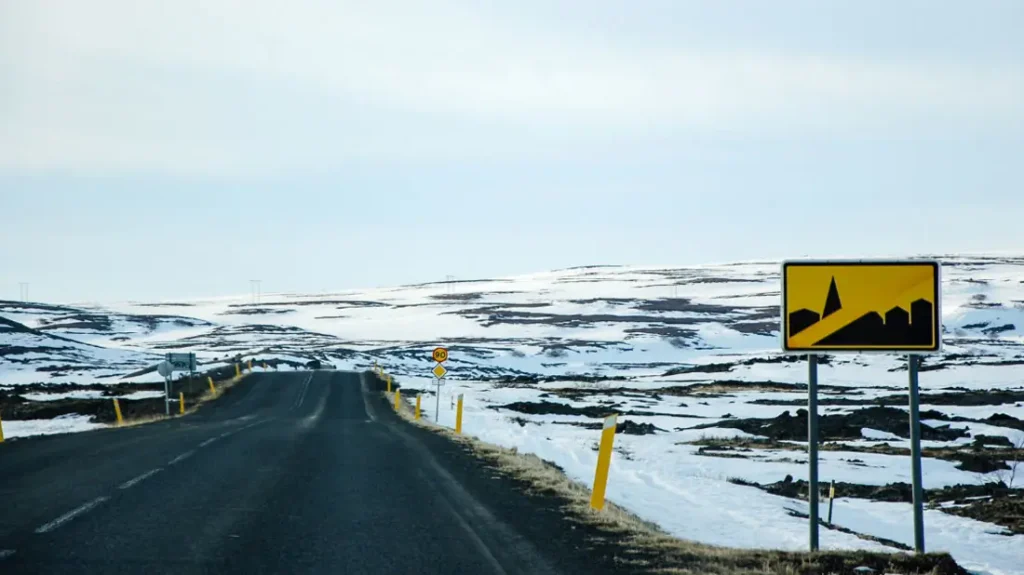
Fresh snow is only part of the picture. Wind can move snow across the road, cover markings, and make the edge of the road harder to judge. Visibility may become the deciding factor before snow depth does.
Insider tip: many Icelandic roads are lined with yellow-topped marker poles. When snow blurs the edges of the road, these poles are your best guide to where the road actually is, so keep them in view on both sides.
A lightly snow-covered, serviced road in calm weather is a different situation from blowing snow on an exposed route. Don’t treat both as simply “snowy.”
If you are struggling to see the road clearly, that’s a good reason to reassess the drive. Slowing down may be enough in mild conditions. In worsening visibility, the better decision can be to stop somewhere safe, shorten the route, or wait.
Wind and crosswinds
Ask any Icelander what worries them most about winter driving, and many will say wind before snow. Wind deserves particular attention in a camper because a taller vehicle catches crosswinds more strongly than a small car. The Icelandic Met Office also issues warnings when gusty winds may be hazardous to wind-sensitive vehicles.
One thing that confuses many visitors: vedur.is shows wind speed in meters per second (m/s), not miles per hour. A quick conversion is to multiply by about 2.2, so 15 m/s is roughly 34 mph and 25 m/s is roughly 56 mph. There isn’t one universal “safe” number, so check the forecast and warnings for the area and time you plan to travel, and pay close attention to gusts, not just the average wind speed. Gusts are what push a camper sideways.
Some stretches are well known locally for strong gusts, including Kjalarnes and the area below Hafnarfjall north of Reykjavík, the roads around Vík, and the open stretches beneath the glaciers in the Southeast. Wind can funnel through valleys and around mountains, so a calm town forecast doesn’t always reflect what you’ll meet on the road between towns.
Wind also affects you once you’ve parked. A strong gust can rip a door out of your hand and bend it on its hinges, and it’s one of the most common types of winter damage we see on our campers. Wind-blown door damage isn’t covered by any of our insurance packages, and it’s often excluded by other rental companies too, so this is one tip worth taking to heart. Park facing into the wind where you can, and open doors slowly with a firm grip.
If a route feels uncomfortable in the vehicle you’re driving, that matters. You don’t need to keep going simply because the road is technically open.
Darkness and short daylight
Winter gives you fewer daylight hours, especially around midwinter. In late December, Reykjavík gets only around four hours of daylight, with sunrise after 11am. and sunset around 3:30pm. Up north in Akureyri, it’s even shorter. Daylight returns quickly after that, and by late February you’ll have closer to ten hours.
The issue isn’t that driving after dark is automatically unsafe. It’s that darkness makes every other decision harder. It can be more difficult to read the road surface, see drifting snow, judge an unfamiliar bend, or recognize that conditions are getting worse. For a first winter trip, it’s sensible to keep the most unfamiliar or exposed driving within daylight where possible.
That usually means planning shorter days than you would in summer and avoiding an itinerary that only works if every drive starts and finishes on time.
A note on the Northern Lights: if the aurora appears while you’re driving, it’s tempting to pull over right away. Please don’t stop on the road or its narrow shoulder. Many Icelandic roads have little space beside them, and a parked vehicle in the dark is very hard for other drivers to see. Wait until you reach a proper pull-off, parking area, or side road, then turn off your lights and enjoy the show. For tips on when and where to see them, check out our guide to the Northern Lights in Iceland.
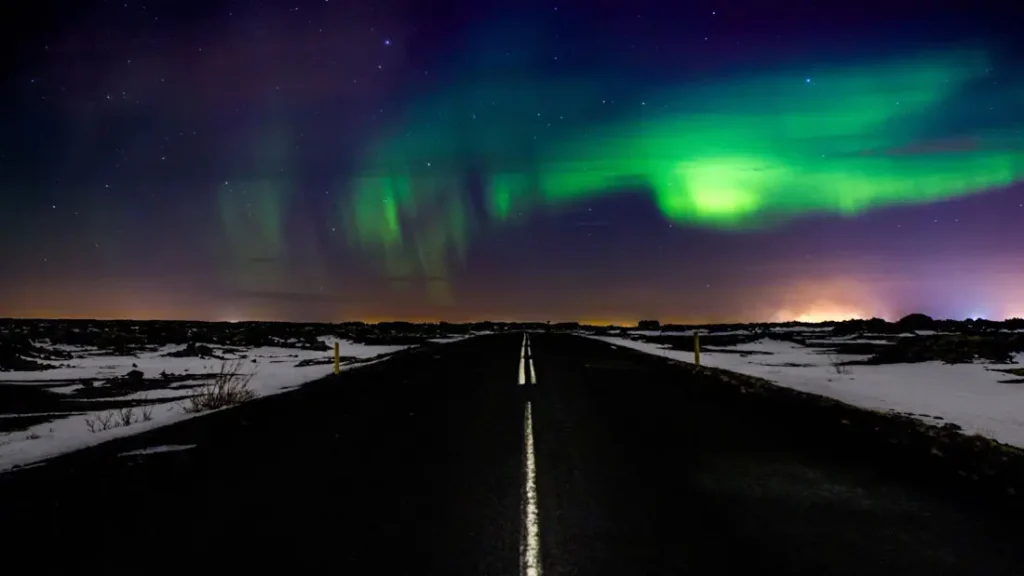
Image alt text: Northern Lights above a road in Iceland in winter
Winter conditions decision table
| Condition | What it can feel like | Why it matters | Safer response |
| Ice/black ice | The road looks clear but grip changes suddenly. | Braking and steering margins shrink. | Reduce speed for conditions, increase following distance, and avoid sudden steering or braking. Take extra care on bridges, which often freeze first. |
| Drifting/blowing snow | Road edges and markings become difficult to read. | Visibility and road position become unclear. | Follow the yellow-topped marker poles, slow down, and shorten the drive or stop if you can’t see clearly. |
| Strong crosswinds | The camper moves sideways, or steering needs constant correction. | Taller vehicles like campers catch the wind more. | Check vedur.is warnings and gusts (m/s × 2.2 = mph); delay or stop if control feels uncomfortable. |
| Parking in strong winds | A gust catches the door as you open it. | Doors can bend on their hinges, one of the most common winter damages. | Park facing into the wind and open doors slowly with a firm grip. |
| Darkness | Surface changes and drifting snow are harder to read. | It makes ice, snow, and visibility problems harder to spot. | Keep unfamiliar or exposed driving in daylight where practical. |
| Road closure | A barrier or Lokað sign blocks the route, even if navigation still suggests it. | The road isn’t available for travel. | Don’t bypass it; turn back or reroute using officially open roads. Call 1777 for route updates. |
| Driver discomfort | You feel tense, tired, or outside your experience. | Judgment and reactions can suffer. | Stop, shorten, delay, or choose a simpler route. |
Should you drive in Iceland in winter?
For many visitors, yes, just not every route and not every day.
A traveler who has driven regularly in snow and ice, has a flexible itinerary, and is comfortable delaying a journey has a very different risk profile from someone who has never driven on ice and has booked a long route with no spare time.
It’s worth thinking twice about a winter self-drive if several of these are true:
- You have little or no experience driving on snow or ice.
- You’re uncomfortable with strong crosswinds.
- Your itinerary depends on long daily distances.
- You have fixed bookings that make delaying a drive difficult.
- You have no backup stop if the route changes.
- You’d feel pressure to keep going because you’ve already paid for the next night or activity.
None of these automatically means you can’t travel in winter. They just mean your route should be simpler and your schedule more flexible.
This is where a camper can genuinely help. Because your bed travels with you, you’re not locked into a hotel booking in a town you can’t safely reach. If the weather turns, you can stop at a nearer open campsite instead. Not every campsite stays open through winter, though, so it’s worth noting a few year-round options along your route before you set off. Our winter camping in Iceland guide covers this in more detail.
Not sure where you fit? Tell us about your driving experience and planned route when you book, and our team will happily give you an honest opinion. For winter trips, our heated campers are the coziest choice. Our rooftop tent models are best saved for summer, when the long, bright nights make sleeping up top a highlight of the trip.
The 6 checks to make before you drive
Use the same routine every morning, and repeat it before a longer afternoon leg if conditions are changing. It only takes about ten minutes over breakfast, and it quickly becomes second nature.
1. Check the exact road on umferdin.is
Don’t just check whether your destination is open. Look at the road sections you’ll actually use.
The Icelandic Road and Coastal Administration publishes live road-condition information, road notifications, weather data, and webcams for parts of the road network. Use that information to see whether the route is open and what conditions are being reported.
Insider tip: the map is color-coded, and it’s worth knowing the main colors before you arrive:
- Green: easily passable.
- Light blue: patches of ice.
- Dark blue: slippery.
- Red: impassable or closed.
You’ll see other colors and symbols too, for conditions like snow cover, slush, and strong wind. Tap the legend on the map for the full list, and if a road is shown in a color you don’t recognize, check what it means before setting off.
The webcams are one of the most underused tools here. A quick look at a live camera on the highest or most exposed part of your route will tell you more than any description.
Be wary of following Google Maps blindly in winter. It may suggest the shortest route, not the one that’s open or serviced. A well-known example is Route 939 over Öxi in the East, which Google often recommends as a shortcut but which is frequently impassable in winter. Always cross-check your route with umferdin.is.
A screenshot from the night before isn’t enough. Check again close to departure.
2. Check weather warnings and wind on vedur.is
Look at the weather for the route and the time you’ll be driving, not only the town where you’re sleeping.
Pay particular attention to official warnings, wind, gusts, snow, and visibility. The Icelandic Met Office uses color-coded warnings: yellow, orange, and red. A yellow warning on your route is a signal to plan carefully, and an orange or red warning usually means it’s time to stay put. If a warning affects your route, take it seriously and adjust your plans around it.
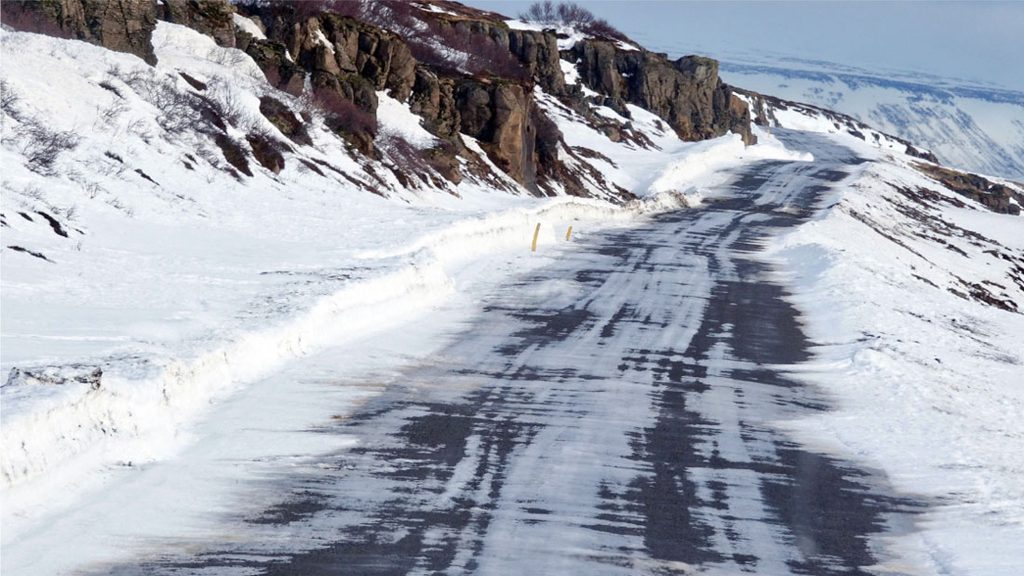
Image alt text: Icelandic road covered in ice in winter
3. Check SafeTravel alerts
SafeTravel brings together current travel alerts and practical safety advice. Its winter-driving guidance also asks drivers to consider whether they have the right vehicle and the right experience for the conditions.
While you’re there, you can also leave a travel plan with SafeTravel, which helps rescue teams know where to look if something goes wrong. Before your trip, download the free 112 Iceland app as well. It lets you check in along your route and call for help with your location attached.
If an alert affects your route, follow the official advice rather than trying to save the itinerary.
4. Check daylight
Ask a practical question: will the most difficult or unfamiliar part of today’s drive happen in daylight?
If the answer is no, consider leaving later, stopping earlier, or shortening the route. A plan that works comfortably in summer may be too ambitious in December or January.
Waiting for daylight can help in another way, too. In midwinter, it doesn’t get light until mid-morning, and that extra time gives snowplows a chance to clear the roads. Roads are cleared on set schedules, and quieter roads may not be serviced until later in the morning, so setting off in the dark isn’t always a head start.
5. Check the vehicle
Before you leave, make sure you have clear windows and mirrors, working lights, enough fuel for the route, and the equipment supplied with your rental. Clear snow off the roof too, so it doesn’t slide down over your windshield when you brake.
Fuel stations can be far apart in rural areas, and many are self-service only. Most pumps ask for a card with a PIN, which catches out a lot of visitors. Set up a PIN with your card provider before you travel, or buy a prepaid fuel card at a staffed station. As a rule of thumb, top up whenever you drop to half a tank outside the towns.
If you’re unsure about the tires, warning lights, heating, or anything vehicle-specific, ask us before driving. Don’t guess. Our team will walk you through your camper at pickup, and our 24/7 support line is there whenever you need it, so save the number (+354 567 3000 ext. 3) in your phone before you leave the office.
6. Check yourself
This is the check people skip.
Are you rested? Are you calm? Are you comfortable with the road surface? Would you be willing to turn around if the road becomes harder than expected?
A road can be open and still be the wrong road for you that day. In our experience, the travelers who have the best winter trips aren’t always the most experienced drivers. They’re the ones who are happy to say “not today” and enjoy a slower morning instead.
When should you change your plans?
Changing the plan is a normal part of winter travel in Iceland. It doesn’t mean the trip has gone wrong. Some of our customers’ favorite memories come from the days that didn’t go to plan.
Delay rather than rush
If conditions are poor first thing, waiting can be the better choice. Road service and weather conditions may change later, but there is no guarantee that a closed or difficult route will improve quickly.
Don’t set off simply because you need to “make up time.”
If you’re unsure whether a road will open, you can call the road administration’s traffic service on 1777 (+354 1777 from a foreign phone). The team can tell you what’s happening on your route, which is often more helpful than refreshing the map. The 1777 traffic service is available daily from 6:30am to 10pm.
And if you’re stuck waiting, do what Icelanders do on a stormy day: head to the local swimming pool. Almost every town has one, usually with geothermal hot tubs, and soaking in hot water while the weather blows past is about as Icelandic as it gets.
Shorten the route
You may not need to cancel the day completely. A shorter paved route, an earlier campsite, or a closer town can keep the trip moving without forcing the original plan.
This is where a flexible camper trip really shines. The value isn’t that you can ignore conditions. It’s that you can respond to them.
Turn back or stop
If visibility worsens, the road becomes much icier, wind makes the vehicle uncomfortable to control, or you’re no longer confident, continuing isn’t the only option.
Return to the last suitable stop, choose a nearer destination, or wait somewhere safe. Gas stations are often the best place to pause. They’re warm, usually have food and coffee, and locals there are a great source of advice on the road ahead. If an official closure or warning applies, follow it.
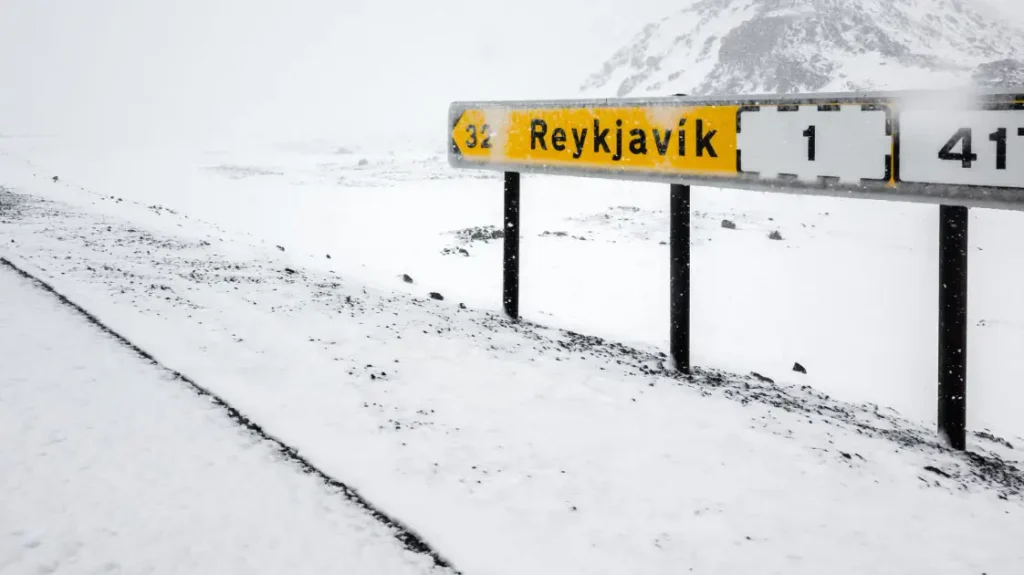
Closed roads are often marked with a barrier and a sign reading Lokað, which means “closed.” Don’t drive around a closure, even if a navigation app still shows the road as a route.
Which winter routes are easier to plan?
There’s no route in Iceland that’s guaranteed to be easy in winter. The useful comparison is planning complexity, not a permanent safe-or-unsafe label.
Reykjavík, the Golden Circle, and the South Coast
These areas are popular winter choices because you can build relatively short driving days around well-known destinations and towns. That can make backup planning much easier.
The one stretch locals keep an eye on here is Hellisheiði, the mountain pass between Reykjavík and Selfoss that’s the gateway to the South Coast. It can close or become very slippery in bad weather. When it does, the lower Þrengsli road is often the alternative, so check both on umferdin.is before you leave the city.
On the South Coast, distances are manageable as far as Vík, about 115 miles (186 km) from Reykjavík. Beyond Vík, the road toward Jökulsárlón Glacier Lagoon becomes longer and more remote, with fewer towns, fuel stops, and places to wait out the weather. If Jökulsárlón is on your list, consider staying overnight nearby rather than trying to see it as a long round trip in one day.
You should still check the exact roads and weather before each drive. A popular route can be affected by ice, wind, snow, or closures just like anywhere else.
A hidden gem for winter: the Snæfellsnes Peninsula, around two to three hours from Reykjavík, packs mountains, black beaches, lava fields, and fishing villages into a compact loop. It’s a great option if you want variety without the long distances of the Ring Road.
Ring Road in winter
A full Ring Road trip is possible in winter, but it asks more of the itinerary. The loop is about 821 miles (1,322 km), and you cross several regions, longer rural sections, and different weather systems.
The main planning mistake is treating the Ring Road like a fixed loop that must be completed on schedule. If one leg is delayed, the pressure can carry into every day after it.
If you want to drive the Ring Road in winter, build in enough time to stop early, wait out poor weather, or drop a planned detour without turning the rest of the trip into a race. In our experience, the winter Ring Road trips that go best have at least seven days, ideally ten or more. With less time, a South Coast or Snæfellsnes itinerary often makes for a more relaxed and rewarding trip.
North, East, and exposed passes
Longer distances, exposed roads, elevation, and fewer easy alternatives can make some northern and eastern legs more demanding in winter. Mountain passes such as Holtavörðuheiði and Öxnadalsheiði on the way to Akureyri, and Möðrudalsöræfi in the Northeast, are among the stretches most often affected by snow and closures. In the East, stick to the coastal fjord roads rather than mountain shortcuts like Öxi.
The Westfjords deserve a special mention. They’re stunning, but many of their mountain roads close regularly in winter, so they’re best left to experienced winter drivers with plenty of spare time.
That doesn’t mean these areas should be avoided automatically. It means you should make the decision using live conditions rather than a general article written weeks or months earlier, including this one!
How to plan a winter itinerary that can absorb bad weather
A good winter itinerary is built around choices. If every campsite, activity, and driving leg depends on reaching one exact place at one exact time, a few hours of bad weather can put the rest of the trip under pressure.
Give each day a primary plan and a shorter backup. That might mean choosing one main destination and identifying a town, campsite, or attraction you can use if the full route no longer makes sense. You don’t need a completely separate itinerary. You just need somewhere sensible to stop before the day becomes a race. Pick that backup stop the evening before, while you’re calm and connected, not after conditions have turned.
Keep daily distances realistic
Driving times from summer itineraries can be misleading in winter. You may need to drive more slowly, stop to clear snow or ice, wait for daylight, or change route because conditions are different from the forecast.
Use map times as a starting point, not a deadline. If a day only works when every mile is driven at the expected speed, there isn’t much room for winter conditions. As a rough rule, we suggest adding at least a third to Google Maps driving times in winter, and with only four to five hours of daylight in midwinter, keeping most driving days to around two to three hours behind the wheel.
Go easy on your first and last days
Many flights land early in the morning, while it’s still dark, after a night with little sleep. That’s not the moment for a long drive on unfamiliar winter roads. Plan a short first day, such as the Reykjanes Peninsula near the airport or a gentle drive into Reykjavík, and save the longer legs for when you’re rested and it’s light.
The same goes for the end of your trip. Aim to spend your last night within easy reach of Keflavík, so a stormy morning doesn’t put your flight at risk. Our office is just five minutes from the terminal, which makes the final drop-off simple.
Build in recovery time
A buffer day is useful on a longer winter trip, especially if you are planning the Ring Road or traveling through several regions. It gives you somewhere to absorb a delay instead of pushing the lost time into the next day.
If you don’t have a full spare day, create smaller margins. Finish earlier than you need to. Avoid booking an activity immediately after a long drive. Keep at least one shorter day after the most weather-dependent part of the route.
Winter flexibility isn’t about fitting everything in. It’s about protecting the parts of the trip that still make sense.
Do you need a 4×4 for winter driving in Iceland?
Not every winter trip needs a 4×4.
Four-wheel drive can improve traction in some snowy or slippery conditions, which can make it a useful choice for certain routes and travelers. But it isn’t a substitute for good judgment.
Here’s the part many visitors don’t realize: a 4×4 helps you get moving and climb in snow, but it doesn’t help you stop or steer on ice. Braking distances on an icy road are much the same in a 4×4 as in a 2WD, and that’s where most winter accidents happen. In those conditions, your tires matter far more than your drive system, which is why every Rent.is camper comes with studded tires through the winter, whichever model you choose.
A 4×4 doesn’t make a closed road open. It doesn’t solve poor visibility, strong wind, or lack of winter-driving experience. And it doesn’t make winter Highland routes available. The Highland F-roads close for the winter season, typically from autumn until early summer, and they stay closed to all vehicles, 4×4 or not.
A 2WD camper can be suitable for some winter itineraries when the route, road conditions, and driver all fit the day. The right choice depends on where you plan to go and how much flexibility you have.
As a rough guide from our experience:
- A 2WD camper with studded tires often works well for the Golden Circle, the South Coast, and the coastal roads on Snæfellsnes, as long as you’re flexible on timing.
- A 4×4 is worth considering if you’re heading north or east, driving the full Ring Road, or planning to stay at places reached by quieter side roads that may not be cleared as often.
For a route-by-route breakdown, see our guide to whether you need a 4×4 camper van in Iceland in winter.
If you’re deciding between vehicle types, compare our campers for your route rather than choosing a 4×4 simply because it’s winter. If your route does call for one, our VW California 4×4 and Toyota Hilux 4×4 Camper also come with a heated sleeping area, so you’re well equipped on the road and cozy at night. If you’re unsure which suits your trip, send us your route, and we’ll give you an honest recommendation.
What to do if conditions get worse while you’re driving
Winter conditions can change after you leave, so your plan needs a point at which you stop reassessing and take action.
If the road closes ahead
Don’t try to bypass a closure or follow a navigation app onto an alternative road without checking that road’s official status.
Turn back to a safe open route or stop somewhere suitable, then recheck umferdin.is and SafeTravel before deciding what comes next. You can also call the traffic service on 1777 for an update on your route.
If visibility drops or the wind rises
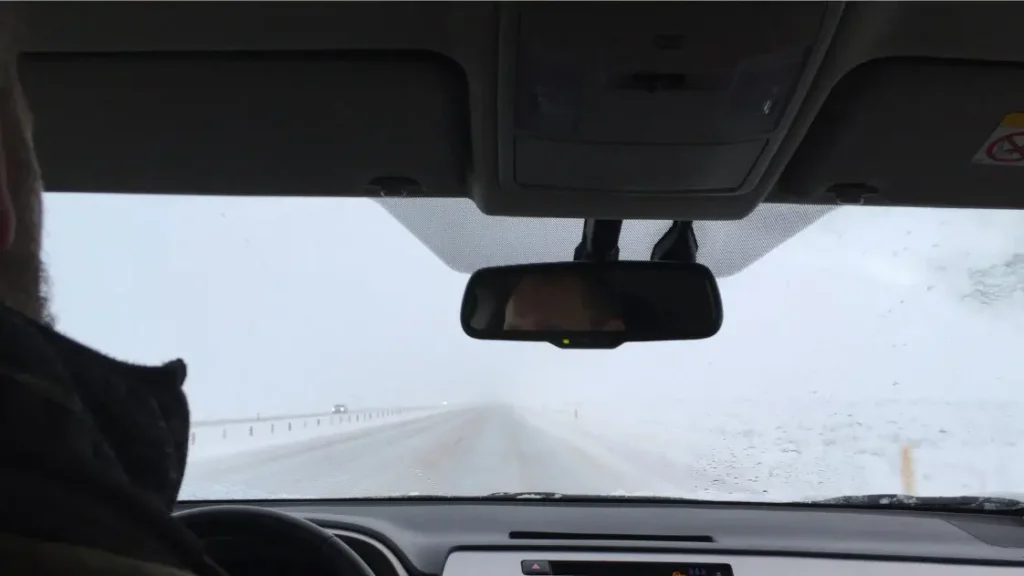
Reduce speed to match the conditions, increase the space around the vehicle, and decide whether continuing still makes sense. Keep your headlights on and use the yellow marker poles along the roadside to guide you.
If you’re struggling to see the road, the camper feels difficult to control, or an official warning affects your route, stop at a suitable safe location when you can. If you have no choice but to stop on or beside the road, pull as far over as you safely can and turn on your hazard lights. Don’t make the next booked stop more important than the conditions in front of you.
If you become stranded or need help
In an emergency, call 112. It’s Iceland’s single number for police, ambulance, fire, and search and rescue, and it works from any phone. If you’ve downloaded the 112 Iceland app, as we suggest in the checks above, use it to call for help with your location attached.
If you’re stuck in snow or waiting out a storm, stay in your camper. It’s your shelter, it’s much easier for rescuers to find than a person on foot, and conditions outside can be far worse than they look. Iceland’s search and rescue teams are made up of highly trained volunteers, and they’d much rather find you warm and dry inside your vehicle.
While you wait, keep the exhaust pipe clear of snow if you’re running the engine for warmth, and open a window slightly. A blocked exhaust can cause dangerous carbon monoxide to build up inside. The same applies to your camper’s heater, so make sure its outside vent isn’t buried in snow.
If you’re driving a Rent.is vehicle and the issue is vehicle-related, call our 24/7 support line (+354 567 3000 ext. 3). We’re here day and night, wherever you are in Iceland.
If you’re not sure whether the situation is an emergency, call 112 anyway. It’s always better to ask for help early than to try to solve a dangerous situation on your own.
Common winter-driving mistakes visitors make
Assuming “open” means “easy”
Open means the road isn’t closed. It doesn’t mean the road will feel comfortable for every driver or every vehicle. Road surface, visibility, wind, daylight, and your experience still matter.
Rushing single-lane bridges
Iceland has many single-lane bridges, marked with a sign reading Einbreið brú. The vehicle closest to the bridge goes first, so slow down well before you reach one and be ready to wait. In winter, take extra care, because bridges often freeze before the road around them.
Using cruise control on slippery roads
Cruise control can keep the wheels spinning when your tires lose grip, making a skid harder to recover from. Save it for clear, dry roads, and keep it off when there’s any chance of ice.
Driving without headlights
In Iceland, headlights must be on at all times, day and night, all year round. In winter, it also helps oncoming drivers spot you in low light, spray, and blowing snow.
Driving into the low winter sun
In midwinter, the sun barely rises above the horizon, so it sits low in the sky all day. Combined with snow and wet roads, the glare can be blinding, especially on east-west stretches of the South Coast. Keep sunglasses within reach, and keep your windshield clean inside and out. Speaking of which, road spray in winter goes through washer fluid fast, so top it up whenever you refuel.
Not expecting wildlife on the road
In East Iceland, wild reindeer move down from the Highlands in winter and often graze close to the road, especially around dawn and dusk. They’re hard to see in low light, so slow down when you spot one, as others are usually nearby. Early and late in the winter season, you may also meet the odd sheep that missed the autumn roundup. If you see one at the roadside, slow right down, as sheep often dart across the road without warning.
A simple winter driving checklist
Screenshot this list or save it to your phone, so you can run through it each morning.
Before each winter drive, make sure you have:
– Checked the exact route on umferdin.is, including the webcams on the most exposed stretch.
– Checked the latest forecast and warnings on vedur.is, paying attention to gusts as well as average wind.
– Checked SafeTravel alerts.
– Planned the difficult parts of the drive around available daylight where possible.
– Cleared windows, mirrors, lights, and the roof of snow or ice.
– Your headlights on, as required by law in Iceland.
– Enough fuel for the route and a sensible margin, plus a card with a PIN or a prepaid fuel card.
– A charged phone, the 112 Iceland app, and our 24/7 support number saved.
– Warm clothing, water, and food in case the day changes.
– A backup stop if the original destination no longer makes sense.
– Permission from yourself to delay, shorten, or cancel the drive.
Frequently asked questions
Is it safe for tourists to drive in Iceland in December?
It can be, but December gives you the least daylight of the year, with as little as four hours around the winter solstice, and winter weather can change quickly. Keep driving days short, check official road and weather information before you leave, and avoid building an itinerary that depends on completing long distances every day. Learn more about Iceland in December.
Is it safe to drive in Iceland in January?
January self-drive trips can work for prepared travelers, but the same rule applies: decide from the live conditions, not the month alone. Daylight grows quickly through January, from around four to five hours at the start of the month to around seven by the end. Road status, wind, visibility, daylight, vehicle, and your own winter-driving experience should all support the route.
Can you drive the Ring Road in Iceland in winter?
Yes, parts or all of the Ring Road can be driven in winter when conditions allow, but a complete loop needs flexibility. Weather and road conditions can vary between regions, so leave room to delay a leg or change the route instead of treating the loop as fixed. We recommend allowing at least seven days for a winter Ring Road trip.
Do I need a 4×4 in Iceland in winter?
Not automatically. A 4×4 can help you get moving in snowy conditions, but it doesn’t help you stop on ice or make every road suitable. Good tires matter more than drive type. A 2WD can work for some winter plans when roads, tires, weather, and driver experience are appropriate.
Are Iceland’s roads icy in winter?
They can be. Ice, packed snow, drifting snow, wet surfaces, and rapid changes in conditions are all possible. Because coastal temperatures often hover around freezing, roads can thaw and refreeze several times in a day. Check the current road-condition map before you drive and adjust your speed and route to the conditions you actually find.
Are roads in Iceland cleared of snow?
Many roads receive winter service, but the level and frequency of service vary by road. Main routes are usually cleared first, while quieter roads may not be serviced until later in the day or only on certain days. The Icelandic Road and Coastal Administration publishes winter-service information and current road conditions, so check the specific route rather than assuming every road is cleared the same way.
How often should I check road conditions in Iceland?
Check before every significant drive and check again if the weather changes or you’re starting a long second leg later in the day. Use current official information rather than relying on an earlier screenshot or a general weather app.
What should I do if the weather changes while I am driving?
Slow down to match the conditions, reassess the route, and be willing to stop, turn back, or shorten the day. If an official warning or closure affects the road, follow the official advice. In an emergency, call 112.
Is winter driving in Iceland harder than in the US or Canada?
That depends on where and how you normally drive. A driver from a snowy part of North America may be comfortable on ice but less familiar with Icelandic crosswinds, rapidly changing weather, or short daylight. The same goes for drivers from the Alps or Scandinavia, while visitors from milder climates, like much of the UK, may find the ice the biggest adjustment. Judge your actual experience, not your passport.
Can I drive at night in Iceland in winter?
Yes, but darkness makes unfamiliar roads and changing winter conditions harder to read. For a first winter trip, keep the most exposed or difficult driving in daylight where practical and avoid a schedule that forces long unfamiliar drives after dark. And if the Northern Lights appear, wait for a safe pull-off before stopping.
Is it warm enough to sleep in a camper in Iceland in winter?
Yes, in a camper with a heated sleeping area. Our heated campers are designed to keep you comfortable through cold Icelandic nights. For winter trips, we recommend these over our rooftop tent models, which are best saved for summer.
For broader trip planning, use our driving in Iceland guide for road rules, our winter camping in Iceland guide for campsite and overnight planning, our Iceland weather by month guide for seasonal context, and our Iceland road signs guide before you build the route.
A good winter plan leaves room not to drive
The best winter-driving plan isn’t the one that covers the most distance. It’s the one that still works when the weather changes.
Before each drive, check the road, weather, alerts, daylight, vehicle, and your own confidence. If one of those pieces no longer fits, change the plan. Do that, and winter can be the most magical time of all to explore Iceland: quiet roads, snow-covered landscapes, and long nights made for watching the Northern Lights.
Once you know the route and the kind of winter trip you want, choose the right camper for your winter trip. Rent.is offers a range of campers for different group sizes and routes, all with studded tires through the winter. Our team has been helping travelers explore Iceland since 2012, and we’re always happy to help you decide which option makes sense for your trip. Just email us at info@rent.is, and once you’re on the road, our 24/7 support is only a call away.