
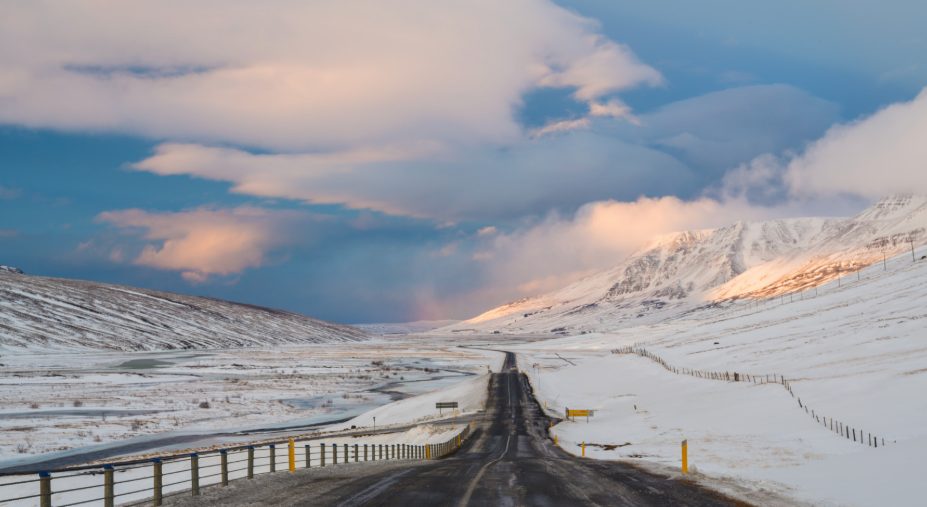
Not every winter trip to Iceland needs a 4×4 camper van. If you’re sticking to suitable open roads, keeping your route conservative, and ready to change plans when conditions change, a 2WD camper van can be the right choice.
A 4×4 can be worth considering if you want more flexibility around variable conditions or your route has less margin for disruption. That said, a 4×4 isn’t a solution for poor weather, road closures, or driving beyond your experience. It helps you get moving on snow, but it doesn’t help you stop or steer on ice. Good winter tires and a slower pace matter more. The right vehicle is the one that fits your route and the conditions on the day.
Planning a trip outside winter? Our guide to whether you need a 4×4 in Iceland covers the rest of the year.
Start with your route, not just the season
Winter matters, but that alone doesn’t need to dictate the whole booking. Before you choose a camper, look at the roads you want to drive, how fixed the itinerary is, and how comfortable the driver is with winter conditions.
As a rough guide, the Golden Circle and the Ring Road along the South Coast as far as Jökulsárlón are the busiest winter routes and among the first to be cleared, which is why so many winter trips stick to them. The Ring Road through the north and east is a different story. Mountain stretches like Holtavörðuheiði and Möðrudalsöræfi close more often in storms, and shortcuts like the Öxi pass (Route 939) in the east are usually closed all winter. A full winter Ring Road trip needs spare days, whichever vehicle you choose.
A short, flexible trip based around the busier, regularly cleared roads needs something different from a plan that depends on covering long distances every day. The more varied the roads you’ll cover, the more useful a 4×4 may be.
When a 2WD camper van can be the right choice
A 2WD camper van can suit a winter trip when your plan is cautious and adaptable. That usually means staying on the main, regularly cleared roads, keeping daily distances realistic, and accepting that a stop may need to move if the weather changes. In December, when Reykjavík gets barely four hours of daylight, a realistic day might be 150 to 200 km (about 90 to 125 miles).
It isn’t about trying to complete the same itinerary regardless of conditions. It’s about giving yourself enough time to pause, take a shorter route, or stay where you are when it makes sense.
A 2WD may be a good fit if:
– Your route is centered on well-traveled roads that are open and suitable on the day.
– You have spare time in the itinerary rather than a fixed list of non-negotiable stops.
– You’re happy to make decisions based on current conditions, not the plan you made at home.
– You want a simpler vehicle choice, and your route doesn’t require extra flexibility.
That doesn’t mean every open road will feel right for every driver. Visibility, wind, ice, daylight, and your own confidence still matter. In a camper van, wind is often the biggest of these. Taller vehicles catch strong gusts, and a door caught by the wind can be damaged in seconds, so park facing into the wind and open doors with both hands.
When a 4×4 camper van is worth considering
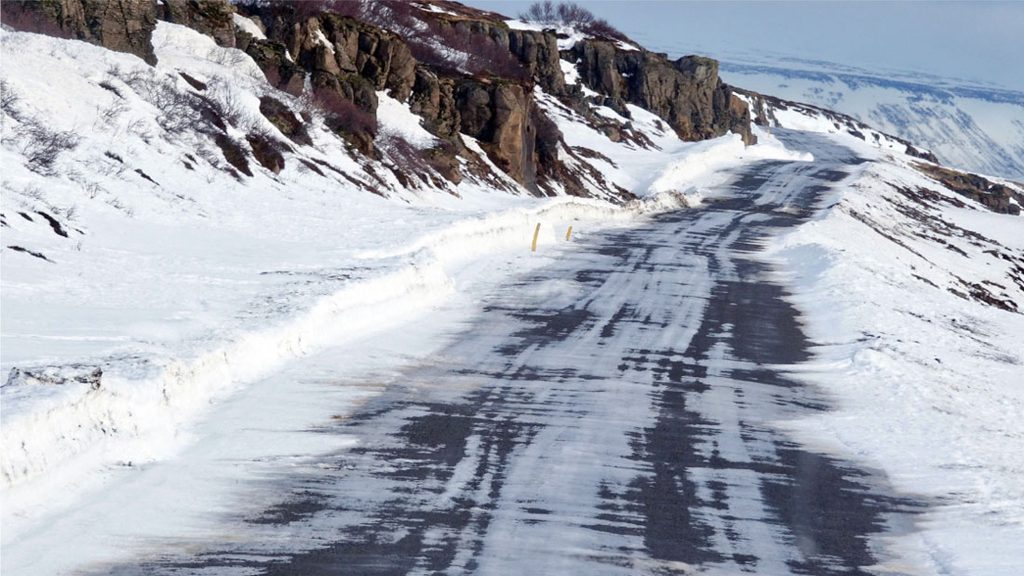
A 4×4 isn’t automatically essential in winter, but it can be a practical choice if you want more flexibility. It may suit travelers who are planning a broader route, have fewer spare days, or want a vehicle that gives them more options when conditions vary.
The value isn’t just four-wheel drive. Higher ground clearance helps on snow-packed side roads, and the extra traction makes it easier to get moving on a snowy hill or out of a campsite after an overnight snowfall. For some people, that will be worth the extra cost. For others, a simpler plan in a 2WD will be the more sensible decision.
Consider comparing 4×4 options if:
– Your route includes roads that can be more exposed or less predictable.
– You want more flexibility if one part of the trip needs to change.
– You’re traveling in midwinter, when storms are most frequent.
– You’d rather choose a vehicle with more capability than your minimum planned route appears to need.
Use the fleet details, not assumptions, to make the final choice. Passenger numbers, luggage, sleeping setup, route, and driving confidence all matter. You can compare our 4×4 camper vans to see the current options.
What a 4×4 doesn’t change
A 4×4 can’t make unsafe conditions safe, it can’t open a closed road, and it can’t replace good judgment.
Iceland’s F-roads and Highland routes are generally closed in winter, and most don’t open until June or July. A 4×4 should never be treated as a way around that. It’s also illegal to drive off-road in Iceland, whatever vehicle you have.
Every winter driver still needs to check current conditions, drive within their ability, and be ready to change the plan. That might mean delaying a departure, taking a shorter route, returning to your accommodation, or canceling a leg altogether.
For wider context on access rules, read our guide to driving in Iceland’s Highlands. For your actual journey, use Safetravel’s driving guidance and current travel conditions before setting off.
For more on road conditions, tires, and winter driving tips, read our guide to winter driving in Iceland.
A simple 2WD vs 4×4 winter decision
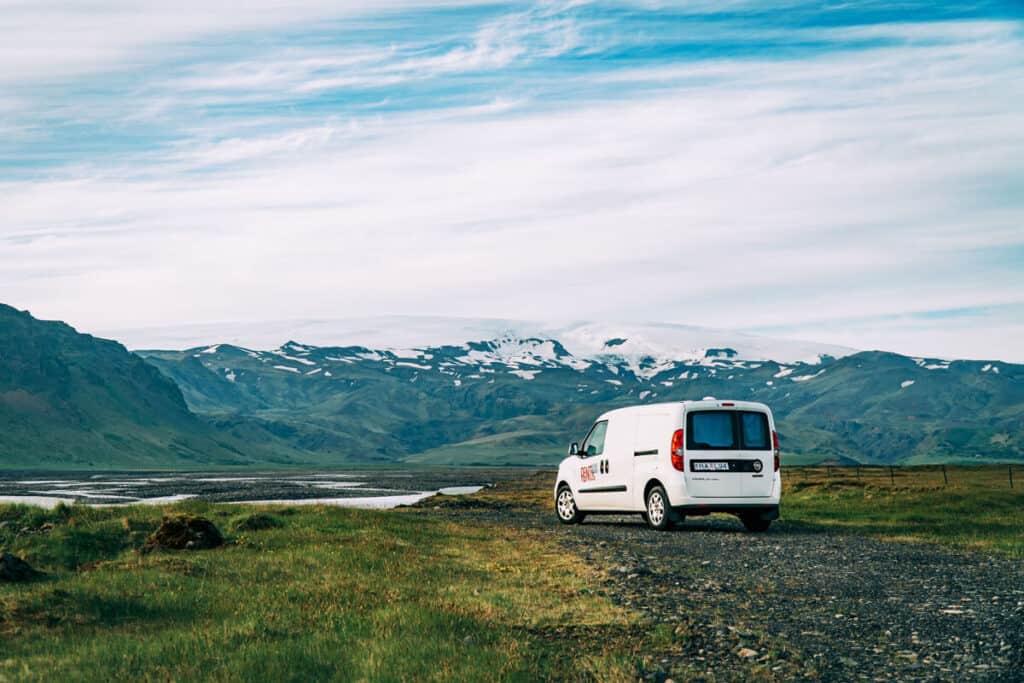
Choose a 2WD when the trip is built around the main, regularly cleared roads, you have room to adapt, and you don’t need to force a schedule.
Consider a 4×4 when your route needs more flexibility, your itinerary has less margin, or you prefer a vehicle that’s better suited to varied winter conditions.
Here’s how that typically plays out by route:
| Winter route | 2WD or 4×4? | What to know |
| Reykjavík and the Golden Circle | 2WD is usually fine | Busy, regularly cleared roads. Allow extra time on icy mornings. |
| South Coast to Vík and Jökulsárlón | 2WD is usually fine | Wind is the main risk, especially around Vík and the open sands near Skaftafell. |
| Snæfellsnes Peninsula | 4×4 recommended for the mountain passes | The mountain passes across the peninsula can be snowy and close in storms. In a 2WD, stick to the coastal roads and avoid the passes. |
| Full Ring Road | 4×4 worth considering beyond the South Coast | The north and east sections close more often in storms. Whatever you drive, build in spare days. |
| Westfjords | 4×4 recommended | Steep passes and fewer services. Best left to experienced winter drivers. |
| F-roads and the Highlands | Neither | Closed in winter, whatever you drive. |
In both cases, the same rule applies: a road can be open and still not be right for you. If the wind is strong, visibility is poor, or you’re uncomfortable with the conditions, change the plan.
Check conditions before every drive
Winter travel works best when you make the day’s plan after checking the conditions, not before. Check live road conditions at umferdin.is or call 1777, the Icelandic Road Administration’s information line, and check wind warnings at vedur.is before leaving, then check again if the weather changes. Warnings are color-coded yellow, orange, and red, and in a camper van, even a yellow wind warning is worth taking seriously.
Build in time for delays. Keep distances realistic. If an official warning, a road closure, or your own judgment tells you not to drive, don’t try to make up time later.
If you need to adjust a booking or route, speak to your accommodation, tour provider, or our team. We’re available 24/7 by phone or email and would love to help.
Which 4×4 camper van is right for your journey?
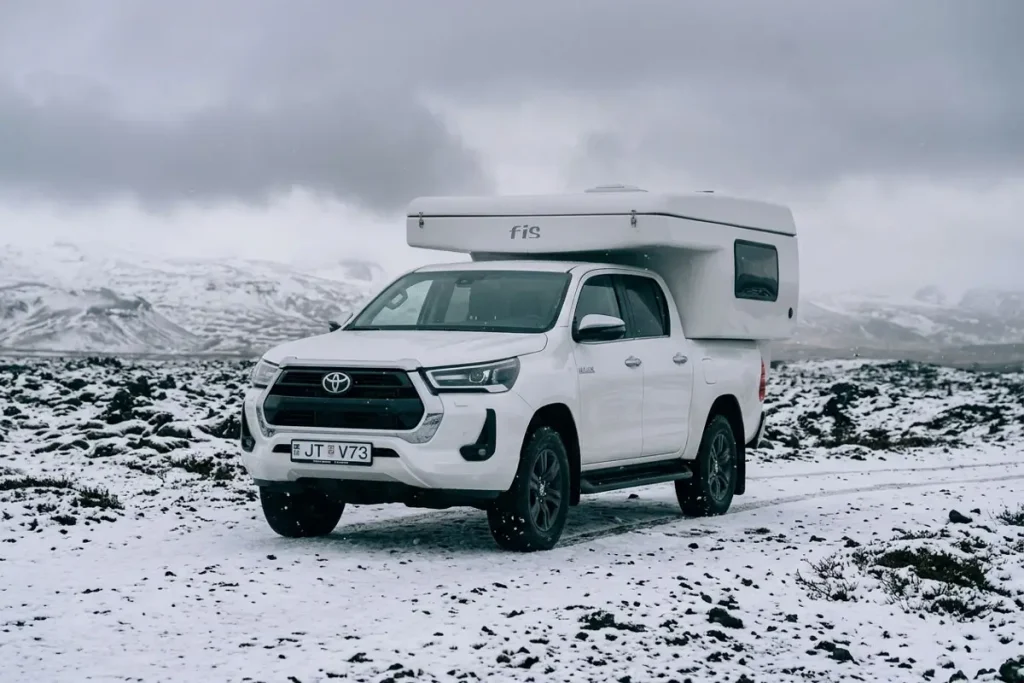
The best option depends on the whole trip, not one feature on a vehicle page. Think about how many people are traveling, how much luggage you have, where you plan to sleep, the roads you expect to use, and how comfortable you are driving the vehicle.
Start with the 4×4 category. For winter, we recommend a camper van with an indoor sleeping area and heating. Compare the VW California 4×4 (Automatic), VW California Beach 4WD 2024 Model and Toyota Hilux 4×4 Camper.
Our rooftop-tent 4x4s, the Dacia Duster, Jeep Renegade 4xe, and Jeep Wrangler 4xe, work year-round at campsites that stay open in winter, and the included sleeping bags are rated for Iceland’s conditions. They don’t have heating, though, and temperatures drop significantly from October through April. If you’d like somewhere warm to retreat to after a long winter drive, a heated camper van will be the more comfortable choice.
If you’re unsure, send us your travel dates and the route you have in mind. We can help you compare the options without pushing you into a vehicle you don’t need.
Frequently Asked Questions
Do I need a 4×4 to drive the Ring Road in winter?
Not for the South Coast. The Ring Road from Reykjavík to Jökulsárlón is one of the busiest, most regularly cleared routes in winter, and a 2WD is usually fine. A 4×4 is worth considering if you’re heading north or east or driving the full Ring Road, where closures are more common. Whatever you drive, build in spare days and check conditions each day.
Is a 2WD camper van safe in Iceland in winter?
It can be, on the right roads. A 2WD can be suitable for a cautious plan on the main, regularly cleared roads, like the Golden Circle and the South Coast, but drivers still need to check official conditions, adapt to visibility and weather, and stay within their experience. Don’t treat a booking choice as a guarantee that every route will be suitable.
Can a 4×4 drive on F-roads in winter?
No. F-roads and Highland routes are generally closed in winter, and most don’t open until June or July. A 4×4 doesn’t make a closed road available. Always follow the current official road information and your rental terms.
What should I check before driving each day?
Check road conditions at umferdin.is and weather and wind warnings at vedur.is, then consider the weather, wind, visibility, daylight, your planned distance, and your own confidence. If the conditions don’t support the route, change the plan.
Do your camper vans come with winter tires?
Yes. Every Rent.is camper van and motorhome is fitted with studded tires during winter, whether it’s a 2WD or a 4×4. Studded tires give you far more grip on ice than four-wheel drive alone, so even a 2WD camper van starts the winter well equipped. They still don’t replace slower speeds and careful braking, especially on icy mornings.
Is a 4×4 easier for first-time winter drivers?
Not as much as many people expect. It helps you get moving on snow, but it doesn’t help you stop or steer on ice. First-time winter drivers should keep routes realistic, allow extra time, and avoid treating the vehicle as a substitute for checking conditions.
What happens if the weather changes my plans?
Change the plan early. Contact our team, available 24/7, and we can help you rethink your route, find a campsite that’s open nearby, or work out how to make up the time safely later in the trip. Winter trips are more enjoyable when you leave room for that flexibility.
Plan a winter route that fits your camper
A 2WD can be the right choice for a cautious, adaptable winter trip on the main, regularly cleared roads. A 4×4 can be worth it if you’re heading north or east, crossing mountain passes, or want more flexibility around varied conditions. Neither removes the need to check the road, weather, and travel advice before you set off.
Choose the camper that fits the trip you’re actually taking, then compare 4×4 camper vans for your winter route, or see our full range if a 2WD suits your plans better.